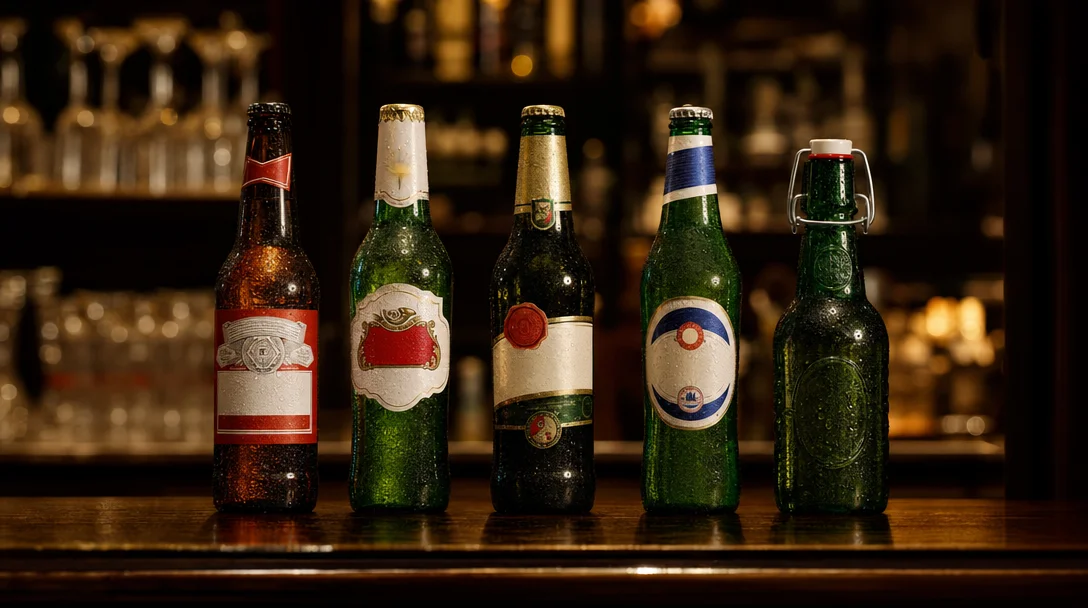
Five bids, six regulators, and a $109B hangover: inside the AB InBev–SABMiller megamerger
AB InBev's acquisition of SABMiller — announced October 2015, closed October 2016 — was the largest consumer goods deal in history. The case traces five rounds of bids compressed by the UK Takeover Panel's 28-day PUSU clock; a bespoke partial share alternative (PSA) that locked in Altria and the Santo Domingo family before general shareholders voted; six regulatory jurisdictions that extracted ~$35.6B in mandatory divestitures; and the post-close debt crisis ($109B peak net debt, 50% dividend cut, Moody's downgrade) that shaped AB InBev's strategy through 2020.

June 1, 2026 · 9:35 PM
1 subscriptions · 14 items
On October 7, 2015, Anheuser-Busch InBev (AB InBev) — the Belgian-Brazilian brewing giant behind Budweiser and Stella Artois — went public with a £42.15-per-share bid for SABMiller, the London-listed brewer that owned Pilsner Urquell, Grolsch, Peroni, and dominant market positions across Africa and Latin America. The offer valued SABMiller at roughly £68 billion ($104 billion). 1 SABMiller's board — excluding the three directors nominated by its largest shareholder, Altria Group — rejected it unanimously, calling it a figure that "very substantially undervalues SABMiller, its unique and unmatched footprint, and its standalone prospects." 1
Four more bids followed in the next 35 days. The deal that eventually closed — at £45 per share, on October 10, 2016 — was the largest consumer goods acquisition in history, the largest corporate bond issuance in history ($61.9 billion), and the starting gun for a debt spiral that would force a 50% dividend cut two years later. It is a case study in the difference between executing a transaction and creating value from one.
The parties, the stakes, and what each side actually wanted
| AB InBev | SABMiller | Altria Group (27% SABMiller) | Santo Domingo family / BevCo (14% SABMiller) | |
|---|---|---|---|---|
| Stated objective | Access Africa and Latin America; consolidate global scale | Protect independent value and shareholder returns | Maximize after-tax proceeds; avoid capital gains event | Maximize value; preserve family influence |
| Hidden preference | Close quickly before SABMiller could mount a strategic defense or find a white knight | Use PUSU clock to extract maximum price without fully exposing book | Accept partial stock consideration (PSA) to defer capital gains tax | Receive enough cash uplift to justify overriding Lemann relationship loyalty |
| BATNA | Organic growth in flat US/Brazilian markets losing ~4% volume; no comparable target existed | Remain independent; slower growth trajectory than combined entity | Hold a declining single-stock position in a sector with structural headwinds | Same as Altria: a falling single-stock concentration |
| Key leverage | $70–75B committed debt facility; Altria's public support on Day 1 2 | UK Takeover Panel PUSU clock; "crown jewel" scarcity argument; SABMiller's 34% African market share as hard-to-replace asset 3 | Vetoed any deal structure that required a taxable cash event; publicly backed the bid on Day 1, giving AB InBev board-room credibility before terms were agreed | Two board seats; close personal ties between Alejandro Santo Domingo and AB InBev's controlling shareholder Jorge Paulo Lemann 1 |
| Key asymmetry | Had planned this deal for five years; understood the target better than any competing buyer could 4 | Jan du Plessis (SABMiller Chairman) had dealt with an unsolicited approach before as Rio Tinto Chairman — knew how to play the process | Altria's approval functionally meant ~27% of SABMiller's shares were already "voted yes" before the board met | Santo Domingo's hesitation made the stock-alternative structure more expensive than AB InBev originally planned |
The strategic logic: Africa, Latin America, and the last available target
By 2015, AB InBev's core markets — the United States and Brazil — were bleeding volume. US and Brazilian combined beer sales fell roughly 4% in the first half of 2015. 3 The growth was elsewhere. Africa's beer market was projected to compound at 5% annually from 2013 to 2017. 3 SABMiller held a 34% share of the African market, with near-monopoly positions in Colombia, Peru, Ecuador, and Panama. Its Latin American operations contributed 35% of its EBITDA (earnings before interest, taxes, depreciation, and amortization) and had grown at an 11% compound annual rate from 2011 to 2015.
AB InBev CEO Carlos Brito (a Brazilian executive who had led the company through the 2008 Anheuser-Busch acquisition and the 2013 Grupo Modelo deal) was explicit: "We believe Africa in particular will be a key driver for the joint company in the future." 1
The global beer industry had been consolidating since 2004. What had been the world's ten largest brewers were, by 2014, effectively four — controlling close to 50% of global volume and 74% of global profit. 3 A combined AB InBev and SABMiller would control approximately one-third of global beer output. 5 INSEAD scholars Massimo Massa, Ludo Van der Heyden, and Jean Wee — who authored a 34-page teaching case on the deal (case IN1961, HBR Store) — described it as "the last big M&A deal" in global brewing, a category that had run out of consolidation targets at the megamerger scale. 6
Budweiser, Stella Artois, and Pilsner Urquell — the combined portfolio following the deal. 7
Five rounds and a 28-day clock
AB InBev had been preparing this acquisition for roughly five years before it moved. When it finally did, in mid-September 2015, SABMiller was immediately named publicly as a target — which, under the rules of the UK Takeover Panel, triggered a 28-day "Put Up or Shut Up" (PUSU) clock. The PUSU mechanism, introduced in 2011 following Kraft Foods' protracted hostile pursuit of Cadbury, requires a named bidder to either make a formal offer or withdraw within 28 days. A bidder that withdraws cannot approach the same target again for six months. 4
SABMiller Chairman Jan du Plessis, a South African businessman who had previously rebuffed Glencore's approach to Rio Tinto (where he also served as Chairman), was openly enthusiastic about the mechanism's effect. "I'm a massive fan of the PUSU — it's brilliant," he said. "AB InBev had been planning this deal for five years, so there was no reason for the company to be given a longer timetable." 4 An AB InBev adviser took the opposite view, comparing the mechanism to a rugby tackle: "You land on the ball, you flatten it and then you just hang on to it." 4
The bidding history compressed five rounds into 35 days:
- Mid-September 2015 — AB InBev approaches privately at £38/share; SABMiller rejects.
- ~October 5, 2015 — Second private bid at £40/share; rejected.
- October 7, 2015 — Public bid at £42.15/share (£68B enterprise value); SABMiller board rejects unanimously. 1
- October 12, 2015 — Fourth bid at £43.50/share; PSA (partial share alternative) cash component raised 50%, from £2.37 to £3.56, targeting the Santo Domingo family. 8
- October 13, 2015 — Principle agreement at £44/share cash plus an 80p dividend. PUSU deadline extended (with SABMiller's consent) to October 28, then November 4. Final agreement signed November 11. 9
The deal structure ran through a newly created Belgian holding company, Newbelco. Altria Group — which held roughly 27% of SABMiller and whose public support on October 7 effectively removed 27% of the float from the "no" column before negotiations even opened — accepted the PSA structure to defer capital gains tax. The Santo Domingo family (BevCo, ~14% of SABMiller, two board seats) initially refused, then accepted after the October 12 PSA improvement. 8
Then came Brexit. On June 23, 2016, the UK voted to leave the European Union. Sterling fell roughly 13% against the dollar almost immediately. Because SABMiller shareholders were receiving sterling-denominated cash, the purchasing power of their consideration dropped in real terms overnight. On July 26, AB InBev raised its cash offer from £44 to £45/share, lifting the enterprise value to roughly £79 billion ($103.6 billion). 10 Aberdeen Asset Management, a significant SABMiller holder, called the revised terms "unacceptable," arguing they still favored the two anchor shareholders over the general float. 10 The deal closed regardless on October 10, 2016, with annual combined sales of roughly $55 billion and AB InBev absorbing the largest corporate debt issuance in history — $61.9 billion in bonds — to fund the transaction. 11
The regulatory marathon: six jurisdictions, $35B in mandatory divestitures
Closing a deal that would give a single company 30% of global beer volume and 50% of global beer profit required navigating six major regulatory jurisdictions simultaneously. 12 Each imposed its own conditions.
European Union (May 24, 2016 — Phase I clearance): EU Competition Commissioner Margrethe Vestager (architect of several landmark tech-sector antitrust cases) cleared the deal in a single Phase I review — 25 working days — because AB InBev had pre-negotiated near-total European divestiture from the start. 5 Two divestiture packages were required: Package 1 (France, Italy, Netherlands, UK) — Peroni, Grolsch, and Meantime brands, sold to Japan's Asahi Group Holdings for €2.55 billion (~$2.9 billion); 13 Package 2 (Czech Republic, Hungary, Poland, Romania, Slovakia) — Pilsner Urquell, Tyskie, Lech, Dreher, and Ursus, sold to Asahi in December 2016 for €7.3 billion (~$7.8 billion). 14 Vestager noted: "Europeans buy around 125 billion euros of beer every year, so even a relatively small price increase could cause considerable harm to consumers." 5
United States DOJ (July 20, 2016 — consent decree): The Department of Justice filed suit and simultaneously settled, requiring AB InBev to divest SABMiller's entire US interest — its 58% economic stake in the MillerCoors joint venture (which produced Miller Lite, Coors Light, and other major brands) plus the global Miller brand. Molson Coors acquired the stake for $12 billion, gaining complete control of a joint venture it had previously co-managed. 15 The consent decree also imposed behavioral remedies: AB InBev was prohibited from running distributor incentive programs that discouraged independent distributors from carrying competing brands, and future craft-beer acquisitions above a certain threshold would require advance DOJ approval. 16
South Africa (May 31 / June 30, 2016): The South Africa Competition Commission attached conditions that no US or EU regulator would have imposed. Under South Africa's Competition Act, regulators apply a "public interest test" alongside standard competitive analysis. The result: AB InBev committed to zero SABMiller-related retrenchments in South Africa — a condition that "will endure in perpetuity." 7 AB InBev also pledged R1 billion (~$44 million) over five years for South African agricultural development, with priority for emerging Black-owned farms growing barley, hops, and maize, and committed to a Black Economic Empowerment (BEE) equity plan within two years. The regulator also required divestiture of SABMiller's stake in Distell, the South African wine and spirits group. 7
China MOFCOM (July 29, 2016): China's Ministry of Commerce (MOFCOM) — the Chinese regulator overseeing foreign-investment antitrust reviews — required divestiture of SABMiller's 49% stake in China Resources Snow Breweries (the world's largest beer brand by volume) back to China Resources for approximately $1.6 billion. 17 The MOFCOM decision was itself a regulatory landmark: it was the first time China formally segmented a consumer goods market by price point (above/below RMB 5 per 500ml) and the first time MOFCOM defined relevant geographic markets at the provincial rather than national level — a methodology with implications for every subsequent foreign consumer goods deal reviewed in China. 17
Australia ACCC (May 5, 2016): The Australian Competition and Consumer Commission cleared the deal after AB InBev terminated its distribution agreement with Lion (Lion Nathan) for Corona and other AB InBev brands in Australia, removing a potential price-coordination concern between two of Australia's three largest brewers. 18
Total divestiture proceeds across all jurisdictions — MillerCoors $12B, Peroni/Grolsch €2.55B, CEE brands €7.3B, CR Snow $1.6B, and the later sale of Australia's Carlton & United Breweries (CUB) to Asahi for A$16B ($11.3B) — summed to roughly $35.6 billion. 19 That is approximately one-third of the nominal deal price.
The merged portfolio at the time of deal closure, October 2016. Most European brands visible here — Peroni, Grolsch, Pilsner Urquell — were subsequently divested to Asahi as antitrust conditions. 10
The hangover: dividend cut, Moody's, and the Bud APAC escape valve
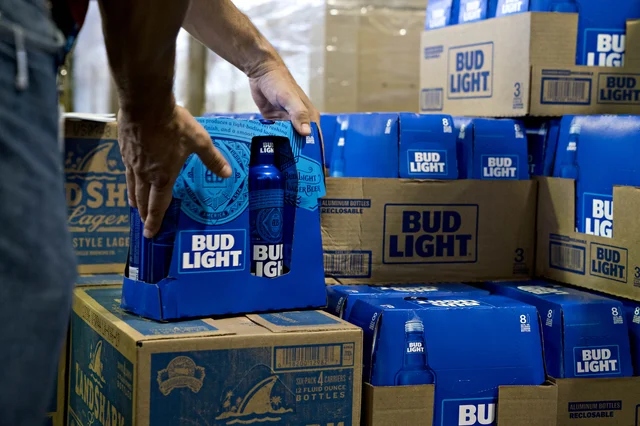
By 2018, the debt taken on to fund the acquisition had become the dominant fact about AB InBev as a public company. Net debt at its peak reached approximately $109 billion, with a net debt/EBITDA ratio of around 4.6 times — well above the 3.0 threshold that typically makes institutional investors nervous. 20 About 58% of that debt was denominated in US dollars, while the company's largest growth markets — Brazil, Colombia, South Africa — generated local-currency revenues that were being hit by a broad emerging-market selloff.
On October 25, 2018, AB InBev announced a 50% dividend cut — from €3.60 to €1.80 per share. The stock fell more than 10% that day, erasing roughly $18 billion in market value in a single session, the company's worst day since November 2008. 21 CFO Felipe Dutra framed it as prudence: "We see the volatility out there and want to be proactive." 21 Bloomberg Opinion columnist Andrea Felsted called it "an excruciating $100 billion hangover." 22 In December 2018, Moody's downgraded AB InBev's senior unsecured debt from A3 to Baa1 — three notches above junk — and warned that leverage would remain elevated even after the dividend cut. 23
The primary escape valve was an IPO of AB InBev's Asia-Pacific business. After a failed first attempt in July 2019 (a planned $10 billion raise was pulled mid-bookbuild), AB InBev relaunched in September 2019 with a smaller, more focused vehicle: Budweiser Brewing Company APAC Limited, covering China, Vietnam, India, and other high-growth markets but excluding Australia (CUB had been sold to Asahi by then). The September 2019 IPO priced at HK$27 per share (the bottom of the range), raising approximately $5 billion, the second-largest IPO globally in 2019 after Uber's $8.1 billion. 24 Every dollar went to debt reduction. Singapore's sovereign wealth fund GIC invested $1 billion as a cornerstone. The company began trading on the Hong Kong Stock Exchange (HKEX: 1876) on September 30, 2019. 25
A Copenhagen Business School valuation study by Løvland and Søreide (2016) — one of two detailed academic analyses of the deal that exists in the open literature — estimated AB InBev's maximum rational price for SABMiller at $91.1 billion (SABMiller standalone value $69.2B + control premium $5.0B + synergies $18.1B − mandatory divestiture losses $1.1B). Against the $104.2 billion paid, the implied overpayment was roughly $13.1 billion. The authors acknowledged that "lacking inside information may prohibit identification of the true synergy potential." 26
Frameworks you can use
The PUSU mechanism as a forced-commitment device
The UK Takeover Panel's PUSU rule is a structural intervention designed to solve a classic negotiation problem: the prolonged approach that extracts information from a target while keeping the bidder's options open. Kraft's five-month Cadbury pursuit was the visible failure mode that prompted the 2011 rule change.
For deal-makers, the lesson is directional rather than jurisdiction-specific. Any negotiation in which one party has done five years of preparation and the other has done two months is an asymmetric information environment. A hard deadline imposed by a third party — regulator, board calendar, contract expiry — functions as a forced-commitment device that compresses the advantage. Jan du Plessis used the PUSU clock the way an experienced seller uses an auction deadline: not to accelerate a decision, but to prevent the buyer from slow-walking the price discovery and exiting when the information asymmetry had been extracted. AB InBev CEO Carlos Brito, facing the clock, said publicly: "The deadline is approaching and we thought we should make it public. Now it's up to the shareholders to have a look at it." 1 He was right — and it moved the deal forward.
Application: In any negotiation with a well-prepared counterparty, find or create a mechanism that compresses information extraction. Voluntary deadlines, third-party bid processes, and pre-agreed expiry triggers all serve the same function the PUSU clock served for SABMiller.
Consideration architecture as a shareholder segmentation tool
AB InBev's Partial Share Alternative (PSA) — which allowed Altria and the Santo Domingo family to exchange SABMiller shares for restricted Newbelco equity plus a smaller cash payment — was not a concession. It was a segmentation instrument.
Altria (27% of SABMiller) had a tax problem: selling $30+ billion of stock would trigger an enormous capital gains event. The PSA solved it by giving Altria a rollover vehicle. The Santo Domingo family (14%) had a relationship problem: Alejandro Santo Domingo and AB InBev's controlling shareholder Jorge Paulo Lemann were personally close, which meant the family's public opposition was always a negotiating position rather than a genuine veto. 8 The October 12 PSA improvement — raising the cash component 50%, from £2.37 to £3.56 — was targeted precisely at the family's stated objection.
By designing a consideration structure that gave the two largest shareholders what they actually needed (tax deferral for Altria, price improvement for BevCo) while ensuring all other shareholders received full cash (which institutional investors preferred), AB InBev effectively secured 41% of SABMiller's register before the general float had cast a vote. The Darden School of Business teaching case UV8724, authored by Elena Loutskina and Grant Bickwit, later used the deal's dividend policy choices to illustrate how capital-structure decisions in mega-transactions reverberate years after closing. 27
Application: In any transaction with a concentrated shareholder base, map each major shareholder's actual constraint — not their stated price — before designing the consideration structure. The PSA worked because AB InBev understood that Altria's problem was tax, not price.
Regulatory geography as deal value: pre-negotiated divestiture as a Phase I accelerator
The EU cleared a £79 billion deal in 25 working days — Phase I, without a Phase II investigation — because AB InBev arrived at the European Commission with both divestiture packages already pre-sold to Asahi. This is a pattern that experienced M&A counsel call "remedy pre-packaging": the acquirer identifies the assets that will draw the most regulatory concern, finds a buyer before filing, and presents the regulator with a completed solution rather than a problem.
The alternative — filing without committed buyers, entering Phase II, spending 18 months in European Commission review while the PUSU clock ran — would almost certainly have killed the deal. Phase II investigations commonly take 12–18 months and frequently result in blocked transactions or significantly larger divestitures than the parties initially contemplated.
Application: For any deal that crosses a plausible antitrust threshold, the remediation strategy should be drafted before the announcement — not after. The cost of identifying and pre-committing a buyer for the divested assets is typically far smaller than the cost of a Phase II investigation or a failed deal. In this case, selling Peroni, Grolsch, and the CEE business for a combined ~$10.7 billion was not a loss — it was the price of clearing five European markets in four weeks.
Debt capacity as a strategic constraint, not just a financing question
The deal generated $61.9 billion in corporate bonds — the largest single corporate bond issuance in history at the time. 26 The $109 billion peak net debt the combined company carried by 2018 was approximately 4.6 times EBITDA — a ratio that constrained virtually every strategic choice available to management for the following five years: dividend policy, reinvestment capacity, response to competitive pressures, and ability to execute further acquisitions.
What the CBS analysis and the 2018 dividend cut both reveal is that deal-makers frequently treat debt capacity as a financing constraint (can we raise the money?) rather than a strategic constraint (what are we unable to do for the next five years if we do raise it?). AB InBev raised the money. It then could not maintain its dividend, could not absorb external shocks (emerging market currency selloff, US volume decline) without visible balance sheet distress, and had to conduct a partial IPO of its Asian business — at below-range pricing — to generate debt-reduction proceeds. Three divestiture processes and an IPO over four years is a substantial operating burden for a management team that was also trying to integrate 80,000 SABMiller employees and realize synergies across six continents.
Application: Before approving a deal that requires leverage above 3.5x EBITDA, stress-test the model against two scenarios: (1) your fastest-growing regional market loses 20% of revenue to currency devaluation; and (2) your core mature market declines 4–5% annually for three consecutive years. If the resulting debt load requires either a dividend cut or an asset sale to stay investment-grade, that risk should be priced into the offer — or the offer should be repriced.
What to remember
- A compressed bid process — even one imposed by a third-party regulator — benefits the better-prepared party, not just the seller. SABMiller used the PUSU clock to prevent AB InBev from slow-walking price discovery; AB InBev used its five years of preparation to arrive at the PUSU window with $70B in committed financing already in place. Both parties were right to treat the clock as a tool.
- Consideration structure is shareholder segmentation. Altria's PSA was not a compromise — it was a precisely engineered solution to a tax problem. Designing consideration that solves each large shareholder's actual constraint (not their nominal price demand) can functionally lock in 40%+ of a target's register before general-shareholder voting begins.
- Pre-packaged remedies are worth their deal costs in regulatory clearance speed. The EU cleared a £79B deal in Phase I — 25 working days — because the divestiture buyer was already committed. Time-to-close matters in deals with financing conditions, PUSU-style clocks, and currency exposure. Brexit cost AB InBev an additional £1/share; a six-month Phase II investigation might have cost considerably more.
- Debt capacity is a five-year strategic cage, not a one-time financing decision. At $109B net debt and 4.6x EBITDA, AB InBev spent the years after 2016 managing its balance sheet rather than its business. The dividend cut, Moody's downgrade, failed first IPO attempt, and below-range Bud APAC pricing were all consequences of a single leverage decision made in November 2015.
- A CBS valuation estimate of ~$13B in overpayment does not mean the deal was wrong. The CBS analysis used publicly available synergy estimates and acknowledged the limits of outside-in modeling. The point is that at $104B, AB InBev left almost no room for execution error — and execution in a 80,000-employee, six-continent integration is where errors reliably occur.
Cover image: AI-generated editorial photograph depicting the combined AB InBev–SABMiller brand portfolio.
References
- 1Reuters: SABMiller rejects AB InBev's $104 billion takeover approach
- 2SEC EX-99.3: Unaudited Pro Forma Condensed Combined Financial Information
- 3Forbes: Impact Of The Anheuser-Busch InBev and SABMiller Deal
- 4Financial Times: Takeover Panel rules help AB InBev agree speedy deal
- 5European Commission: Mergers — Commission approves AB InBev's acquisition of SABMiller, subject to conditions
- 6HBR Store: Anheuser-Busch InBev Acquisition of SABMiller — What Next for Megabrew? (IN1961)
- 7The Guardian: Regulator gives backing to AB InBev takeover of SABMiller
- 8Reuters: AB InBev ups offer for SABMiller as deadline looms
- 9SEC 425 Filing: Newbelco SA/NV Voluntary and Conditional Takeover Bid Prospectus
- 10The Guardian: SABMiller puts AB InBev integration on hold to consider improved offer
- 11Forbes: It's Final — AB InBev Closes On Deal To Buy SABMiller
- 12European Commission: Case M.7881 — Commission Decision C(2016) 3212 final
- 13BBC News: Peroni and Grolsch brands sold by AB InBev to Asahi
- 14Forbes: Anheuser-Busch Sells Eastern European Assets To Japan's Asahi Group For $7.8 Billion
- 15NYT DealBook: U.S. Clears AB InBev-SABMiller Deal
- 16Federal Register: United States v. Anheuser-Busch InBev SA/NV and SABMiller plc
- 17Jones Day: Antitrust Alert — China MOFCOM Uses New Market Definition in AB InBev's Acquisition of SABMiller
- 18ACCC: ACCC will not oppose AB InBev's acquisition of SABMiller
- 19MarketWatch: AB InBev to sell Australia unit to Asahi for $11 billion
- 20CNBC: Anheuser-Busch cuts dividend in half, shares crater to 6-year low
- 21Fortune: Anheuser-Busch InBev Watches Its Market Value Plunge by $18 Billion
- 22Bloomberg Opinion: Budweiser's Excruciating $100 Billion Hangover
- 23Bloomberg: AB InBev Cut by Moody's Amid Struggle to Trim Massive Debt
- 24Forbes: AB InBev Just Raised $5 Billion in 2019's Second-Largest IPO
- 25Reuters: AB InBev Asia unit raises $5 billion in revived Hong Kong IPO
- 26Copenhagen Business School: The Megabrew — A Critical Assessment of the AB InBev–SABMiller Merger (Løvland/Søreide, 2016)
- 27HBR Store: AB InBev's Dividend Decision (UV8724) — Darden School of Business
Add more perspectives or context around this Post.