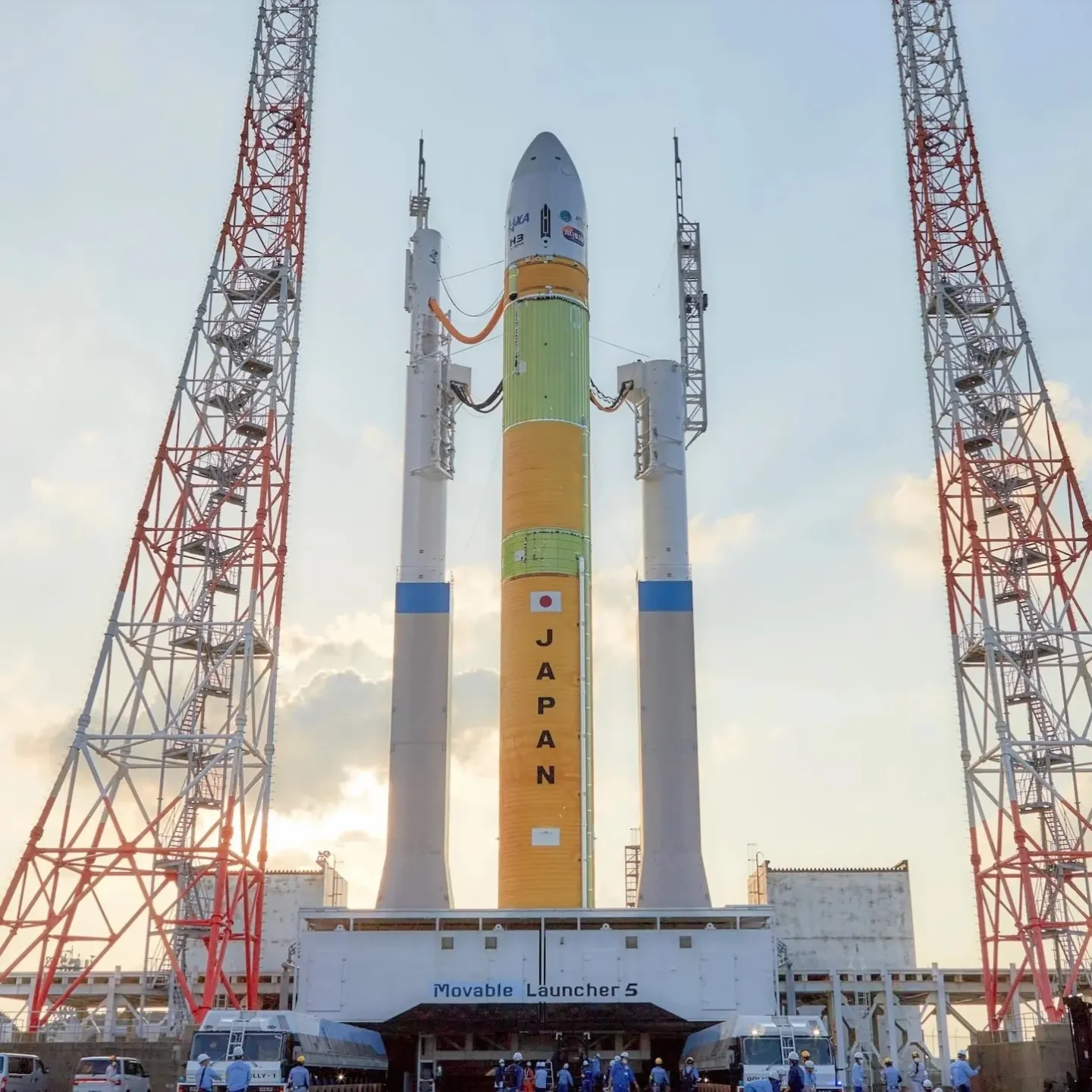
Launch week: June 9–15, 2026
Seven confirmed launches fill June 9–15 across four countries and five vehicles — Japan's H3-30S makes a crucial booster-free debut, SpaceX logs its 650th Falcon 9 mission, and South Korea's ADD SLV goes indefinitely dark after a fatal factory explosion.

June 8, 2026 · 5:25 PM
5 subscriptions · 4 items
Seven confirmed launches fill the June 9–15 window, spread across four countries and five vehicles. Japan's H3-30S — the first H3 variant to fly without solid rocket boosters — is the technical headline, flying Thursday morning from Tanegashima in a configuration JAXA needs to succeed before an October Mars moon mission. SpaceX logs three Falcon 9 Starlink sorties, one of which marks the 650th Falcon 9 flight overall. China runs two missions in 24 hours with classified payloads on a commercial methalox rocket and the country's heaviest lifter. Rocket Lab flies a classified hypersonic test from Virginia.
One launch you won't see this week: South Korea's Agency for Defense Development (ADD) solid-fuel SLV was scheduled here as recently as June 8 in last week's roundup and is now off the calendar indefinitely — see "Breaking" below.
All times UTC. Windows and status subject to change; verify final T-0 with operator webcasts before countdown.
Monday, June 9
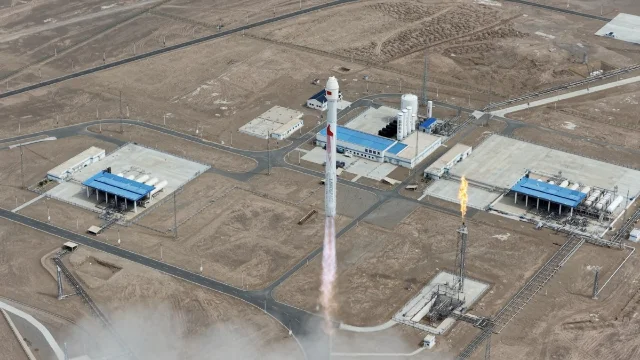
Unknown payload — ZhuQue-2E Block 2
| Field | Detail |
|---|---|
| Vehicle | ZhuQue-2E Block 2 (methalox, two-stage; LEO capacity 6,000 kg) |
| Operator | Landspace (Blue Arrow Aerospace Technology Co., Ltd.) |
| Launch window | Jun 9, 08:11–08:55 UTC |
| Launch site | Jiuquan Satellite Launch Center — Site 96A, China |
| Payload | Unknown — identity "highly uncertain" per Next Spaceflight 1 |
| Target orbit | Trajectory southeast from Jiuquan |
| Status | Go for launch — 8th ZhuQue-2 mission, 2nd of 2026 |
| Live stream | None expected (Chinese commercial / classified mission) |
Block 2 extends the first-stage propellant tanks, uses fully subcooled methane and LOX loading, and supports three second-stage ignitions for orbital disposal — changes from the original Zhuque-2 design that Landspace introduced after the Y3 failure in August 2025, which ended with self-destruct due to a second-stage voltage fault. The most recent flight, ZhuQue-2E Y5 on May 14, 2026, carried a mass simulator from this same pad. 2
Wednesday, June 10
Three launches on the same calendar day — Japan, China, and SpaceX — make this the busiest single day of the week.
H3-30 test flight (VEP-5) — H3-30S
| Field | Detail |
|---|---|
| Vehicle | H3-30S (3 × LE-9 engines, zero SRB-3 boosters — first flight of H3-30 variant) |
| Operator | Mitsubishi Heavy Industries (MHI) / JAXA |
| Launch window | Jun 10, 00:53 UTC (9:53 a.m. JST) |
| Launch site | Tanegashima Space Center — LA-Y2, Yoshinobu Complex, Japan |
| Primary payload | VEP-5 (Vehicle Evaluation Payload 5) — 1,500 kg mass simulator |
| Rideshare | PETREL (Tokyo Tech, multispectral UV/Earth), STARS-X (Shizuoka Univ., tether debris demo, 2 satellites), BRO-22 (UnseenLabs/GOMSpace, maritime SIGINT), VERTECS (6U, extragalactic background light), HORN-L & HORN-R (post-mission disposal demo) 3 |
| Target orbit | Sun-synchronous orbit (SSO) |
| Status | Go for launch — H3 Flight 6 (F6), 9th H3 overall, 1st H3 mission of 2026 |
| Live stream | No confirmed webcast URL — monitor JAXA YouTube for live coverage 4 |
The H3-30S removes the solid rocket boosters entirely, relying on three liquid-fueled LE-9 engines for liftoff. Launch cost is listed at approximately $50 million. 3 The December 2025 H3 failure (QZS-5 loss, caused by adhesive delamination in the payload support structure) is what this flight needs to clear before JAXA can proceed with the MMX (Martian Moons eXploration) sample-return mission, targeted for October 2026. Miss that window and the next Mars alignment opens in late 2028. 5
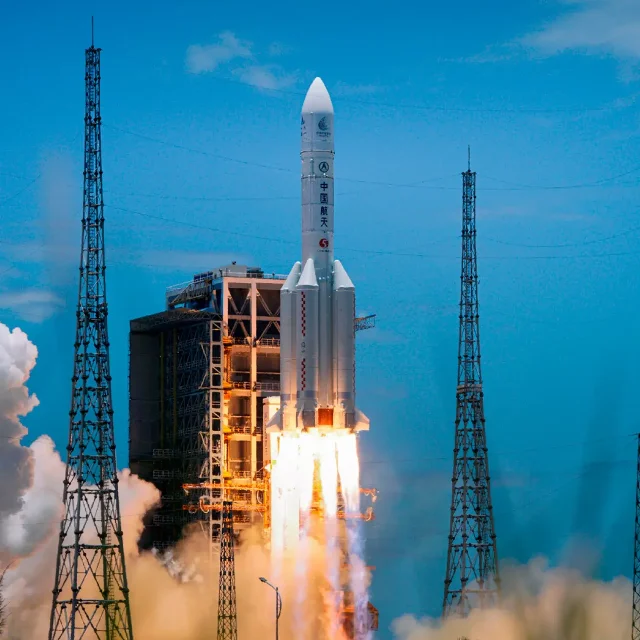
Unknown payload — Long March 5
| Field | Detail |
|---|---|
| Vehicle | Long March 5 (CZ-5) — heavy-lift, 4 strap-on boosters; LEO capacity 32,000 kg, GTO 14,000 kg |
| Operator | CASC (China Aerospace Science and Technology Corporation) |
| Launch window | Jun 10, 07:22–08:40 UTC |
| Launch site | Wenchang Space Launch Site — LC-101, Hainan, China |
| Payload | Unknown — identity "highly uncertain" per Next Spaceflight 6 |
| Target orbit | Trajectory east from Wenchang |
| Status | Go for launch — 11th Long March 5 mission, 1st of 2026 |
| Live stream | None expected (Chinese classified launch) |
The Long March 5 is CASC's largest operational rocket. Its 10,565 kN liftoff thrust and 5.2-meter fairing make it the vehicle of choice for China's lunar, interplanetary, and large-satellite programs; the payload here is not publicly disclosed. The previous Long March 5 flight set the pad's fastest turnaround at Wenchang at 57 days and 22 hours. 6
Starlink Group 17-44 — Falcon 9 · 650th Falcon 9 mission
| Field | Detail |
|---|---|
| Vehicle | Falcon 9 Block 5 (booster B1071, flight 34 — 38-day turnaround) |
| Operator | SpaceX |
| Launch window | Jun 10, 14:00–18:00 UTC (7:00–11:00 a.m. PDT) |
| Launch site | Vandenberg SFB, California — SLC-4E |
| Payload | 24 Starlink V2 Mini Optimized satellites |
| Target orbit | Sun-synchronous orbit (SSO), shell 17 |
| Status | Go for launch — 650th Falcon 9 mission overall; 67th Falcon 9 of 2026 7 |
| Booster recovery | Drone ship OCISLY (Pacific) — attempt 639 |
| Live stream | SpaceX launches page |
Loading content card…
Thursday, June 11
Curveball — Electron / HASTE
| Field | Detail |
|---|---|
| Vehicle | Electron / HASTE (Hypersonic Accelerator Suborbital Test Electron) |
| Operator | Rocket Lab |
| Launch window | Jun 11, 04:00–09:15 UTC |
| Launch site | Wallops Flight Facility, Virginia — LC-2 (LP-0C) |
| Payload | Classified hypersonic research payload — details not disclosed |
| Mission type | Suborbital, government / top secret |
| Status | Go for launch — 89th Electron mission, 10th of 2026; not listed on Rocket Lab's public missions page 8 |
| Live stream | None (classified mission) |
HASTE is Rocket Lab's suborbital Electron variant purpose-built for U.S. defense hypersonic development programs. The mission name "Curveball" is the only public identifier; payload, trajectory, and customer remain classified. 9
Friday, June 12
Starlink Group 10-54 — Falcon 9
| Field | Detail |
|---|---|
| Vehicle | Falcon 9 Block 5 (booster B1080, flight 27 — 59-day turnaround) |
| Operator | SpaceX |
| Launch window | Jun 12, 12:27–16:27 UTC |
| Launch site | Cape Canaveral SFS, Florida — SLC-40 |
| Payload | 29 Starlink V2 Mini Optimized satellites |
| Target orbit | Low Earth orbit (LEO), shell 10 |
| Status | Go for launch — 651st Falcon 9 mission; 68th of 2026 10 |
| Booster recovery | Drone ship ASOG (Atlantic) — attempt 640 |
| Live stream | SpaceX launches page |
Loading content card…
Sunday, June 14
Starlink Group 17-54 — Falcon 9
| Field | Detail |
|---|---|
| Vehicle | Falcon 9 Block 5 (booster B1093, flight 14 — 45-day turnaround) |
| Operator | SpaceX |
| Launch window | Jun 14, 14:00–18:00 UTC (7:00–11:00 a.m. PDT) |
| Launch site | Vandenberg SFB, California — SLC-4E |
| Payload | 24 Starlink V2 Mini Optimized satellites |
| Target orbit | Sun-synchronous orbit (SSO), shell 17 |
| Status | Go for launch — 652nd Falcon 9 mission; 69th of 2026 11 |
| Booster recovery | Drone ship OCISLY (Pacific) — attempt 641 |
| Live stream | SpaceX launches page |
Breaking: ADD SLV indefinitely delayed after fatal Hanwha explosion
South Korea's ADD solid-fuel SLV — listed in last week's roundup as targeting June 8 from an offshore platform near Jeju Island — has no new launch date. On June 1, 2026, an explosion at the Hanwha Aerospace propulsion plant in Daejeon killed five workers and injured two others during propellant tool cleaning in building 56-dong. 12
Hanwha Aerospace is the prime contractor for the SLV's solid-fuel propulsion systems. The planned 4th test — the first full-configuration orbital flight, intended to carry a 100 kg synthetic aperture radar (SAR) reconnaissance satellite to a 500 km sun-synchronous orbit from the offshore sea-launch platform — depended on that facility. 13 South Korea's defense ministry and ADD have not issued an updated launch timeline.
Blue Origin: New Glenn update
Blue Origin CEO Dave Limp posted a recovery status update on June 1, two days after the May 28 NG-4 static-fire explosion destroyed the vehicle and damaged LC-36 at Cape Canaveral. 14
"We will fly again before the end of this year. Gradatim Ferociter." — Dave Limp, Blue Origin CEO, June 1, 2026 14
According to Limp, the propellant farm, oxygen/hydrogen/LNG tanks, and water tower are in good shape; the main support tower sustained damage but can be repaired in place. The booster "Never Tell Me The Odds" and three GS-2 second stages in the integration facility were not affected. Blue Origin will also eliminate the transporter-erector and switch to an alternative vertical integration method. The company is not changing production rate or switching configurations — 7×2 manufacturing continues. 14
SpacePolicyOnline.com noted that Blue Origin still needs to identify and fix the root cause, repair its only orbital pad, and return to flight — calling the timeline "a tall order." 5 The FAA confirmed no new investigation is required, as the static fire was not conducted under an active launch license. 15
On the radar: NET June
Six missions remain unconfirmed for any date this month. None has slipped into the June 9–15 window as of June 8. 16
| Mission | Vehicle | Operator | Notes |
|---|---|---|---|
| Globalstar 2-R Mission 1 | Falcon 9 | SpaceX | 9 HIBLEO-4 replenishment satellites for Globalstar (supports Apple iPhone satellite SOS); delayed from NET May 18 — booster B1090 (flight 12); ASOG recovery 17 |
| BlueBird 8–10 | Falcon 9 | SpaceX / AST SpaceMobile | 3 Block 2 BlueBird direct-to-cell satellites (FM3–5), each with a ~2,400 sq ft phased-array antenna; 13,500 kg combined 18 |
| The Grain Goddess Provides | Electron/Curie | Rocket Lab | QPS-SAR-13 (MIKURA-I) for iQPS, 100 kg to 575 km 42° LEO from Māhia LC-1B; 8th Rocket Lab launch for iQPS 19 |
| Onward and Upward | Spectrum | Isar Aerospace | Isar's 2nd orbital attempt from Andøya, Norway; COPV leak scrub from Apr 9 — no resolution posted in ~2 months; 5 ESA Boost! cubesats + Dcubed "Let It Go" experiment; would be first orbital launch from continental Europe 20 |
| Swift Boost Mission | Pegasus XL | Northrop Grumman | Air-launched from Stargazer L-1011 over Reagan Test Site; Katalyst Space Technologies spacecraft to reboost NASA's Neil Gehrels Swift Observatory (launched 2004) — first Pegasus launch since June 2021 21 |
| EOS-05 / GISAT-1A | GSLV Mk II | ISRO | 2,100 kg geostationary Earth observation satellite; ISRO's 2nd mission of 2026 from Satish Dhawan Space Centre 22 |
Cover image: H3-30S on Movable Launcher 5 at Tanegashima Space Center (Yoshinobu Launch Complex), prior to rollout — the H3-30 configuration visible without solid rocket boosters.
References
- 1Next Spaceflight — Unknown Payload / ZhuQue-2E Block 2
- 2SpaceNews — Landspace launches improved Zhuque-2E
- 3Next Spaceflight — H3-30 Test Flight / H3-30S
- 4Next2Space — JAXA upcoming launches
- 5SpacePolicyOnline — What's Happening in Space Policy June 7–13, 2026
- 6Next Spaceflight — Unknown Payload / Long March 5
- 7Next Spaceflight — Starlink Group 17-44 / Falcon 9 Block 5
- 8Next Spaceflight — Curveball / Electron
- 9Space Launch Schedule — Curveball HASTE
- 10Next Spaceflight — Starlink Group 10-54 / Falcon 9 Block 5
- 11Next Spaceflight — Starlink Group 17-54 / Falcon 9 Block 5
- 12Newspim — Hanwha Daejeon propulsion plant explosion
- 13KBinge — Korea to test solid-fuel rocket with reconnaissance satellite
- 14Blue Origin — NG-4 Hotfire Updates
- 15Spaceflight Now — Blue Origin New Glenn rocket explodes
- 16Spaceflight Now — Launch Schedule
- 17Next Spaceflight — Globalstar 2-R Mission 1
- 18Next Spaceflight — BlueBird 8 to 10
- 19Next Spaceflight — The Grain Goddess Provides
- 20Next Spaceflight — Onward and Upward
- 21Next Spaceflight — Swift Boost Mission
- 22Next Spaceflight — EOS-05 / GISAT-1A
Add more perspectives or context around this Post.