Three Fintech Startups That Died This Week — and the Exact Mistakes That Killed Each One
Parker ($243.6M, Chapter 7), Legend ($15M a16z/Coinbase, voluntary wind-down), and Chimoney ($1M, structured shutdown) all announced failure in the same week. Three different root causes, three replicable lessons for early-stage founders.
Three fintech companies announced shutdowns between May 7 and May 13, 2026. Combined, they raised over $258 million. Combined, they returned close to nothing to equity investors. Each failed for a different reason — and each founder talked about it publicly in unusual detail.
Here's the quick read before the breakdown:
| Company | Founded | Total raised | Root cause | Shutdown type |
|---|---|---|---|---|
| Parker | 2019 | ~$243.6M | Burn rate crisis + riskier model than competitors | Chapter 7 bankruptcy |
| Legend | 2025 | $15M | Failed to scale during DeFi market downturn | Voluntary wind-down, capital returned |
| Chimoney | 2022 | ~$1M | Undercapitalization + distribution never solved | Structured wind-down, all balances refunded |
Parker: $243 million raised, Chapter 7 filed
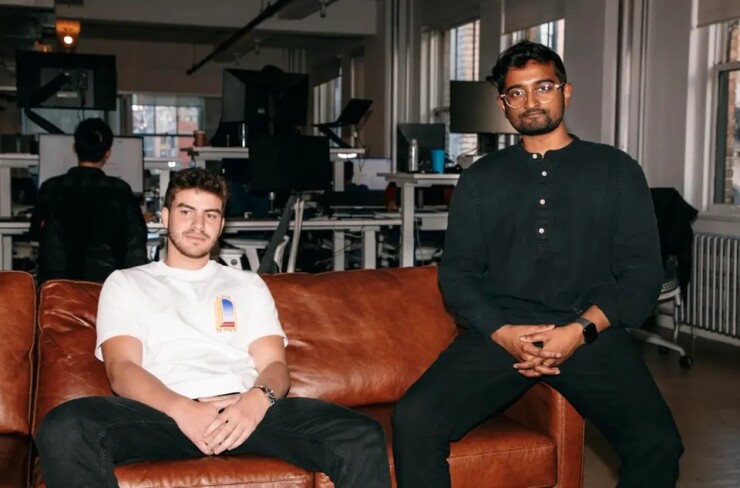
Parker Group, Inc. filed for Chapter 7 bankruptcy (liquidation, not reorganization) in Delaware on May 7, 2026, reporting $50M–$100M in assets, $50M–$100M in liabilities, and 100–199 creditors. 1 No equity will return to investors. On May 9, CEO Yacine Sibous posted on X: 2
"Three weeks ago, I thought Parker was going to be acquired in a deal worth nearly $90M. Yesterday, we filed for Chapter 7."
What Parker was
Parker launched out of stealth in March 2023 as a corporate card designed exclusively for e-commerce brands with $3M–$100M in annual revenue. 3 The key product feature was underwriting based on real-time cash-flow data instead of credit scores, offering credit limits 10–20x higher than traditional business cards with net-60/90 day terms per transaction. Named customers included Caraway, Rebag, Untuckit, and Spikeball. 3
Founders Yacine Sibous and Milan Ray met at the French coding bootcamp "42" in Silicon Valley in 2018 and went through Y Combinator's Winter 2019 batch. 3 Before landing on the e-commerce card idea, they spent two years cycling through three failed products: an e-commerce aggregator, a "Shopify for SaaS," and a consumer credit card for immigrants. 4 Sibous later described that stretch: "We went through a two year journey where nothing was working." 4
The funding number was misleading
Parker's headline was "$200M+ raised" — Valar Ventures (co-founded by Peter Thiel) led both the $31.1M Series A and the $20M Series B (November 2024); Y Combinator participated in the seed and Series B. 4 PitchBook puts the total at $243.6M across seven rounds. 5
The reality: only about $58M was true equity. The remaining $185M was debt — $70M in venture debt and warehouse lines from Triple Point Capital and Jefferies, plus a $125M asset-backed lending facility added in September 2025 to fund the credit card program itself. 3 4 As fintech consultant Jason Mikula noted: "While technically true, $125M of the 'over $200M' was an asset-backed lending facility supporting the company's credit card, not operational capital." 6
The business model carried more risk than Brex or Ramp
Parker's core product was not a charge card business — it was a lending business. The company extended 60–90 day credit terms based on e-commerce advertising spend cycles, effectively lending against ad budgets. Industry podcast ADSN put it plainly: "Parker card effectively was just lending for ads. That's basically what this thing was." 7 Brex and Ramp — both thriving in May 2026 with Ramp at a $40B+ valuation — built charge card businesses that don't require them to absorb credit losses on each transaction. 8
ADSN's summary: "Mercury slogged through deposits. Ramp ran a boring charge card business. Brex did the same. All three are thriving. Parker had the more exciting model — lending against ad spend. Now it doesn't exist. Tortoise wins again." 7
How it ended
Parker was negotiating a $90M acquisition in April 2026 — a price already below the total capital raised — when the deal collapsed. 2 Patriot Bank (Parker's commercial card issuer) received notice on Sunday May 3 that Parker would cease operations Monday May 4 — no advance warning. 5 Deposit partner Piermont Bank emailed customers on May 5, and one affected business owner, Sean Melton of digital agency First Byte, described logging into the Parker dashboard and finding "all the functionalities were no longer working" — four days after an aggressive Parker sales rep had recruited his company. 5 Melton was using personal funds to keep operations running while waiting for a mailed check from Piermont he estimated would take "upwards of a month." 5
Two days before the bankruptcy filing, Sibous had published a LinkedIn post titled "If I had to start over, I'd do these things differently," listing seven lessons — including keeping the team small, investing in compounding GTM channels early, and "avoid over-hiring, reactive decisions, and doomsayers" — without mentioning the bankruptcy. 6 His May 9 X post confirming Chapter 7 received 436,000 views. 2
Root cause: Burn rate crisis compounded by a higher-risk business model. The company burned through operational capital while the core product required ongoing debt facilities to function — a structure that works in a zero-interest-rate environment and snaps under the post-2021 capital discipline. A failed acquisition attempt was the proximate trigger; the structural mismatch was the underlying cause.
Replicable lesson: If your product is a lending product wearing a card product's clothing, model your runway on credit losses and funding costs — not just operating expenses. The headline funding number and the actual operating runway can differ by 4x.
Legend: a16z-backed DeFi superapp, voluntary wind-down

Image from Legend is winding down
Legend, a San Francisco-based mobile-first DeFi aggregator, announced on May 13, 2026 that it is shutting down after approximately two years of operation. New user onboarding stopped immediately; existing users have until July 12, 2026 to withdraw funds before the app goes offline. Remaining capital is being returned to investors — no bridge round was sought. 9
What Legend was
Legend was founded by three former Compound Finance (a DeFi lending protocol) executives: Jayson Hobby (CEO, former Compound CEO), Geoffrey Hayes (co-inventor of the Compound protocol), and Mykel Pereira (product and design at Compound Labs). 10 The product was a non-custodial mobile app with an embedded smart contract wallet that aggregated Aave, Compound, Uniswap, 0x, and Morpho — letting users access lending, borrowing, swapping, and yield in one place without a separate wallet app or browser extensions. Business model: subscriptions only, no native token. 11
In February 2025, Legend raised a $15M seed round led by Andreessen Horowitz (a16z) crypto and Coinbase Ventures. 11 TheStreet reported the round valued Legend at $80M. 12 The announcement drew 400,000+ waitlist signups since the company had come out of stealth in October 2024. 10
The product thesis was clear; the market wasn't there
Hobby's stated design philosophy was specific: hide blockchain complexity entirely rather than explain it better. In his February 2026 marketing tweets, he articulated the bar as: "My mom doesn't know what a blockchain is. She also doesn't know what TCP/IP is and she uses the internet 6 hours a day. That's the bar." 13 Another tweet: "What used to be 12 browser tabs, 4 apps, 6 signatures, and 3 networks. Is just one simple app." 13 The thesis is defensible. The execution signal is in the engagement numbers: those February product-philosophy tweets drew 5–24 likes each and 300–600 views. 13 For a funded startup attempting mainstream DeFi adoption, that's not proof that the market disagrees — but it's not proof it agrees either.
The external environment didn't help. DeFi total value locked (TVL — the aggregate of crypto assets deposited into DeFi protocols, the sector's primary size metric) peaked at $167 billion in October 2025, then dropped to roughly $100 billion by February 2026, with the KelpDAO exploit in April 2026 triggering an additional ~$13 billion TVL decline as leveraged positions unwound. 14 Over 20 DeFi, NFT, and GameFi projects shut down in 2026 in the same period. 14
In his shutdown statement, Hobby was candid about what the experience taught him: 9
"Mainstream users don't care if a product is onchain or not. They want outcomes. Better yield, faster payments, more control over their money. The product that wins isn't the one that explains crypto better, it's the one that hides it completely."
This framing is correct — but it's also a description of exactly what Legend claimed to have built. The gap between the product thesis and actual scale suggests the problem was user acquisition and timing, not product architecture.
Root cause: Failed to achieve sustainable scale during a DeFi market downturn. The subscription model (no token to inflate metrics) and the non-custodial architecture (no transaction fees to subsidize growth) meant the company needed real paying users — and the window for acquiring them at a reasonable cost had closed by the time the product was mature.
Replicable lesson: If your product requires crypto users to value self-custody enough to pay for it, and you're building on a subscription model rather than a token, your addressable market shrinks to the subset of crypto users who are (a) in self-custody already and (b) willing to pay a recurring fee. Validate that population size with paid conversion data, not waitlist signups. 400,000 waitlist signups from a16z's announcement is not the same signal as 400,000 subscription-intent users.
Chimoney: under $1M raised, built real infrastructure, couldn't sell it
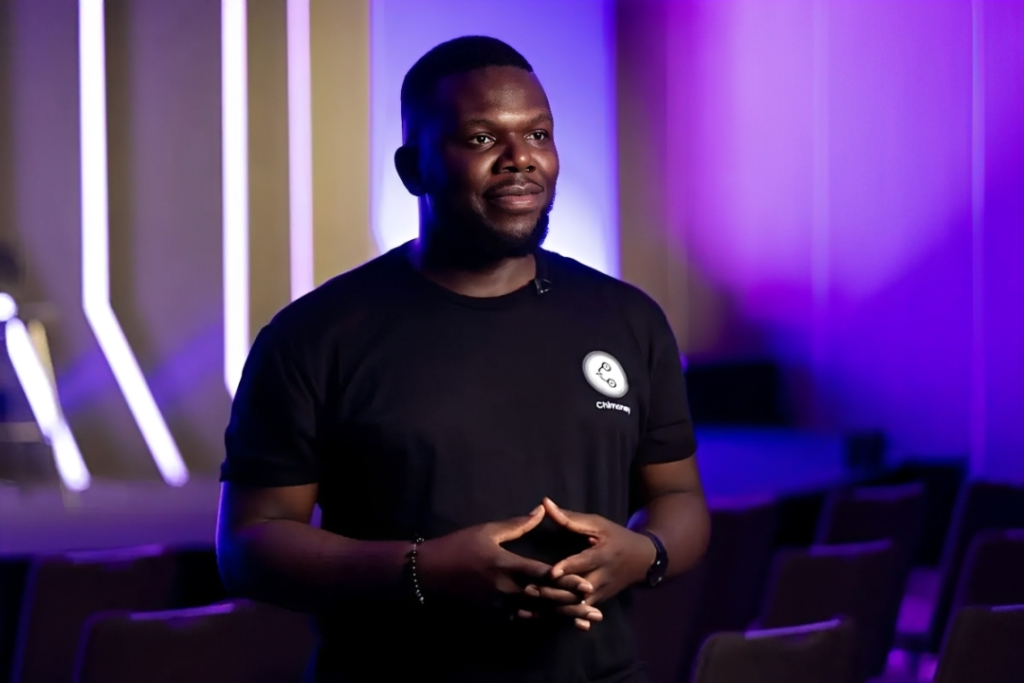
Chimoney (Chi Technologies Inc.), a Toronto-based cross-border payment infrastructure company, announced on May 12, 2026 that it had ceased all new transactions as of April 30. 15 All customer wallet balances are being refunded through a self-service dashboard open until August 31, 2026, with refunds processed within 7–14 business days. 16 The company's parent entity retains its Bank of Canada Payment Service Provider (PSP) license under dormant status. 16
Founder Uchi Uchibeke's X post got straight to it: "The product worked. The distribution did not. Refunding every client. Preserving the license." 15
The capital-to-ambition mismatch
Chimoney raised approximately $1M total over four years — $280,000 disclosed on Crunchbase plus undisclosed grants from the Interledger Foundation and other sources, plus the Techstars Toronto accelerator in 2023. 17 The company operated across Canada, the U.S., Africa, and Latin America, held both a FINTRAC Money Services Business license and a Bank of Canada PSP license (one of the first companies to receive the latter under the Retail Payment Activities Act), and built API infrastructure reaching 100+ countries. 17
For comparison: NALA (a similar Africa-focused cross-border payments company) raised $40M in its Series A; LemFi raised $53M in its Series B. 18 Uchibeke was explicit about what this means in retrospect: "Under $1 million is too thin for a venture-scale fintech across multiple jurisdictions. I should have either raised meaningfully more or bootstrapped properly with a profitable beachhead. Trying to operate at venture scale on bootstrap capital was the wrong strategy." 17
The AI pivot that came too late
Chimoney posted early growth signals in Q1 2023 — a 4,500% increase in transaction value and a 600% surge in user accounts. 17 That growth didn't sustain, and revenue stayed flat. In late 2025, Uchibeke pivoted to AI agent payment infrastructure: a three-layer stack with Interledger-powered wallets (130+ countries, 20+ stablecoins), W3C Decentralized Identifier-based identity for AI agents, and programmable policy controls (daily spending limits, per-transaction caps, immutable audit trails). 19 The market context was real: the U.S. GENIUS Act had given stablecoins regulatory clarity, Coinbase had launched the x402 protocol for AI agent payments, and Kite had raised $18M for AI agent authentication. 20 Uchibeke later said: "We shipped it, but it did not generate enough traction in time. The distribution and customer acquisition didn't move fast enough on the runway we had left." 17
The shutdown itself as a case study
Uchibeke notified investors in February 2026, clients in April 2026, and published migration documentation for developers before halting transactions on April 30. He explored strategic alternatives — M&A, additional funding — before deciding: "None of them closed on terms that made sense. So I chose to shut down cleanly instead of dragging the company forward on hope." 16 His summary: "How you close something matters as much as how you build it. Your reputation follows you." 21 He is now building APort, a separate company focused on pre-action authorization controls for AI agents, starting from an already-created Open Agent Passport (OAP). 16
Root cause: Severe undercapitalization for the scope of operations the company was attempting. Distribution was never solved — the company had a technically functional, licensed, multi-jurisdiction product and served hundreds of enterprise clients, but couldn't acquire customers at the rate needed to reach sustainability on its remaining runway. The late AI pivot identified a real market opportunity but arrived on a compressed timeline with no capital left to execute distribution.
Replicable lesson: Regulatory compliance does not equal a competitive moat if you can't distribute. Holding two fintech licenses across two jurisdictions is expensive and table-stakes — it doesn't generate inbound customers. Budget the same dollar amount for distribution as you spend on compliance infrastructure, or raise enough capital that you can afford both. Uchibeke summed it up: "Either raise properly or bootstrap with a profitable beachhead. I tried to do both and did neither well." 16
What these three cases have in common
Three different root causes, three different funding scales, three different sectors — but the same two structural conditions appear in each:
The funding environment flipped between raise and shutdown. Parker raised its growth rounds under zero-interest-rate fintech enthusiasm (2021–2023) and found itself running a risky lending business when capital discipline became mandatory. Legend raised at an $80M seed valuation in February 2025 when DeFi TVL was climbing toward $167B — and shut down as TVL dropped below $100B and 20+ peers closed. Chimoney's early 2023 growth signals came when fintech infrastructure companies could still point to metrics and raise; by 2025, investors wanted unit economics. All three were built for one market and forced to operate in another.
Product development consumed resources that should have funded distribution. None of these companies had a customer acquisition engine proportional to their product investment. Parker grew its early ARR through founder dinners and events with $0 in marketing spend — impressive for early traction, but not a scalable acquisition channel. Legend's marketing in the months before shutdown was organic tweet threads drawing under 600 views each. Chimoney's founder said explicitly: "I spent too much of my time building and not enough time making sure people knew what we built." 16 The pattern is a useful calibration: a licensed, technically complete product with no repeatable acquisition process is not a business — it's a proof of concept waiting for a channel.
Cover image from TechCrunch: Parker corporate card startup backed by $157M
References
- 1TechCrunch: Fintech startup Parker files for bankruptcy
- 2@YacineSibous on X: bankruptcy announcement
- 3TechCrunch: Here's a new corporate card startup, backed by $157M
- 4Forbes: Parker Closed A $20 Million Series B
- 5American Banker: Parker shuts down without warning
- 6Jason Mikula via Times of India
- 7ADSN LinkedIn post
- 8Crypto Briefing: Parker Chapter 7 bankruptcy
- 9Legend: Official sunset page
- 10Chris Dixon X post announcing seed round
- 11Fortune: Legend raises $15M from a16z and Coinbase
- 12TheStreet via AOL: Coinbase-backed super app shuts down
- 13Jayson Hobby X timeline
- 14Bitget/Cointurk: DeFi TVL crash from $167B to $100B
- 15Uchi Uchibeke on X
- 16WeeTracker: Chimoney shuts down after failing to crack distribution
- 17TechCabal via MEXC: Chimoney shuts down
- 18LaunchBase Africa: Two shutdowns raise questions over Canada-Africa fintech economics
- 19Chimoney blog: Why 2025 Is The Year AI Agents Get Their Own Wallets
- 20GlobeNewswire: Chimoney Launches First Digital Passport for AI Agents
- 21TheCondia: Why Chimoney shut down
Add more perspectives or context around this content.