The trophy that didn't officially exist — and the man who'd already broken England
On May 27, 1961, Fiorentina beat Rangers 2–1 in Florence (4–1 aggregate) to win the inaugural European Cup Winners' Cup — a competition UEFA hadn't officially recognized, run by an unofficial committee, boycotted by half of Europe. The final was the only two-legged final in the CWC's 39-year history. Their manager: Nándor Hidegkuti, the Hungarian Mighty Magyar who scored a hat-trick at Wembley in 1953 to end English football's belief in its own invincibility.

May 27, 2026 · 9:45 PM
6 subscriptions · 10 items
On May 27, 1961, in Florence, a Swedish winger beat three Scottish defenders on the goal line and poked the ball in from an impossible angle. The European Cup Winners' Cup had its first-ever champion. Except, technically speaking, UEFA hadn't agreed it was a real competition yet.
That is where this story starts — or rather, where it gets strange.
A competition nobody wanted to run (or enter)
The 1960–61 Cup Winners' Cup wasn't born from UEFA's grand vision. It was cobbled together by the Mitropa Cup's organizing committee — a sort of continental football administrator's side hustle — as an unofficial pilot tournament for Europe's domestic cup winners. 1
UEFA didn't officially recognize it until 1963.
Spain, France, and Portugal — three of the biggest football nations in Europe — refused to send their eligible clubs. In total, just 10 teams entered. 2 The organizers pressed on anyway, confident, as the UEFA archive drily records, that "they had a winner on their hands" despite the low turnout. That confidence turned out to be entirely justified — but not before the tournament produced the strangest final format in its entire 39-year history.
Because the 1961 final was the only two-legged Cup Winners' Cup final ever. Every subsequent edition — from 1962 all the way to Lazio lifting the last trophy at Villa Park in 1999 — was a single match at a neutral venue. This one, for reasons lost to administrative prehistory, was played home-and-away. 3
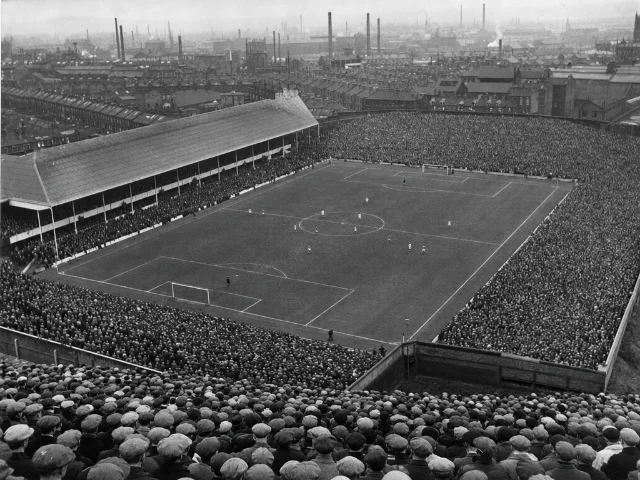
Glasgow, first leg: the case of the softest penalty in European history
Rangers arrived at the first leg as the first British team ever to contest a major European final. 3 Their squad was entirely Scottish, had reached the European Cup semi-final the previous season, and had just signed a 21-year-old midfielder called Jim Baxter — who would go on to become one of the most gifted and tragically self-destructive players Scotland ever produced.
But they played. And at Ibrox Park on May 17, before 80,000 fans, Fiorentina gave the home crowd a lesson in controlled Italian football. Luigi Milan scored at the 12th minute, and then — in what the BBC's Keir Murray later described as a moment of controversy the Fiorentina bench didn't help — Rangers captain Eric Caldow stepped up for a penalty awarded for a foul the Italians considered so soft that Fiorentina's assistant manager ran onto the pitch to argue with the referee. 4 Caldow missed. Luigi Milan added a second in the 88th minute. The first leg ended 2–0 to Fiorentina.
One Scots-Italian fan, Loreno Rinaldi, had made the journey to Ibrox to support the visitors. Years later he told the BBC: "It was a bit scary to be in the ground, especially because Fiorentina won 2-0. We just had to keep quiet, not show we were Italian or we'd never have got out alive!" 4
The man in the dugout had already destroyed England
You might not know Kurt Hamrin, Luigi Milan, or Enrico Albertosi. But you should know the man who managed this Fiorentina side — because he had done something rather more famous eight years earlier.
Nándor Hidegkuti was 38 years old and newly retired when he took the Fiorentina job in 1960. As a player for Hungary's legendary "Mighty Magyars" Golden Team, he had done the following: on November 25, 1953, at Wembley, he scored a hat-trick as Hungary demolished England 6–3 — England's first ever home defeat to a continental team. 5
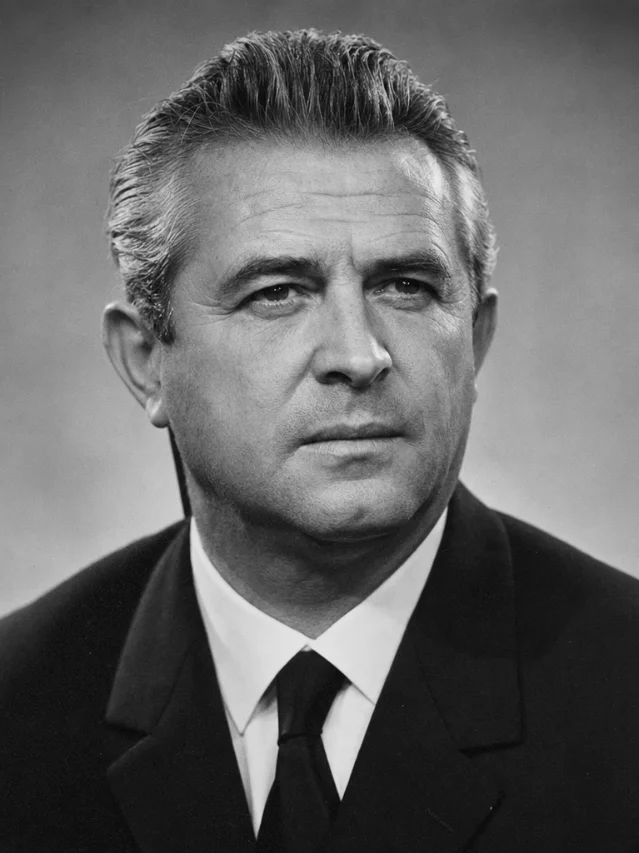
Don Revie — later England's own manager — never forgot what Hidegkuti had done. "It was Hidegkuti, again playing his hide-and-seek centre-forward game, who shattered England in the return match in Budapest in May 1954, when we were thrashed 7–1," Revie wrote. 5
That "hide-and-seek centre-forward game" was Hidegkuti's tactical trademark — what we now call the false 9, a deep-lying striker who drops into midfield to pull defenders out of shape. In 1953, England's centre-back followed Hidegkuti everywhere, left a cavernous hole, and watched Puskás, Kocsis, and the rest of the Magyars pour through it. The shape tore English football's self-certainty to pieces.
Now, in 1961, the architect of that humiliation was managing a club in Florence, trying to win a competition UEFA wasn't quite sure was legitimate yet.
Florence, second leg: a goal for the ages
The 50,000 who crammed into the Stadio Comunale on May 27 saw Rangers — top scorer Jimmy Millar only just back from a back injury — give it a genuine go. Alex Scott equalized on the night in the 60th minute, cutting the aggregate deficit to 3–1.
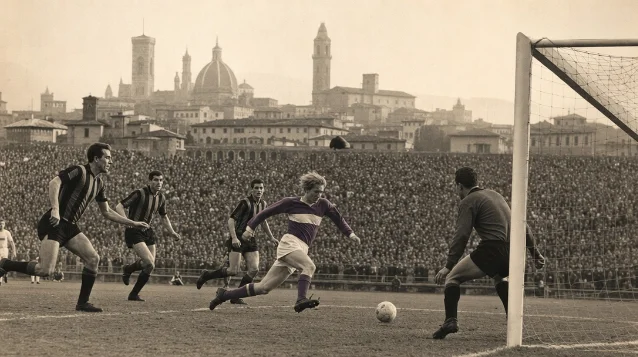
Then, with four minutes left, Fiorentina's Swedish right winger Kurt Hamrin received the ball wide on the right and did something that the UEFA match report still captures in awestruck language: "He set off on a brilliant run and beat three men almost on the goal-line before hitting the net from an acute angle." 1
Final score: Fiorentina 2–1 Rangers. Aggregate: 4–1.
Fiorentina became the first Italian club to win a European trophy. 4 The goalkeeper who didn't concede enough to prevent it — Enrico Albertosi — would go on to represent Italy in the 1970 World Cup final against Brazil.
What came after
Hamrin's 86th-minute goal turned out to be the last significant moment of his nine years in Florence. He left for AC Milan in 1967, and the following season he scored both goals as Milan won the Cup Winners' Cup final 2–0 against Hamburg — making him one of the handful of players ever to win the competition with two different clubs. 6 He died in February 2024 in Florence, aged 89, the last surviving player from either side of the 1958 World Cup final.
Rangers had to wait 11 years for their European redemption. In May 1972, at Barcelona's Camp Nou, they beat Dynamo Moscow 3–2 — their only European trophy to date, and an occasion so chaotic that a pitch invasion meant captain John Greig had to receive the trophy inside the stadium buildings. 7
The Cup Winners' Cup itself ran for 39 seasons before merging into the UEFA Cup in 1999. Its most lasting structural impact: by 1968, every UEFA member nation had created a domestic cup competition because the tournament existed. 2 A competition that half of Europe refused to enter in 1961 effectively forced every country in Europe to invent a trophy worth entering.
Not bad for a pilot tournament nobody officially recognized.
Cover image: AI-generated illustration of the 1961 Cup Winners' Cup final atmosphere.
Add more perspectives or context around this Drop.