
Hantavirus, Ebola, and a Salmonella Wave: Public Health Advisory Digest, May 10–17
This week's digest covers the Andes virus hantavirus cluster on MV Hondius (41 Americans monitored), WHO's Ebola PHEIC for DRC/Uganda, a large CDI Salmonella powdered milk recall cascade, New York's legislative break from federal vaccine guidance, and updated RSV and COVID booster recommendations for travelers and families.

The week's dominant story is a rare disease that most Americans had never heard of before April: Andes virus hantavirus, circulating aboard an expedition cruise ship and now touching 14 U.S. states. Alongside it: a new Ebola emergency in central Africa, a Salmonella cascade that has reached your pantry's seasoning blends and frozen pizzas, and a historic split between federal and professional guidance on childhood vaccines.
This week's advisories at a glance
| Date | Event | Issuing agency | Type | Who it affects |
|---|---|---|---|---|
| May 8 | Andes virus HAN advisory (HAN #528) | CDC | Health Advisory | Clinicians, healthcare facilities, state/local health depts |
| May 10 | 18 Americans repatriated to NQU/Emory from MV Hondius | CDC / ASPR | Response action | Travelers on MV Hondius; 14-state monitoring |
| May 14 | Updated Andes virus exposure guidance, 2-tier risk stratification | CDC | Interim guidance | Exposed individuals, public health departments |
| May 15 | Ebola Bundibugyo Level 2 travel notice (DRC) | CDC | Travel health notice | Travelers to DRC Ituri Province |
| May 15 | Ebola Bundibugyo Level 1 travel notice (Uganda) | CDC | Travel health notice | Travelers to Uganda |
| May 17 | Ebola Bundibugyo declared PHEIC | WHO | Public health emergency | International travelers; no US travel ban |
| Apr 20–May 15 | CDI powdered milk Salmonella cascade | FDA / FSIS | Class I recall + public health alert | Anyone who bought affected snacks, seasonings, frozen pizza |
| May 11 | Daisy Brand headcheese Listeria outbreak | FSIS | Public health alert | Illinois/Indiana consumers; discard if you have it |
| May 14 | Salmonella backyard poultry update: 184 cases, 31 states, 1 death | CDC | Outbreak update | Backyard flock owners; families with children under 5 |
| May 14 | Chikungunya Level 2 travel notice (Mauritius) | CDC | Travel health notice | Travelers to Mauritius; pregnant travelers especially |
| May 15 | New York decouples vaccine requirements from federal ACIP | NY Governor | State legislation | NY residents, insurers, pharmacists |
Disease outbreak: Andes virus aboard MV Hondius
The largest single-country response story of the week centers on a Dutch-flagged expedition cruise ship called the MV Hondius (operated by Oceanwide Expeditions), which departed Ushuaia, Argentina on April 1, 2026 carrying 147 people from 23 countries. An index case — an adult male — developed fever and headache on April 6 and died on board April 11, with no laboratory testing performed at the time. 1
The chain unraveled slowly. A second passenger deteriorated on a flight to Johannesburg on April 25 and died at the emergency department April 26, with PCR confirming hantavirus on May 4. 1 WHO was notified on May 2 by the UK International Health Regulations National Focal Point. On May 6, WHO confirmed the pathogen as Andes virus (Orthohantavirus andesense) — the only hantavirus species documented to spread person to person. 2
As of WHO's May 13 update: 11 total cases (8 laboratory-confirmed, 2 probable, 1 inconclusive), 3 deaths, case fatality rate 27%. No deaths have been reported since May 2. 2 Preliminary genomic sequencing showed sequences differing by no more than one single-nucleotide polymorphism per individual — strongly consistent with a single zoonotic spillover event, with no evidence of adaptation for enhanced human-to-human transmission. 2 Working hypothesis: the index case acquired the virus through rodent exposure — possibly during bird-watching on land in Argentina or Chile before boarding.
WHO Director-General Dr. Tedros Adhanom Ghebreyesus stated: "The risk to health globally is low." 3
What the U.S. response looks like
CDC issued Health Alert Network (HAN) Advisory CDCHAN-00528 on May 8, 2026 — classified as a Health Advisory (second tier), distributed to state and local health officers, epidemiologists, laboratory directors, and clinician organizations. 4
On May 10, 18 American passengers were repatriated via U.S. government medical flight to Offutt Air Force Base in Omaha, Nebraska, then transported to two of HHS ASPR's (Administration for Strategic Preparedness and Response) Regional Emerging Special Pathogen Treatment Centers (RESPTCs): the University of Nebraska Medical Center National Quarantine Unit and Emory University Hospital in Atlanta. 5 Seven passengers who had returned early are being monitored at home by state and local health departments.
As of approximately May 15, 41 people across 14 U.S. states are under active public health monitoring for possible Andes virus exposure. 6 CDC confirmed: "To date, no cases of Andes virus have been confirmed in the United States as a result of this outbreak." 6
On May 14, CDC published updated Interim Guidance with a two-tier exposure risk framework: 7
- High-risk contacts: anyone on the MV Hondius between April 6 and disembarkation, or anyone seated within 2 seats in any direction of a symptomatic patient on an aircraft. Required actions: stay home, wear a respirator or mask when around others indoors, no visitors, twice-daily in-person monitoring by health department, defer nonessential medical care.
- Standard monitoring contacts: passengers on the same flight but outside the 2-seat radius. No travel restrictions; regular self-monitoring; notify health department before traveling.
Monitoring continues for 42 days from last exposure. For ship passengers who disembarked May 10, that window runs through June 21, 2026. 7
For clinicians: Andes virus causes Hantavirus Pulmonary Syndrome (HPS). Early symptoms — fever, myalgia, fatigue, GI upset — appear 4–42 days post-exposure. The case fatality rate runs approximately 38% in cases with severe respiratory symptoms. Early extracorporeal membrane oxygenation (ECMO) can improve survival to roughly 80% if started promptly; patients can deteriorate rapidly and delayed care reduces survival. 4 No approved antiviral treatment exists. Testing for New World hantavirus IgM/IgG is available at CDC, some state labs, and Quest Diagnostics; Andes-specific real-time RT-PCR is available at the Nebraska Public Health Laboratory.
At least 10 state and territorial jurisdictions issued their own HAN alerts in the week of May 8–16, including Kansas (KDHE), North Dakota, Pennsylvania (PA-HAN #823), DC Health, Virginia, Maine, Alabama, California, New York City, and Vermont. 8 9
Disease outbreak: Ebola Bundibugyo PHEIC — DRC and Uganda
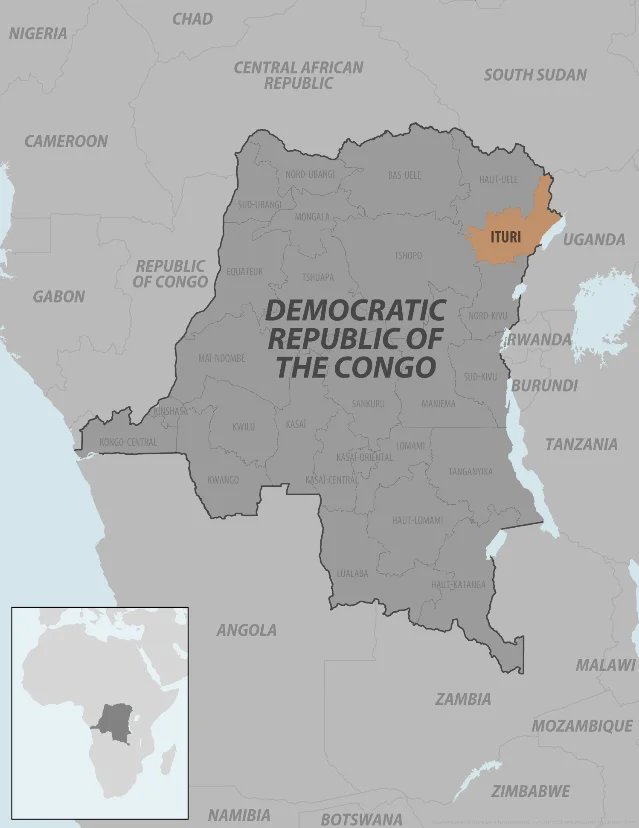
On May 17, 2026, WHO Director-General declared the outbreak of Ebola disease caused by Bundibugyo virus (BVD) in the Democratic Republic of Congo and Uganda a Public Health Emergency of International Concern (PHEIC). 10 This is the 17th Ebola outbreak in DRC.
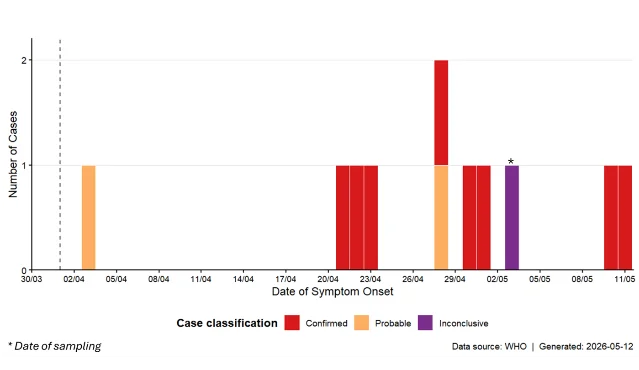
As of May 16: 8 laboratory-confirmed cases, 246 suspected cases, and 80 suspected deaths in Ituri Province, DRC, spanning at least three health zones (Bunia, Rwampara, Mongbwalu). The presumed index case had symptom onset on April 24, with laboratory confirmation not reached until May 14 — a four-week detection gap. In Kampala, Uganda, two imported lab-confirmed cases (including one death) were detected on May 15–16, both in individuals who had traveled from DRC. 11
A critical distinction from past Ebola outbreaks: there are no licensed vaccines or specific therapeutics for Bundibugyo virus. Case fatality rates in the two previous BVD outbreaks (1994, 2012) ranged from 30% to 57%. 11
- DRC: Level 2 (Practice Enhanced Precautions) — Ituri province specifically; avoid contact with blood or body fluids of symptomatic individuals, bats, and nonhuman primates.
- Uganda: Level 1 (Practice Usual Precautions) — no local transmission identified at time of reporting.
The U.S. Embassy in Kampala issued a health alert the same day, noting the State Department advisory for Uganda remains Level 3 (Reconsider Travel) and that the U.S. government is "extremely limited in its ability to provide emergency services to U.S. citizens in Ituri province." 14 WHO has advised against any international travel or trade restrictions beyond restricting the movement of identified high-risk contacts.
If you have traveled to or through DRC or Uganda: self-monitor for symptoms (fever, severe headache, vomiting, diarrhea, unexplained bleeding) for 21 days after departure. Onset of any symptoms warrants immediate isolation and contact with a healthcare provider before presenting in person.
Domestic outbreaks: Salmonella from backyard birds and reptiles
Backyard poultry: CDC's May 14 update brings the three concurrent multistate Salmonella outbreaks linked to backyard flocks to 184 total cases across 31 states, with 53 hospitalizations and one death in Washington state. 15 The count grew by 150 cases and 18 states since the April 23 update. Three strains are circulating simultaneously: Salmonella Enteritidis (32 cases), Mbandaka (19 cases), and Saintpaul (133 cases). Children under 5 account for 28% of cases; median age is 31. 15
The largest strain (Saintpaul) shows an unusual Pekin duck link: 54% of patients reported contact with ducklings or ducks, with 64% specifically citing Pekin ducks. Drug resistance is documented — all 133 Saintpaul samples show predicted resistance to fosfomycin, and 32 samples are predicted nonsusceptible to ciprofloxacin. 16
Outbreaks are traced to five hatcheries; CDC is working with state partners to notify them. Key prevention: wash hands thoroughly after handling any poultry or their habitat; young children should not kiss birds or bring them indoors.
Pet veiled chameleons: CDC issued a new investigation notice on May 7 for a multistate Salmonella outbreak linked to pet veiled chameleons. Five children across four states are infected — all are 2 years old or younger. 17 CDC does not recommend reptiles as pets in households with children under 5. Preventive actions: wash hands after any reptile handling, clean supplies outside the home, and never allow eating or drinking in the same area as reptiles or their habitat.

Food and product safety recalls
The broadest food safety story this week is a multi-tier Salmonella cascade that traces to a single dairy supplier.
Powdered milk Salmonella cascade (Class I recall)
On April 20, California Dairies, Inc. (CDI, Visalia, CA) voluntarily recalled 2,679,357 pounds of low-heat nonfat dry milk and 19,841 pounds of buttermilk powder due to potential Salmonella contamination. 18 The bulk dairy was distributed to manufacturers and wholesalers, triggering a cascade of downstream recalls that grew through May 15.
As of May 12, at least eight companies have issued secondary recalls. The contaminated ingredient found its way into: 19 20
- Popcorn seasonings and chip seasonings (including Jonco Industries white cheddar seasoning, Blackstone Products parmesan ranch, JCB Flavors Wildlife Seasoning Sour Cream & Onion — Lot 057596, Best By 5/18/2027)
- Trail mixes and cheese curds
- Frozen pizzas: Aldi Mama Cozzi's Biscuit Crust Sausage & Cheese, Walmart Great Value Thin Crust and Stuffed Crust Chicken Bacon Ranch, Culinary Circle Ultra Thin Crust Chicken Bacon Ranch
- Pork rind snacks
FSIS issued a public health alert on April 30 for the meat and poultry products and expects additional products to be added as the ingredient recall expands. 21 FDA is working with downstream consignees to identify any remaining products not yet recalled. No illnesses have been reported to date.
Action: Check your pantry and freezer. Full lot codes and UPC numbers are posted on the FDA recalls page. Discard or return any affected items.
Daisy Brand headcheese — Listeria outbreak (Illinois)
FSIS issued a public health alert on May 11 for ready-to-eat pork headcheese under the Daisy Brand Meat Products label, produced by Crawford Sausage Co., Inc. (Chicago, establishment EST. 21406). The product was produced January 20, 2026 (Use By date: March 26, 2026) and sold at retail deli counters in Illinois and Indiana. 22
Whole genome sequencing (WGS) confirmed that unopened headcheese samples tested positive for the outbreak strain of Listeria monocytogenes. As of May 10, 3 confirmed cases in Illinois are linked to the outbreak. The product is no longer available for sale — FSIS issued a public health alert rather than a formal recall. FSIS notes it is "concerned that recently purchased product may remain in consumer refrigerators." 22
Action: Discard any Daisy Brand headcheese (regular or "HOT" variety). Thoroughly clean and sanitize your refrigerator. Listeria symptoms can take up to 70 days to appear; pregnant women face risk of miscarriage or stillbirth.
Spring & Mulberry chocolate bars — Salmonella
Spring & Mulberry (Raleigh, NC) expanded its chocolate bar recall on May 8 to include all 12 flavors after a root cause investigation identified a single lot of date ingredient as the most likely Salmonella source. 23 Affected flavors include Blood Orange, Coffee, Earl Grey, Lavender Rose, Mango Chili, Mint Leaf, Mixed Berry, Mulberry Fennel, Pecan Date, Pure Dark, Pure Dark Mini, and Sea Salt. Products were sold nationwide online and through select retail partners since August 2025. All recalled products have tested negative for Salmonella; no confirmed illnesses. Action: photograph the batch code on your packaging, email [email protected] for a refund, then discard. 23
Straus Family Creamery organic ice cream — metal fragments
Straus Family Creamery (Petaluma, CA) recalled select production runs of its Organic Super Premium Ice Cream on May 14 due to potential metal foreign material. 24 Six SKUs are affected — Vanilla Bean (pint), Strawberry (quart and pint), Cookie Dough (pint), Dutch Chocolate (quart), and Mint Chip (pint) — all with Best By dates between December 23 and December 30, 2026, and distributed to retailers in 17 states (AZ, CA, CO, CT, FL, GA, IA, IL, IN, MD, NJ, OR, PA, SC, TX, WA, WI). Products went on shelves beginning May 4. No injuries reported. Action: discard; contact the company for a replacement voucher.
Additional notices this week
| Product | Hazard | States affected | Action |
|---|---|---|---|
| IQ Produce Enoki Mushrooms (Lot UI775, 528 cases) | Listeria monocytogenes (FDA sampling) | Retail nationwide | Return for refund 25 |
| HH Fresh Trading TW Enoki Mushrooms 150g (UPC 4711498860002, 120 cases) | Listeria monocytogenes (Florida DOH testing) | TX, FL | Return for refund 26 |
| Hellas Meze Golden Smoked Whole Herring (prod. 4/12/2025, best before 4/12/2026) | Clostridium botulinum risk — uneviscerated fish | MA, NJ, IL, NY | Return for refund 27 |
| Fly by Jing Creamy Sesame Noodles (BB 10/15/2026, 12/6/2026, 3/23/2027) | Undeclared peanut cross-contact | Nationwide (Whole Foods, Thrive Market, flybyJing.com) | Discard or return 28 |
| MG217 Eczema Cream (Lot 1024088, exp. Nov 2026, UPC 012277051067) | Staphylococcus aureus contamination | Nationwide (HEB, Amazon, wholesale) | Discard 29 |
For families: CPSC issued a product safety warning on April 30 for Agddjdfjy children's pajama sets (model 2442, pink feather-trim, sizes 2Y–14Y), sold on SHEIN.com in January 2026 for approximately $15. The pajamas violate mandatory flammability standards for children's sleepwear. Approximately 170 units were sold. The seller has not cooperated with CPSC's recall requests. 30 Action: Stop use immediately; dispose of the product. Do not sell or give it away.
Vaccine policy updates
New York state decouples from federal ACIP: On May 15, New York Governor Kathy Hochul signed two bills that sever New York's vaccine requirements and insurance coverage obligations from federal Advisory Committee on Immunization Practices (ACIP) guidance. 31
- A.10710/S.9599: Requires health insurers to cover vaccines recommended by the New York State Commissioner of Health — drawing on generally accepted medical standards and recommendations from recognized scientific organizations — rather than tying coverage solely to ACIP recommendations.
- A.10711/S.9598: Removes all references to ACIP from New York's Public Health Law, Education Law, and Social Services Law. Also authorizes pharmacists to administer COVID-19 vaccines to children ages 2–18.
The legislation is a direct response to the current limbo surrounding the federal ACIP. In June 2025, HHS Secretary Robert F. Kennedy Jr. replaced all 15 sitting ACIP members with a smaller panel of seven. On March 16, 2026, a federal judge issued a preliminary injunction halting that reconstitution and associated policy changes while the lawsuit AAP et al. v. Kennedy et al. proceeds; the government filed a notice of appeal on May 7, 2026.
Governor Hochul stated: "When public health comes under attack by an anti-science administration, New York fights back." 31
What this means for patients and providers: New York residents retain coverage for vaccines removed from the federal schedule — including hepatitis A, hepatitis B, rotavirus, RSV, influenza, COVID-19, and meningococcal vaccine — through their state-regulated insurance plans. Healthcare workers and pharmacists in New York now operate under state rather than federal immunization guidance for coverage purposes.
ACP RSV vaccine practice points (adults 75+): The American College of Physicians (ACP) issued updated vaccine practice points around May 9–12 advising that adults aged 75 and older should receive a protein subunit RSV vaccine — specifically Arexvy (GSK) or Abrysvo (Pfizer). 32 This is a more definitive recommendation than the previous framework for adults 60–74, which required shared clinical decision-making.
FDA VRBPAC meeting May 28 — 2026–2027 COVID-19 strain selection: The FDA's Vaccines and Related Biological Products Advisory Committee (VRBPAC) is scheduled to meet on May 28, 2026 to recommend strain selection for updated 2026–2027 COVID-19 vaccines. 33 Because ACIP — which typically votes on COVID-19 vaccines in late June and triggers insurance coverage mandates — remains frozen under the court stay, insurance coverage for updated vaccines approved after that FDA meeting is uncertain. Public comments are open through May 27 (Docket FDA-2026-N-3962).
Travel health notices issued this week
In addition to the new Ebola DRC and Uganda notices covered above, CDC issued two other new notices this week.
Chikungunya in Mauritius — Level 2 (Practice Enhanced Precautions), issued May 14: Vaccination is recommended for travelers visiting outbreak areas. 34 Chikungunya causes fever and joint pain; some patients experience severe joint symptoms persisting for months to years. Pregnant travelers approaching delivery should reconsider travel due to the risk of vertical transmission to newborns. Prevention: EPA-registered insect repellent, long-sleeved clothing, and screened or air-conditioned accommodations.
Ciguatera fish poisoning in Vanuatu — Level 1 (Practice Usual Precautions), issued May 7: Ciguatera is caused by eating certain reef fish (barracuda, grouper, snapper, amberjack) contaminated with toxins from the algae Gambierdiscus toxicus. 35 The toxin is not destroyed by cooking, freezing, or drying, and affected fish appear, taste, and smell normal. Symptoms begin 3–6 hours after consumption: nausea, vomiting, diarrhea, tingling, and temperature reversal (cold feels hot). Most recover within days, but those with prior ciguatera exposure should avoid reef fish for 6 months.
2024 dengue — a reminder for summer travelers: The May 14 MMWR (Morbidity and Mortality Weekly Report, Vol. 75, No. 18) reported that 3,798 dengue cases were confirmed in the United States in 2024 — a 359% increase above the 2010–2023 annual average of 828 cases. 36 Of these, 97.2% were travel-associated; 36.1% required hospitalization. The Caribbean accounted for 34.1% of acquisition regions, followed by Mexico (24.3%) and Central America (15.6%). Cases peak between July and September (41.6% of annual total). Travelers planning summer trips to those regions should apply insect repellent consistently and consider pre-travel consultation.
Cover image: CDC/Getty Images — view from the deck of an expedition cruise ship. Image from CDC hantavirus situation summary
References
- 1WHO Disease Outbreak News DON599 (May 4, 2026)
- 2WHO Disease Outbreak News DON601 (May 13, 2026)
- 3WHO DG opening remarks at media briefing on hantavirus, May 12, 2026
- 4CDC HAN CDCHAN-00528 (May 8, 2026)
- 5CDC media release: Update on hantavirus outbreak linked to MV Hondius (May 8, 2026)
- 6CDC hantavirus situation summary (May 12, 2026)
- 7CDC Interim Guidance for Public Health Assessment and Management (May 14, 2026)
- 8KDHE KS-HAN alert (May 13, 2026)
- 9Pennsylvania DOH PA-HAN Advisory #823 (May 12, 2026)
- 10WHO: Epidemic of Ebola disease in DRC and Uganda determined a PHEIC (May 17, 2026)
- 11WHO Disease Outbreak News DON602 (May 16, 2026)
- 12CDC Level 2 Travel Health Notice: Ebola Bundibugyo Virus Disease in DRC (May 15, 2026)
- 13CDC Level 1 Travel Health Notice: Ebola Bundibugyo Virus Disease in Uganda (May 15, 2026)
- 14U.S. Embassy Kampala health alert (May 15, 2026)
- 15CDC investigation update: Salmonella outbreaks linked to backyard poultry (May 14, 2026)
- 16CDC Salmonella outbreak investigation notice (May 14, 2026)
- 17CDC media release: New Salmonella outbreak linked to pet veiled chameleons (May 7, 2026)
- 18Cheese Reporter: CDI recalls bulk powdered milk and buttermilk powder (May 15, 2026)
- 19USA TODAY: Powdered milk recall grows (May 12, 2026)
- 20NBC Chicago: Dozens of popular snacks recalled (May 11, 2026)
- 21Food Safety News: USDA issues public health alert for frozen pizza (May 15, 2026)
- 22Food Safety News: Test results show headcheese contaminated with outbreak strain of Listeria (May 14, 2026)
- 23FDA: Spring & Mulberry expands voluntary recall of select chocolate bars
- 24FDA: Straus Family Creamery voluntarily recalls select flavors of organic ice cream
- 25FDA: IQ Produce enoki mushrooms recall
- 26FDA: HH Fresh Trading enoki mushrooms recall
- 27FDA: Terra Medi LLC recalls Hellas Meze smoked herring
- 28FDA: Fly By Jing issues voluntary recall of Creamy Sesame Noodles
- 29FDA: Pharmacal issues nationwide recall of MG217 eczema cream
- 30CPSC: Warning — Agddjdfjy children's pajama sets
- 31Governor Hochul signs two bills protecting vaccine access for New Yorkers (May 15, 2026)
- 32Arkansas ACP Chapter (Facebook) announcing ACP RSV vaccine practice points, ~May 9–12, 2026
- 33FDA VRBPAC May 28, 2026 meeting announcement
- 34CDC Level 2 Travel Health Notice: Chikungunya in Mauritius (May 14, 2026)
- 35CDC Level 1 Travel Health Notice: Ciguatera fish poisoning in Vanuatu (May 7, 2026)
- 36CDC MMWR Vol. 75 No. 18: Increase in travel-associated and locally acquired dengue cases — United States, 2024 (May 14, 2026)
Add more perspectives or context around this Drop.