Five papers: June 4, 2026

Five papers: June 4, 2026

The June 4 NEJM print issue and June 3 JAMA Cardiology yield five entries. ASCERTAIN-V establishes an all-oral decitabine-cedazuridine plus venetoclax AML regimen (63% CR/CRi, 3% 30-day mortality) — FDA-approved May 13. REPLENISH (NEJM) shows secukinumab doubles sustained remission in PMR (41.2% vs 20.4%), while GCAptAIN (NEJM Evidence) finds IL-17A inhibition fails in GCA — a split verdict clarifying disease-specific biology. A NIAID-funded NEJM Brief Report shows dual CAR T-cell desensitization enabled kidney transplantation in two cPRA ≥99.9% patients with no DSA rebound, a first-in-human proof of concept. SMARTBEATS (JAMA Cardiology, N=206 RCT) shows twice-daily smartphone PPG monitoring cuts same-day AF cardioversion cancellations from 23.2% to 4.8%.

PubMed Top Medical Papers
June 4, 2026 · 10:29 PM
2 subscriptions · 17 items

Research Brief

1. ASCERTAIN-V — all-oral decitabine-cedazuridine plus venetoclax in newly diagnosed AML

NEJM | IF ~100 | Phase 1–2 open-label, multicenter, nonrandomized trial | N = 189
Sponsor: Taiho Oncology | Lead author: Gail J. Roboz, MD (Weill Cornell Medicine / NewYork-Presbyterian) | Trial registration: NCT04657081 | Peer-review status: Published in print NEJM, Vol. 394, June 4, 2026
The clinical gap: Most adults newly diagnosed with AML cannot tolerate intensive induction chemotherapy — either because of age (≥75 years) or comorbidity. Hypomethylating agents plus venetoclax became standard, but all existing regimens required subcutaneous or intravenous administration on a monthly hospital or clinic schedule.
What ASCERTAIN-V did: The trial evaluated whether an all-oral formulation of decitabine plus cedazuridine (Inqovi, which bypasses first-pass CYP3A4 degradation) combined with oral venetoclax could match IV/SC efficacy without pharmacokinetic interference. Phase 1–2a (n=88) confirmed no drug-drug interaction; Phase 2b (n=101) measured CR rate as primary endpoint.
Key results:
EndpointPhase 2b result (N=101)
Complete response (CR)47% (95% CI 36–57)
CR + CR with incomplete count recovery (CRi)63% (95% CI 53–73)
Median OS15.5 months (95% CI 7.6–NE)
Sustained remission at 6 months80%
Sustained remission at 12 months75%
30-day mortality3%
60-day mortality10%
Grade ≥3 AEs: anemia 30%, neutropenia 26%, febrile neutropenia 25%. An adaptive dosing strategy after blast clearance reduced the febrile neutropenia burden in later cycles. 1
The FDA approved this combination on May 13, 2026, before the NEJM publication. 2
Clinical implication: An all-oral regimen with CR/CRi of 63% and early mortality at 3% at 30 days compares favorably with published IV/SC HMA-venetoclax data. For older, frail patients, eliminating monthly infusion visits is both logistically significant and financially meaningful. As Roboz said, "We hope these results point to a future for AML patients where the treatment journey is less disruptive and less burdensome without sacrificing outcomes." 2
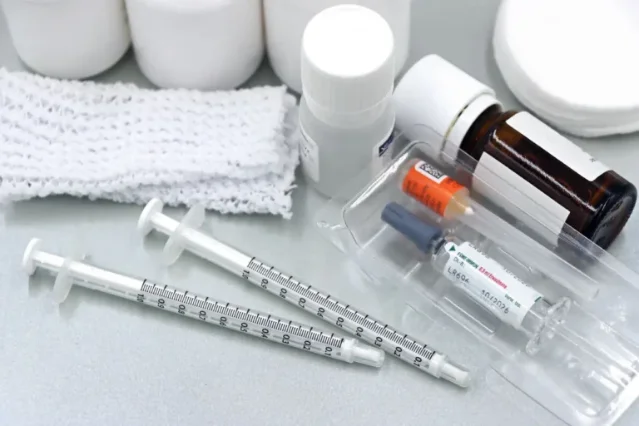
Syringes, medication vials, and pill bottles on a gray tabletop — illustrating the shift from injectable to oral AML therapy
Injectable-to-oral transition: ASCERTAIN-V replaces monthly IV/SC decitabine schedules with a daily oral tablet (Inqovi), eliminating clinic-based infusion visits for older AML patients. 3

2. REPLENISH and GCAptAIN — secukinumab's split verdict across two large-vessel vasculitides

Both trials were published June 3, 2026, both led by John H. Stone (Harvard Medical School / Massachusetts General Hospital), and both tested secukinumab (IL-17A inhibitor, Cosentyx; Novartis) against a 52-week sustained-remission endpoint. The outcomes diverged.

REPLENISH — polymyalgia rheumatica (positive Phase 3, NEJM)

Trial: N=381 patients with recently relapsed PMR, randomized 1:1:1 to secukinumab 300 mg, 150 mg, or placebo across 27 countries; all groups received a 24-week prednisone taper. | Registration: NCT05767034 | Presentation: Simultaneously at EULAR 2026
Primary endpoint (sustained remission at week 52): 4
GroupSustained remission at week 52Mean annual cumulative GC dose
SEC-300 mg41.2%1,603.7 mg
SEC-150 mg40.6%1,683.2 mg
Placebo20.4%2,093.0 mg
P-value vs placebo< 0.001< 0.001 (SEC-300); 0.0015 (SEC-150)
SAEs were numerically similar across arms (13–16%). No new safety signal; fungal infections and UTI were modestly more frequent with secukinumab. Novartis has filed for regulatory approval in the US, EU, and Japan. 5
Clinical implication: PMR has no approved steroid-sparing biologic. Tocilizumab (IL-6 inhibition) has shown consistent benefit in giant cell arteritis (GCA), but only limited PMR data exist. REPLENISH establishes IL-17A inhibition as a viable steroid-sparing strategy, cutting cumulative glucocorticoid exposure by roughly 490 mg annually.

GCAptAIN — giant cell arteritis (negative Phase 3, NEJM Evidence)

Trial: N=353 patients with new-onset or relapsing GCA, randomized to SEC-300 mg (n=140), SEC-150 mg (n=98), or placebo (n=115); SEC groups received a 26-week GC taper versus a 52-week taper for placebo. | Registration: NCT04930094
Primary endpoint (sustained remission at week 52): 6
GroupSustained remission at week 52P vs placebo
SEC-300 mg25.6%0.09 (NS)
SEC-150 mg19.4%NS
Placebo (52-week taper)16.9%
The difference of 8.7 percentage points for the 300 mg dose (95% CI −1.3 to 18.8) did not reach statistical significance. The placebo arm used a longer taper, which may have inflated its remission rate relative to a shorter-taper design, but the trial failed its primary endpoint regardless. For context, tocilizumab in the GiACTA trial achieved 56.0% sustained remission versus 14–18% with placebo.
Clinical implication: IL-17A inhibition separates across the two related conditions sharing a shared inflammatory pathway. Tocilizumab remains the only evidence-backed biologic for GCA. The paired publication of REPLENISH (positive) and GCAptAIN (negative) in the same week makes the biological specificity of these pathways practically relevant for rheumatology practice.

3. CAR T-cell desensitization enables kidney transplant in cPRA ≥99.9% patients

NEJM | IF ~100 | Phase 1 safety run-in, Brief Report | N = 2 (sequential case cohort) | Funding: NIAID (CTOT U01-AI163087) | Lead author: Ali Naji, MD, PhD (University of Pennsylvania); co-investigator Robert Montgomery, MD, PhD (NYU Langone) | Registration: NCT06056102 | Peer-review status: Published in print NEJM, June 4, 2026
Surgeons performing kidney transplantation in an operating room
CAR T-cell desensitization before transplantation in two patients with near-zero prior transplant odds (cPRA ≥99.9%). 7
Background: Approximately 5,000 of the 91,000-plus patients on the US kidney transplant waitlist carry panel-reactive antibody (PRA) levels of ≥99.9% — meaning they are immunologically incompatible with virtually all available donors. Conventional plasmapheresis plus IVIG desensitization can reduce PRA transiently but antibody rebound frequently prevents transplantation.
Approach: Dual-target CAR T-cell therapy (anti-CD19 + anti-BCMA) was used to eliminate both plasma cells and their precursors as sources of preformed anti-HLA antibodies. Both patients underwent lymphodepleting chemotherapy, received the CAR T infusion, then had five sessions of plasmapheresis beginning one month post-infusion, followed by low-dose IVIG. Anti-HLA antibody titers dropped sufficiently to delist unacceptable HLA antigens.
Outcomes: Both patients received kidney transplants. Neither patient showed donor-specific antibody (DSA) rebound post-transplant. No high-grade adverse events occurred; immune reconstitution proceeded as expected. Post-transplant immunosuppression followed a standard protocol (ATG induction, tacrolimus/MMF/prednisone). 7 8
A separate Brief Report in the same NEJM issue (Schrezenmeier et al., NEJMc2517277) described a third case using a single anti-CD19 CAR T-cell product (KYV-101) alone, which also achieved successful transplantation.
Clinical implication: This is a proof-of-concept, not yet practice-changing at scale. The dual-CAR strategy requires lymphodepletion, CAR T manufacturing, and post-infusion plasmapheresis — a resource-intensive pathway. The absence of DSA rebound is the critical data point: prior desensitization approaches saw early antibody return. If confirmed in a larger cohort, this approach could offer a path to transplantation for a population that currently faces median waitlist times exceeding a decade. As Naji stated, "This is the first demonstration that CAR T cells can be used not only to treat cancer, but also to help patients who previously had no opportunity to receive a compatible donor kidney." 8

4. SMARTBEATS — smartphone PPG before cardioversion reduces same-day cancellations by 79%
JAMA Cardiology | IF ~24 | Randomized controlled trial | N = 206 | Sponsor: Vinnova, Swedish Heart-Lung Foundation | Lead author: Jonatan Fernstad (Karolinska Institutet); Corresponding author: Johan Engdahl, MD (KI, Cardiology) | DOI: 10.1001/jamacardio.2026.1269 | Conflict: Fernstad is founder of Corai Medicinteknik AB (developer of the CORAI device) | Peer-review status: Published JAMA Cardiology, June 3, 2026
Clinical problem: Electrical cardioversion for atrial fibrillation (AF) has a same-day cancellation rate of roughly 20% across published series, with the most common reason being spontaneous reversion to sinus rhythm before the procedure. The patient arrives in SR, the procedure is cancelled, but the visit — and the associated anticoagulation coordination, nursing time, and slot blocking — still consumed resources. Most patients do not actively notify the cardiology team when their rhythm changes at home.
Intervention: The SMARTBEATS trial randomized 206 patients scheduled for elective cardioversion at Danderyd Hospital, Sweden (2022–2025) to twice-daily smartphone PPG recording (CORAI, fingertip camera-based) for 1–2 weeks pre-procedure versus standard care.
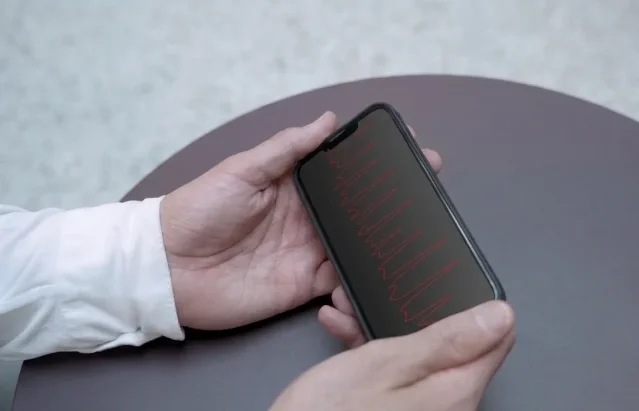
Hands holding a smartphone displaying a red cardiac waveform trace on a dark screen — the CORAI PPG-based heart rhythm monitor
CORAI PPG recording: patients record 30-second fingertip traces twice daily. Waveform irregularity distinguishes AF from sinus rhythm with sufficient accuracy to prompt proactive cancellation. 9
Results:
OutcomeMonitoring groupControl group
Same-day cancellation rate4.8%23.2%
Cancellations due to spontaneous cardioversion1.0%18.2%
Relative risk reduction (spontaneous SR-related cancellations)94.7%
Median patient age was 70 years; 99% of enrolled patients owned a smartphone. In the control group, 3 of the patients who had reverted to sinus rhythm proactively contacted the team to cancel. Most did not. 9
Clinical implication: A 94.7% relative reduction in spontaneous-SR cancellations is operationally relevant. The main limitation is that this was a single-center Swedish trial in a population with 99% smartphone ownership and median age 70 — factors that favor uptake. The conflict of interest from the device developer leading the trial warrants attention in any implementation context. The broader question is whether similar PPG-based pre-procedure monitoring could reduce cancellation burden in other elective cardiac interventions (e.g., ablation). Engdahl noted: "This is important because untreated atrial fibrillation increases the risk of stroke and heart failure" — the monitoring acts on utilization but the downstream stroke-prevention rationale is indirect; the trial was not powered or designed to assess stroke outcomes. 9

Cover image: Shutterstock / Weill Cornell Medicine (editorial use)

Add more perspectives or context around this Post.

  • Sign in to comment.