


The €14 billion hole: Parmalat, Calisto Tanzi, and the forgery that collapsed Europe's biggest dairy empire
24/6/2026 · 8:19

The €14 billion hole: Parmalat, Calisto Tanzi, and the forgery that collapsed Europe's biggest dairy empire

In December 2003, Bank of America confirmed that a €3.95 billion account at Parmalat's Cayman Islands subsidiary simply did not exist — exposing thirteen years and €14.3 billion in concealed debt. This case study traces how founder Calisto Tanzi sustained the fraud through double-billing, offshore shell companies, and forged bank confirmations; how the Italian government's emergency Marzano Law enabled Extraordinary Commissioner Enrico Bondi to orchestrate a debt-for-equity restructuring that wiped out shareholders while returning equity to 135,000 bondholders; and how Bondi's aggressive bank litigation recovered over $670 million in settlements. The article extracts four practitioner frameworks covering family-governance red flags, cross-border audit integrity, creditor power asymmetry, and BATNA erasure in fraud-driven bankruptcies.

On December 19, 2003, a single fax changed everything. Bank of America issued a public statement confirming that Parmalat's Cayman Islands subsidiary, Bonlat Financing Corporation, did not hold the €3.95 billion it claimed to have on deposit at the bank. The account, which had been certified by auditors as Parmalat's single largest cash asset, simply did not exist. Within hours, the Milan Stock Exchange suspended trading in Parmalat shares. Within days, Calisto Tanzi — the 65-year-old devout Catholic who had turned a tiny Parma deli into a global dairy empire — confessed to knowing about an €8 billion gap in the company's accounts. The final tally was worse: €14.3 billion in concealed debt, accumulated over thirteen years. The SEC called it "one of the largest and most brazen corporate financial frauds in history." 1

The parties, their stakes, and what they wouldn't say out loud

The Parmalat crisis involved at least five distinct negotiating parties, each with objectives, leverage, and hidden preferences that rarely aligned.
PartyStated objectiveReal leverageBATNAHidden preference
Calisto Tanzi (founder/CEO)Deny full knowledge; protect familyNone by Dec 2003PrisonKeep Parmatour family business intact
Enrico Bondi (Extraordinary Commissioner)Maximize recovery for creditorsGovernment backing + Marzano Law powersReturn company to insolvency courtPursue banks aggressively to inflate estate value
International banks (Citigroup, BofA, UBS, Morgan Stanley, Deutsche Bank)Deny enabling the fraudDeep pockets for settlementCostly multi-year litigationSettle quietly below headline damages
Bondholders (~135,000 individuals + institutions)Recover as much principal as possibleMajority approval needed for concordatoZero recovery if company liquidatedAccept equity over cash if company viable
Italian government (Berlusconi cabinet)Protect 36,000 jobs; limit political damageLegislative power to pass emergency decreeConventional bankruptcy = factory closuresUse Parmalat as test case for new insolvency law

From Parma to 30 countries: the rise of a dairy empire

Calisto Tanzi dropped out of university in 1961 at age 22, took over his family's Parma food shop, and then saw something on a trip to Sweden that changed his life: milk in a cardboard carton. He brought the UHT (ultra-high-temperature) pasteurization technology back to Italy, opened a small dairy plant outside Parma, and built a brand whose name — Parmalat, "milk from Parma" — would eventually appear in supermarkets across 30 countries. 2
By April 22, 2002, Parmalat's shares hit an all-time high, valuing the company at €3.7 billion. The business employed more than 36,000 people. Tanzi had sponsored the Brabham Formula 1 team, backed the Parma FC football club to a UEFA Cup win, and been awarded two Italian state honors — Cavaliere del Lavoro in 1984 and Cavaliere di Gran Croce in 1999. 3 His priest described him this way: "He's got that impulse in him to just say yes." 4
The expansion was real — but so was the cost. A 1987 bet on Odeon TV, an attempt to build Italy's third television network, lost roughly €45 million when the venture collapsed three years later. 2 Acquisitions in Latin America, Australia, and South Africa were funded partly through debt and partly, investigators later discovered, through fabricated receivables. If Parmalat's accounts had been honest, Parma investigator Vito Zincani concluded, "the company would have reported a loss every single year from 1990 onwards." 5
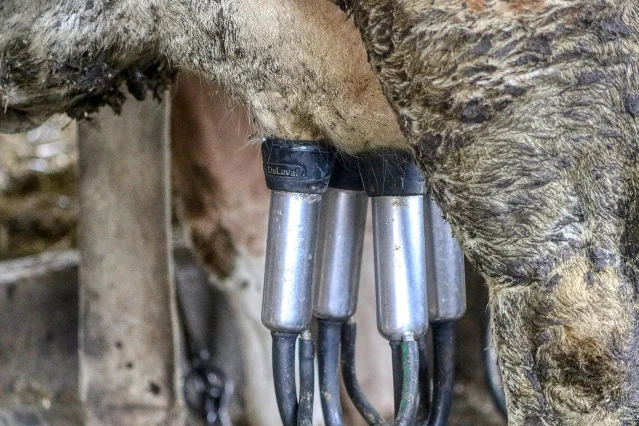
Industrial dairy milking operation — the mechanical precision of the industry Tanzi built, and then hollowed out
Industrial dairy milking: Parmalat's core UHT technology was genuine; the finances behind it were not. 2

The mechanics: how €14 billion stays hidden for 13 years

The fraud was not sophisticated. Milan's lead prosecutor Francesco Greco put it plainly: "What struck and surprises me is the simplicity. It was almost banal." 5
The core mechanism was circular: borrow from banks by showing fictitious assets; use the borrowed cash to pay interest on the existing debt; invent new assets to paper over the growing shortfall. Seven techniques kept the cycle going:
  • Double billing: the same goods invoiced twice to Italian supermarket customers, inflating accounts receivable. Former executive Claudio Pessina told prosecutors that up to 300 employees knew. 5
  • Caribbean shell companies: three entities that pretended to distribute Parmalat products, generating fictitious invoices that were then used as collateral.
  • Bonlat Financing Corporation (Cayman Islands): created in 1999 when the fraud needed a new home after auditor rotation forced changes at the parent. By 2002, Bonlat's fabricated assets had grown to roughly $8 billion.
  • A fake powdered milk trade: a transaction claiming that a Parmalat subsidiary sold 300,000 tons of powdered milk to a fictitious Cuban importer — with the proceeds notionally flowing through Singapore.
  • Epicurum (a Cayman Islands "investment fund"): invented to absorb the growing Bonlat receivables on paper.
  • Credit-linked notes: Parmalat effectively sold insurance on its own creditworthiness to itself, creating fictional asset entries.
  • False bond buybacks: the company claimed to have repurchased €2.9 billion of its own bonds. It had not. 1
The forged documents underpinning Bonlat's balance sheet — including the Bank of America account confirmation — were produced on an ordinary office scanner. 6 Class-action attorney Mel Weiss later observed: "They were doctoring documents in the most amateurish fashion, and yet got away with it for a decade. The auditors just accepted it willy-nilly." 4
The audit structure made this possible. Grant Thornton had audited Parmalat from 1990. When Italian law required auditor rotation in 1999, Parmalat and Grant Thornton-Italy shifted the questionable financial activity to Bonlat — which remained under Grant Thornton's oversight — while Deloitte & Touche took over the parent company's audit. 7 Deloitte certified the consolidated accounts. Grant Thornton certified Bonlat. Neither had full visibility into the other's work. The jurisdictional seam between Italy and the Cayman Islands was the fraud's primary structural protection.

Three decision points that defined the unraveling

February 2003: the bond announcement that wasn't

In February 2003, CFO Fausto Tonna — Tanzi's long-serving finance chief and a key architect of the offshore web — announced an unscheduled €300 million bond issuance. Markets panicked; Parmalat shares fell sharply. Tanzi cancelled the bond the next morning and fired Tonna on the spot. He then hired Alberto Ferraris, a 46-year-old former Citigroup banker, as the new CFO, billing the appointment as a signal of transparency. 5
Ferraris presented an optimistic picture to analysts in Milan — rising sales, controlled debt — because that was what the books showed him. Then he started asking questions that the old CFO's loyalists blocked. Interest payments were running far higher than the reported €5.4 billion debt would require. He couldn't get complete account access. He sent two trusted subordinates on a quiet survey of every Parmalat business unit worldwide. Their finding: total debt was approximately €14 billion, more than twice the official figure.
In October 2003, Ferraris confronted Tanzi directly. He expected Tanzi to tell him the numbers were wrong. Instead, Tanzi shrugged. "Eight billion, eleven billion, fourteen billion — it's all the same," Tanzi said. Ferraris recalled his reaction: "I was flabbergasted." And then: "If I'd known, I'd have stayed in Australia." 5
Ferraris did not immediately go public. He sought outside advisers and legal counsel. That six-week window — October to December 2003 — was the last moment when an orderly restructuring might have been possible.

December 9, 2003: the Blackstone meeting in New York

On December 9, Tanzi flew to New York with his son Stefano for what was ostensibly an exploratory conversation with Blackstone Group about a potential leveraged buyout. When Blackstone's team pointed to the company's large reported cash balances, Stefano Tanzi replied: "The cash was not there." 1 The Blackstone team immediately terminated the discussions and told Parmalat to disclose publicly.
Tanzi resigned as Chairman and CEO on December 15. Enrico Bondi arrived to take operational control on December 16. Three days later, Bank of America's denial broke in the press, and the Milan Stock Exchange suspended trading in Parmalat shares. 8

December 23–24, 2003: emergency legislation and bankruptcy filing

The Italian cabinet under Prime Minister Silvio Berlusconi responded within hours. On December 23, Industry Minister Antonio Marzano introduced emergency Decree Law 347/2003 — immediately dubbed the "Marzano Law" — which applied to any company with more than 1,000 employees and over €1 billion in debt. 9 The law was not drafted specifically for Parmalat, but Parmalat was its first beneficiary. Berlusconi stated simply: "The government couldn't sit still." 8
On December 24, Parmalat formally filed for bankruptcy. On December 27, Tanzi was arrested in Milan — investigators had discovered he had quietly left Italy — and taken to the 18th-century San Vittore prison. By December 29 he had confessed to knowing about roughly €8 billion in fictitious accounts and to having transferred approximately €500 million to family businesses, primarily Parmatour, the travel company run by his daughter Francesca. 10 On December 31, five more executives were arrested, including Tonna and two Grant Thornton auditors — Lorenzo Penca and Maurizio Bianchi. 11
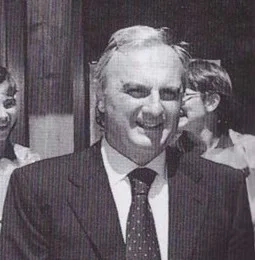
Calisto Tanzi, founder of Parmalat, photographed in 1996 — five years before the company's stock peak, seven years before his arrest
Calisto Tanzi (1996). He received Italy's highest business honor in 1984, and had both titles stripped by President Giorgio Napolitano after his convictions. 3

Bondi's restructuring: the administrator as negotiator

Enrico Bondi — born 1934, trained as a chemist, best known for unwinding the Ferruzzi industrial empire in the 1990s — took a two-track approach to the restructuring: stabilize the operating business while pursuing every potentially liable party in court.

The debt-for-equity swap

Under the Marzano Law framework, Bondi had 180 days to submit a restructuring plan to the Industry Ministry, which he did in June 2004. Minister Marzano approved the plan in early July. 12 The plan's core mechanism: approximately €12 billion in unsecured debt claims would be converted into equity in a newly incorporated "New Parmalat." Original shareholders were wiped out — their shares had already fallen by more than 95% before the suspension of trading. 13
The approximately 135,000 retail bondholders who had bought Parmalat paper — many of them Italian pensioners who had been steered into the bonds by their local bank branches — received equity worth only "a few cents on every euro" of their original investment. 14 Secured creditors (tax authorities, workers, trade suppliers) were paid in cash first.
The concordato mechanism under the Marzano Law required a majority of creditors to approve the plan, but — as Fitch Ratings analyst Edward Eyerman noted — creditors had no formal committee and no direct role in shaping it: "Without recourse to creditor committees, distressed borrowers are almost entirely dependent on bond trustees to present restructuring plans — often prepared by management with input from shareholders and banks but not bondholders." 15
On October 6, 2005, New Parmalat began trading on the Milan Stock Exchange. Its 1.6 billion shares opened at €3.15, giving it an initial market capitalization of roughly €5 billion. 16 In November 2005 shareholders elected Bondi as chief executive. Lactalis, the French dairy giant, acquired a majority stake for approximately €2.5 billion in 2011.

The litigation campaign: wins, losses, and the billion-dollar reversal

Bondi simultaneously filed suit against approximately 45 banks, alleging they had arranged 80% of Parmalat's debt while ignoring obvious signals of insolvency. 14 The strategy was explicit: extract value from the banks to inflate the estate, which in turn improved bondholder recovery. As one bondholder attorney put it: "The more value there is in the estate — for any reason — the better it is for us." 14
The results were mixed:
  • Morgan Stanley settled first, paying $188 million in June 2005 — it had helped arrange a $365 million bond sale for Parmalat just months before the collapse. 17
  • UBS paid €184 million and Credit Suisse paid €172.5 million in a combined €356.5 million settlement in mid-2008. 18
  • Deloitte paid €149 million in early 2007. 19
  • Bank of America — against which Bondi had claimed $10 billion — settled for $100 million in July 2009. The bank maintained that "no one at Bank of America knew or could have known of the true financial condition of Parmalat." 19
  • Citigroup was the catastrophic exception. A New Jersey jury found entirely for Citi in October 2008, awarding the bank $364.2 million on its counterclaim. By 2019, when Italy's Supreme Court confirmed the judgment as enforceable, the value of the shares comprising the award had grown to approximately €971.9 million ($1.1 billion). 20
Lady Justice and legal documents — the multi-jurisdiction litigation Bondi ran against 45 banks produced over $670 million in settlements but also a $1.1 billion loss to Citigroup
Bondi's litigation strategy recovered over $670 million from banks and auditors — but the Citigroup counterjudgment ultimately exceeded all settlements combined. 20

Criminal accountability: three courts, three sentences

Tanzi faced parallel criminal proceedings in Milan (securities fraud), Parma (fraudulent bankruptcy), and a separate Parmatour case.
  • Milan (December 2008): Tanzi convicted of fraudulent bankruptcy and criminal association; sentenced to 10 years. On appeal the sentence was confirmed, then reduced by Italy's Supreme Court (Corte di Cassazione) to 8 years, 1 month. Tanzi entered San Vittore prison on May 5, 2011. 21
  • Parma (December 9, 2010): The most significant verdict. The court convicted all 17 remaining defendants and sentenced Tanzi to 18 years, one of the harshest white-collar sentences in Italian legal history. 22 CFO Tonna received 14 years; Tanzi's brother Giovanni received 10 years, 6 months. The court also ordered defendants to pay back €2 billion to New Parmalat and roughly €30 million to some 30,000 defrauded investors. 23 Parma prosecutor Lucia Russo described the company as "the symbol of a sick system and the biggest debt factory of European capitalism." 22
  • Cassazione (March 7, 2014): Italy's Supreme Court confirmed 15 convictions and finalized Tanzi's Parma sentence at 17 years, 5 months. 24
Despite cumulative sentences that, on paper, approached 35 years across all proceedings, Tanzi served just over two years in actual custody before converting to house arrest. Italian prosecutors separately seized 19 artworks hidden at associates' homes in December 2009 — including works attributed to Van Gogh, Picasso, Monet, and Cézanne — valued at over €100 million. 3 They were auctioned in Milan in October 2019. Tanzi died of pneumonia on January 1, 2022, aged 83.
Cargando vista previa del enlace…

Frameworks you can use

Framework 1: The family-control governance red flags checklist

Academic researchers Andrea Melis (Corporate Governance: An International Review, 2005) and Buchanan & Yang (Research in International Business and Finance, 2005) identified a checklist of structural indicators that, in combination, should trigger forensic scrutiny of any family-controlled public company. 25 26
Parmalat hit every indicator:
  1. Triple role concentration — Tanzi was simultaneously founder, majority shareholder, Chairman, and CEO. No structural check existed on his decisions.
  2. Executive directors outnumber independents — Melis found that "the number of non-executive directors was smaller than the number of executive directors, thus impeding any effective probing of issues." 25 GovernanceMetrics International had already rated Parmalat 4 out of 10 on governance in July 2003 — five months before the collapse.
  3. Opaque ownership via holding companies — The Tanzi family controlled 51% of voting rights through a cascade of family vehicles (Coloniale, Hit, Zilpa), making a hostile takeover or shareholder rebellion structurally impossible.
  4. Rampant related-party transactions — The SEC complaint documented transfers of approximately €350 million to businesses owned by Tanzi family members. 1
For deal-makers: Run this checklist before any investment in or acquisition of a family-controlled company, especially in jurisdictions where minority-shareholder protections are weak. Score each indicator 0–2; a combined score above 6 warrants a forensic accountant before any term sheet.

Framework 2: The cross-border subsidiary audit integrity test

The Parmalat fraud exploited a structural gap created by auditor rotation: the parent switched to Deloitte in 1999, but the Cayman Islands subsidiary Bonlat stayed with Grant Thornton. Neither firm had complete visibility across the group. 7
Five diagnostic questions that would have caught Bonlat:
  1. Does a subsidiary in a zero-tax jurisdiction hold a disproportionate share of the group's reported cash? Bonlat, with no employees and no physical operations, supposedly held $4.9 billion in a single bank account — over half the group's reported liquidity.
  2. Has the primary auditor independently verified bank confirmations at every material subsidiary? Grant Thornton accepted a faxed Bank of America letter without contacting the bank directly.
  3. Did auditor rotation create a subsidiary continuity exception? When the parent rotates auditors, confirm that no key subsidiary retained the departing firm.
  4. Do intercompany transactions cross three or more jurisdictions? Italian funds flowing to a Brazilian unit, through a Cayman account, into a Santander Malta entity, then back as "receivables" — each hop is a red flag.
  5. Can the primary auditor obtain unrestricted access to all subsidiary work papers? If the answer is no, the consolidated audit opinion is unsupported.
For deal-makers: In any M&A due diligence or ongoing audit committee review of multinationals, make these five questions standing agenda items. A single "no" answer is grounds for a separate forensic review before signing.

Framework 3: Creditor power asymmetry — using the Marzano Law model

The Marzano Law restructuring was, at its core, an exercise in asymmetric negotiation: Bondi held almost every structural advantage over the creditor class, and he used each deliberately. 15
The five tactics and their deal-making counterparts:
Bondi's tacticWhat it achievedGeneralizable lesson
Emergency legislation = automatic stayFroze all creditor claims instantly, preventing a run on assetsControl the procedural clock before engaging on substance
Single administrator, not a committeeEliminated internal disagreement; one decision-maker moved fasterCentralize decision authority before negotiations begin
Super-priority bridge financingNew lenders ranked above existing debt, ensuring working capital without creditor consentWhoever controls new-money terms controls restructuring outcomes
Marzano Law + Italian insider-dealing rulesJustified withholding information from creditor groupsKnow which regulatory constraints serve your position; invoke them strategically
"Public interest" framing (jobs, communities)Gave government political cover; muted bondholder criticism in pressIn large-employer restructurings, the social narrative is leverage
The cost: creditors accepted these asymmetric terms because their alternative — liquidation — would have returned close to nothing. That BATNA erasure was Bondi's most powerful tool. When any party's BATNA is near-zero, the range of acceptable outcomes expands dramatically in the other side's favor.

Framework 4: The BATNA erasure pattern in fraud-driven bankruptcies

Across the Parmalat case, BATNA erasure happened in layers — and each layer changed a party's behavior in ways that made the fraud easier to sustain.
Layer 1 — Creditors' BATNA at the moment of collapse: With the company's real assets uncertain and litigation risk high, liquidation offered near-zero recovery. That forced creditors to accept Bondi's terms.
Layer 2 — Banks' BATNA in settlement negotiations: Bondi's lawsuits sought amounts — up to $10 billion from Citigroup and Bank of America — that were unrealistic but created an enormous shadow over each bank's litigation exposure. The gap between the claim and any reasonable settlement was so wide that banks faced a credible threat even if they believed they would ultimately win. Morgan Stanley settled first, establishing a template. 17 Each subsequent settlement raised pressure on the remaining defendants — a classic sequential-settlement dynamic.
Layer 3 — Tanzi's BATNA at every stage of the fraud: As long as new financing was available, Tanzi's alternative to continued fraud was immediate exposure and collapse. Investigator Zincani described the logic precisely: "It was a reversal of logic... they had to grow to hide the debt." 5 Every successful bond issuance removed the pressure to stop. The fraud grew not because Tanzi was reckless, but because stopping had become structurally more costly than continuing.
For deal-makers: When evaluating a distressed counterparty's position, the first question is not "what do they want?" but "what happens to them if this deal does not close?" A counterparty with an erased BATNA will accept terms they would otherwise reject — but they will also stay at the table indefinitely, extracting concessions, because walking away is worse. Understand which condition your counterparty is in before setting your opening position.

What to remember

  • Auditor rotation without subsidiary continuity checks creates structural blind spots. Parmalat's fraud survived a mandatory rotation because Grant Thornton-Italy stayed on the Cayman subsidiary. Any M&A or audit committee review involving subsidiaries in low-tax jurisdictions should treat cross-auditor gaps as a distinct risk category.
  • A governance score below 5/10 is not a yellow flag — it is a red one. GovernanceMetrics International rated Parmalat 4/10 five months before the collapse. That score was publicly available. Investors who acted on it avoided the losses; those who did not lost everything.
  • In distressed restructurings, controlling the procedure is more valuable than controlling the substance. Bondi's primary advantage was not his negotiating skill or his knowledge of the business — it was the Marzano Law's automatic stay, single-administrator structure, and insider-dealing rules that kept creditors from coordinating. Whoever drafts the process rules wins the negotiation.
  • Sequential settlement dynamics in litigation are self-reinforcing. Morgan Stanley's $188 million settlement in 2005 did not end pressure on the remaining banks; it intensified it. When you are one of multiple defendants in a high-profile case, the question of whether to settle early or hold out depends entirely on what you expect the others to do — and what a jury will believe after seeing the first settlement announced.

Cover image sourced separately by production.

Contenido relacionado

Añade más opiniones o contexto en torno a este contenido.

  • Inicia sesión para comentar.