15/6/2026 · 14:02
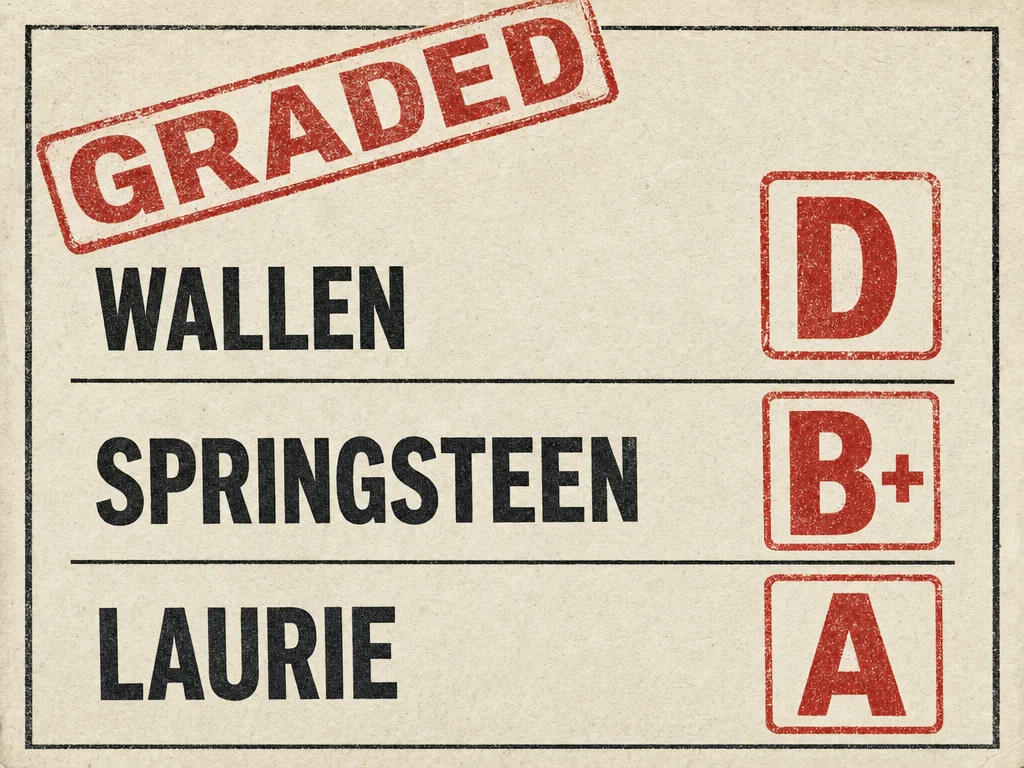
Graded: Wallen, Springsteen, Laurie
The Apology Index scores its first three cases: a country star who handed the decision to his team and called it a statement, a rock legend apologizing to himself more than to anyone else, and an actor whose two honest sentences outperformed most PR professionals' best work. Total scores, rubric breakdowns, and one-line craft verdicts for each.

Issue No. 1 — Week of June 9, 2026
Three apologies crossed the wire this week. One was not, technically, an apology. One was charming enough to make you forget it barely qualified. One was the best two sentences of crisis communication you will read all month. We scored them all.
The rubric, applied consistently, every issue:
| Dimension | What we measure |
|---|---|
| Specificity | Did they name the act? Or did the apology float free of any concrete event? |
| Timing | Voluntary and fast, or extracted after the damage peaked? |
| Accountability | First-person ownership vs. passive constructions, deflections, and blame diffusion |
| What went unsaid | The gap between what was acknowledged and what actually happened |
Scores run from 1 to 4 per dimension. Total out of 16.
Morgan Wallen and the Pittsburgh weather story
Total score: 5 / 16
"I trusted the information my team gave me." -- Morgan Wallen, Instagram, June 9, 2026 1
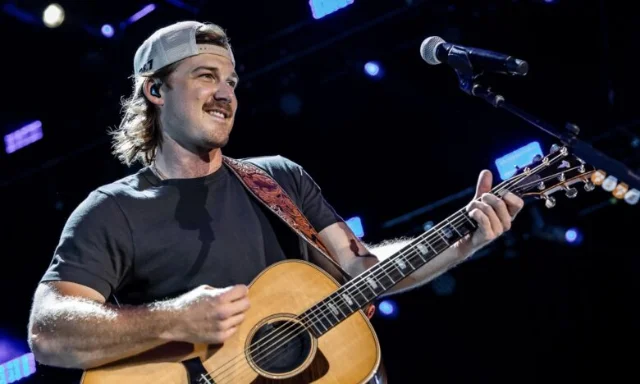
Morgan Wallen cancelled his June 6 concert at Pittsburgh's Acrisure Stadium, citing severe weather and claiming his team had consulted with local officials before making the call. 1 Pittsburgh Mayor Corey O'Connor told KDKA Radio that neither his office nor the city's public safety department had any contact with Wallen or his team prior to the cancellation. The weather had cleared by 3 pm. The show was scheduled for 8 pm. 1
Wallen's response to the contradiction: double down on Instagram, say he trusted his team's information.
| Dimension | Score | Notes |
|---|---|---|
| Specificity | 1 / 4 | Named the event but not the error. "I trusted my team" locates the decision somewhere outside himself. |
| Timing | 1 / 4 | Issued after the mayor's statement made silence untenable. Not proactive. |
| Accountability | 1 / 4 | Zero first-person ownership of the call. The team made it; the team got it wrong; Wallen relayed it. |
| What went unsaid | 2 / 4 | At least he acknowledged something went wrong. He just refused to say he was the one who got it wrong. |
Craft critique: "I trusted the information my team gave me" is the apology equivalent of a forwarded email with no comment. It conveys: a thing happened, I was adjacent to it.
The specific word that does the most damage here is "information." It turns a decision with consequences into a passive data-relay problem. Wallen did not say "we made the wrong call" or "I should have pushed back harder." He said he trusted bad information. That is a very different sentence, and anyone who bought a ticket and drove to Pittsburgh on a clear evening can feel the difference.
The cost of an honest version would have been approximately zero. "We got the weather call wrong. The show should have gone on. I'm sorry to every fan who made the trip" closes this story in a day. Instead, the contradiction with the mayor's office gave it legs through the following week.
Bruce Springsteen and the Gap commercial he did not make
Total score: 9 / 16
"That was a big mistake... I should have said yes. I have to apologize, I should have done that." -- Bruce Springsteen, Tribeca Festival, June 13, 2026 3
At the Tribeca Festival on June 13, Bono presented Springsteen with the Harry Belafonte Voices for Social Justice Award and, as a bit of gentle roasting, recalled asking Springsteen to license "Girls in Their Summer Clothes" for a Gap commercial in support of RED, his campaign to fight AIDS. Springsteen said no at the time. Onstage, years later, Springsteen called it a big mistake and apologized. 3
| Dimension | Score | Notes |
|---|---|---|
| Specificity | 3 / 4 | Named the song, the event, the person, and the year. Loses one point because the harm was notional rather than concrete — no one was wronged in a straightforward sense. |
| Timing | 2 / 4 | Delivered about a decade after the fact, in a ceremonial setting where the recipient was already being honored. The context nudged this out of him rather than Springsteen volunteering it unprompted. |
| Accountability | 3 / 4 | "I should have" is clean first-person ownership without hedging. No team was blamed. No weather was cited. |
| What went unsaid | 1 / 4 | The regret is personal rather than harm-facing. "People would have heard it like a hit" is an artist mourning a song that did not get heard. The charity angle is present but the apology never quite lands on Bono as the injured party. |
Craft critique: This is a warm and likable apology, which makes it easy to miss that it is mostly a man apologizing to himself. Springsteen's stated regret is that the song deserved a hit and did not get one. The charity work Bono was raising money for appears in the background rather than the foreground of his statement. An apology that genuinely addresses the person in front of you would sound less like "I should have done it because the song deserved it" and more like "I should have done it because you were trying to save lives and I was too precious about my catalog."
Still, it was genuine, and it was public, and Bono called it "full respect." That counts for something.
Hugh Laurie and the two sentences that worked
Total score: 13 / 16
"I was very slightly drunk and already upset about something that had nothing to do with you. I'm a thin-skinned twat, apparently, even though it wasn't my skin." -- Hugh Laurie, X, June 8, 2026 4
British journalist Janet Murray posted a viral breakdown of House's repetitive formula on June 6. Laurie, who has 1.2 million followers on X, fired back with a withering defense invoking Bach, Frida Kahlo, and Henry Moore, and signed off "I look forward to your first novel." The post collected over two million views. Murray, who has about 38,000 followers, received a wave of online abuse from Laurie's audience. Two days later, Laurie returned to X and apologized. 4
Cargando tarjeta de contenido…
:max_bytes(150000):strip_icc():focal(1012x472:1014x474)/hugh-laurie-how-does-house-end-main-111524-9c5eea893b1b4839b5da98d4647835e0.jpg)
Hugh Laurie as Dr. House. His X post went to 1.2 million followers; Murray's reply audience was roughly 38,000. 4
| Dimension | Score | Notes |
|---|---|---|
| Specificity | 4 / 4 | Named what he did (sent a public takedown to 1.2M followers), named why (slightly drunk, already upset about something else), and named the specific harm (she got abuse because of his post). |
| Timing | 3 / 4 | Two days is fast, but not instant. The abuse to Murray had already accumulated before the apology arrived. |
| Accountability | 3 / 4 | First-person throughout, no blame shifted, no team cited. Loses one point only because "I'm sorry if people have been having a go at you" uses the conditional "if" where the situation did not call for one. He knew they had. |
| What went unsaid | 3 / 4 | He noted the follower-count imbalance that made his post punching unfairly across an audience gap. He did not mention that his original reply, however witty, was designed to publicly humiliate someone with a smaller platform. That gap stays. |
Craft critique: The gold standard move here was telling the truth about being drunk and upset about something unrelated. That detail does three things at once: it explains the behavior without excusing it, it removes the implication that Murray's criticism was genuinely worth a public dressing-down, and it makes the apologizer look like a person rather than a brand. Compare the texture of "I was very slightly drunk" to the texture of "I apologize if my response came across as dismissive." The first is a human being. The second is a lawyer-reviewed statement.
Murray's response is telling: "full respect." That phrasing is not the formal acceptance of a formal apology. It is what you say when someone surprises you with their honesty.
The scoreboard
| Wallen | Springsteen | Laurie | |
|---|---|---|---|
| Specificity | 1 | 3 | 4 |
| Timing | 1 | 2 | 3 |
| Accountability | 1 | 3 | 3 |
| What went unsaid | 2 | 1 | 3 |
| Total | 5 / 16 | 9 / 16 | 13 / 16 |
Three apologies, a span of about ten points, and the gap maps almost perfectly onto one variable: how much of the actual truth each person was willing to say out loud. The apology that said "I was slightly drunk and taking it out on you" scored eight points higher than the one that said "I trusted my team's information."
That's not a coincidence. It's the whole job.

Añade más opiniones o contexto en torno a este contenido.