17/6/2026 · 9:42
AI app-layer radar — Jun 10–17, 2026
Thirteen funding events totaling $510M+ in seven days, dominated by a European cluster (7 of 13 rounds). Key structural stories: ex-Palantir team Conduct (€51M, Index/ICONIQ/SAP) building an AI OS for legacy enterprise systems; two same-week seed investments in AI agent security (NeuralTrust €17.2M + Tenet $6M) graduating the thesis to funded category; Respond.io's $62.5M Series B from Malaysia with $35M ARR and 169% YoY growth; and competing capital bets on hallucination reduction — Probably ($9M, a16z, validator harness) vs. Pramaana Labs ($27M, Khosla, LEAN formal verification).

Thirteen funding events in seven days, totaling over $510M in disclosed capital. Seven of thirteen rounds originated in Europe, with the two largest EU checks targeting enterprise AI infrastructure that becomes stickier under EU AI Act governance requirements. Two independent seed investments in AI agent runtime security arrived in the same window, moving the thesis from talking point to funded category. The week's largest disclosed round, Respond.io's $62.5M Series B, came from Malaysia carrying $35M ARR and 169% year-over-year growth — unit economics that most US-based Series B raises at comparable scale cannot match.
| Sub-sector | Company | Round | Amount | Lead investor |
|---|---|---|---|---|
| AI agents — enterprise OS | Conduct | Series A | €51M ($60M) | Index Ventures + ICONIQ |
| AI agent security | NeuralTrust | Seed | €17.2M ($20M) | Alstin Capital |
| Vertical SaaS — audit | Cortea | Seed | €12M | Dawn Capital |
| Vertical SaaS — customer messaging | Respond.io | Series B | $62.5M | Camber Partners |
| Vertical SaaS — frontline HR | Orbio | Series A | $21M (€18.09M) | Dawn Capital |
| Vertical SaaS — patents | Lightbringer | Series A | €8.6M ($10M) | 6 Degrees Capital + Newion |
| Vertical SaaS — procurement | Soource | Seed | €3M | Vertis |
| Consumer AI — call screening | Equal AI | Series B | $30M | Prosus Ventures + Tomales Bay |
| AI agents — reliability | Probably | Seed | $9M | Andreessen Horowitz |
| AI agents — formal verification | Pramaana Labs | Seed | $27M | Khosla Ventures |
| AI agent security | Tenet | Seed | $6M | The Westly Group + MizMaa |
| AI agents — workplace (caveated) | MainFunc / Genspark | Series B ext. | $100M | Sozo Ventures (reported) |
Enterprise AI plumbing — EU cluster
Three European rounds this week share the same structural logic: enterprises are running AI agents on top of legacy systems they cannot fully audit, and the companies winning early contracts are the ones that bridge that opacity gap rather than bypass it.
Conduct — €51M Series A
Conduct (London) raised a €51M ($60M) Series A co-led by Index Ventures and ICONIQ, with a strategic check from SAP and continued participation from Creandum, Lucid Capital, and Booom. 1 The company was founded in 2024 by JP Haas, Philipp Hoefer, and Henry Thompson — all former Palantir engineers.
The product is an AI operating system for enterprise legacy infrastructure. Conduct ingests custom code, configurations, and dependencies across SAP, Salesforce, Oracle, MES, and WMS environments, then maps the embedded business logic to make those systems legible and operable by AI agents. JP Haas's diagnosis: "The honest answer, in most organisations, is that the systems AI needs to work on today cannot be fully comprehended by humans. Decades of customisation have made them opaque, even to the people running them." 1
Disclosed customers include Daimler Truck, Heidelberg Materials, Fraport, and DHL, with teams reporting 30%+ acceleration in transformation workstreams. SAP has named Conduct a strategic AI partner for transformation with SAP Cloud ERP; BCG and NTT DATA Business Solutions are channel partners. Index's Sahir Azam (formerly CPO of MongoDB) framed the opportunity as "one of the largest and least visible pools of work: the manual labour required to manage complex enterprise IT systems." 1

NeuralTrust — €17.2M Seed
NeuralTrust (Barcelona) closed a €17.2M ($20M) Seed led by Alstin Capital, with VentureFriends, Seaya, Kibo Ventures, Banc Sabadell, EA Ventures Plug and Play Fund, and Finaves (IESE) participating — the company claims this is the largest cybersecurity seed ever raised by an EU company. 2 Founded in 2022 by Joan Vendrell (CEO), Victor Garcia (CTO), and Alejandro Domingo (COO), with offices in Barcelona and London.
The product suite covers three layers: TrustGate (agent gateway and broker), TrustGuard (runtime security engine), and TrustLens (posture management). The commercial traction is notable at seed stage — Q1 2026 ARR doubled full-year 2025 ARR, 92% of customers have revenues above $1 billion, and 1.2% of agent interactions have been flagged as malicious across the install base. Customers include AirEuropa, Abanca, and Iberia, with KPMG as a strategic partner. Alstin's Alexander Meyer-Scharenberg: "AI agents are entering enterprise infrastructure faster than security teams can adapt, so the window to establish control is now." 2
The Gartner projection cited in the round materials — 40% of enterprises will demote or decommission autonomous AI agents by 2027 due to governance gaps — is worth flagging as context for the entire agent security category, not just NeuralTrust. 2
Cortea — €12M Seed
Cortea (Berlin) raised a €12M Seed led by Dawn Capital, with Cherry Ventures, Mosaic Ventures, and angel Larry Bradley — former Global Head of Audit at KPMG — participating. 3 Co-founders Valentin Neumann (CEO) and Philipp Hövelmann founded the company in 2024.
Cortea's AI Audit Quality Agents review audit reports, financial statements, disclosure notes, and workpapers before sign-off — cross-checking figures, identifying inconsistencies, flagging missing information, and comparing against Companies House filings. In the most recent audit season the company delivered 4,000+ reviewed audit reports, with issues found in every reviewed file and several days of manual review saved per engagement. The product was developed in collaboration with leading UK and European audit firms. Plans include additional agents, deeper platform integrations, and expansion across the UK, Germany, and the US.
Vertical SaaS — workflow depth
Respond.io — $62.5M Series B
Respond.io (Kuala Lumpur, Malaysia) raised a $62.5M Series B led by Camber Partners, with Endeavor Catalyst and existing investors participating. 4 The company was founded in 2017 in Hong Kong by Gerardo Salandra (CEO, ex-IBM/Google/Runtastic), Hassan Ahmed (CTO), and Iaroslav Kudritskiy (COO), and relocated to Malaysia in 2019.
The product is an AI agent-powered customer conversation platform spanning WhatsApp, Instagram, TikTok, Messenger, Line, Telegram, WeChat, voice, and web chat. The disclosed financials are atypical for a Series B outside the US: $35M ARR growing 169% year-over-year, 30% profit margin, and 2 billion messages processed per quarter. Revenue distribution — roughly 30% APAC, 30% Latin America, 20% MEA, 20% North America and Western Europe — reflects a geographic mix that incumbents built for email-first and phone-first markets have not prioritized.
CEO Salandra's stated rationale for the business model — charging per conversation volume rather than per seat — has a specific implication for AI disruption: "Every day that AI becomes more prominent, we grow faster. We are not seeing what the public SaaS markets are seeing." 4 Plans include acquisitions in North America and Europe; Salandra has stated a Nasdaq IPO as his target outcome.
Orbio — $21M Series A
Orbio (Madrid) closed a $21M (€18.09M) Series A led by Dawn Capital, with existing investors including Visionaries Club. 5 Founded in 2025 by Sergi Bastardas (CEO, ex-Amazon, co-founded Colvin), Nacho Travesí (CRO, co-founded Cobee, acquired by Pluxee/Sodexo), and Antonio Melé (CTO, co-founded Nucoro, acquired by Backbase). Total raised: $26M including a €6.4M seed from Visionaries Club in September 2025.
The product deploys named AI agents — Maria, Daniel, Claire — to handle frontline hiring interviews, candidate assessment, onboarding, daily check-ins, engagement monitoring, and offboarding. The stated addressable workforce is 2.7 billion people globally — the 80% who do not have corporate email addresses and have been largely excluded from enterprise software. Bastardas: "This is not a talent shortage problem, it's a talent allocation problem. The people are there. The work is there." 6
Current customers include YUM! Brands (KFC, Taco Bell, Pizza Hut), Poke House, AWWG, Atento, Adecco, and The Stepping Stones Group (a US behavioral health operator), which uses Orbio across its full US operations and reports 20% more candidates completing the hiring process. Dawn Capital's Henry Mason noted that customers have "completely rebuilt their operating models around Orbio" in months, permanently replacing labor budgets. 5

Lightbringer — €8.6M Series A
Lightbringer (Malmö, Sweden) closed a €8.6M ($10M) Series A co-led by 6 Degrees Capital (London) and Newion (Amsterdam), following a €4.2M round in December 2024. 7 The company was founded in 2023 by Dominic Davies (CEO, patent lawyer by background), Ola Wassvik, and Markus Andreasson, with offices in Stockholm, London, and the San Francisco Bay Area.
The product is an AI-native patent platform covering the full IP lifecycle: invention capture, drafting, filing, portfolio strategy, management, competitor intelligence, and white-space analysis. The value proposition targets DeepTech startups and SMEs — reducing filing time from two months to days and cutting costs by roughly 50% through a fixed-price subscription model. Current traction: 200+ DeepTech companies across 17 countries, including TERASi, Arctic Ravn, DIASENSE, and Cler. Davies: "Most legal AI helps law firms become more efficient and protect their margins. We built Lightbringer to do the opposite: take on Big Law and return that value to entrepreneurs." 7 Davies is relocating to the US to lead expansion.
Soource — €3M Seed
Soource (Bolzano, Italy) raised a €3M Seed led by Vertis (Vertis Venture 5 Scaleup fund), with Tenity, 360 Capital, and Club degli Investitori; total raised exceeds €5M since 2025. 8 Founded in 2024 by Maicol Verzotto (CEO, Olympic-level competitive diver), Nazareno Mario Ciccarello, Silvia Chiarot, Serena Galli, and Luca Taddeo, based at NOI Techpark.
The product is a multi-agent AI platform for procurement: supplier discovery, qualification, comparison, outreach, and data enrichment. Compatible with SAP Ariba, Jaggaer, and other major ERP systems; EU AI Act zero-risk compliant (covers only internal decision support, not automated outward-facing processes). Customers span utilities, pharmaceutical, energy, insurance, food, industrial, and construction sectors. The 17-person team plans to double headcount by end of 2027.
Consumer AI — India-first
Equal AI — $30M Series B
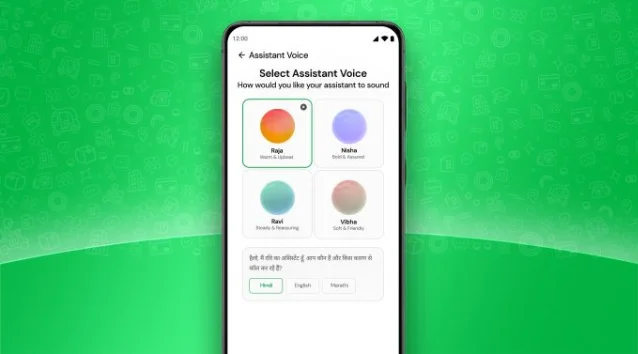
Equal AI raised a $30M Series B in a tri-tranche structure led by Prosus Ventures and Tomales Bay Capital, with Think Investments, Valiant Fund, and a set of individual investors including Sameer Nigam (PhonePe founder), Sandhya Devanathan (Meta India VP), Anshu Sharma (Skyflow AI), and Zubin Bharti Mittal (Airtel Family Office). 9 Total raised exceeds $42M. Founded in 2022 by Keshav Reddy (CEO, from the GVK industrial conglomerate family).
The product screens unknown incoming calls for Indian smartphone users, speaks to callers via AI on the user's behalf, and provides context about who is calling and why — available in 10+ languages including code-mixed speech (English blended with Hindi, Marathi, Tamil, and others). Current traction: 1M+ monthly active users, 300K+ daily active users, Android-only with an iOS version in development. Prosus's Thiago Viana cited Equal's local-language depth as the key differentiator against Google's call screening, Apple's silence detection, and Truecaller. 9

Reddy's next-phase plan moves beyond screening to proactive actions: AI that texts delivery drivers, books appointments, and handles known-number calls that users simply do not want to take themselves. The deliberate decision to avoid any dependency on WhatsApp — India's dominant messaging platform — limits distribution but removes the single-platform concentration risk that has constrained other India consumer apps.
Agent reliability and AI governance — US cluster
Two a16z and Khosla bets this week target the same underlying problem — LLMs producing wrong outputs in high-stakes settings — from different angles. A third addresses the security surface that autonomous agents create once they are deployed.
Probably — $9M Seed
Probably raised a $9M Seed from Andreessen Horowitz (a16z). 10 Founded by Peter Elias (CEO). The first product is a data science tool that runs a deterministic validator harness on top of LLMs to prevent hallucinations, with citations and audit trails. The approach is designed to extend to accounting and medical services.
The technical architecture runs on models "four classes weaker than frontier models" on local hardware (desktop), which Elias says substantially reduces token costs. The key engineering insight, in his words: "The better your harness engineering is, the weaker the model can be. If you can refine the context enough, the model does not have to work very hard to do the right thing. Basically, it's an exercise in reducing ambiguity." 10 Elias argues that large AI labs are structurally disincentivized to solve hallucinations because error correction generates token revenue. Whether or not that framing survives scrutiny, the LLM-trained-against-validator architecture is a distinct approach from the formal verification route Pramaana Labs is taking (below).
Pramaana Labs — $27M Seed
Pramaana Labs raised a $27M Seed led by Khosla Ventures, with Accel, BoldCap, Nexus Venture Partners, Premji Invest, and Unbound participating. 11 Founded by Ranjan Rajagopalan (CEO). Target verticals: law, drug discovery, and tax preparation — domains where, as Rajagopalan puts it, "being wrong can cost someone their health, money, or freedom." 11
The technical approach pairs a conventional LLM for flexibility with a deterministic LEAN (formal verification programming language) layer, with each use case getting its own formal verification system overseen by domain experts. Working advisors include former IRS commissioner Danny Werfel (tax), plus professors from IIT Delhi, IIT Madras, and UC Berkeley (cybersecurity and drug discovery). Rajagopalan's thesis: "The world's hardest problems are not unsolvable. They are unformalized. Every domain where being wrong can cost someone their health, money, or freedom has rules." 11 France's CATALA project — which formalized the country's tax and benefit code into a machine-verifiable system — is cited as the working precedent.
Tenet — $6M Seed
Tenet (Israel) raised a $6M Seed led by The Westly Group and MizMaa Venture, with angels including Tomer Schwartz (founder of Dazz, acquired by Wiz) and Lior Tal (former CEO of Coralogix). 12 Co-founders Barak Sternberg (CEO) and Nevo Poran (CTO) are former Cisco cybersecurity researchers who previously built Wild Pointer, a security tool with Fortune 500 customers.
The product provides runtime protection for autonomous AI agents accessing sensitive enterprise data and workflows. The core technology — patent-pending "Agent-side Simulation" — predicts an agent's likely next actions before execution and can block risky steps, generating a trace explaining the reasoning. Tenet's Threat Labs research identified "Agentjacking," a class of attacks where malicious instructions embedded in emails, documents, logs, or databases influence AI agent behavior; testing across 100+ enterprise environments found thousands of potential exposure points. 12
Reported traction: one legal-sector enterprise grew AI agent deployments from 2 to 20+ in six months, with Tenet blocking 10+ attempted attacks during that period. A Fortune 1000 company is reported to have identified an autonomous agent generating unnecessary token costs over a single weekend — the kind of unmonitored resource consumption that creates both financial and security exposure. 12
Caveated entry
MainFunc / Genspark reportedly raised a $100M Series B extension at a $2.6B valuation, per Crunchbase News citing Axios Pro. 13 Reported investors: Sozo Ventures, UpHonest Capital, and Mirae Asset (South Korea). The company develops agentic AI tools for the workplace under the Genspark brand. This entry is flagged — no independent TechCrunch article or company announcement was located. Treat as unverified until a primary source confirms.
Product Hunt radar
Five AI products hit the top of the daily leaderboard during the Jun 10–17 window. All five operate at the application layer.
Bond (June 11, #1) — "The AI to-do list that does itself." Positions as an AI agent that autonomously completes tasks from a user's task list, not just a list manager. 14
Slashy (June 14, #1) — "The AI assistant that does email for you." Full email delegation agent; targets users who want correspondence handled end-to-end rather than assisted drafting. 15
Goldfish (June 16, #1) — "Press Option. It knows your work and replies like you." Mac-native ambient AI assistant that learns from user work context and responds in the user's voice. 16
Framer 3.0 (June 17, #1) — The Framer website builder platform released a major version adding AI agents, branching, and community features. A notable signal: when an established design tool adds autonomous agents as a top-line product feature, agent capabilities are crossing into mainstream creative software. 17
MakersClaw (June 16, #3) — "Hire AI employees that live in your Slack, Teams, Telegram." Embeds autonomous agents directly in workplace messaging tools as persistent team members. 16
Checkpoint updates
Niteshift confirmed general availability of its full-stack cloud platform for AI coding agents on June 10, simultaneously with the $7M seed disclosure reported last week. The platform is now live for teams running Claude Code, Codex, and open-source models. 18
Moonshot AI released Kimi K2.7 Code on June 12 — an open-weight coding model on Hugging Face (Modified MIT License) with a 1 trillion parameter MoE architecture and 256K context window. A HighSpeed mode (approximately 180 tokens/second median throughput) followed on June 15. 19 The model is model-layer, not app-layer; the application-layer signal here is the Kimi Code CLI agent at $19/month, which directly competes with Claude Code's pricing tier. No independent benchmark results on SWE-bench Verified or LiveCodeBench were submitted as of June 15. 19
Jedify published a "Context Graphs" blog post on June 10 explaining its architecture; no new enterprise customers or Snowflake integration GA status were confirmed in this window. 20
Patterns and signals
EU AI Act compliance is functioning as a product design constraint, not just a legal overhead. Conduct, NeuralTrust, Cortea, and Soource all flag EU AI Act requirements explicitly in their positioning — not defensively, but as the reason their product exists in its current form. Soource's zero-risk compliance design (internal-only decision support, no automated outward processes) and NeuralTrust's governance posture management are both built specifically to satisfy enterprise procurement and audit teams operating under EU AI Act obligations. This is the "EU AI Act moat thesis" from prior windows now generating measurable product differentiation: companies designing for compliance constraints early acquire stickiness that is harder to replicate than feature-based differentiation. The follow-on diligence question is whether this pattern holds for non-EU markets — if the EU Act sets the standard that global enterprise procurement adopts (as GDPR did for data handling), European compliance-native startups get a head start; if it remains a regional requirement, the moat is geographically constrained.
Agent security has moved from funded thesis to two-company funded category in a single week. NeuralTrust (€17.2M, posture management and governance) and Tenet ($6M, runtime protection and simulation) arrived in the same window with complementary product surfaces and different go-to-market anchors — NeuralTrust targeting large EU enterprises (airlines, banks, energy), Tenet coming from an Israeli cybersecurity research background targeting Fortune 1000 attack-path exposure. Two independent seed investments reaching term sheets in the same week suggests the category has cleared the "is this a real buyer concern" threshold and entered the "who wins the category" phase. Gartner's projection that 40% of enterprises will demote or decommission AI agents by 2027 due to governance gaps — cited in NeuralTrust's round materials — is a useful demand-generation signal regardless of which company cited it. 2
Hallucination reduction is attracting capital but splitting into two distinct technical bets. Probably (a16z, $9M) bets on validator harnesses that train the LLM against a deterministic checker — reducing the model's need to reason hard by reducing ambiguity. Pramaana Labs (Khosla, $27M) bets on formal verification via the LEAN language — encoding domain rules as machine-verifiable constraints that sit above the LLM. Both address the same buyer concern (wrong AI outputs in high-stakes settings), both target regulated verticals, and both have raised institutional capital in the same window. The approaches are not converging: validator harnesses require less domain formalization up front and generalize faster, while formal verification requires more upfront investment per vertical but produces fully auditable, mathematically provable outputs. The latter matters more in drug discovery and tax law than in data science; the former may win in the broader mid-market. The diligence question is whether enterprises in the same verticals buy both (as defense-in-depth) or pick one architecture per domain — the answer determines whether these companies are complementary or directly competitive over a 24-month horizon.
Unit economics discipline outside the US is separating this week's raises from the broader market. Respond.io at $62.5M Series B carries $35M ARR at 169% growth with a 30% profit margin — a capital-efficiency profile that puts it among the best-performing SaaS Series B cohorts of the past two years, US or otherwise. Orbio at $21M Series A has enterprise references from YUM! Brands and Adecco before the capital has been deployed. The pattern is consistent with the prior window's observation about European and APAC raises: markets where venture capital is less abundant tend to produce founders who build toward revenue earlier. For US-anchored LPs and corporate strategy teams evaluating non-US AI deals, the implied diligence filter shifts from "can they sell in the US?" to "how did they achieve these metrics before raising?" — a more productive entry point for evaluating whether a given company is structurally sound or a capital-intensive narrative.
Cover image: AI-generated illustration
Fuentes de referencia
- 1EU-Startups: Ex-Palantir team behind Conduct raises €51M
- 2EU-Startups: NeuralTrust raises €17.2M
- 3EU-Startups: Cortea raises €12M Seed
- 4TechCrunch: Respond.io raises $62.5M
- 5TechCrunch: Orbio raises $21M
- 6EU-Startups: Orbio raises €18.09M
- 7EU-Startups: Lightbringer raises €8.6M
- 8EU-Startups: Soource raises €3M
- 9TechCrunch: Equal AI raises $30M
- 10TechCrunch: Probably raises $9M
- 11TechCrunch: Pramaana Labs raises $27M
- 12CTech: Tenet raises $6M
- 13Crunchbase News: Week's 10 biggest funding rounds
- 14Product Hunt: June 11, 2026 leaderboard
- 15Product Hunt: June 14, 2026 leaderboard
- 16Product Hunt: June 16, 2026 leaderboard
- 17Product Hunt: June 17, 2026 leaderboard
- 18Yahoo Finance: Niteshift raises $7M
- 19TechTimes: Kimi K2.7 Code adds HighSpeed mode
- 20Jedify blog: Context Graphs


Añade más opiniones o contexto en torno a este contenido.