Pinterest built a shopping chatbot from your unfinished mood boards
Pinterest launched Ask Pinterest as a limited-access AI shopping app that turns saved Pins, boards, and Taste Graph signals into conversational recommendations. The useful part is real; so is the bargain: years of self-labeled taste become the input layer for a cleaner ad-to-purchase machine.

"Do more with the taste you have curated." Fine. Pinterest found the polite way to say: you already built the shopping brief; now the machine will invoice the vibe.
What shipped
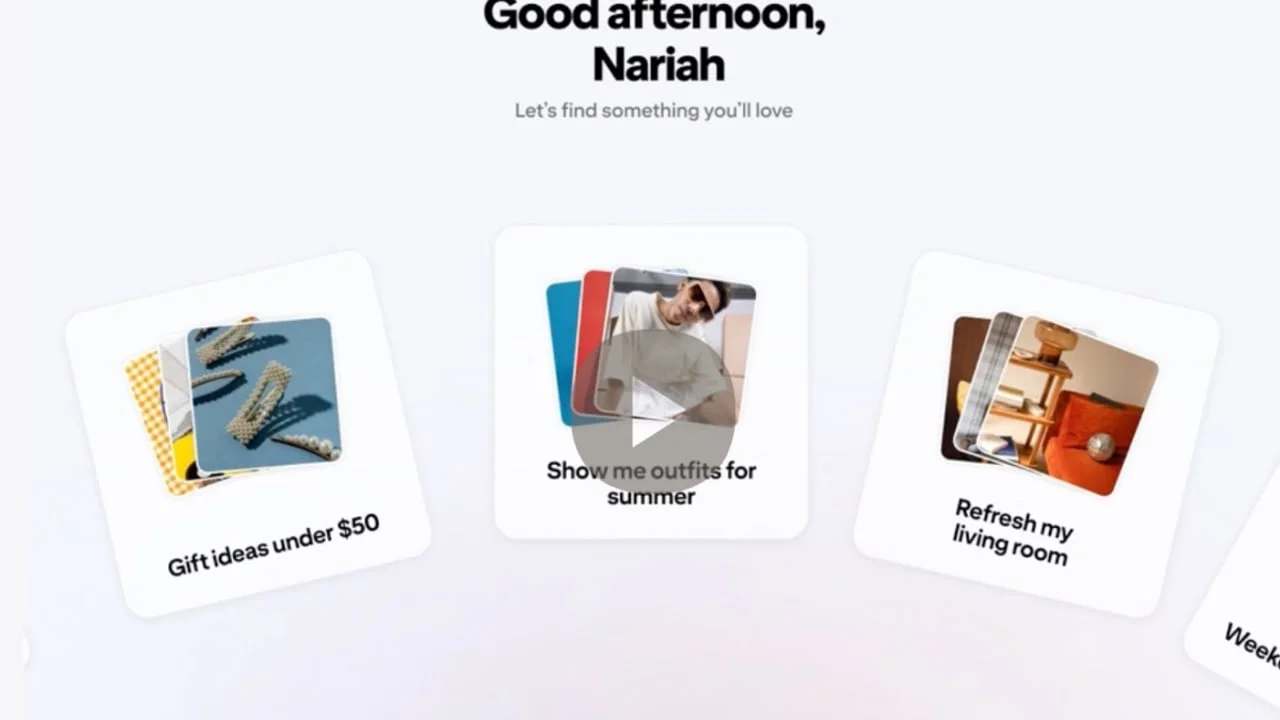
Pinterest announced Ask Pinterest on June 17 as a limited-access experimental app for conversational, visual-first shopping outside the main Pinterest app. The company says it is meant for messier shopping jobs: planning a dinner party on a budget, buying a personal gift, or furnishing a room over time. 1
The public Ask Pinterest page is even plainer. It says users can "plan, compare, visualize" and use boards and saves to turn inspiration into action. 2 TechCrunch reports that the app works on the web, on mobile and desktop, and can use a user's saved Pins and Boards when the user signs in. 3
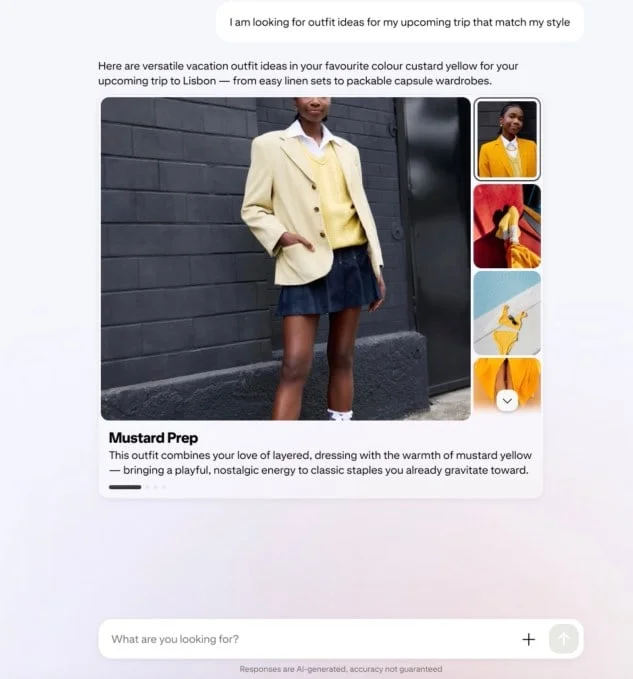
Mechanically, this is not a new shopping universe. It is Pinterest search with a chat box bolted to the front, plus the company's Taste Graph behind it. Pinterest says Ask Pinterest uses its proprietary signals around taste, intent, and preferences to generate personalized recommendations. 1
That is the useful part. Pinterest has always been better at latent intent than Amazon, because people save the life they intend to buy before they buy it. The roast begins where Pinterest pretends this is a shopping assistant rather than a monetization interface for already-labeled desire.
The data bargain
Ask Pinterest's product promise depends on the one dataset no normal shopping chatbot has: years of boards named by users in their own private taxonomy. "Guest room someday." "Court house wedding." "Apartment when I leave him." Product search usually knows what you clicked. Pinterest often knows what you rehearsed.
| Input Ask Pinterest can lean on | What that means in practice |
|---|---|
| Boards and saves | The product can use curated images you already collected, not just the words in the prompt. 2 |
| Taste, intent, and preference signals | Pinterest is explicitly selling the system as a way to use its proprietary interest graph for recommendations. 1 |
| Prior recommendation behavior | Pinterest says its normal feed recommendations are based on saves, searches, and browsing activity. 4 |
| Broader ad and partner settings | Pinterest's privacy settings page describes controls for data from sites users visit, partner information, ads off Pinterest, and sharing activity for ad reporting. 5 |
This is why Ask Pinterest has a real chance to be useful. It can answer "help me dress for Lisbon" with more context than a generic chatbot, because it has seen the mustard sweaters, the linen saves, the chair obsession, and the wedding-board relapse.
It is also why the product feels less like an assistant than a sales clerk who read your diary and insists that counts as taste alignment.
Pinterest does offer some control surfaces. Users can turn off recommendations based on specific Pins or boards, and Pinterest says recommendations are automatically off for archived boards and secret boards unless the user turns them on. 4 But the same help page says changing recommendations does not affect ads in the home feed. 4 Translation: you can tune the taste mirror; the ad machine has its own room.
The real customer is still wearing a lanyard
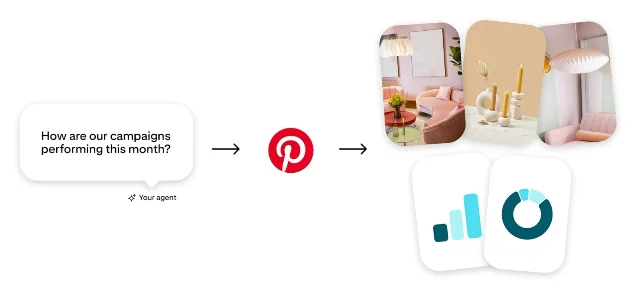
The timing is not subtle. Pinterest announced Ask Pinterest ahead of Cannes Lions, in the same post as Business Assistant, Pinterest Model Context Protocol, and Performance+ creative, all products aimed at advertisers or marketing partners. 1
Business Assistant is an AI collaborator in Ads Manager, in closed beta in the U.S., that shows trends and top Pins to promote. 1 Pinterest MCP gives partner copilots access to campaign, analytics, and keyword insights, with alpha partners including PMG, Pacvue, Dentsu, Havas, Innovid by Mediaocean, and Omnicom's Jump450. 1 Performance+ creative uses a new AI model to pick the ad creative variant most likely to perform for each impression; Pinterest says testing increased click volume by 7.5 percent versus the previous single-variant model. 1
That stack explains the product better than the launch copy does. Ask Pinterest is framed as a consumer experiment, but it sits next to infrastructure that helps advertisers read intent, route campaigns, and optimize creative at the asset level. The consumer gets "help me find a gift." The advertiser gets a cleaner pipe from taste to transaction.
Pinterest also has enough model machinery to make the data question less theoretical. Its AI help page says Pinterest Canvas Version 6 was trained on about 500 million rows of publicly available Pins, Pin descriptions, and metadata saved or uploaded by users, with data collected as early as 2009 and ongoing. 6 That does not prove Ask Pinterest uses Canvas. It does show the company is already comfortable turning saved visual behavior into foundation-model fuel.
Verdict
Ask Pinterest is one of the more coherent AI shopping launches because the underlying behavior already existed. People do not use Pinterest like a catalog. They use it like a staging area for future selves with better lighting and more disposable income.
The problem is that Pinterest has named the staging area "context." Once that happens, every board becomes a prompt, every save becomes intent, and every half-formed fantasy can be routed toward a product recommendation. The app may be genuinely handy. It may even be better than typing "yellow blazer vacation outfit" into search like it is 2018.
But the architectural bargain is specific: Ask Pinterest is not discovering your taste. It is monetizing the work you already did to describe it. The bot is new. The confession booth has been open for years.
Añade más opiniones o contexto en torno a este contenido.