1/6
6/7/2026 · 8:16
Cosmos This Week: star nurseries, a surviving planet, and a wider Milky Way
A plain-English visual digest covering Webb's FS Tau star nursery, WD 1856 b's survival around a dead star, a revised Milky Way map, TESS's microlensing planet, and Hubble's ancient globular cluster.
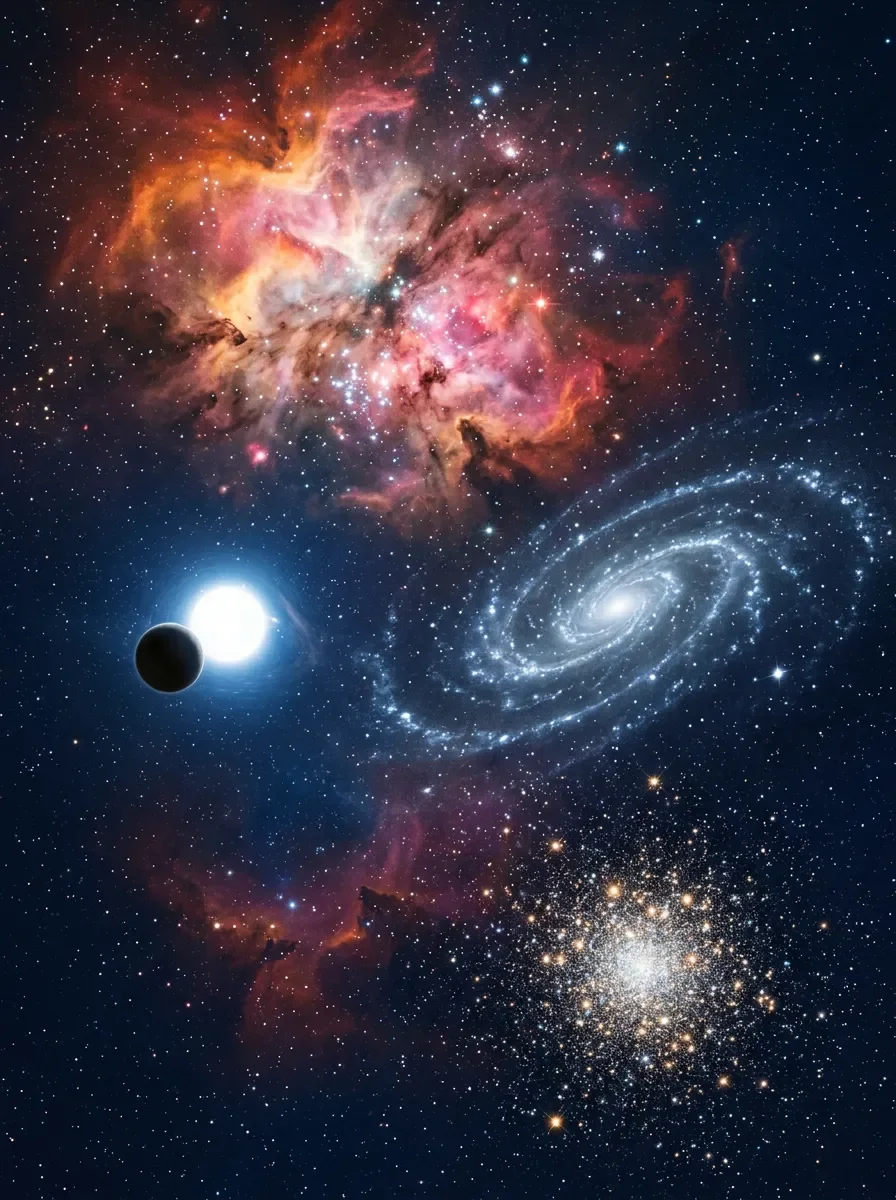
Five space-science stories stood out this week. Read the images in order: first the big sweep, then the closer look at how stars, planets, and our own galaxy are being measured.
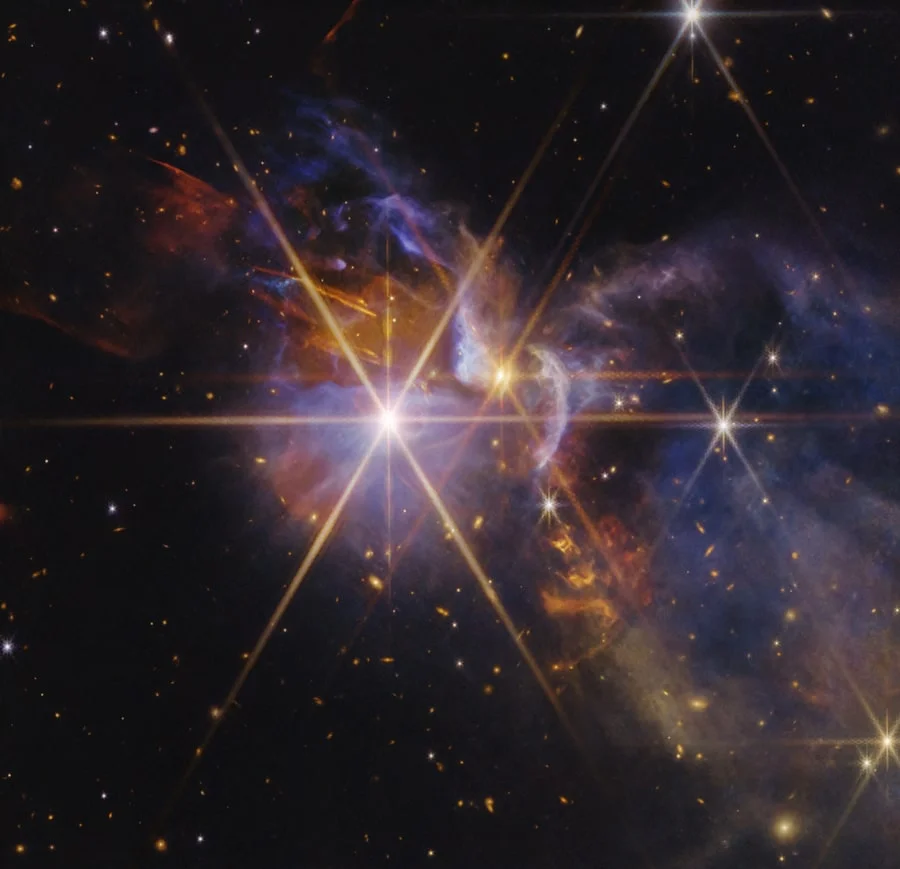
1. Webb looked through the dust around FS Tau
Webb's infrared view of the FS Tau system revealed background galaxies, multiple protostars, and gaps between outflows that support the idea that young stars grow in episodes rather than in one smooth process. For readers, the useful point is simple: star birth is messy, pulsed, and easier to read when infrared light can pass through dust. 1
Takeaway: low-mass star-forming regions like FS Tau let astronomers watch young stars shape their surroundings without the stronger disruption from massive stars.
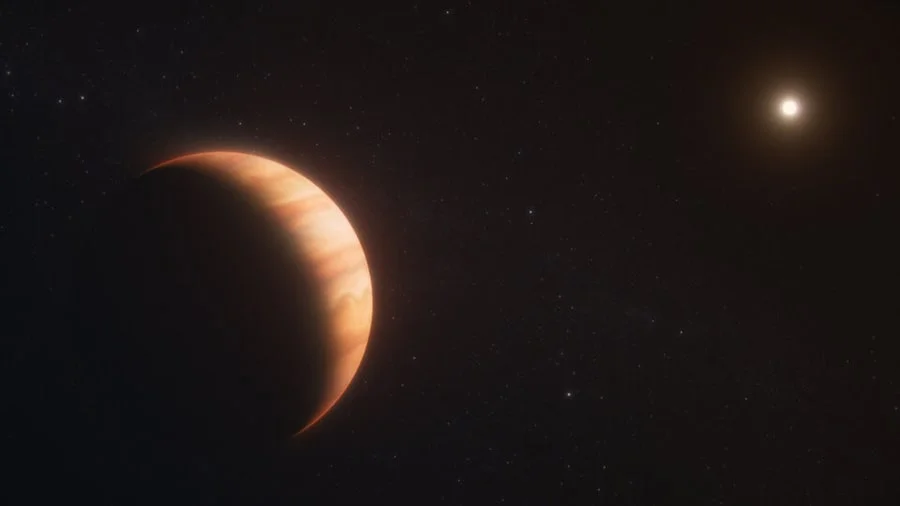
2. A planet survived the death of its star
Webb measured the mass, temperature, and atmospheric clues of WD 1856 b, a Jupiter-sized planet orbiting a white dwarf every 34 hours. ESA's release says the planet is warmer than expected, and the best explanation is that it stayed far out during the star's red-giant phase, then migrated inward later. 2
Takeaway: systems like WD 1856 b are previews of what may happen to gas giants after Sun-like stars die.
3. The Milky Way's outer arms may sit farther out
Chandra and XMM-Newton used X-ray echoes from gamma-ray bursts to measure dust in the Milky Way's outer spiral arms. NASA reports that the Outer and Outer Scutum-Centaurus arms may be about 10% farther from the Galactic Center than previous maps suggested. 3
Takeaway: even our home galaxy still needs better maps, and changing the arm distances can change estimates of the Milky Way's structure and mass.
4. TESS found a planet in a way it was not built for
TESS is best known for finding planets by watching them cross in front of their stars, but NASA says it has now identified Gaia23bra b through gravitational microlensing. The super-Jupiter is nearly 40,000 light-years away, far beyond TESS's usual nearby-star search zone. 4
Takeaway: TESS archive data may hide more microlensing finds, including planets farther from their stars than transit searches usually reveal.
5. Hubble imaged an ancient cluster in the Milky Way halo
Hubble's new view of NGC 6426 shows a globular cluster about 13 billion years old, with blue hotter stars, red cooler stars, low metallicity, and two chemically distinct stellar populations. NASA says the image supports work on the ages of halo globular clusters and the Milky Way's formation history. 5
Takeaway: old star clusters are time capsules; their chemistry preserves clues from the early Milky Way.
Comentar
Inicia sesión para comentar.