"Forgotten all about the cuckoos": Sei Shōnagon's art of drifting
A close read of a cuckoo-hunting outing in The Pillow-Book: how quick digression, status-glances, and comic deflection turn a search for refined beauty into a scene of social pleasure.

A party sets out to hear a cuckoo and ends up laughing at a rice-threshing demonstration. That small failure is the pleasure of Sei Shōnagon's prose: the stated object matters, but the mind's quick turns matter more.
Passage
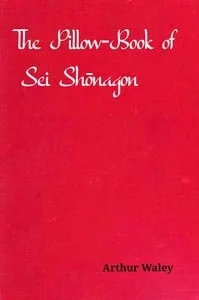
Sei Shōnagon, The Pillow-Book of Sei Shōnagon, translated by Arthur Waley, first published in English in 1928; entry on the fifth-month outing to Kamo, in a selection from a work written from Heian court life around 991-1000. 1
Something seemed to be happening at the riding-ground, where there was a great press of people. When we asked what was going on, we were told that the competitions were being held, and that the archers were just going to shoot on horseback. It was said, too, that the Officers of the Bodyguard of the Left were there; but all we could see, when we had pulled up, was a few gentlemen of the Sixth Rank wandering vaguely about. "Oh, do let us get on," someone said; "there's no one of any interest here." So we drove on towards Kamo, the familiar road making us feel quite as though we were on our way to the Festival. Presently we came to my lord Akinobu's house, and someone suggested we should get out and have a look at it. Everything was very simple and countrified--pictures of horses on the panels, screens of wattled bamboo, curtains of plaited grass--all in a style that seemed to be intentionally behind the times. The house itself was a poor affair and very cramped, but quite pretty in its way. As for cuckoos, we were nearly deafened! It is really a great pity her Majesty never hears them. And when we thought of the ladies who had wanted so badly to come with us, we felt quite guilty. "It's always interesting to see things done on the spot," said Akinobu, and sending for some stuff which I suppose was husked rice, he made some girls--very clean and respectable--along with others who seemed to come from neighbouring farms, show us how the rice was thrashed. Five or six of them did this, and then the grain was put into a sort of machine that went round, two girls turning it and at the same time singing so strange a song that we could not help laughing, and had soon forgotten all about the cuckoos. 2
Gloss
- Fifth month: in this courtly seasonal calendar, early summer. The cuckoo is not just a bird here; it is a seasonal event worth going out to hear.
- Kamo: the shrine district toward which the carriage is heading. The route feels familiar because it recalls festival travel.
- Sixth Rank: a lower court rank. The joke is social before it is descriptive: the riders are present, but not socially exciting enough to stop for.
Close read
The device is comic digression: the sentence keeps accepting interruptions until the original purpose of the outing disappears. First there is a public spectacle at the riding-ground, but it collapses into disappointment: important-sounding officers become only "a few gentlemen of the Sixth Rank wandering vaguely about." Then the destination changes shape. Kamo promises cuckoos and festival feeling, but Akinobu's house pulls the party sideways into interiors, screens, panel-pictures, and country manners.
Shōnagon's mechanics are wonderfully brisk. She does not announce, "we were distracted." She lets objects compete for attention. The riders lose to social boredom; the cuckoos lose to guilt over the women left behind; even the cuckoos' own sound loses to the stranger music of rice being thrashed. The repeated movement is: expectation, glance, judgment, new attraction. That rhythm makes the prose feel like conversation inside a moving carriage.
The last clause is the turn: they "had soon forgotten all about the cuckoos." A less exact writer might treat that as failure. Shōnagon treats it as evidence of life. Refinement, in this passage, is not solemn concentration on beauty. It is the ability to be caught by whatever the day offers: a road, a bad social prospect, a cramped house, a branch of rural labor, a song too strange not to laugh at.
Why it still matters
Many modern readers are trained to defend attention as if every worthwhile experience must fulfill its stated aim. Shōnagon gives us a lighter model. The plan matters because it gets the body moving; after that, the world has permission to revise the plan.
Her prose also warns against a narrow idea of taste. The court ladies begin with a refined seasonal goal, but the scene becomes livelier when rank, weather, noise, work, and embarrassment enter the frame. The day is better because it is not pure.
Reflection question
When has a failed plan given you a better memory than the thing you originally set out to do?
Contenido relacionado
- Inicia sesión para comentar.
More from this channel
- "He had two lives": Chekhov's life under cover
- "He simply shrugged": Machado's unbelief without reasons
- "It makes me tired to follow it": Gilman's wallpaper as mental labor
- "Get rid of your helmet": Flaubert's cap as social machinery
- "You cannot light the house": Tagore's fire test for zeal
- "The songs of the slave": Douglass and the sound mistaken for joy
- "What a fine thing for our girls": Austen's market disguised as a maxim
- "Come and sing with me": The Kalevala's invitation to inherited song