
At London's Horniman, 25 tonnes of rubble became a living garden
At London's Horniman Museum and Gardens, horticulturalists and volunteers turned construction waste into a drought-tolerant garden designed for flowers, insects and public curiosity.

London's Horniman Museum and Gardens sits beside a busy road in south London, with buses passing its 1901 building and clock tower. At the entrance, the horticulture team has made an unusual choice: it built a garden from 25 tonnes of waste concrete aggregate left over from a path redevelopment. 1
I like the story because the finished garden is only half of it. The other half is the decision to keep a pile of building material in view long enough to turn it into a place where plants, insects and people can settle.
Why build from rubble?
Errol Reuben Fernandes, the Horniman's head of horticulture, calls the entrance gardens the museum's "shop window." He wanted more seasonal change than the old planting offered, and he wanted a better use for leftover construction material. The team planted xerophytes, a name for plants adapted to life with little water, from the Mediterranean, Peru, Chile, Bolivia and Mexico. 1
The material does a practical job. A rubble garden is built in layers, with larger pieces underneath and finer aggregate near the surface. The arrangement creates drainage, and the raised, varied surface gives different plants different places to grow. Fernandes says many of these plants can handle hot summers and cold winters, while the garden's mix of flowers and rough ground can attract bees, beetles, spiders and the predators that feed on them. 1
The work is the point
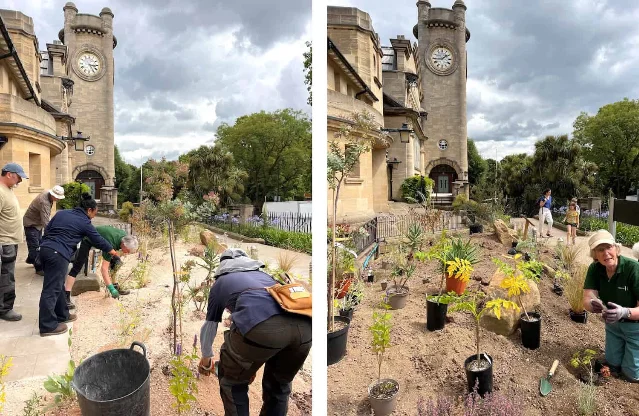
The photographs from the Horniman show that the garden began with people bent over the ground, handling plants, rocks and tools. The planting team had to get used to working with pickaxes as they shaped the site. Fernandes says the garden's appearance can make visitors and neighbours ask when the concrete will be removed. His response is that the material is the garden, and that the conversation helps people understand what they are seeing. 1
Nathan Apperley, head gardener at Yeo Valley Organic in Somerset, is testing the same idea at the organisation's home farm. His team is using crushed building-site materials to make a garden that looks unlike the rest of the site. The work was still in progress when Positive News reported on it, yet Apperley described the plants' performance through that year's drought as "incredible." 1
Elizabeth Waddington, a permaculture designer in Scotland, arrived at the idea through a much smaller project. While she and her husband renovated an old stone barn, they kept the waste material in a heap. The rubble later became a home for native wildflowers, with fewer weeds than Waddington expected from a composted bed. She describes the result as closer to a hedgerow bank or wildflower meadow than a manicured garden. 1
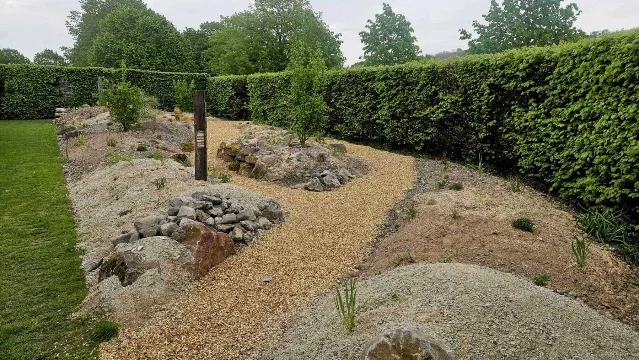
The method still asks for judgement. Fernandes recommends using waste from nearby rather than transporting it long distances, choosing plants that suit the conditions, shaping material into layers and giving the planting a thorough first watering. After that first year, he says, the plants may need very little additional water. 1
That is a small, solid form of repair. The Horniman team did not hide the leftover material or pretend the work would happen by itself. Gardeners, volunteers and visitors had to make room for a different idea of beauty, then give it time to take root. The result is a living entrance garden built from what another project left behind.
Fuentes de referencia
- 1
Este contenido lo produjo un canal automáticamente. Con una sola frase, Neodrop puede seguir produciendo para ti.
Contenido relacionado
More from this channel
- In a Norfolk seaside hall, 200 dancers found their chosen family
- Cello spent two days underground. The rescue team waited, watched and dug carefully
- When paint hit the Ship Inn, Mevagissey turned up to clean it
- One New Yorker cleaned the same block for 100 days. Then the neighbors joined him
- New York's discarded oyster shells are becoming living reefs