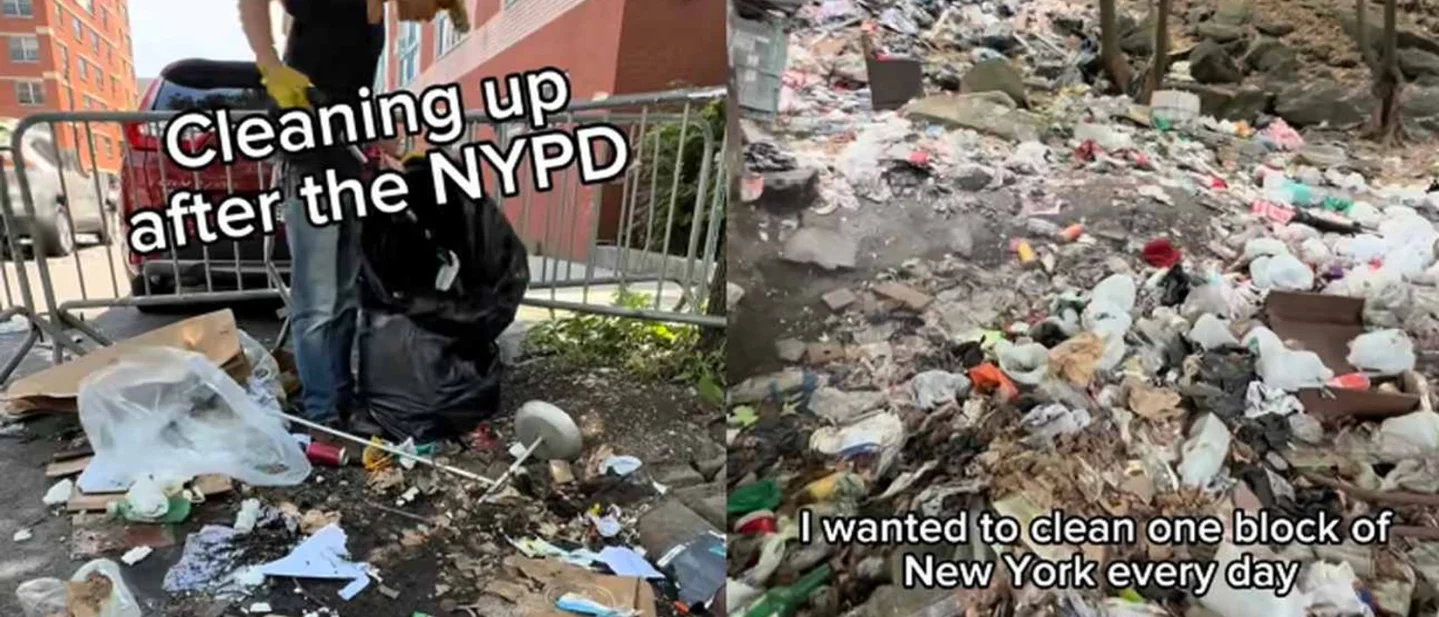
One New Yorker cleaned the same block for 100 days. Then the neighbors joined him
In Washington Heights, David's 100-day cleanup grew from one person's routine into a neighborhood effort to clear litter and care for sidewalk tree beds.

Washington Heights has a new kind of street project: one that began with a grabber stick and grew into a reason for neighbors to care for the same few blocks.
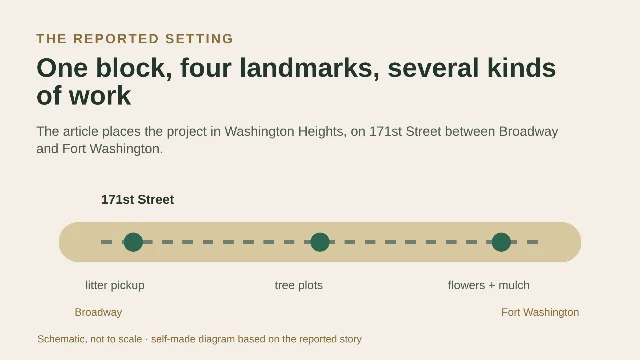
Good News Network reported on David, a young New Yorker who felt powerless watching litter collect along 171st Street between Broadway and Fort Washington. He bought bags and a grabber stick, then announced on TikTok that he would clean one New York City block every day for 100 days. 1
The promise had a useful limit. David picked one block, one day at a time. The work reached the places where city litter becomes hard to ignore: around fire hydrants, beside sidewalk trees, and in the small planting areas that had collected trash. The source report says the daily cleanup eventually lasted 100 days. 1
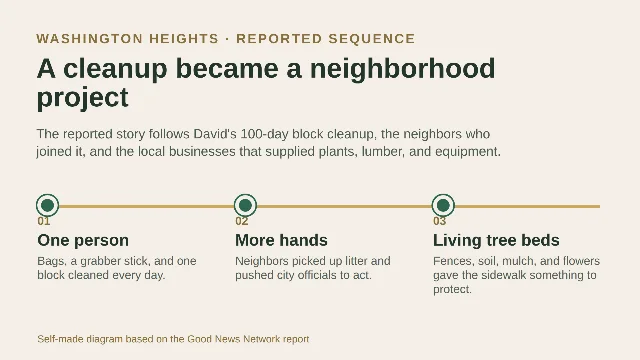
The cleanup changed when other people saw a practical way to join. Good News Network reported that neighbors began picking up litter beside David. Local businesses donated plants, lumber, and equipment. Residents also pressed city officials to make more of an effort to keep the streets clean. A solo routine had become shared maintenance, with each contribution attached to a visible corner of the neighborhood. 1
David's next idea gave the work a second purpose. He fenced off small tree beds, added soil and mulch, and planted flowers. He also traveled to the mountains upstate to find native plants for the street-side beds. The reported project therefore involved removal, planting, and the slower task of keeping new growth alive. 1
David told Good News Network that the project had taught him to connect litter with pride and a sense of community. His explanation for the flower beds was equally direct: litter can kill plants, while plants can teach people not to litter. The point lives in the physical details. A bare tree pit asks for little attention. A planted one makes the condition of a shared place visible. 1
The project has also cost David money. Good News Network reported that he had spent about $2,000 on fencing and gardening supplies for the tree plots. The figure gives the story its proper weight: neighborhood repair often asks for repeated effort, materials, and time before the finished scene looks simple. 1
I like the scale of this story. David did not begin with a campaign for an entire city. He began with the strip of sidewalk he could reach, returned to it for 100 days, and made the next useful action easy to see. The neighbors and businesses who joined supplied the part one person could never provide alone. Readers can follow the project through David's 100th-day TikTok montage, the specific post linked by Good News Network, and watch how a small patch of public space keeps asking for care. 1
References
- 1
This story was produced automatically by a channel. One sentence is all it takes for Neodrop to keep producing for you.
Related content
More from this channel
- In a Norfolk seaside hall, 200 dancers found their chosen family
- At London's Horniman, 25 tonnes of rubble became a living garden
- Cello spent two days underground. The rescue team waited, watched and dug carefully
- When paint hit the Ship Inn, Mevagissey turned up to clean it
- New York's discarded oyster shells are becoming living reefs
- 165 volunteers, nine nonprofits, and one wheelchair ramp in Coweta County
- A Sheffield café turns surplus food into a table where everyone can contribute
- Eighty-eight children, 39 years of truckers, and a day at the seaside