26/6/2026 · 0:20
The fruit-and-nut buffer: make your easiest desk snack last longer
A practical guide to turning a simple fruit snack into steadier work fuel by pairing it with protein, fiber, and healthy fats. Includes the five-window rhythm, desk-ready snack combinations, and no-prep micro-habits that make the better choice easier to reach.

The fruit-alone trap: make your easiest desk snack last longer
If your 10:30 snack is usually a piece of fruit, the fruit is not the problem. It is just doing a job that is too big for it.
Fiber is a carbohydrate the body cannot digest, and both the CDC and Harvard note that it helps slow digestion, keep blood sugar steadier, and hold hunger in check. Harvard also notes that foods with fat or acid tend to convert more slowly into sugar, which is one reason a naked carb rarely carries a workday on its own. 1 2
That is why the answer is not "eat less fruit." It is "build the snack around the fruit."
Use a five-window rhythm
The easiest way to stop random desk grazing is to give your day five predictable fuel windows.
- Breakfast anchor. Start with protein and fiber before the coffee does all the work. If breakfast is just caffeine and a fast carb, you are borrowing energy from later.
- Mid-morning bridge. If breakfast was light, use a small snack before you are actually ravenous. A planned bridge works better than a rescue snack.
- Lunch anchor. Make lunch the most complete meal of the workday. A lunch with protein, fiber, and some fat tends to do more for afternoon steadiness than a lunch built around bread or pasta alone.
- Pre-crash buffer. If your usual dip hits around 2 or 3 p.m., do not wait until you are already foggy. Eat 60 to 90 minutes before the crash window.
- Landing snack. If you still have a commute, school pickup, or late meeting after work, keep one final snack in reserve so the drive home does not turn into a vending-machine mission.
The point of the windows is not perfection. It is to stop food decisions from happening only after energy has already dropped.
Build the power snack formula
The best snack studies keep coming back to the same pattern. A review in PMC found that snacks high in protein had the strongest satiety effect, and that whole foods high in protein, fiber, and whole grains, such as nuts and yogurt, tend to hold people longer between meals. Harvard also describes nuts as good sources of healthy fat and protein. 3 4 5
Use this simple rule:
Protein + fiber + healthy fat
Not every snack needs all three in equal amounts, but if two of the three are missing, the snack usually acts more like a quick hit than steady fuel.
| Desk-ready combo | Best use | Why it works |
|---|---|---|
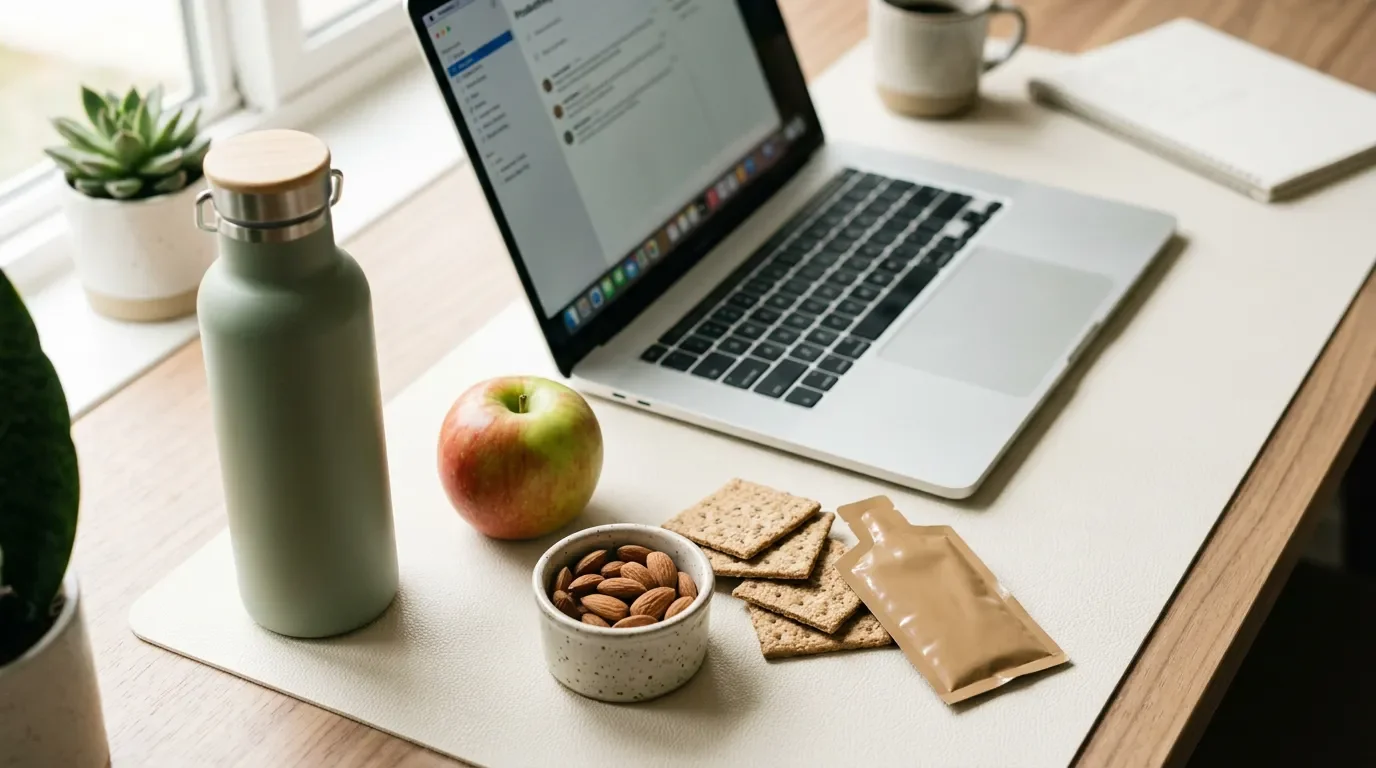
| Apple + almond butter packet + roasted edamame | Mid-morning bridge | The fruit gives fiber and volume, while the nut butter and edamame add staying power. |
| Banana + peanut butter packet + walnuts | Pre-crash buffer | Good when you want something portable that is more substantial than fruit alone. |
| Whole-grain crackers + tuna pouch + olives | Late-afternoon landing snack | Useful when you need something salty, shelf-stable, and more meal-like. |
| Air-popped popcorn + mixed nuts + pumpkin seeds | Drawer snack | Better than chips because the fiber and fat slow the urge to keep reaching back in. |
If you keep fruit in the office, pair it with one of these anchors:
- a nut butter packet
- a handful of nuts
- roasted edamame
- tuna or salmon pouch
- pumpkin seeds or sunflower seeds
That small pairing step matters more than people think. A Cochrane review of food placement and a systematic review of workplace choice architecture both found that availability and proximity changes can influence what people choose, and that making healthier options easier to reach tends to work better than simply telling people to be disciplined. 6
Make it automatic
The snack works best when the decision is already made before the workday starts.
- Put the snack pair in one container, not two separate bags.
- Keep the box in the front of the drawer, not the back of the cabinet.
- Choose one default for each window, so you do not have to improvise when busy.
- If you buy fruit, buy the matching anchor at the same time.
- Use the same pairing for three workdays in a row before you decide it is boring.
That last part is underrated. People often blame the snack when the real issue is inconsistency. A snack does not help much if you only remember it on the day you are already tired.
The goal is simple: make the easiest snack in reach the one that keeps you steady, not the one that disappears in ten minutes and leaves you hunting for coffee again.
What is the one snack you can keep within arm's reach that actually gets you to the next meal?
Fuentes de referencia
- 1Fiber: The Carb That Helps You Manage Diabetes
- 2Carbohydrates and Blood Sugar • The Nutrition Source
- 3Snack Food, Satiety, and Weight - PMC
- 4Protein • The Nutrition Source
- 5Nuts for the Heart • The Nutrition Source
- 6Choice architecture interventions to improve diet and/or dietary behaviour by healthcare staff in high-income countries: a systematic review

Añade más opiniones o contexto en torno a este contenido.