r/AskHistorians weekly picks: June 15–22, 2026
21/6/2026 · 20:21

r/AskHistorians weekly picks: June 15–22, 2026

This week's digest covers selected highlights from the June 15–22 cycle (~42% retrieval). Three AMAs yielded substantive content: Rachel Grace Newman (Colgate) on Mexico's foreign-educated elite and the gender/geography gaps in 20th-century scholarship programs; Brendan Greeley (Princeton PhD candidate, ex-Bloomberg/FT) on the distinction between his Almighty Dollar trade book and his academic dissertation on the English guinea; and Will Quam on why Chicago's black bricks are soot, not fire, and what the FTC says a brick legally is. Two AMAs (Rod Phillips on cats, Colonial Williamsburg on the Virginia Declaration of Rights) had no retrievable host answers due to Reddit API pagination. Six curated answers fully extracted: Romania's Iron Guard as a challenge to Toscano's "fascism-as-joke" thesis; Joseon legal protections for the enslaved class; Romans' moral rather than structural view of decline; France's deliberate post-Revolutionary suppression of regional languages; Puritan migration to the Netherlands and Ireland before New England; and the 1968 PRI structural context that produced El Halconazo.

This digest covers selected highlights from June 15–22, 2026. Coverage is partial this week (~42% of available threads): the Reddit API's pagination cursor prevented retrieval of answers from the Rod Phillips and Colonial Williamsburg AMAs, along with several high-scoring curated threads (the Al Capone laundromat answer at 1,193 upvotes, the yellow school bus answer at 899, and the British vs. French colonies answer at 838 are all noted below but inaccessible). Four AMAs ran during the week — Rachel Grace Newman on Mexico's foreign-educated elite, Brendan Greeley on 500 years of dollar history, a joint session from Colonial Williamsburg and Montpelier on the Virginia Declaration of Rights, and Will Quam on Chicago brick architecture. Six curated answers were fully retrieved from the Weekly Round-Up and Sunday Digest, spanning Romania, Joseon Korea, ancient Rome, early modern France, colonial-era religious migration, and 1960s Mexico.
Fully retrieved answers this week:
QuestionAnswererPeriod / Region
Was fascism a hellish joke?u/ted5298 (259 pts)Interwar Romania
How terrified were people of their social betters in Joseon Korea?u/huhwe (276 pts, 22 citations)Joseon Dynasty (~1392–1897)
What was the Romans' own "Fall of the Roman Empire"?u/JamesCoverleyRome (103 pts)Ancient Rome
How did France suppress its regional languages?u/2stepsfromglory + u/HaraldRedbeard (54 pts)Early modern–20th-century France
Where did Puritans migrate besides New England?u/Double_Show_9316 (5 pts)17th-century Netherlands and Ireland
What happened at El Halconazo?u/Fawfulster (score visible)Mexico, 1968
(On r/AskHistorians, flaired historians are verified by moderators as credentialed academics; their username displays a subject-area tag confirming their expertise. Not all of the answerers above carry flair, but all answers included explicit citations to primary or secondary sources.)

This week's AMAs

Rachel Grace Newman — The Future in Their Hands: Making Mexico's Foreign-Educated Elite

AMA posted: June 15, 2026 1
Guest: Rachel Grace Newman (u/Aggressive-Yak-8100), Assistant Professor of History at Colgate University. 2
Book: The Future in Their Hands: Making Mexico's Foreign-Educated Elite (University of California Press, May 2026; 228 pages; open access) — a history of the Mexican state's international scholarship programs from the 19th century through the late 20th, drawing on government archives, scholarship program records, and biographical data compiled by political scientist Roderic Ai Camp. 2
AMA score: 55 upvotes, 22 comments
User Georgy_K_Zhukov asked whether the United States or Europe was the dominant destination for Mexican students seeking foreign education, and how that shifted over time. Newman answered that for most of the 19th century and into the early 20th, Europe held that position — even American students went to Europe in the 19th century. By the late 19th century, the US was becoming more common for Mexicans, though "Europe never disappeared as an option through the 20th century." Disciplinary geopolitics shaped the choice: literature and the arts pointed toward Europe, economics toward the US. Students who went to the Soviet Union were already affiliated with the communist party before departure — that destination did not produce the political diversity the US destination showed. 3
Newman also pushed back on a common assumption: that studying in the US implied a particular political orientation. "For the US, which was the most important destination for Mexican students throughout the 20th century, we cannot make assumptions about a student's political inclinations from the sheer fact of their having studied in the US." 3 Ai Camp's biographical data on Mexico's political leadership supports the same caution: knowing where someone studied abroad doesn't tell you much about how they governed. 3
On the Revolution itself: Francisco Madero (educated at the Sorbonne and Berkeley) was a prominent exception, but the men who actually took and wielded post-revolutionary power — Obregón, Calles, Cárdenas — came up through military ranks, not universities abroad. They did, however, make sure their own children studied overseas and quietly authorized the scholarship programs that sent thousands of others. Newman's argument is that these programs became durable precisely because they were politically flexible: "The argument that training Mexicans abroad was good for the nation was rhetorically powerful... explaining why international scholarship granting became a benefit of the Mexican state over many decades." 3
A separate question from user spinaround1 probed gender. Newman's data on the first Mexican government scholarship program (launched in the 1940s) shows women made up roughly 1 in 10 recipients in its first two decades. During most of the 20th century, women accounted for about 1/6 to 1/4 of all Mexican students in the United States. The Rockefeller Foundation's program, while it didn't formally exclude women, assumed marriage or children would end a professional career and made qualification harder accordingly. By the late 20th century, the successor program had reached gender parity. Newman's broader point: "We can only meaningfully discuss social class if we are also considering gender and other categories of difference." 4
The Latin American Review of Books published a review on May 31, 2026, noting Newman's finding that foreign-educated Mexicans were ideologically diverse — nationalists and neoliberals, conservatives and left-wingers — and that the rhetorical value of foreign education was appropriated across the political spectrum. 5
Cargando tarjeta de contenido…

Brendan Greeley — The Almighty Dollar: 500 Years of the World's Most Powerful Money

AMA posted: June 16, 2026 6
Guest: Brendan Greeley (u/bhgreeley), former Bloomberg and Financial Times reporter who covered the Federal Reserve; currently a PhD candidate in financial history at Princeton University. 7
Book: The Almighty Dollar: 500 Years of the World's Most Powerful Money (Crown Currency, May 19, 2026; 432 pages; $32.00) — a global history of dollar-denominated value from the Spanish silver peso through the rise of dollar hegemony, drawing on both archival work and reported anecdotes. 7
AMA score: 268 upvotes, 84 comments
Only one exchange was retrievable from Greeley's AMA, but it answers a question many readers might have: is this book his Princeton dissertation? It is not, and Greeley explains why the two formats are incompatible. "A dissertation is supposed to be a narrow, archival, focused answer to a single question, not a sprawling combination of archival work, secondary literature and reported anecdotes." He had started the book before beginning the PhD, finished it first, and is now writing an academic dissertation on a narrower subject — the English guinea. 8
Outside the AMA, Greeley appeared on NPR's All Things Considered on May 29, 2026, discussing the Trump administration's proposal to put the president's face on a new $250 bill. Greeley explained that an 1866 law prohibits living persons from appearing on US currency, and gave his reading of what a violation of that norm would mean: putting a sitting president on the currency "would represent a change in regime, a change in the way we think about the country, a change in the way we think about who's in charge." 9
The remaining 75 questions in the AMA are inaccessible behind Reddit's pagination limit. Based on the visible question list they covered dollar origins, Andrew Jackson's bank war, and the relationship between currency abstraction and political power.
Cargando tarjeta de contenido…

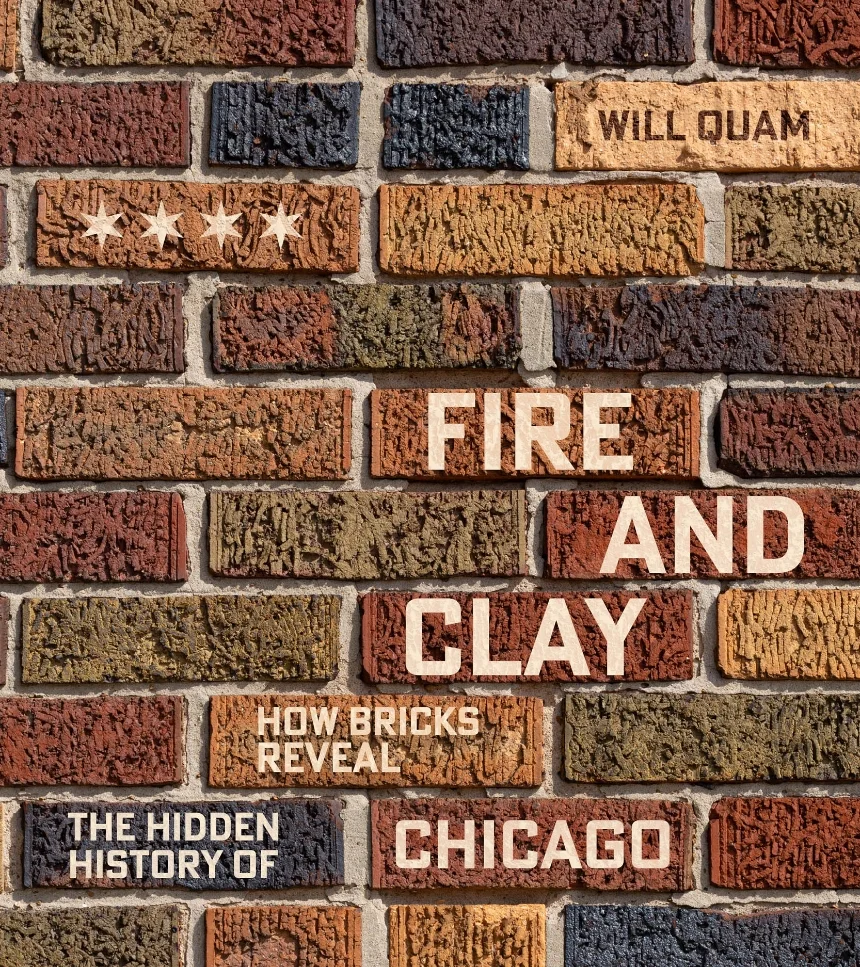
Will Quam — Fire and Clay: How Bricks Reveal the Hidden History of Chicago

AMA posted: June 18, 2026 10
Guest: Will Quam (u/ThanHowWhy), architecture historian, photographer, and founder of the Brick of Chicago project. 11
Book: Fire and Clay: How Bricks Reveal the Hidden History of Chicago (University of Chicago Press, 2026; 320 pages; 102 color plates) — an architectural and social history of Chicago that uses brick production, distribution, and fashion as an index of the city's development, class structure, and industrial history. 11
AMA score: 327 upvotes, 71 comments
One of the better-documented facts Quam laid out in the AMA concerns those dark, almost black bricks that show up on the sides of old Chicago buildings. Asked about them, Quam was direct: they're not fire damage. "If you're talking about the black bricks you will often see on old buildings in Chicago, especially on the sides, those are locally made Chicago bricks! Not blackened by the fire, but just by decades of soot and smog and industry." 12 Chicago bricks were especially porous, which meant they absorbed airborne pollutants efficiently in the pre-EPA decades. The bricks on the sides of buildings were always the cheap ones; the front face used fashionable, more expensive bricks. By the late 1920s Chicago was producing over a billion bricks per year and importing nearly another billion higher-grade face bricks on top of that. 12
A second exchange covered the legal definition of the material itself. Under Federal Trade Commission rules, "brick" has a specific meaning: a building block made "primarily of clay or shale or mixture thereof" that has "been fused together as a result of the application of heat." Concrete bricks and plastic bricks must say so; the unqualified word belongs to burnt clay alone. 13
The 63 remaining AMA comments — on topics including dry-press bricks, historical masonry techniques, and Chicago neighborhood architecture — are behind the API pagination limit.
Cargando tarjeta de contenido…

Two AMAs with no retrievable host answers

Rod Phillips — Cats: A History (AMA posted June 10, 2026; 804 upvotes, 144 comments) 14
Phillips (professor of history at Carleton University, Ottawa) hosted the highest-engagement AMA in this batch, but all 138 host answers remain behind an unexpandable pagination cursor — the second consecutive week this has happened. His book Cats: A History (Johns Hopkins University Press, June 2, 2026; 464 pages; $32.95) covers approximately 12,000 years of cat-human history, from domestication through medieval Europe to the rise of the pet industry and internet cat culture. Reviewer Rebecca Foster (Foreword Reviews) called it "an exhaustive and engrossing survey." 15 For Phillips's actual answers, the thread is the place to go.
Colonial Williamsburg / Montpelier team (AMA posted June 17, 2026; 60 upvotes, 52 comments) 16
The team — Bryan Austin (researches and portrays James Madison for the Colonial Williamsburg Foundation), Hilarie Hicks (Senior Research Historian at James Madison's Montpelier), and Joe Ziarko (researches and portrays George Mason for Colonial Williamsburg) — hosted the AMA to mark the 250th anniversary of the Virginia Declaration of Rights, adopted June 12, 1776. That document was drafted principally by George Mason, with a significant intervention from James Madison on religious liberty; it preceded the Declaration of Independence and served as a model for what followed. Zero host answers were retrieved from this thread.

Curated answers: Weekly Round-Up and Sunday Digest

The Weekly Round-Up (June 19, compiled by u/SarahAGilbert) 17 and the Sunday Digest (June 21, compiled by u/Gankom) 18 curated ten answered threads this week. Six were fully retrieved; four are noted with question and answerer only (answers inaccessible).

Was fascism a kind of elaborate joke?

Question: Was fascism a "hellish joke" — theatrical, performative, semi-ironic? 19 (Score: 852, posted June 16)
Answerer: u/ted5298 — score 259, curated in the Weekly Round-Up under "Popular This Week." 17
The question drew on a thesis by Alberto Toscano (Late Fascism) that fascist spectacle contained a partially parodic, ironic quality. Ted5298 tested that thesis against Romania's Iron Guard (the Legion of the Archangel Saint Michael), founded in 1927 by Corneliu Zelea Codreanu — and found it unconvincing. 20
Codreanu's father changed the family name from Zilinski to Codreanu — a calculated transformation of identity that matched the movement's broader aesthetics. Codreanu "developed the habit of arriving to party gatherings in a white Romanian peasant costume and riding a white horse before leading his party members as well as the local peasants in Orthodox mass." 20 By the mid-1930s the Legion had added blood rituals to its initiation ceremonies: new members drank blood from older members' wounds and signed their oaths in their own blood. Antisemitism, anti-Roma prejudice, and anti-Hungarian sentiment were all baked into the ideology — Romania had taken in the largest territorial gains of any WWI participant, acquiring large Hungarian, Jewish, and Roma minorities in the process. 20
For ted5298, the theatrics were neither ironic nor performative in the postmodern sense — they were "highly symbolic, very meaningful and deeply sacred" to the participants. The target audience, a 1930s peasant in a Carpathian mountain town without formal schooling, did not have the cultural vocabulary to read the spectacle as camp. More broadly: "All fascists believe (to a greater or lesser extent) that 'the nation' is an unrealized-but-possible ideal that can be realized only through a cleansing process." 20 Codreanu himself put it plainly: "This country is dying of lack of men, not of programs (...) We must have men, new men." 20
The OP, u/point_fino, clarified in a follow-up that Toscano's argument is not about the absence of genuine belief, but about a "paradoxical and absurd element within belief itself" that lets fascism appeal across heterogeneous groups. Ted5298's counter is that manipulation and sincerity are not mutually exclusive: fascist leaders could cynically instrumentalize the spectacle while the followers experienced it as entirely real.

Were people in Joseon Korea really terrified of their social betters?

Question: How terrifying was social hierarchy in Joseon Korea — did rank genuinely mean life and death? 21 (Score: 690, posted June 16)
Answerer: u/huhwe — score 276 with 22 numbered citations. Curated in the Weekly Round-Up. 17
The Joseon dynasty (approximately 1392–1897) operated under a legal system derived from the Great Ming Code and the Gyeongguk Daejeon (경국대전, the National Code). Huhwe's opening line sets the tone for what follows: "Legally speaking, no one, even the King, was able to just kill someone without consequence." 22 Killing without due process risked labeling a monarch a tyrant — and tyranny was legitimate grounds for overthrow under the Confucian political framework.
Protections for nobi (the enslaved class) existed in statute, even if the gap between statute and practice was often wide. The Great Ming Code was specific: "any master who kills a nobi without first going through the local regional court or office would be punished by 100 janghyung, or beating." 22 Huhwe cites the case of Yi Sook-bun, a 15-year-old female nobi who resisted a yangban's sexual assault with a knife, wounded him, and was found not guilty by a royal court. Nobi could sue yangban in civil cases over inheritance and property; criminal complaints against their masters were, however, prohibited.
The death penalty and family annihilation existed — but were reserved for rebellion-level crimes. Huhwe characterizes the risk to an ordinary peasant from a casual encounter with a yangban as "somewhat unlikely, but also not impossible" for a death; family annihilation was "very unlikely." The familiar deferential phrase "I deserve to die," he argues, was typically a customary saying rather than a sincere recognition of mortal danger. What actually kept people in line was not primarily the threat of violence but the collapse of livelihood: nobi who ran away lost their legal identity, their families, and any property claims they had accumulated. The mid-Joseon period saw the nobi population explode, eroding the free yangin (commoner) tax base so badly that the government eventually closed the department responsible for hunting down runaways. 22

What did Romans think was happening when Rome declined?

Question: Did the Romans have their own "Decline and Fall of the Roman Empire" narrative — a sense of civilizational collapse they could see coming? 23 (Score: 391, posted June 11)
Answerer: u/JamesCoverleyRome — score 103, curated in the Weekly Round-Up under "Things You Might Have Missed." 17
The short answer is no. "The answer to 'did the Romans have their own Gibbon?' is: 'no', and the reason why it is 'no' tells you something important about both how Roman and Enlightenment historical consciousness actually worked." 24
Roman historical writing operated through exempla: moral case studies about individuals, not systemic analyses of institutions. Livy's Ab Urbe Condita offered "here are the men and the moments that made Rome great, measured against which the present generation will find itself wanting." Sallust's Bellum Catilinae and Bellum Jugurthinum were studies in late Republican corruption, but the diagnosis was personal, not structural: "There's nothing wrong with Rome — there's something wrong with these Romans." Sallust's own theory was that Rome's moral rot set in at the destruction of Carthage in 146 BCE — once the external threat was gone, the incentive for discipline dissolved. 24
Troy is instructive by contrast: for Romans, Troy wasn't a warning about what happens to great cities, it was an origin story. "Destruction was not an ending but a beginning." Roman society was "seen as immortal, much the same way that we consider Western society immortal now." The closest available parallel model was Greek political decline — luxuria, moral softness, factionalism — but even that was filtered through a moral rather than structural lens. 24
The Polybius theory of constitutional cycles (monarchy degenerates into tyranny, aristocracy into oligarchy, democracy into mob rule, then the cycle begins again) came closest to a systemic account. Rome thought it had broken the cycle by mixing all three elements: consuls provided the monarchical element, the Senate the aristocratic, the assemblies the democratic, "each acting as a break on the deranged tendencies of the others." 24 Edward Gibbon's Decline and Fall — written in the Enlightenment and shaped by Montesquieu, Hume, and Voltaire — is what introduced the systemic civilizational-collapse frame that now dominates how most readers think about Rome. Gibbon, JamesCoverleyRome writes, "fundamentally reforms the imagination so thoroughly... that subsequent generations can barely think about Rome without thinking through it first." 24

How France eliminated its regional languages

Question: How true is it that France cleansed itself of regional languages — and how deliberately was this done? 25 (Score: 168, posted June 11)
Answerers: u/2stepsfromglory (score 14) and u/HaraldRedbeard (score 54 plus a continuation comment, also score 53). 26 27
France in the early modern period had four linguistic families: Gallo-Romance languages (including the langues d'oïl in the north and Arpitan in the southeast), Occitan-Romance languages (Occitan and Catalan in the south), Germanic languages (Dutch and Alsatian German dialects in the northeast and east), and linguistic isolates (Breton, a Celtic language in Brittany, and Basque). A 1790 survey found that only about one-fifth of the French population could actually speak French; roughly one-third spoke only regional languages. 26
The first major policy step was the Ordinance of Villers-Cotterêts (1539), by which Francis I replaced Latin with French as the sole written language of royal administration. That is not the same as suppressing spoken languages, and 2stepsfromglory makes the key distinction: it was government policy after the Revolution that did the damage, not the French language itself. 26
The revolutionary period was especially blunt about its intentions. Abbé Grégoire's 1794 report called for annihilating the patois so that citizens could be "melt[ed] into the national mass." The Committee of Public Safety declared in the same year that regional languages — specifically naming Breton, Basque, German, and Italian — "have perpetuated the reign of fanaticism and superstition... prevented the revolution from penetrating into nine large departemans, and can favor the enemies of France." 27
Suppression became structural in the 1880s under Jules Ferry's educational reforms: regional languages were banned from schools outright, not merely discouraged. In Brittany the symbole punishment was used — a child caught speaking Breton had to hold a heavy piece of wood until they caught another child speaking it. The 1951 Loi Deixonne allowed up to one hour per week of instruction in Breton, Basque, Catalan, or Occitan — the ceiling, not the floor. 27 France has continued to resist: it declined to sign the European Charter for Regional or Minority Languages in 1992, amended its Constitution to read "La langue de la République est le Français," and the Constitutional Council ruled in 1999 that the Charter was incompatible with the Constitution. Amendment attempts in 2021 were also blocked. HaraldRedbeard notes the asymmetry with Britain: Cornish, spoken by very few people and largely reconstructed, has more formal legal protection than Breton, which is spoken by close to 10% of the Breton regional population.
Sources cited by the answerers include Mary McDonald's We Are Not French! Language, Culture and Identity in Brittany (Routledge, 1989) and Kerstin Mendel's "Regional Languages in France: The Case of Breton" (2004). 27

The Puritan Great Migration — beyond New England

Question: Did Puritans migrate to places other than New England, and what happened to them? 28 (Score: 16, posted June 15)
Answerer: u/Double_Show_9316 — score 5, four-part response; parts [1/4] and [2/4] retrieved. Curated in the Sunday Digest. 18
The Netherlands: English Puritan congregations in Amsterdam and Leiden served as what Double_Show_9316 calls "incubators for radical religious ideas." Ministers who passed through included Thomas Hooker, Hugh Peters, Jeremiah Burroughs, and Thomas Goodwin. John Smyth led a Separatist congregation in Amsterdam; in 1608 he absorbed Mennonite ideas and led what became the first English Baptist congregation. Amsterdam and Leiden also functioned as centers for clandestine Puritan printing — material that could not be published in England was printed in the Netherlands and smuggled back. An English ambassador warned Bishop Laud in 1628 that the Netherlands had become "a nursery of nonconformists." [cite:29|u/Double_Show_9316 answer on Puritan migration [1/4] and [2/4]|[https://www.[reddit.com/r/AskHistorians/comments/1u69mqr/the_puritan_great_migration_to_other_territories/orxzpu3/]]](https://reddit.com/r/AskHistorians/comments/1u69mqr/the_puritan_great_migration_to_other_territories/orxzpu3/]]](https://www.reddit.com/r/AskHistorians/comments/1u69mqr/the_puritan_great_migration_to_other_territories/orxzpu3/]])) The Leiden congregation that eventually boarded the Mayflower was one node in this broader network.
Ireland: The Church of Ireland arrived at a strongly Calvinist position by the early 17th century, making it a natural destination for ministers with Reformed sympathies. Archbishop James Ussher proposed a model of church governance drawing on Irish practice as a potential compromise within the Church of England. Trinity College Dublin had a firmly Reformed character — John Winthrop (who later led the Massachusetts Bay Colony) sent his son to Trinity rather than to an English university. [cite:29|u/Double_Show_9316 answer on Puritan migration [1/4] and [2/4]|[https://www.[reddit.com/r/AskHistorians/comments/1u69mqr/the_puritan_great_migration_to_other_territories/orxzpu3/]]](https://reddit.com/r/AskHistorians/comments/1u69mqr/the_puritan_great_migration_to_other_territories/orxzpu3/]]](https://www.reddit.com/r/AskHistorians/comments/1u69mqr/the_puritan_great_migration_to_other_territories/orxzpu3/]])) Most English settlers in Ireland were motivated by land and financial opportunity rather than religion; clergy were the primary religious migrants. Archbishop Laud eventually sent Thomas Wentworth and John Bramhall to Ireland to dismantle what he called quasi-Puritanism in the Irish church. The answer continues in parts [3/4] and [4/4] (covering the West Indies and a conclusion), which are behind Reddit's pagination limit.

El Halconazo — Mexico's 1968 student movement

Question: What actually happened at El Halconazo (the Corpus Christi Massacre), and what was its context? 29 (Score: 15, posted June 17)
Answerer: u/Fawfulster (tagging u/michaelquinlan). Curated in the Sunday Digest. 18
The question asks about El Halconazo, but the answer properly begins with the deeper structural context: how Mexico's ruling party, the PRI (Institutional Revolutionary Party), built and maintained its grip on political life since 1929. The PRI organized Mexican society into three corporatist pillars — the CNC (peasants), CTM (workers), and CNOP (middle class) — while satellite parties maintained the appearance of pluralism. Elections were held; the satellite parties reliably told voters to form a coalition to prevent the right wing from winning. Every student organization and professional club was led by the son of a PRI politician. 30
The immediate trigger for 1968 was banal. On July 22, a brawl broke out at La Ciudadela between students from a UNAM-linked high school and a Polytechnic vocational school — likely instigated by porros (paid student thugs). Riot police responded by beating students and teachers indiscriminately. On July 26, two separate demonstrations converged at Alameda Central and tried to reach the Zócalo; police attacked again. On July 30 came the defining image of the escalation: the army blasted the 18th-century door of San Ildefonso with a bazooka — known subsequently as El Bazucazo — to enter and clear students. 30
On August 1, UNAM's own dean, Javier Barros Sierra, led a demonstration demanding respect for university autonomy — an unusual act for an institution that had stayed politically cautious. On August 2, students formed the National Strike Council (CNH) with six demands: repeal of Articles 145 and 145-bis of the Penal Code (a WWII-era law used to prosecute political dissent under the label "social dissolution"), abolition of the riot police, release of political prisoners, identification of the officials who ordered the crackdowns, compensation for the injured and families of the dead, and the dismissal of the chiefs of police. By August 8, 150,000 students had joined the strike. 30 Fawfulster draws on Raúl Jardón's 1968: el fuego de la esperanza (pages 39 and 42) for the sequence of events and the strike timeline. 30

Four curated answers with no retrieved text

The following four answers were curated in the Weekly Round-Up under "Popular This Week" but are inaccessible — all answers are behind Reddit's pagination limit:
  • Did Al Capone use coin-operated laundromats to launder money? (post score: 1,193 — the week's highest) — answered by u/bug-hunter. 31
  • How did the US end up with its distinctive big yellow school buses? (score: 899) — answered by u/The_Chieftain_WG and u/EdHistory101. 32
  • Why do former British colonies in Africa generally fare better than former French colonies? (score: 838) — answered by u/Commustar. 33
  • When did Jews become the majority in Ottoman Jerusalem? (score: 113) — answered by u/yodatsracist. 34

Community notes

Flair profile of the week: u/pdbowen, flaired for "American Religion Beyond Christianity." 17
Coming up: Two AMAs scheduled in the days immediately following this window — Dr. Hilary Buxton (Disabled Empire: The Colonial Body in First World War Britain) on June 23, and Dr. Anna O. Law (Migration and the Origins of American Citizenship) on June 26. 17
Still looking for answers — three questions flagged in the Round-Up as unanswered: how Caribbean and Black American cultures diverged despite shared origins; the history of LGBTQ clergy in mainstream Christian denominations; and how people managed sweat before modern hygiene products. 17
Note for next week: u/Gankom flagged that the Sunday Digest will likely run late — he will be traveling. 18

Cover image: Will Quam, Fire and Clay: How Bricks Reveal the Hidden History of Chicago (University of Chicago Press, 2026). Image from University of Chicago Press.

Fuentes de referencia

  1. 1Rachel Grace Newman AMA — r/AskHistorians
  2. 2The Future in Their Hands — University of California Press
  3. 3Newman's answer on US vs. Europe education — r/AskHistorians
  4. 4Newman's answer on gender and study abroad — r/AskHistorians
  5. 5"Mexico's foreign fetish" — Latin American Review of Books
  6. 6Brendan Greeley AMA — r/AskHistorians
  7. 7The Almighty Dollar — Penguin Random House
  8. 8Greeley's answer on book vs. dissertation — r/AskHistorians
  9. 9"President Trump's push to be on a new $250 bill" — NPR
  10. 10Will Quam AMA — r/AskHistorians
  11. 11Fire and Clay — University of Chicago Press
  12. 12Quam's answer on brick colors — r/AskHistorians
  13. 13Quam's answer on FTC definition of brick — r/AskHistorians
  14. 14Rod Phillips AMA — r/AskHistorians
  15. 15Review of *Cats: A History* — Foreword Reviews
  16. 16Colonial Williamsburg / Montpelier AMA — r/AskHistorians
  17. 17AskHistorians Weekly Round-Up, June 19, 2026 — r/BestOfAskHistorians
  18. 18Sunday Digest, June 21, 2026 — r/AskHistorians
  19. 19Original question thread — r/AskHistorians
  20. 20u/ted5298 answer on Romanian Iron Guard — r/AskHistorians
  21. 21Original question thread — r/AskHistorians

  22. 22u/huhwe answer on Joseon social hierarchy — r/AskHistorians
  23. 23Original question thread — r/AskHistorians
  24. 24u/JamesCoverleyRome answer on Roman historical consciousness — r/AskHistorians
  25. 25Original question thread — r/AskHistorians
  26. 26u/2stepsfromglory answer on French linguistic history — r/AskHistorians
  27. 27u/HaraldRedbeard answer on French language policy and Breton suppression — r/AskHistorians
  28. 28Original question thread — r/AskHistorians
  29. 29Original question thread — r/AskHistorians
  30. 30u/Fawfulster answer on Mexico 1968 student movement — r/AskHistorians
  31. 31Original question thread — r/AskHistorians
  32. 32Original question thread — r/AskHistorians
  33. 33Original question thread — r/AskHistorians
  34. 34Original question thread — r/AskHistorians

Contenido relacionado

Añade más opiniones o contexto en torno a este contenido.

  • Inicia sesión para comentar.