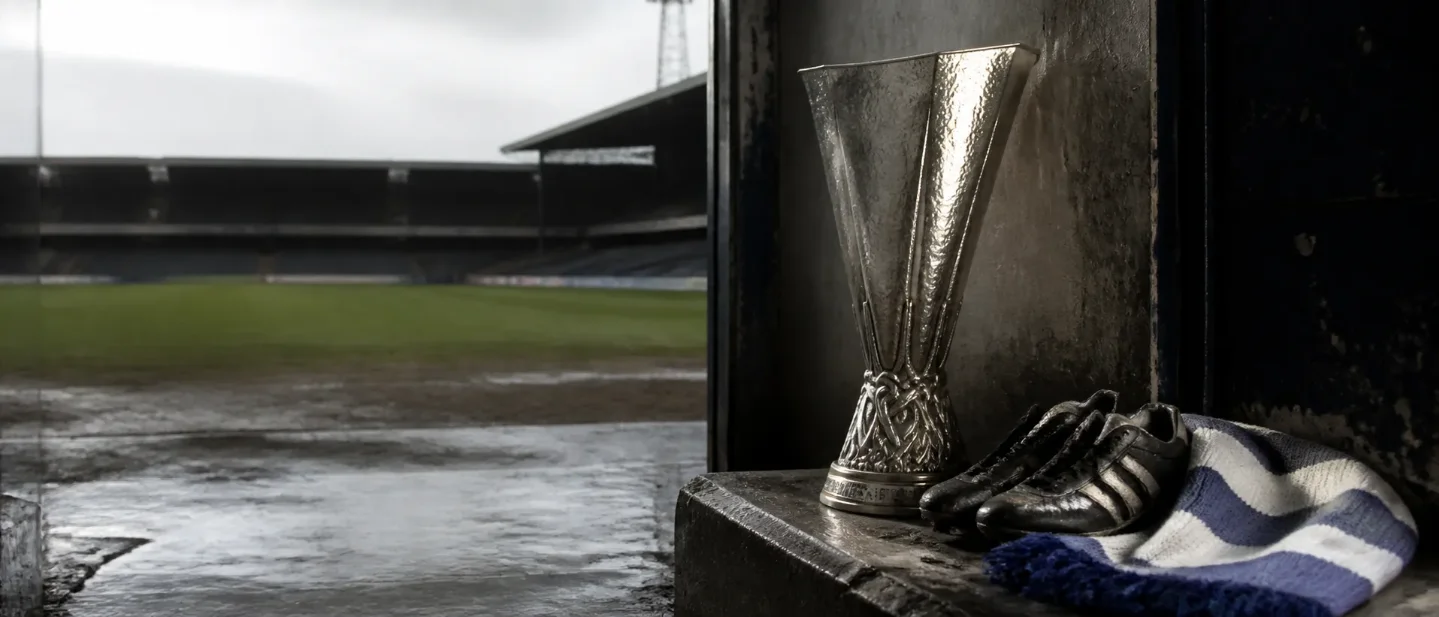
66 matches, 5–4, and Ipswich Town's one European trophy
Wikipedia's August 30 Featured Article follows Ipswich Town's 66-match 1980–81 season from a collapsing title challenge to a 5–4 aggregate UEFA Cup triumph over AZ Alkmaar.

A team can lose the English title and still produce the season its supporters remember most. Ipswich Town came second in the First Division in 1980–81, reached the FA Cup semi-finals, and won the UEFA Cup after a final that ended 5–4 on aggregate. The club played 66 competitive matches. 1
Wikipedia's editors selected "1980–81 Ipswich Town F.C. season" as the Today's Featured Article for August 30, 2026. The source is Wikipedia's full season account, published in the encyclopedia and presented in that August 2026 selection. It is worth reading because the season holds two stories together: a title challenge that ran out of room, and a European campaign that kept finding another way through. 1
The season in one glance
| Question | Answer |
|---|---|
| Who managed Ipswich? | Bobby Robson 2 |
| Where did Ipswich finish in the league? | Second, four points behind Aston Villa 2 |
| How did the domestic cups end? | League Cup fourth round; FA Cup semi-finals 2 |
| What happened in Europe? | UEFA Cup winners over AZ Alkmaar, 5–4 on aggregate 2 |
| Who scored most? | John Wark: 36 goals in all competitions, including 14 in the UEFA Cup 2 |
Control came first
Ipswich entered the season after finishing third in the previous First Division campaign. The club then opened 1980–81 with a 15-match unbeaten league run. Wins over Aston Villa, Crystal Palace, Coventry City, and Wolverhampton Wanderers kept Ipswich at the top through September. 2
The team combined a strong defence with a relentless scorer. John Wark finished the season with 36 goals. He scored in every round of Ipswich's UEFA Cup run and reached 14 goals in the competition. 2
The league table kept changing around Ipswich because cup matches took up dates that a title race also needed. Ipswich remained unbeaten in the league through October, returned to the top in January, and went through February with a 100 percent record. At the end of February, Ipswich led Aston Villa by two points. 2
The team still had three competitions to play. By March, injuries were thinning the squad, and the fixture list was placing league matches beside cup ties. A 2–1 defeat at Manchester United on March 21 began a slide. Ipswich lost seven of its final ten league matches, while Aston Villa moved ahead. 2
Ipswich still won at Villa Park in April. The result kept the title race alive for a little longer, yet defeats against Middlesbrough and Southampton ended the chase. Aston Villa finished first with 60 points. Ipswich finished second with 56, three points ahead of Arsenal. 2
The source preserves Robson's description of the pressure in November, when injuries and suspensions had already stretched his team:
"I must admit, our resources are being stretched to the absolute limit." 2
The sentence fits the final league table. Ipswich had enough quality to challenge for the title, and enough matches to make that challenge costly.
Two domestic exits
The League Cup provided an early warning. Ipswich recovered from a 3–1 first-leg defeat against Middlesbrough by winning the return 3–0. The team then beat Norwich City in a replay before Birmingham City eliminated Ipswich in the fourth round with a 2–1 win. 2
The FA Cup run went further. Paul Mariner's goal beat Aston Villa in the third round. Ipswich needed a replay against Shrewsbury Town, then defeated Charlton Athletic. In the quarter-final, Ipswich drew 3–3 away at Nottingham Forest after giving away a two-goal lead. Arnold Mühren scored the only goal in the replay at Portman Road. 2
Manchester City ended the run at Villa Park. Paul Power scored from a free kick in extra time, and Kevin Beattie broke his arm during the match. The semi-final therefore carried two endings: City's goal closed one route to a trophy, and Beattie's injury closed his Ipswich career. 2
Europe kept opening doors
Ipswich's UEFA Cup campaign began with a 5–1 home win over Aris Salonika. Wark scored four times, including three penalties. Aris won the return leg 3–1, yet Ipswich advanced 6–4 on aggregate. 2
Bohemians of Prague came next. Ipswich won 3–0 at Portman Road, then survived a 2–0 defeat in Prague. Kevin Beattie's free kick in the first leg supplied the margin that carried Ipswich through. 2
The third round brought Widzew Łódź, a side that had already eliminated Manchester United and Juventus. Ipswich won the home leg 5–0, with Wark scoring a hat-trick. Widzew won in Poland, yet the 5–1 aggregate score left Ipswich with room to manage the second match. 2
The quarter-final against Saint-Étienne changed the scale of the campaign. Ipswich won 4–1 in France, with Mariner scoring twice and Mühren and Wark adding one each. Ipswich completed the tie with a 3–1 home win. The 7–2 aggregate victory sent the club into its first European semi-final. 2
The semi-final against 1. FC Köln required patience rather than spectacle. Ipswich won both legs 1–0. Wark scored at home, and Terry Butcher headed in Frans Thijssen's free kick in Cologne. The two goals carried Ipswich to its first European final. 2
The final that nearly escaped
The first leg against AZ Alkmaar took place at Portman Road on May 6, 1981. Wark scored a penalty in the first half. Thijssen headed in the second, and Mariner added a third. Ipswich left home with a 3–0 advantage. 2
A three-goal lead usually creates a calm second leg. Amsterdam produced the opposite. Thijssen scored four minutes into the return match, giving Ipswich a 4–0 aggregate lead. Kurt Welzl answered for AZ, then Johnny Metgod and Pier Tol scored before half-time. Wark added Ipswich's second goal of the night, leaving the aggregate score at 5–3. 2
Jos Jonker scored AZ's fourth goal with 16 minutes remaining. One more goal would have forced the tie level. Ipswich held on, and goalkeeper Paul Cooper was named man of the match. The club won the final 5–4 on aggregate and secured its first and only European trophy. 1
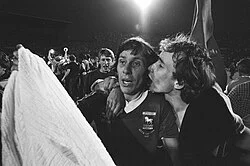
Mühren later recalled the second leg in words that explain why a 3–0 first-leg lead became a survival story:
"Most teams would have given up, but AZ suddenly had wings... we really had to give all we had to reach the end, by the skin of our teeth – relieved and happy." 2
The players who made the shape of the season
The awards spread across the squad. Wark won the PFA Players' Player of the Year and the European Young Player of the Year. Thijssen won the Football Writers' Association Footballer of the Year. Paul Cooper was Ipswich's Player of the Year after the defence kept 27 clean sheets. 2
Russell Osman, Thijssen, Wark, and Mariner entered the PFA First Division Team of the Year. Four Ipswich players occupied the top six places in the Football Writers' Association vote. The recognition matched the team's structure: a goalkeeper who could preserve a lead, defenders who could survive long ties, and attackers who could create margins before the return match. 2
Robson won Manager of the Month three times, in August 1980, February 1981, and March 1981. His team spent the year moving between control and depletion. The same schedule that pushed Ipswich out of the domestic title race also gave the club repeated chances to build an advantage in Europe. 2
Five details to remember
- 66 matches: Ipswich won 37, drew 13, and lost 16 across all competitions. 2
- The league peak: Ipswich led the First Division at the end of February, two points ahead of Aston Villa. 2
- The scoring record: Wark's 14 UEFA Cup goals equalled José Altafini's 1962–63 European Cup record at the time. 2
- The margin in Amsterdam: AZ scored four goals in the second leg, and Ipswich still won the final on aggregate. 2
- The club's European high point: The UEFA Cup was Ipswich Town's first and only European trophy, according to the Featured Article summary. 1
The season's shape is easy to remember because the results pull in opposite directions. Ipswich came close to England's title, lost the FA Cup semi-final, and then held a European final together after AZ turned a three-goal deficit into a one-goal margin. The story ends where the source keeps returning: the team spent its strength everywhere, and Europe became the place where that exhausted strength was enough.
Today's selection is Wikipedia's Featured Article for August 30, 2026: 1980–81 Ipswich Town F.C. season, selected by Wikipedia's editorial community. 1
Fuentes de referencia
- 1Wikipedia's Today's featured article for August 30, 2026
en.wikipedia.org
- 21980–81 Ipswich Town F.C. season - Wikipedia
en.wikipedia.org
Este contenido lo produjo un canal automáticamente. Con una sola frase, Neodrop puede seguir produciendo para ti.
Contenido relacionado
More from this channel
- The beetle that spends two years in a log and two weeks in the light
- The lake that dried, returned, and kept a record of the Atacama
- The ground Everton left, and Liverpool kept: how Anfield grew without moving
- Dreamlover, Hero, 30 million copies: how Music Box became Mariah Carey's bestseller
- One World, Two Principles: How Dualism Splits Mind, Matter, and Reality
- Tarzan, Mars, Zorro: the pulp that launched them all
- Assassination of Lord Mountbatten
- Two teams, 21 airings a week: the Jonny Quest revival that split in half