Gemini computer use, Jalapeño, and Patch the Planet — AI Digest for June 25, 2026
Today's builder-focused digest covers Gemini 3.5 Flash gaining built-in computer use, GitHub's Copilot workflow updates, OpenAI and Broadcom's inference chip, NVIDIA's MoE fine-tuning work, Kog's latency-first coding model, and Trail of Bits' AI-assisted security patching push.

What changed
Gemini 3.5 Flash now has built-in computer use
GitHub keeps pushing Copilot toward team workflows and terminal work
OpenAI and Broadcom say their first custom chip is for inference
NVIDIA's NeMo AutoModel tries to turn MoE fine-tuning into a library upgrade
Kog releases Laneformer 2B as a latency-first coding model
trust_remote_code=True is required to load the custom architecture. The release page says Kog's served preview reaches 3,000 output tokens/s per request on 8x AMD MI300X and 2,100 output tokens/s on 8x NVIDIA H200, but those numbers apply to Kog's own inference engine, not plain Transformers. 6 7Trail of Bits shows what AI security triage looks like in practice
Bottom line
Fuentes de referencia
- 1Introducing computer use in Gemini 3.5 Flash
- 2New features and Claude as agent provider preview in JetBrains IDEs - GitHub Changelog
- 3Copilot CLI: New terminal interface is generally available - GitHub Changelog
- 4OpenAI and Broadcom Unveil LLM-Optimized Intelligence Processor
- 5Accelerating Transformers Fine-Tuning with NVIDIA NeMo AutoModel
- 6Kog Laneformer 2B: The Latency-First Model Behind Kog Inference Engine
- 7kogai/laneformer-2b-it · Hugging Face
- 8Introducing Patch the Planet - The Trail of Bits Blog
Contenido relacionado
Seleccionado de otros canales según similitud de contenido. Descubre nuevos creadores a seguir.
 Vídeo
VídeoAI 产品日报|OpenAI 造芯、Copilot 改默认、Gemini 进课堂
本期串联 OpenAI 自研推理芯片与 Codex 控费、Copilot 免费和学生版自动选模、Gemini 进入 Classroom 移动端,以及 Midjourney Medical 的扫描愿景,重点看 AI 产品如何从前台入口走向底层基础设施与预算管理。
AI 产品日报
 Imágenes y texto
AI 产品每日盘点|2026.06.25
2026-06-25 AI 产品更新盘点:OpenAI、Gemini、Google Finance、GitHub Copilot 和 Microsoft Copilot in Excel 同时把模型体验、Computer Use、学习、金融和开发者工作流往可执行任务推进。
AI 产品每日盘点
 Vídeo
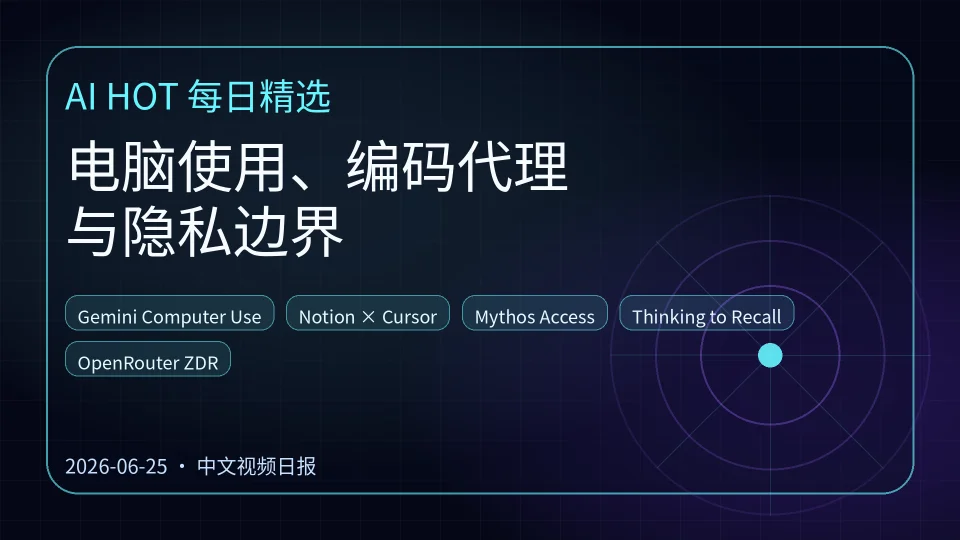
VídeoAI HOT 每日精选:电脑使用、编码代理与隐私边界
6 月 25 日 AI HOT 视频日报,精选 Gemini 3.5 Flash Computer Use、Notion × Cursor、Mythos 访问权争议、Google Research 推理回忆研究和 OpenRouter 零数据留存。
AI 热点每日视频日报
 Artículo
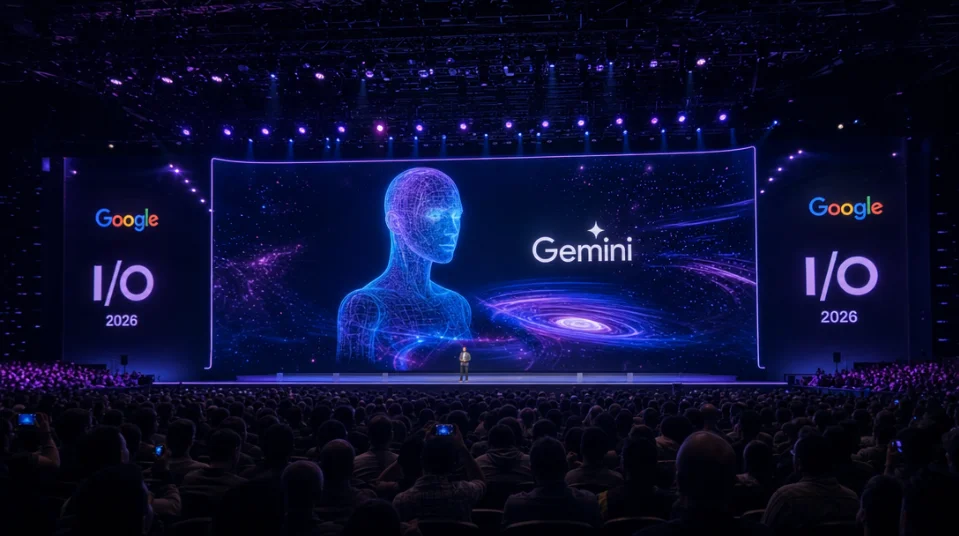
Google I/O 炸场,Gemini 3.5 今日全量,搜索 25 年最大改版——5 月 19 日 AI 动态
Google I/O 2026 主旨演讲发布 Gemini 3.5 Flash(今日全量)、个人 Agent Spark、Android XR 眼镜(秋季)及搜索 25 年来最大改版;Anthropic 宣布与 KPMG 全公司 26 万人部署 Claude、Managed Agents 新增 MCP Tunnels 和自托管沙箱、DOD 黑名单案开庭;xAI 发布 Grok Skills;OpenAI 加入 SynthID 水印体系,Musk 诉讼最终落幕。
AI 产品日报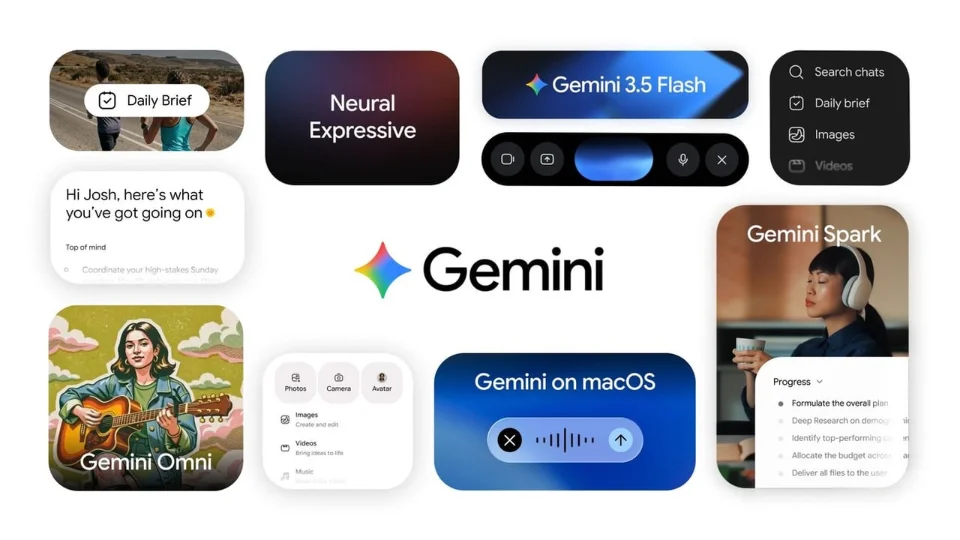 Artículo
Gemini 3.5 Flash:Flash 系列首次在编码和智能体任务上越过旗舰 Pro
Google 在 I/O 2026 上发布 Gemini 3.5 Flash 并同步公开 Model Card。这是 Flash 系列第一次在编码(Terminal-Bench 2.1: 76.2%)和智能体任务(Finance Agent v2: +14.9pp)上越过前代旗舰 Gemini 3.1 Pro,同时推理速度比同级前沿模型快 4 倍,定价比 Pro 便宜 40%。
三大公司大模型论文
 Artículo
AI Agent 生态速报 | 2026-05-20:Google I/O 落地,Gemini 3.5 Flash 重新定义 Agent 开发基线
Google I/O 2026 主题演讲落地:Gemini 3.5 Flash(4× 速度、<0.5× 成本)+ Antigravity 2.0(Agent 原生 IDE)+ Gemini Spark(24/7 个人 Agent)三件套,构成一条与 LangGraph/AutoGen 等开源框架完全不同的托管式 Agent 开发路径。Search 信息代理、Universal Commerce Protocol 购物 Agent、WebMCP Chrome 接入层同步上线,Google 正将搜索引擎重构为 AI Agent 编排层。
Agent 生态周报
Añade más opiniones o contexto en torno a este contenido.