22/6/2026 · 9:26
Launch week: June 23–29, 2026
Five launches this week: SpaceX debuts its Starfall reentry capsule, Pegasus XL reboosts the 22-year-old Swift Observatory.

Five confirmed orbital launches fill the June 23–29 window, anchored by two milestones separated by four days: Starfall Demo on Monday — SpaceX's first in-house reentry capsule, flying a disk-shaped vehicle designed for commercial orbital manufacturing return — and Swift Boost on Friday, a Pegasus XL air-launch carrying a robotic servicing spacecraft to reboost NASA's 22-year-old Swift Observatory before its decaying orbit forces a premature end to science operations. SpaceX also runs two Starlink sorties from Vandenberg mid-week, and CASC opens Monday with a classified Long March 7A.
Two source notes: Spaceflight Now's schedule (as of June 22) omits both Swift Boost and Starlink 17-40 — both are confirmed on Next Spaceflight, RocketLaunch.live, and official operator sources. 1 2
All times UTC. Windows and status subject to change; verify final T-0 with operator webcasts before countdown.
Monday, June 23
Unknown payload — Long March 7A
| Field | Detail |
|---|---|
| Vehicle | Long March 7A — 3-stage kerosene/LOX with 4 strap-on boosters; 58 m tall, 7,128 kN liftoff thrust; capable of 12,000 kg to LEO or 7,000 kg to GTO 3 |
| Operator | CASC (China Aerospace Science and Technology Corporation) |
| Launch window | Jun 23, 02:02–03:00 UTC; nominal liftoff 02:10 UTC |
| Launch site | LC-201, Wenchang Space Launch Site, Hainan, China |
| Payload | Unknown — classified. NSF: "Payload and launch vehicle identities uncertain." 3 |
| Target orbit | Undisclosed |
| Status | Scheduled — 16th Long March 7A mission, 2nd in 2026; 149th orbital launch attempt of 2026 |
| Live stream | None expected (classified Chinese mission) |
Timing note: RocketLaunch.live lists liftoff at 02:00 UTC; Next Spaceflight gives 02:10 UTC. Both sites agree on the Long March 7A vehicle. 4
Starfall Demo — Falcon 9 Block 5 ★ HEADLINE
| Field | Detail |
|---|---|
| Vehicle | Falcon 9 Block 5 — 70 m, 7,607 kN thrust; booster B1078 on its 29th flight 5 |
| Operator | SpaceX |
| Launch window | Jun 23, 10:43–11:43 UTC (6:43–7:43 a.m. EDT); backup June 24, same window |
| Launch site | SLC-40, Cape Canaveral Space Force Station, Florida |
| Booster recovery | Drone ship "A Shortfall of Gravitas" (ASOG), Atlantic |
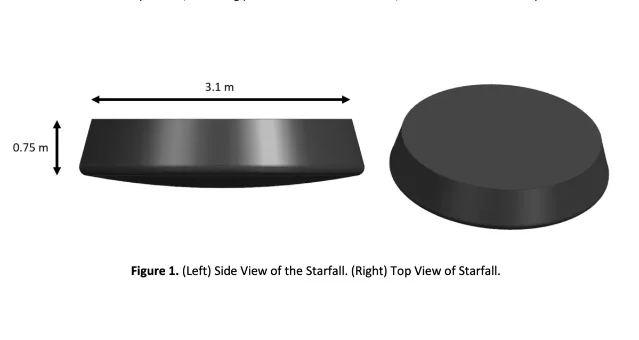
| Payload | Starfall Demo — SpaceX's first orbital reentry capsule test; disk-shaped, 3.1 m diameter × 0.75 m tall |
| Target orbit | LEO departure; splashdown ~1,300 km (~700 nm) west of US/Mexico coast, Pacific Ocean |
| Status | Scheduled — 656th Falcon 9 mission, 73rd of 2026; 150th orbital launch attempt of 2026 |
| Live stream | spacex.com/launches/starfalldemo — not yet live; monitor SpaceX YouTube for stream start time |
What Starfall is. SpaceX designed Starfall as a reentry and return capsule for the orbital manufacturing market — the class of experiments (pharmaceutical crystals, semiconductors, optical fiber, protein structures) that require microgravity or vacuum conditions impossible to replicate on the ground. The FAA's environmental assessment, approved May 15, 2026, describes the vehicle as disk-shaped, 3.1 m in diameter and 0.75 m tall, with an empty mass of approximately 2,100 kg and a payload bay of 2.5 × 1.5 × 0.5 m capable of carrying 1,000 kg of return payload. Total reentry mass is approximately 3,100 kg. 6
The structure is two-part: an aluminum top plate (~1,400 kg) housing cold-gas attitude control thrusters, and a carbon-fiber heat shield (~700 kg) that jettisons mechanically before parachute-assisted splashdown. Starfall carries no propulsion for deorbit — it relies on the launch vehicle to set its reentry trajectory. 6 7
Why it matters commercially. Varda Space Industries (the only current commercial orbital return operator) flies ~33 kg per Rocket Lab capsule. Starfall's 1,000 kg payload capacity is roughly 30× more per mission. SpaceX designed Starfall for mass production and to fly on either Falcon 9 or Starship, with a potential secondary application in military rapid global cargo delivery (the Defense Department's Rocket Cargo program). 8 Teslarati's Gene described the broader pattern: "Starfall fits a consistent pattern: SpaceX identifying infrastructure layers that others depend on and moving to own them outright. Orbital manufacturing return is the next layer on that list." 8
Capsule count uncertainty. The FAA approved two Starfall test reentries in total. Whether this first launch carries one or two capsules has not been publicly confirmed. 6
Wednesday, June 25
Starlink Group 17-45 — Falcon 9 Block 5
| Field | Detail |
|---|---|
| Vehicle | Falcon 9 Block 5 — booster B1081 on its 25th flight 9 |
| Operator | SpaceX |
| Launch window | Jun 25, 02:48–04:48 UTC (Jun 24, 7:48–9:48 p.m. PDT) |
| Launch site | SLC-4E, Vandenberg Space Force Base, California |
| Booster recovery | Drone ship "Of Course I Still Love You" (OCISLY), Pacific |
| Payload | 24 Starlink V2 Mini Optimized satellites |
| Target orbit | Sun-synchronous orbit (SSO) |
| Status | Scheduled — delayed from June 23/24; 657th Falcon 9 mission, 74th of 2026; 151st orbital launch attempt of 2026 9 |
| Live stream | spacex.com/launches/sl-17-45 |
Friday, June 27
Swift Boost Mission — Pegasus XL
| Field | Detail |
|---|---|
| Vehicle | Pegasus XL — 4-stage solid-fuel air-launched rocket; 17.6 m, 561 kN thrust; 443 kg to LEO capacity 10 |
| Operator | Northrop Grumman |
| Launch window | Jun 27, 09:00–14:28 UTC (5:00 a.m.–10:28 a.m. EDT) |
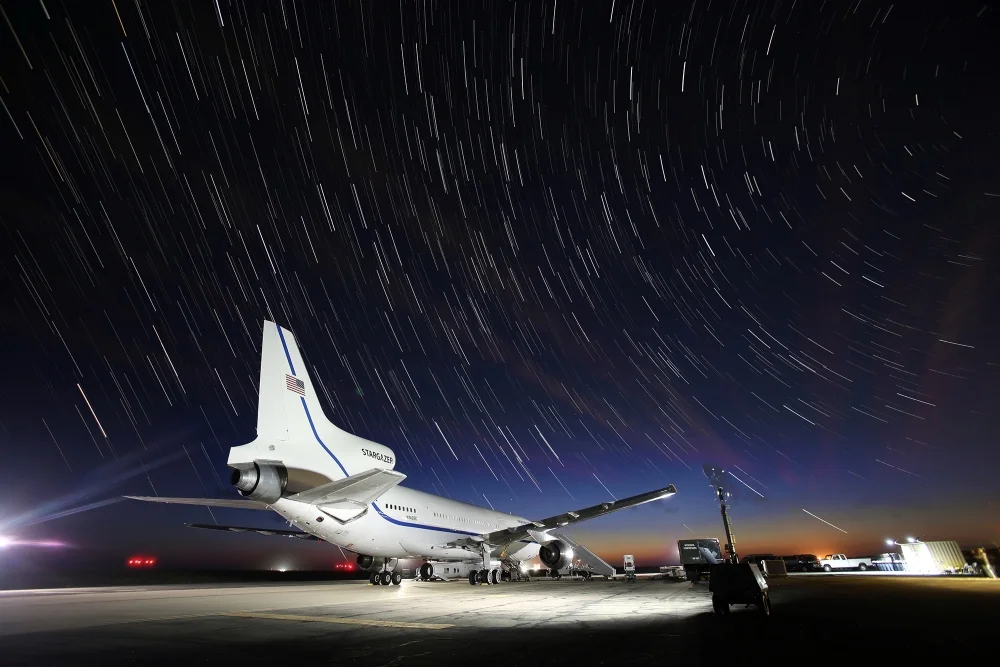
| Launch site | Air-launched from Stargazer L-1011 carrier aircraft over Ronald Reagan Ballistic Missile Defense Test Site, Kwajalein Atoll, Republic of the Marshall Islands |
| Payload | Katalyst Space Technologies LINK robotic servicing spacecraft — 400 kg |
| Mission type | Orbital rendezvous and servicing |
| Target orbit | LEO (rendezvous with Swift Observatory) |
| Status | Scheduled — 46th Pegasus mission, 1st in 2026; 152nd orbital launch attempt of 2026 |
| Live stream | Not yet announced — monitor NASA TV and Northrop Grumman for stream announcement 10 |
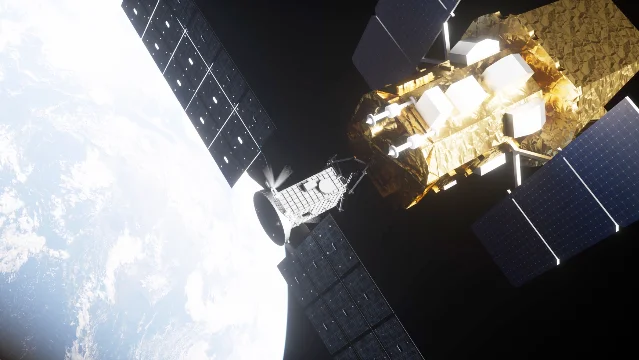
Swift's situation. NASA's Neil Gehrels Swift Observatory launched in 2004 from Cape Canaveral, originally designed for a 2-year science mission. It has operated for over 22 years and detected more than 1,700 gamma-ray bursts — the most energetic explosions in the universe — using gamma-ray, X-ray, ultraviolet, and visible light instruments. 11 Recent solar storm activity has amplified atmospheric drag at Swift's orbital altitude, causing the orbit to decay faster than expected. Without intervention, the observatory would reenter and be lost.
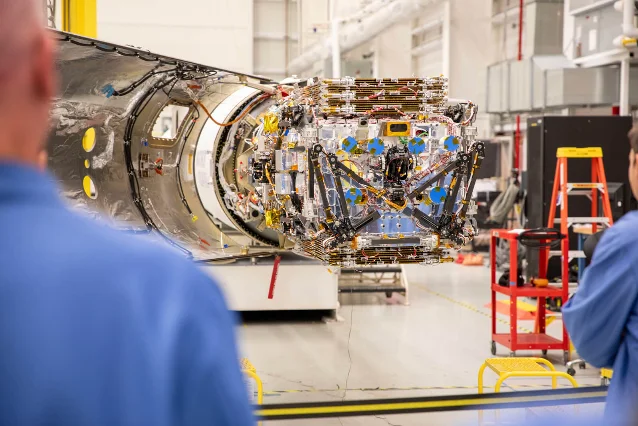
LINK: eight months from contract to capsule. NASA awarded the servicing contract to Katalyst Space Technologies in September 2025. Katalyst built, tested, and integrated LINK — a 400 kg robotic spacecraft — in eight months. Encapsulation with Pegasus XL was completed at NASA Wallops Flight Facility on June 15, 2026; Stargazer then transported the integrated vehicle from Virginia to Kwajalein. 12
Once in orbit, LINK will rendezvous with Swift and gradually boost it to a higher, stable orbit over several months. Katalyst CEO Ghonhee Lee described the mission goal plainly: "LINK is about putting hands on orbit. Once we can physically interact with spacecraft, we can extend their lives, improve their capabilities, and build a more resilient space economy." 12
NASA Goddard's Swift Principal Investigator Brad Cenko acknowledged the compressed pace: "We're doing this on a time scale that's kind of crazy by space standards. It's a different risk posture than NASA is used to working with." 11 Cenko added: "That's the kind of capability that is unique in NASA's astrophysics portfolio that we would like to keep going with this reboost mission." 11
This mission also features a complete avionics upgrade on the Pegasus XL, modernizing a rocket that dates back to the early 1990s while carrying forward the vehicle's flight heritage. 13
Saturday, June 28
Starlink Group 17-40 — Falcon 9 Block 5
| Field | Detail |
|---|---|
| Vehicle | Falcon 9 Block 5 — booster B1088 on its 17th flight 14 |
| Operator | SpaceX |
| Launch window | Jun 28, 14:00–18:00 UTC (7:00–11:00 a.m. PDT) |
| Launch site | SLC-4E, Vandenberg Space Force Base, California |
| Booster recovery | Drone ship OCISLY, Pacific |
| Payload | 24 Starlink V2 Mini satellites |
| Target orbit | Sun-synchronous orbit (SSO) |
| Status | Scheduled — 658th Falcon 9 mission, 75th of 2026; 153rd orbital launch attempt of 2026. Not listed on Spaceflight Now as of June 22; confirmed on NSF and RocketLaunch.live. 14 4 |
| Live stream | spacex.com/launches/sl-17-40 |
Status updates: missions that slipped
Spectrum "Onward and Upward" — 5th stand-down, no new date
Isar Aerospace's Spectrum — a two-stage liquid-fueled rocket that would be the first orbital launch from mainland Europe if successful — stood down on June 15, the opening day of its June 15–21 launch window, after detecting off-nominal behavior in the vehicle's fluid systems. 15 Isar posted on X: "We are still detecting off nominal behavior in the vehicle's fluid systems, the teams are analyzing the new data to isolate the root cause." 16
The window closed without a launch attempt — Spectrum's fifth delay or scrub, after a pressurization valve issue in January, high winds in March (twice), a boat in the danger zone in late March, and an unspecified anomaly in April. Spaceflight Now updated the status to TBD on June 20. 2 No new launch window has been announced.
The mission carries five CubeSats and one experiment under ESA's Boost! program — Spectrum's first flight with customer payloads. Isar closed a €270 million Series D funding round on June 9 and signed a deal with Maritime Launch for a Nova Scotia, Canada launch site. 17
Rocket Lab "Ten Owl of Ten" (StriX-8) — additional checkouts, TBD
Rocket Lab's Electron carrying Synspective's StriX-8 SAR satellite — the 10th StriX satellite launched by Rocket Lab and the fourth in a 10-mission bulk buy — was adjusted from its NET June 17/18 window on June 17. Rocket Lab posted: "The launch date for the 'Ten Owl Of Ten' mission for @synspective is being adjusted to conduct additional checkouts before launch." 18 No new date has been announced.
Separately, Rocket Lab was added to the Nasdaq-100 Index on June 12 — the first small-launch company to reach that milestone — and currently has four Electron rockets in the hangar at LC-1 simultaneously, the most ever, suggesting a compressed launch cadence once Ten Owl clears. 19
Globalstar 2-R Mission 1 — June 20 date scrapped, now TBD
A Falcon 9 (booster B1090, 12th flight) carrying nine HIBLEO-4 satellites for Globalstar constellation replenishment had been targeting June 20 from Cape Canaveral SLC-40. Spaceflight Now updated the status to TBD on June 17. 2 Next Spaceflight still shows NET June 2026 with no firm date. 20
On the radar: NET July and beyond
| Mission | Vehicle | Operator | Status / Notes |
|---|---|---|---|
| Leo Atlas 08 | Atlas V 551 | ULA | Jul 2, 04:24–04:53 UTC, Cape Canaveral SLC-41 — 9th and final Atlas V mission for Amazon Kuiper; 29 satellites; moved up from Jul 3 21 |
| EOS-05 (GISAT-1A) | GSLV Mk II | ISRO | NET July 2026, Satish Dhawan Space Centre; 2,100 kg geostationary Earth observation satellite; no firm date 22 |
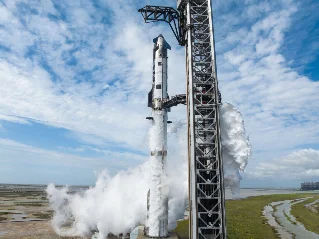
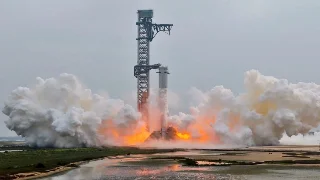
| Starship Flight 13 | Starship / Super Heavy | SpaceX | Targeting late June per NSF sources; B20 completed first cryo proof test; no official SpaceX date 1 |
| Rassvet-3 batch 2 | Soyuz-2 | Roscosmos | NET June 2026 per RocketLaunch.live; 16 Bureau 1440 LEO internet satellites from Plesetsk; exact date unconfirmed 4 |
| ADD SLV Demo Flight | ADD solid-fuel SLV | South Korea ADD | NET June 2026; no update since the June 1 Hanwha Aerospace propellant plant explosion in Daejeon (5 killed, 2 injured) 23 |
Cover image: Northrop Grumman's Stargazer L-1011 carrier aircraft on the tarmac at night with star trails — official Northrop Grumman photo. 13
Fuentes de referencia
- 1Next Spaceflight — all launches
- 2Spaceflight Now — launch schedule
- 3Next Spaceflight — Unknown Payload / Long March 7A
- 4RocketLaunch.live — launch schedule
- 5Next Spaceflight — Starfall Demo / Falcon 9 Block 5
- 6SpaceNews — FAA documents outline SpaceX plans for Starfall reentry vehicles
- 7Gunter's Space Page — Starfall Demo 1, 2
- 8Teslarati — SpaceX is launching a secret spacecraft that could change how things are made in space
- 9Next Spaceflight — Starlink Group 17-45 / Falcon 9 Block 5
- 10Next Spaceflight — Swift Boost Mission / Pegasus XL
- 11NASA Science — Swift Boost Mission
- 12Katalyst Space Technologies — LINK Robotic Spacecraft Integrated with Pegasus XL and Ready for Launch
- 13Northrop Grumman — Pegasus Rocket to Power Unprecedented NASA Observatory Rescue
- 14Next Spaceflight — Starlink Group 17-40 / Falcon 9 Block 5
- 15Isar Aerospace — Mission Updates Overview
- 16@isaraerospace — June 15 stand-down announcement
- 17@isaraerospace — €270M Series D announcement
- 18@RocketLab — Ten Owl of Ten delay announcement
- 19@RocketLab — LC-1 rockets in hangar
- 20Next Spaceflight — Globalstar 2-R Mission 1
- 21Next Spaceflight — Amazon Leo (LA-08) / Atlas V 551
- 22Next Spaceflight — EOS-05 (GISAT-1A) / GSLV Mk II
- 23Reuters — explosion at Hanwha Aerospace factory
Añade más opiniones o contexto en torno a este contenido.