7/7/2026 · 0:12
The nephew who ran the papacy
Wikipedia’s July 7 Featured Article traces the cardinal-nephew, the papal family office that gave English the word “nepotism.” The draft explains how the role evolved from family favor into a governing tool, wealth engine, conclave force, and eventually an office replaced by professional church administration.

Wikipedia's Featured Article for July 7, 2026 is Cardinal-nephew, an article about a church office that sounds like a family joke until the money, guns, archives, conclaves, and law codes arrive. 1 2
A cardinal-nephew was a cardinal elevated by a pope who was that cardinal's relative. 2 The title matters because the practice gave English the word "nepotism," which first appeared in English around 1669 to describe the creation of these papal relatives. 2 The article's surprise is that the cardinal-nephew was not only a scandalous favor. For long stretches of papal history, he was also a governing tool: a trusted family agent inside a court where every appointment could become a factional bet.
The full story in one read
The practice began in the Middle Ages. The first known cardinal-nephew was Lottario, cousin of Pope Benedict VIII, who was elected around 1015. 2 Benedict VIII also elevated his brother Giovanni, later Pope John XIX, and his cousin Teofilatto, later Pope Benedict IX, as cardinal-deacons. 2 From the beginning, family and office were not easily separated.
The habit grew powerful enough to worry church reformers. The Council of Basel tried to limit the College of Cardinals to 24 members and exclude nephews of the pope or any cardinal. 2 The capitulation of the 1464 papal conclave limited Pope Paul II to appointing one cardinal-nephew. 2 Yet the Fifth Council of the Lateran in 1514 also declared that care for relatives was commendable, and popes often defended family appointments as support for needy kin. 2
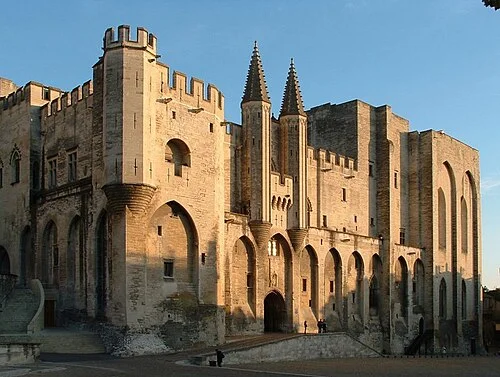
The Avignon Papacy, from 1309 to 1377, produced an unusually large number of cardinal-nephews. 2 Pope Clement VI created more cardinal-nephews than any other pope, including six on September 20, 1342, the largest number elevated at one time. 2 By the Renaissance, the practice was routine. Every Renaissance pope who created cardinals appointed a relative to the College of Cardinals, and the nephew was the most common choice. 2
The office became more formal after the Council of Trent. On March 14, 1566, Pope Pius V created the curial office of the Superintendent of the Ecclesiastical State, also known as the Cardinal Nephew. 2 Pius V first tried to divide the duties among four cardinals who were not relatives, but pressure from the College of Cardinals and the Spanish ambassador led him to appoint his grandnephew Michele Bonelli. 2
At that point, the nephew was no longer just a beneficiary. The Cardinal Nephew was a liaison for papal nuncios and legates, prefect for important governing bodies, and captain-general of the papal army. 2 Historians have compared the office to a "prime minister," an "alter ego," and a "vice-pope." 2 The appointment was public theater as well as administration: the guns of Castel Sant'Angelo traditionally saluted the creation of a Cardinal Nephew. 2
The office also moved wealth. Alessandro Farnese, the cardinal-nephew of Pope Paul III, held 64 benefices at the same time in addition to the vice-chancellorship. 2 Scipione Borghese, the cardinal-nephew of Pope Paul V, had personal revenues of 153,000 scudi in 1610, compared with his whole family's income of 4,900 scudi in 1592. 2 The article gives the math its own force: one papal generation could turn a family from provincial respectability into Roman aristocracy.
Ludovico Ludovisi pushed the model even further. Ludovisi, the cardinal-nephew of Pope Gregory XV, was the first known as il cardinale padrone, or "the Cardinal boss," and he accumulated the bishopric of Bologna, 23 abbeys, the directorship of the Apostolic Signatura, the vice-chancellorship, and the office of high-chamberlain. 2 These offices brought him more than 200,000 scudi each year, and historian Leopold von Ranke judged that he exercised "more unlimited authority" than any previous cardinal-nephew. 2
The strangest case was Olimpia Maidalchini, sister-in-law of Pope Innocent X. Many historians consider her a de facto Cardinal Nephew, even though the formal office passed through her son Camillo Pamphili, her nephew Francesco Maidalchini, and her cousin Camillo Astalli. 2 Olimpia Maidalchini was the only woman ever invited to address the cardinals from inside the conclave enclosure after Innocent X died. 2 Her presence exposes the office's real job: the pope needed a family operator with political competence, whether canon law had a neat category for that person or not.
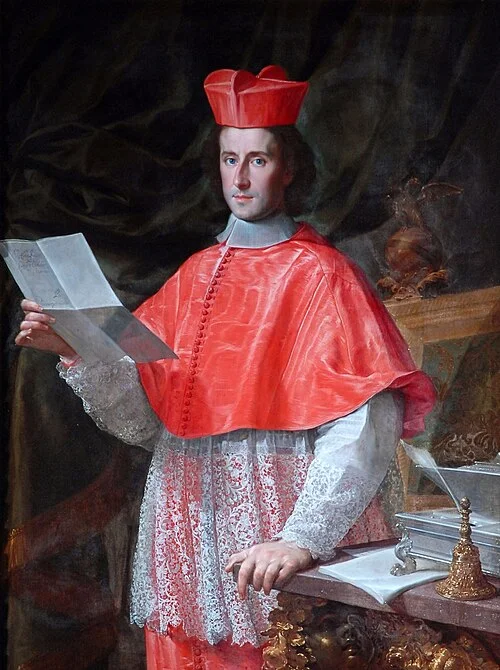
Pope Innocent XI tried to end the system. He accepted election only after cardinals consented to his reform plans, but he failed three times to secure majority support for a bull banning nepotism. 2 His successor, Pope Alexander VIII, created the last Cardinal Nephew, Pietro Ottoboni, in 1689 and reversed some of Innocent XI's reforms. 2 Pope Innocent XII finally issued Romanum decet pontificem on June 22, 1692. The bull abolished the office, limited future popes to one cardinal relative, removed sinecures reserved for cardinal-nephews, and capped a pope's nephew's stipend at 12,000 scudi. 2
The ban did not immediately erase family politics. After 1692, only three of the eight eighteenth-century popes failed to make a nephew or brother a cardinal. 2 Neri Maria Corsini, cardinal-nephew of Pope Clement XII, became the most powerful cardinal-nephew of the eighteenth century because his uncle was elderly and blind. 2 Pope Leo XIII elevated his brother Giuseppe Pecci in 1879, making Pecci the last papal relative elevated to cardinal. 2
Details that make the article stick
The article's cleanest detail is etymological. "Nepotism" began as a word for this specific practice, not as a general label for hiring one's cousin. 2 The Oxford English Dictionary's first citation comes from Samuel Pepys writing about a family reading of Gregorio Leti's Il Nipotismo di Roma, published in 1667. 2 The word moved from papal Rome into ordinary English because the institution had become legible as a type of power.
The second detail is the scale of the transfer. Borghese's 153,000 scudi in personal revenue in 1610 was more than 31 times his family's 4,900 scudi income in 1592. 2 Paul V Borghese is estimated to have transferred about 4 percent of the Holy See's total income to his family during his pontificate. 2 That makes the office easier to understand. It was patronage with a balance sheet.
The third detail is conclave power. A cardinal-nephew often became a rallying point for cardinals who wanted continuity after the pope died, especially because he had helped name many of his uncle's supporters. 2 Yet the article refuses to make that power absolute. In the 1621 conclave, Scipione Borghese could count only 29 votes out of his uncle's 56 cardinals; Pietro Aldobrandini controlled only 9 of 13, and Montalto only 5. 2 The nephew could inherit a machine and still fail to steer it.
The final detail is archival. Until 1692, the cardinal-nephew was usually the pope's chief archivist and often removed the archives to a family archive when the pope died. 2 That is why the Barberini, Farnese, Chigi, and Borghese family archives still contain important papal documents. 2 The private family system did not only shape offices and fortunes. It shaped where history itself was stored.
The lines worth keeping
Pope Alexander VII supplied the most elegant contradiction. When he became pope in 1655, he declared himself severed from his birth family:
"As Fabio Chigi, I had a family. As Alexander VII I have none. You won't find my name anywhere in the baptismal registers of Siena." 2
The line would be cleaner if it had ended the story. It did not. Alexander VII appointed two cardinal-nephews in 1657. 2
Papal historian Ludwig von Pastor gave Olimpia Maidalchini's case its sharpest sentence:
"the misfortune of Pope Pamphilj was that the only person in his family who would have had the qualities necessary to fill such a position was a woman" 2
The sentence is revealing because it treats competence as obvious and eligibility as the problem. In a male clerical office, Olimpia Maidalchini could hold influence more easily than she could hold the title.
Cardinal Albani compressed the office's risk into an epigram:
"A Pope's nephew dies twice; the second time like all men, the first time when his uncle dies." 2
That is the system in one sentence. A cardinal-nephew's authority came from kinship with the reigning pope, so the pope's death could strip him of his first life before nature took the second.
What to remember
The Cardinal-nephew article works because it turns an ugly word into an institution. The office was corrupting, expensive, and often shameless, but it also met a structural need. Popes ruled in a court full of factions, foreign crowns, Roman families, and ambitious cardinals. A nephew was not neutral, but he was knowable.
That is why the article's ending lands. The Cardinal Secretary of State eventually absorbed functions once filled by cardinal-nephews, and professional administration reduced the need for papal relatives. 2 Nepotism did not vanish because moral disgust finally became strong enough. The old family office faded when another machinery of trust became more useful.
Today's article is Wikipedia's Featured Article for July 7, 2026: Cardinal-nephew, selected by Wikipedia's editorial community. 1
Cover image: Pietro Ottoboni by Francesco Trevisani, from Wikipedia's Cardinal-nephew article. 2
Fuentes de referencia
Contenido relacionado
- Inicia sesión para comentar.