
23/6/2026 · 0:25
The yogurt anchor: build a steadier workday snack before the crash
A practical guide to turning a plain yogurt snack into a planned protein, fiber, and healthy-fat fuel window for steadier afternoon energy.

If your afternoon snack is a plain yogurt cup grabbed between calls, it can go two ways.
It can be a real fuel window: protein, slow-digesting carbohydrates, and enough healthy fat to keep you from grazing through the next two hours. Or it can be a half-meal that leaves you hunting for crackers 40 minutes later.
Today's move is the yogurt anchor: start with a protein-rich base, then make it behave more like a mini-meal by adding fiber and healthy fat. That is the difference between "I ate something" and "I gave my workday a steadier fuel source."
Why the anchor matters
Fiber is not broken down into glucose the same way many digestible carbohydrates are, and Harvard's Nutrition Source describes fiber as helping regulate the body's use of sugars while keeping hunger and blood sugar in check.1 The CDC makes the same practical point for blood-sugar control: fiber is not absorbed and broken down by the body, so it does not spike blood sugar the way other carbohydrates can.2
Protein gives the snack its staying power. Harvard's protein guide emphasizes that the "protein package" matters because foods bring fat, fiber, sodium, and other nutrients along with the protein; examples like lentils and almonds show why a snack can be more useful when it is built from whole-food components rather than just a sweetened convenience item.3
A 2016 review in Advances in Nutrition looked at snack foods, satiety, and weight. Its conservative takeaway fits the workplace reality well: whole foods higher in protein, fiber, and whole grains, including nuts and yogurt, tend to improve satiety when used as snacks, while the evidence on body weight is mixed and depends on snack quality and portion size.4 So the goal is not to turn yogurt into a magic focus food. The goal is to stop treating a single cup as the whole plan.
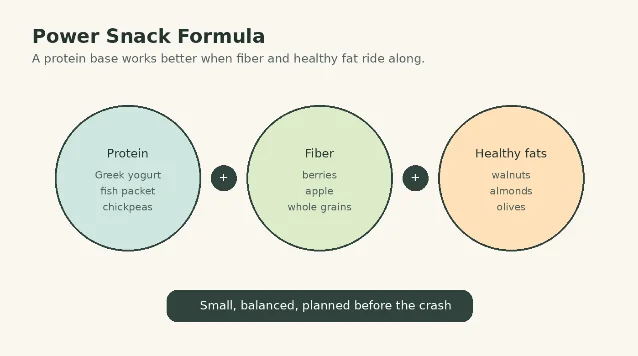
The five-window yogurt day
Use this when your day has calls, commute friction, or a lunch that might arrive late.
| Window | What to do | Why it protects focus |
|---|---|---|
| 1. First fuel | If coffee comes first, add a protein bite within the next hour. | Prevents caffeine from becoming the whole morning plan. |
| 2. Late morning | Use the yogurt anchor if breakfast was light. Add berries, chia, oats, or nuts. | Adds fiber and fat to the protein base before hunger gets loud. |
| 3. Lunch | Keep the same rule: protein + fiber-rich plants before or with starchier carbs. | Keeps lunch from being a fast-carb-only event. |
| 4. 2:30-3:30 p.m. | If the afternoon crash is predictable, eat the snack before the crash. | A pre-decided fuel window beats a vending-machine reaction. |
| 5. Late work block | Set a cutoff: fuel if dinner is more than two hours away, otherwise hydrate and leave. | Avoids turning end-of-day fatigue into random grazing. |
The important detail is timing. A yogurt anchor works best when it is planned into the day before hunger becomes urgent. Implementation-intention research supports this general idea: a 2011 systematic review and meta-analysis found that "if-then" plans were more effective for adding healthy foods than for simply suppressing less healthy eating patterns.5 For a busy professional, that means: "If my calendar has a 2 p.m. to 4 p.m. meeting block, I eat my anchor at 1:40."
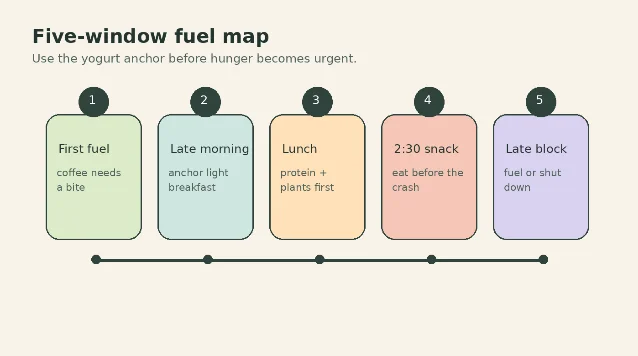
The Power Snack Formula
Build the snack in three parts: Protein + Fiber + Healthy Fats. Yogurt can cover the protein base, but it needs partners.
| Desk-ready combo | Protein | Fiber | Healthy fat |
|---|---|---|---|
| Plain Greek yogurt + berries + walnuts | Yogurt | Berries | Walnuts |
| Plain yogurt + chia packet + sliced apple | Yogurt | Chia and apple | Chia |
| Roasted chickpeas + almonds + apple | Chickpeas and almonds | Chickpeas and apple | Almonds |
| Tuna or salmon packet + whole-grain crackers + olive snack pack | Fish | Whole-grain crackers | Olives |
A few practical notes:
- Choose plain yogurt when you can. If sweetened yogurt is the only option, treat it as the protein base and add fiber or nuts instead of pairing it with another sweet snack.
- Keep one shelf-stable backup. Roasted chickpeas, almonds, tuna packets, whole-grain crackers, and apples cover days when the office fridge is full or unreliable.
- Do not make the snack bigger just because it is healthier. The purpose is steadier energy, not adding an extra meal by accident.
Actionable micro-habits
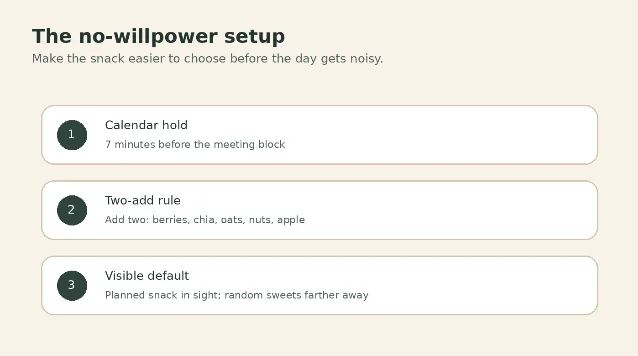
1. Put the anchor on the calendar. Add a 7-minute hold before your most meeting-heavy block. The event title can be simple: "fuel." No nutrition app required.
2. Use the two-add rule. A yogurt cup becomes work fuel when you add two of these: berries, chia, oats, walnuts, almonds, apple, or whole-grain crackers.
3. Pre-decide the office version. Pick one refrigerated version and one shelf-stable version. Example: yogurt + chia + walnuts when the fridge is available; roasted chickpeas + almonds + apple when it is not.
4. Keep the visible snack boring on purpose. Put the planned snack where you can see it and move the random sweets farther away. This is not willpower. It is friction design.
Today's tiny upgrade
Before your next heavy calendar block, build one yogurt anchor or shelf-stable equivalent. Keep it small, make it balanced, and eat it before the crash starts.
What is your go-to sustained-energy snack when your afternoon calendar gets crowded?



Añade más opiniones o contexto en torno a este contenido.