21/6/2026 · 0:17
The snack-drawer buffer: why planned 3pm fuel beats another coffee
This guide helps busy professionals turn the 3pm snack from a reactive sugar grab into a pre-decided fuel buffer. It translates blood-sugar, satiety, and choice-architecture evidence into the five-window framework, four desk-ready Power Snack examples, and zero-prep micro-habits.

If your afternoon crash usually starts with a vague search for "something," the problem is probably not discipline. It is an empty buffer.
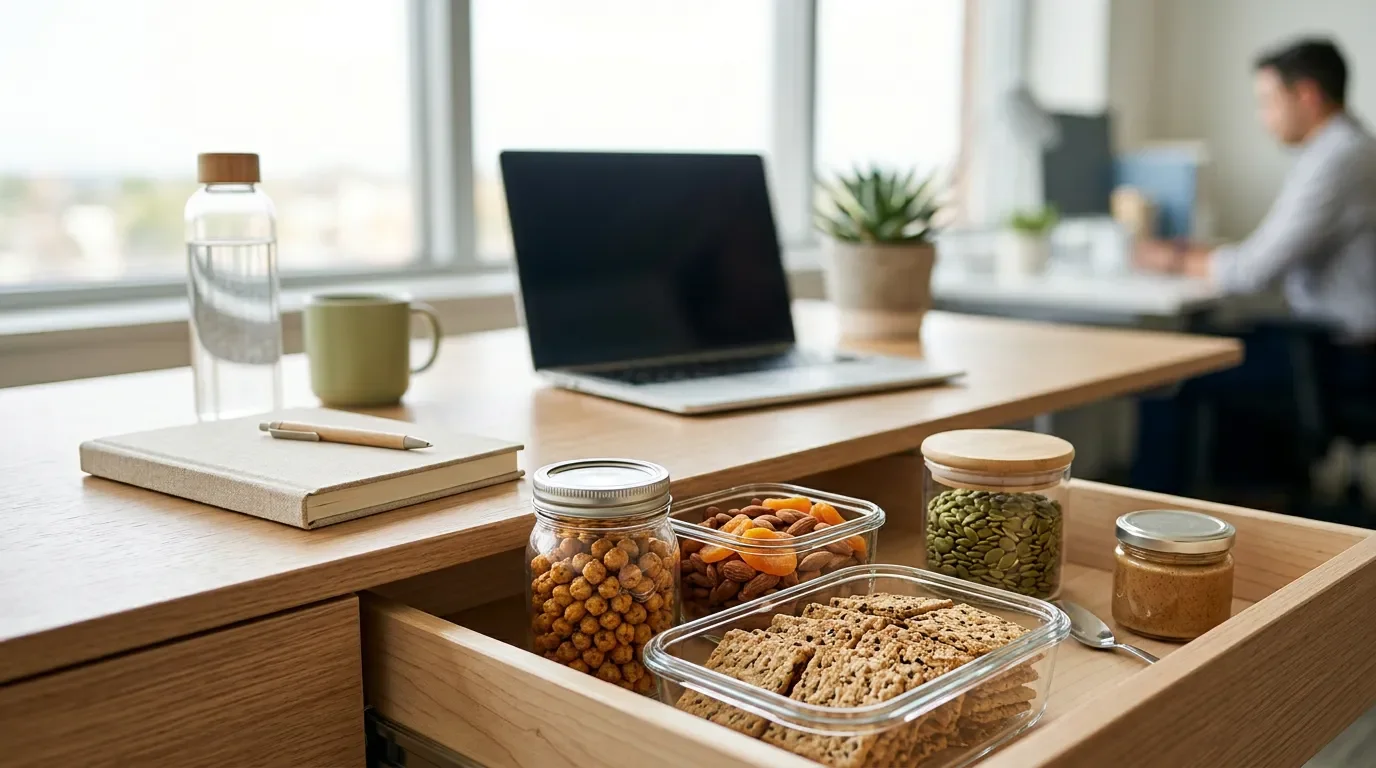
A 3pm snack works best when it is designed before your brain is tired. The goal is not to graze all day. The goal is to give your workday one planned, balanced fuel stop so the vending machine, candy bowl, or second coffee is not making the decision for you.
The nutrition logic is simple: carbs raise blood sugar, but the CDC notes that eating carbs with protein, fat, or fiber slows how quickly blood sugar rises. 1 Harvard's Nutrition Source makes the same idea practical: high-fiber foods slow digestion and tend to create a more gradual rise in blood sugar than rapidly digested, low-fiber carbs. 2
For a busy professional, that means your snack drawer should not be a random collection of emergency calories. It should be a small blood-sugar buffer.
The workday problem: the 3pm decision is usually made too late
By midafternoon, you are usually operating with less patience, more task residue, and a calendar that has already eaten your good intentions. That is exactly when a sugar-only snack feels like the fastest fix.
The better move is to pre-decide the snack while your executive function is still online. Harvard's snacking guidance asks four practical questions: when you tend to snack, why you are snacking, what will actually satisfy you, and how much is enough. It also notes that satisfying snacks often include whole foods with protein, fiber, and whole grains. 3
A 2016 review in Advances in Nutrition reached a similar conclusion: studies on snack satiety often find that whole foods high in protein, fiber, or whole grains, including nuts, yogurt, prunes, and popcorn, can improve satiety when used as snacks. 4 That does not mean a snack will magically make a bad lunch disappear. It means the snack has a job: reduce the urgency that drives low-quality choices later.
The five-window framework for a steadier workday
Use this as a default template, not a rigid diet schedule:
| Window | What to do | Why it helps |
|---|---|---|
| 7:00-9:00am | Eat a real first fuel dose: protein plus a fiber-containing carb. | Breakfast should reduce the need to chase focus with coffee alone. |
| 10:00-11:00am | Check whether you need a small bridge snack or just water. | Many "snack" signals are under-fueled breakfast, thirst, or boredom. |
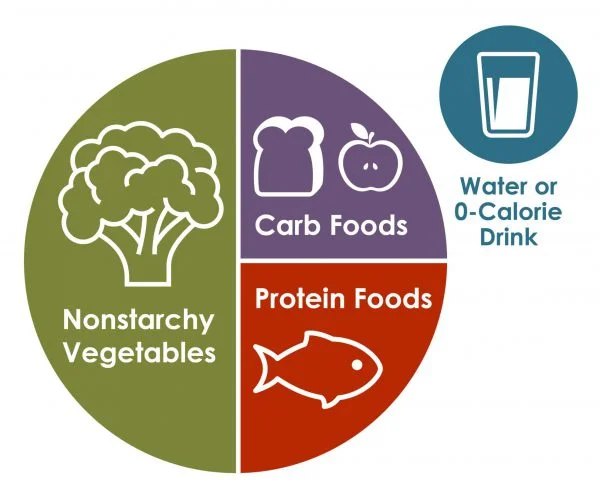
| 12:00-1:30pm | Build lunch around protein, vegetables or beans, and a carb you can portion. | The CDC plate method puts nonstarchy vegetables on half the plate, lean protein on one quarter, and carb foods on one quarter. 1 |
| 2:30-3:30pm | Use your planned snack-drawer buffer. | This is the point where a balanced snack can prevent the "anything nearby" choice. |
| 5:00-6:30pm | Avoid the commute-starvation rebound. | If dinner is delayed, choose a mini version of the same formula instead of arriving home ravenous. |
Notice the theme: the snack is not a treat you earn. It is a system you install.
The Power Snack Formula: protein + fiber + healthy fats
Build your 3pm snack from at least two of the three anchors. All three is ideal, but two is still better than a naked carb.
Protein gives the snack staying power. Fiber slows digestion and adds volume. Healthy fats help satisfaction and make the snack feel like food, not a placeholder.
A small crossover study of 23 women found that higher-protein, higher-fiber snack bars produced lower 9-hour glucose and insulin responses than high-fat, high-sugar bars; peak glucose after the morning higher-protein bar was 16% lower. 6 Treat that as a useful signal, not a universal rule. The population was small, and a snack bar is not the same as every snack you might keep at your desk.
Desk-ready examples:
- 🥑 Roasted chickpeas + almonds: crunchy, shelf-stable, and easy to pre-portion.
- 🧠 Whole-grain crackers + single-serve nut butter: a better version of the cracker habit because fat and protein come along for the ride.
- ⚡ Tuna or salmon pouch + whole-grain crisps: high-protein and still desk-drawer friendly if you have a can opener-free pouch.
- Popcorn + pumpkin seeds: more satisfying than popcorn alone because the seeds add protein and fat.
If you use bars, read the label like a performance tool: look for meaningful protein and fiber, and watch whether added sugar is doing most of the work.
Three zero-prep micro-habits that make the snack automatic
- Pre-portion once, not daily. The CDC specifically advises measuring snacks instead of eating straight from the bag or box. 1 Put five workday portions into small containers or bags on Monday.
- Make the balanced choice the visible choice. A real-world cafeteria nudge study found that environmental cues can change calorie purchases, while also noting that field results are more mixed than lab results. 7 Translation for your desk: keep the Power Snack at eye level and put candy, chips, or cookies somewhere less convenient.
- Pair the snack with a calendar trigger. Add a recurring 2:45pm reminder labeled "protein + fiber first." The reminder is not there to shame you. It is there to interrupt the automatic route from fatigue to sugar.
Today's experiment
Before tomorrow's workday starts, build one snack-drawer buffer:
- one protein source,
- one fiber-rich carb or plant food,
- one healthy fat,
- and one pre-decided time window.
Then notice what happens at 4pm. Do you still want coffee? Do you feel calmer choosing dinner? Does the candy bowl lose some of its pull?
What is your most reliable sustained-energy snack: nuts, yogurt, roasted chickpeas, tuna packets, popcorn, or something else?
Fuentes de referencia
- 1CDC: Diabetes Meal Planning
- 2Harvard Nutrition Source: Carbohydrates and Blood Sugar
- 3Harvard Nutrition Source: The Science of Snacking
- 4Snack Food, Satiety, and Weight
- 5Harvard Nutrition Source: Chia Seeds
- 6High protein high fibre snack bars reduce food intake and improve short term glucose and insulin profiles
- 7Effects of a Nudging Cue Targeting Food Choice in a University Cafeteria

Añade más opiniones o contexto en torno a este contenido.