The Cyclospora outbreak now has a food link. Here's the Taco Bell reality check.
FDA and CDC linked a five-state Cyclospora outbreak to shredded iceberg lettuce served at some Taco Bell locations; here is who should avoid it, what symptoms to watch for, and when to get tested or seek urgent care.

The short version
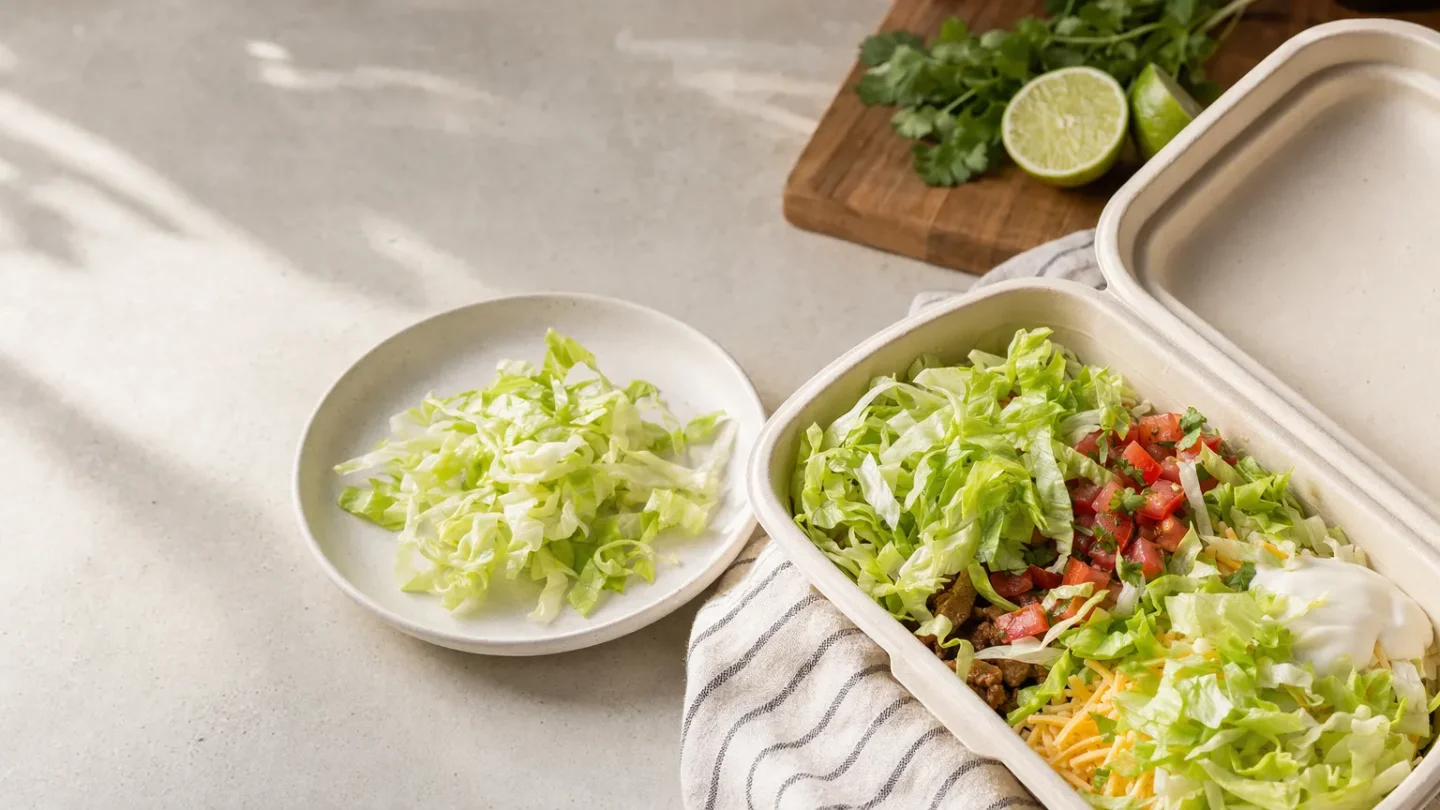
This outbreak has a food link now. On July 17, the FDA and CDC said their traceback and epidemiologic work pointed to shredded iceberg lettuce from Taylor Farms de Mexico served at some Taco Bell locations in Indiana, Kentucky, Michigan, Ohio, and West Virginia. Taylor Farms said it would voluntarily remove all iceberg lettuce sourced from central Mexico from the U.S. market and start a recall. The investigation is still open, and not every Taco Bell in those states received the implicated lettuce. 1 2
So this is a targeted food-safety alert, not a reason to panic about every salad or every Taco Bell. Here is the useful part: what to avoid, what symptoms to watch for, and when a stomach problem needs more than hydration and a day in bed.
What to do if you ate there
- If you ate at a Taco Bell in one of the five states and your meal included shredded iceberg lettuce, do not eat any remaining food that could contain the implicated lettuce. The current advisory specifically names Indiana, Kentucky, Michigan, Ohio, and West Virginia. Additional states or distribution channels could be added as the investigation continues. 2
- Clean anything that food touched. FDA advises washing and sanitizing containers, utensils, refrigerator surfaces, cutting boards, and counters that may have contacted potentially contaminated food, then washing your hands with soap and water. 3
- If you feel fine, watch yourself rather than chasing a test. The public guidance focuses on people who develop symptoms. If you do get sick, tell the clinician where and when you ate, and mention the shredded lettuce exposure. That food history helps public-health investigators connect cases. 1
- If you did not have that specific exposure, do not throw out random lettuce from your fridge based on this advisory alone. The current warning is tied to a named supplier, product, restaurant chain locations, and five known states. That could change, so check the FDA or CDC outbreak page before making plans around a developing recall. 2
Why you may see two different case counts
The numbers in this story are easy to mix up because they describe different buckets.
- 1,644 confirmed illnesses are part of the Taco Bell-linked outbreak in five states. The outbreak has caused 94 hospitalizations and no reported deaths. Illnesses began between May 13 and July 13, 2026. In a Michigan analysis of 190 interviewed cases, 90% reported eating iceberg lettuce. 1
- 1,645 confirmed domestic cases were reported to CDC from 34 states since May 1, according to a July 14 Health Alert. That larger total includes illnesses outside this specific Taco Bell investigation; 141 people in that broader group had been hospitalized, with no reported deaths. 4
Those numbers are not meant to be added together. The agencies also warn that state totals may include probable cases, while CDC and FDA are reporting confirmed cases, and recent illnesses can take weeks to be assigned to an outbreak. 1
The symptom clock is slower than a typical food scare
Cyclospora is a microscopic parasite that can cause an intestinal infection. Symptoms usually start about a week after exposure, but the window can be as short as two days or as long as two weeks or more. The classic pattern is frequent, watery diarrhea, often with cramps, bloating, gas, nausea, fatigue, low appetite, or weight loss. 5
The annoying part is the stop-start pattern: symptoms can fade and then return, and untreated illness can last a month or longer. Not everyone who is infected has symptoms. 6
This is also not usually a classic roommate-to-roommate bug. CDC says direct person-to-person spread is unlikely because the parasite needs about one to two weeks outside the body before it becomes infectious. Normal handwashing after using the bathroom still matters, but you do not need to treat every shared surface like a biohazard. 6
What you can handle at home
For a mild stomach illness, the priority is replacing fluids. Keep drinking, and if your stomach is touchy, take small sips rather than trying to slam a huge bottle at once. MedlinePlus lists thirst, dry mouth, dark urine, less urination, tiredness, and dizziness as dehydration signs. 7
But a suspected Cyclospora infection is not a great time to freestyle with leftover antibiotics. CDC says the treatment of choice is the prescription antibiotic trimethoprim-sulfamethoxazole, usually given for 7 to 10 days, and the right treatment depends on a clinician evaluating you. 8
If you have watery diarrhea that lasts more than a few days, keeps coming back, or started after eating the implicated lettuce, contact a healthcare provider. Say the word Cyclospora. Routine stool testing may miss it, so CDC says clinicians should specifically request Cyclospora testing when they suspect it. 4
When this is no longer a wait-and-see problem
Contact a clinician promptly for:
- Dehydration signs such as dizziness, very dry mouth, dark or unusually little urine, or worsening weakness
- Blood, pus, or black stool
- Stomach pain that does not ease after a bowel movement
- A fever above 101°F
- Diarrhea that is getting worse or has not improved after five days in an adult 9
Get emergency help right away if severe diarrhea is followed by confusion, fainting, no urination, very fast breathing, very fast heartbeat, or signs of shock. Those can signal life-threatening dehydration. 7
The practical takeaway
The new information is specific enough to act on: avoid the named shredded iceberg lettuce exposure at the listed Taco Bell locations, clean anything it touched, and keep an eye on symptoms over the next two weeks. It is not a reason to ban all lettuce or assume every bout of diarrhea is Cyclospora.
If the watery-diarrhea pattern shows up, especially after that exposure, get medical advice and ask for the specific test. This parasite is treatable, but guessing the cause or waiting through repeated relapses is how a manageable stomach infection turns into a long, dehydrating month.
Fuentes de referencia
- 1CDC investigation update: Cyclospora outbreak, July 2026
- 2FDA investigation of 5-state Cyclospora outbreak
- 3FDA food-safety tips during a foodborne outbreak
- 4CDC Health Alert: domestically acquired cyclosporiasis in 2026
- 5CDC symptoms of cyclosporiasis
- 6CDC about cyclosporiasis
- 7MedlinePlus dehydration
- 8CDC clinical care of cyclosporiasis
- 9MedlinePlus diarrhea
Contenido relacionado
- Inicia sesión para comentar.
More from this channel
- Your resting heart rate is not a health score. Here's what the new study actually means.
- Alcohol is not a health hack. Here's what the new mortality study actually says.
- You do not need a gym-bro routine. Here's the strength-training target that matters.
- Costa Rica just got a chikungunya travel alert. Here's the bite-and-vaccine plan.
- Ebola is spreading fast in the DRC. Here's the travel reality check.
- A parasite outbreak is driving a lot of summer diarrhea. Here's the Cyclospora plan.
- Your flu shot was not useless. Here's what this season's numbers actually mean.
- Your nosebleed is not a head-tilt moment. Here's the stop-the-bleed plan.