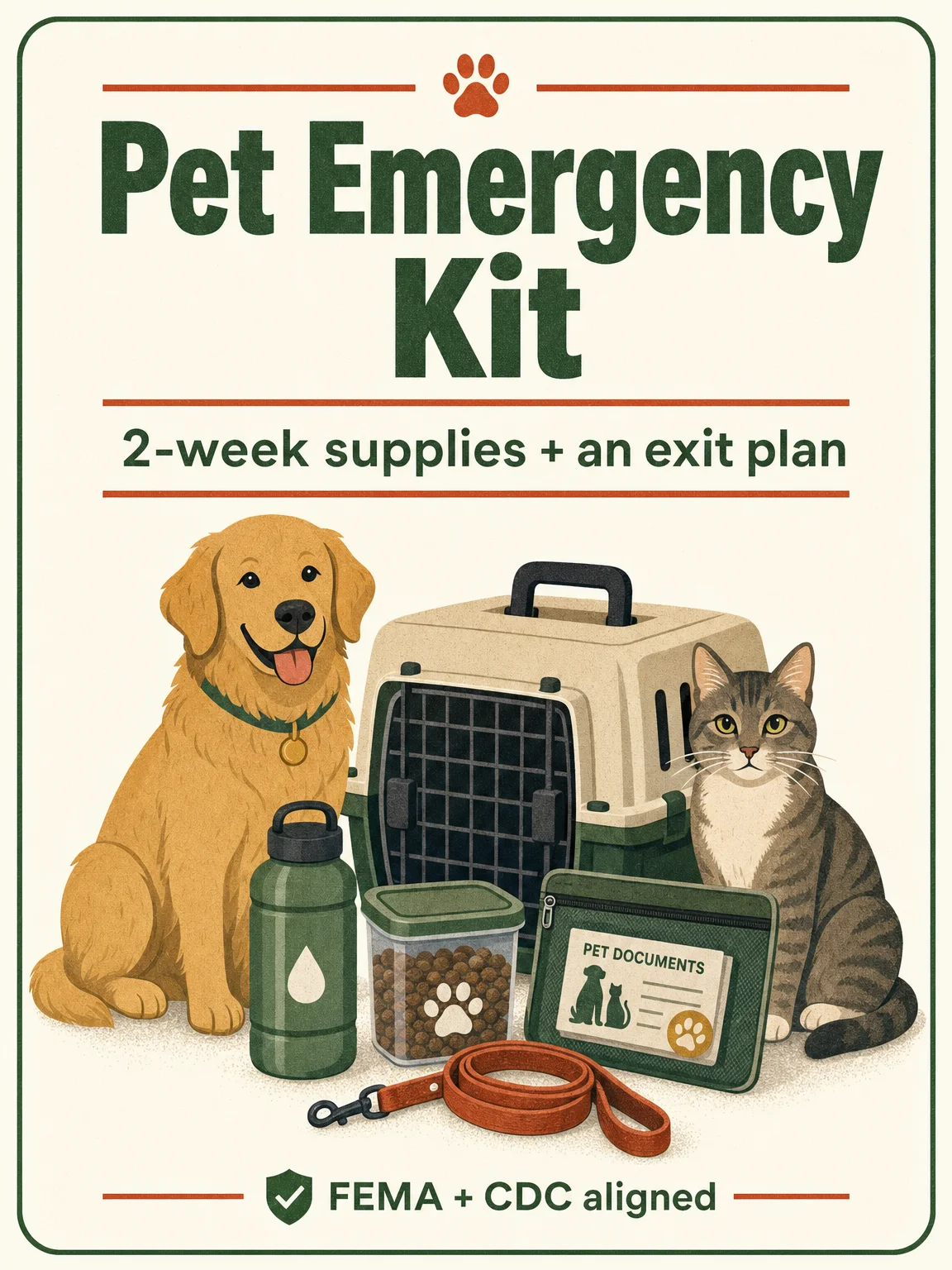

A pet plan is one of those quiet upgrades that keeps a normal emergency from becoming a household rodeo. This four-card kit is built around one idea: your pet needs supplies, documents, and a practiced exit just like the humans do.
Card 1: Pet emergency kit
FEMA says pets should be included in the family emergency plan, with a plan, a kit, and a way to stay informed. If officials tell you to evacuate, your pet should evacuate too. 1
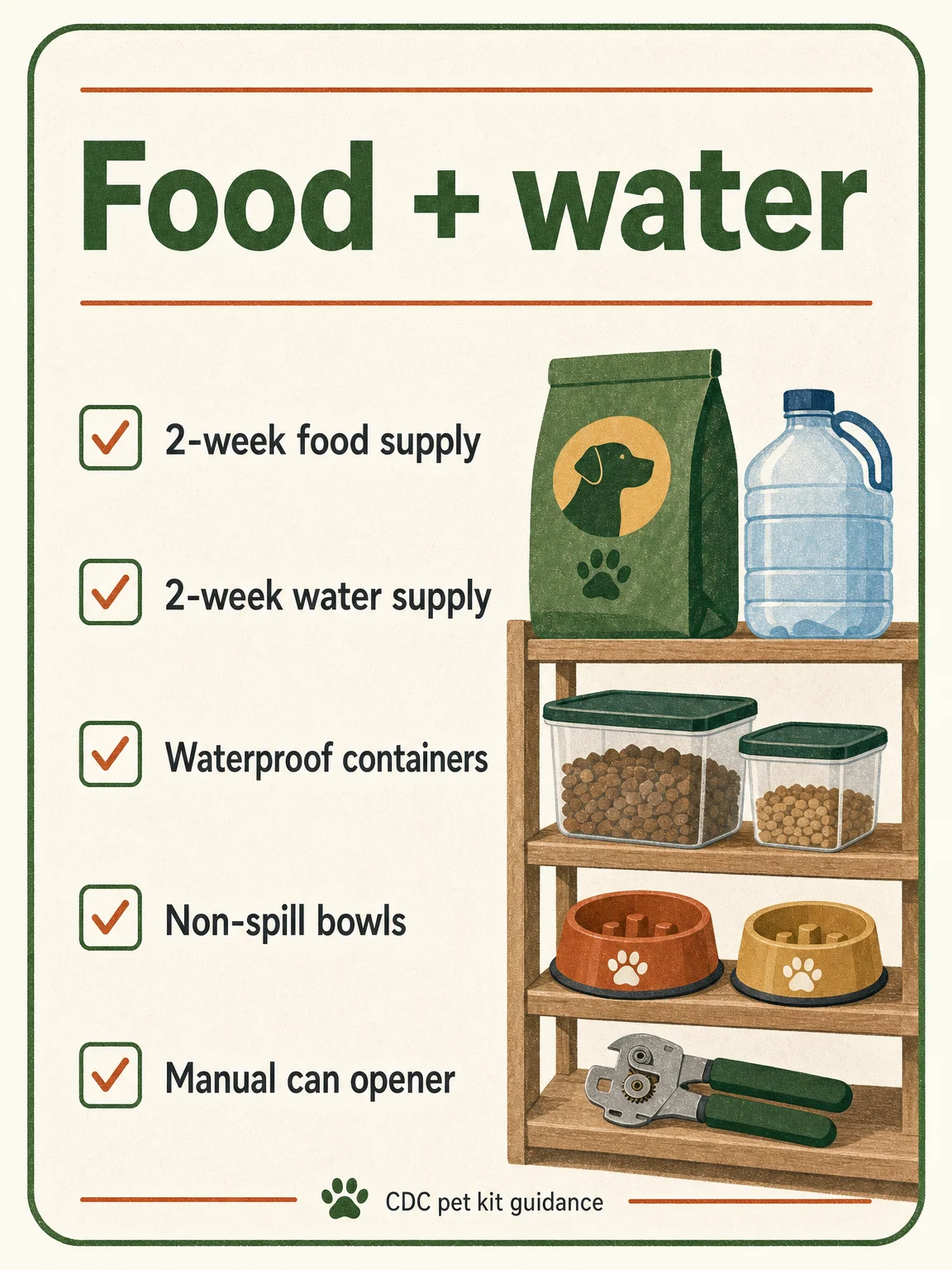
Card 2: Food + water
CDC's pet kit guidance calls for a 2-week supply of food and a 2-week supply of water for each animal, stored with non-spill dishes, feeding instructions, waterproof containers, and a manual can opener when needed. 2
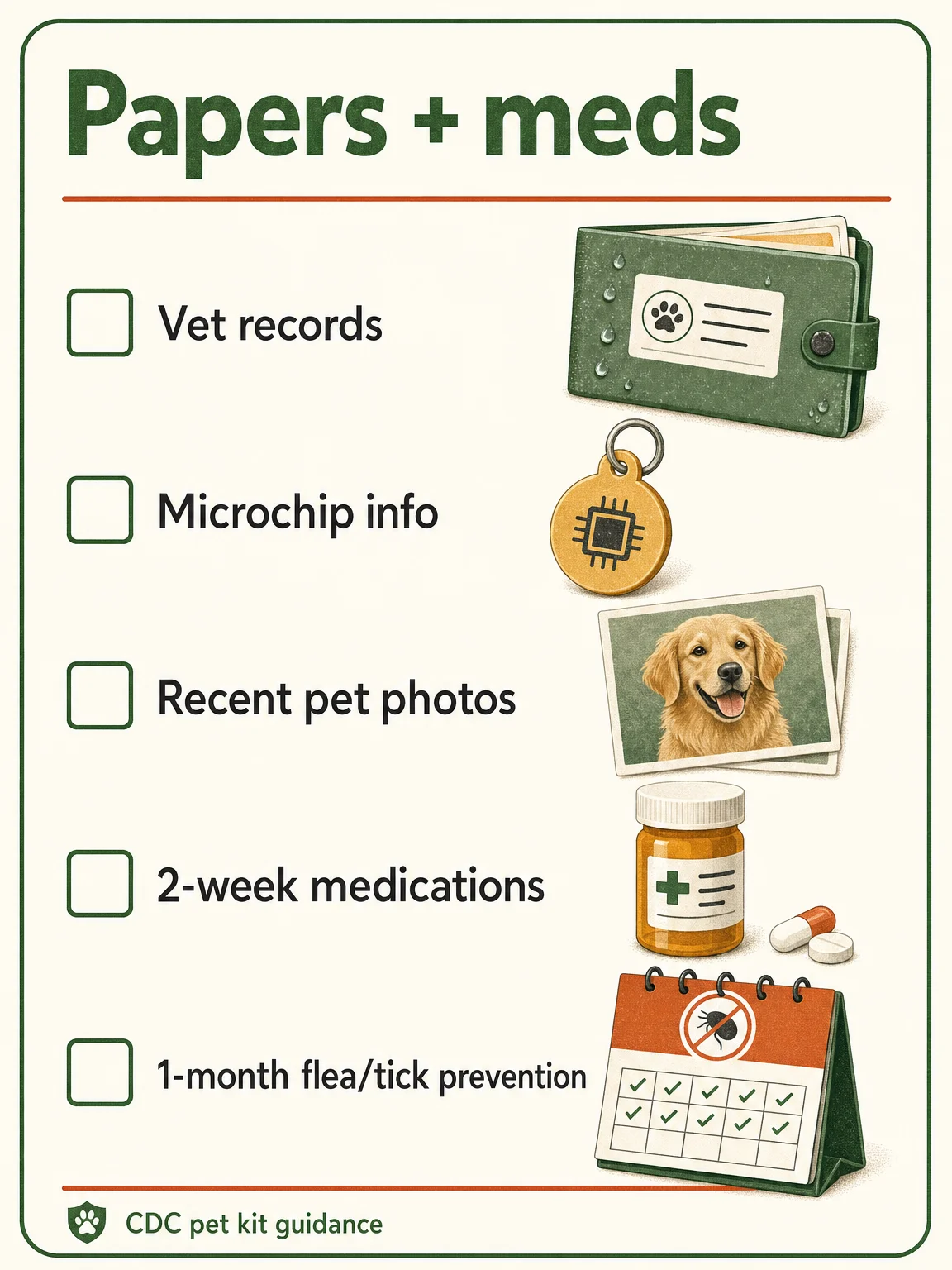
Card 3: Papers + meds
Keep photocopied veterinary records, rabies and vaccination records, prescriptions, registration or ownership documents, microchip information, contact details, and recent photos in a waterproof container. CDC also recommends a 2-week supply of medications and a 1-month supply of flea, tick, and heartworm prevention. 2
Card 4: Carrier drill
Ready.gov recommends a carrier or sturdy crate for each pet and says to leave the carrier open, place treats near or inside it, add familiar bedding, and know where your pets hide so you can leave quickly. CDC adds that pets should have up-to-date collars, tags, and microchip information, with a leash or carrier near the exit. 1 3
If you ever need an evacuation center, check pet rules before you arrive. CDC notes that many evacuation centers do not allow pets, and crowded animal areas require extra attention to hygiene, leashes or carriers, and bite or scratch prevention. 4
Comentar
Inicia sesión para comentar.