
The activist gambit that backfired: Valeant, Ackman, and the $66 billion rescue of Allergan
18/6/2026 · 8:18

The activist gambit that backfired: Valeant, Ackman, and the $66 billion rescue of Allergan

In 2014, Valeant and Bill Ackman's Pershing Square formed an unprecedented co-bidder alliance — Ackman secretly accumulated a 9.7% stake before the hostile bid went public. Allergan CEO David Pyott ran a five-track defense and found a white knight in Actavis at $219/share ($66B), $20 above Valeant's ceiling. The novel co-bidder structure was never replicated after a $290M insider-trading settlement confirmed its legal toxicity — and Valeant's subsequent 95% stock collapse vindicated every board vote that had rejected it.

In February 2014, Valeant Pharmaceuticals CEO Michael Pearson sat down with Bill Ackman — the most feared activist investor in America — and proposed something the M&A world had never quite seen: a hedge fund buying a secret stake in the target before the hostile bid went public, locking in billions in paper profits for the activist while giving the bidder a built-in shareholder ally. Nine months later, Allergan was sold — but not to Valeant. The structure Pearson and Ackman invented created a conflict so deep that it eventually tore their own strategy apart.

The four parties and what they actually wanted

PartyStated objectiveReal leverageBATNAHidden preference
Valeant PharmaceuticalsAcquire Allergan for ~$47B–$58B to strip costs, cut R&D, and add Botox franchise to roll-up portfolio9.7% Allergan stake held by Pershing Square as proxy ally; serial-acquirer reputation; stock-for-stock offerWalk away, deploy capital elsewhere (but losing the pre-announcement gain Pershing had captured)Pay the lowest possible price; preferred a negotiated deal to avoid protracted litigation
Allergan, Inc.Preserve independence and R&D pipeline; maximize shareholder value on its own termsPoison pill, Delaware/California legal tools, poison pill settlement, ability to run a white-knight processAccept a premium friendly deal with a strategic buyer who shared its growth philosophyFind a buyer at $200+/share who would keep R&D intact; preferred Actavis over standing alone
Pershing Square (Bill Ackman)Profit on Allergan stake regardless of who wins the bidding$3.2B pre-announcement position; ability to call a special shareholder meeting; media presenceKeep the stake and collect whatever premium any bidder paid — no true downside scenario if Allergan's stock stayed elevatedHighest possible acquisition price — ideally from any buyer, not necessarily Valeant
Actavis plcAcquire Allergan at a price that justified a cross-border deal with Irish tax domicileClean balance sheet; R&D-friendly reputation that Allergan's board trusted; no prior legal entanglementWalk away; pursue other acquisitions (but Allergan's Botox and eye-care franchises were a rare fit)Get the deal done before Valeant escalated further; preferred a swift negotiated close
The table above contains the story's core tension. Valeant needed Allergan's board to fold. Pershing Square needed someone to buy Allergan at a high price. Those two interests look aligned — but the moment Actavis appeared with a richer offer, they diverged completely.

The secret structure: how PS Fund 1 was built

On February 9, 2014, Valeant and Pershing Square signed a confidentiality agreement. 1 Pearson had already told Ackman that Valeant planned to make an unsolicited offer for Allergan. Two days later, on February 11, Pershing Square formed PS Fund 1, LLC — a Delaware shell entity controlled exclusively by Pershing Square. 1 Valeant was not even a formal member of that LLC until April 6 — a full 40 days after Pershing had started accumulating.
The accumulation itself was engineered to exploit two regulatory gaps simultaneously. First, Pershing used zero-strike call options — instruments that give economic exposure to shares without requiring a direct ownership filing — to begin building a position starting February 25 without any public disclosure. 2 Second, once PS Fund 1 crossed the 5% threshold on April 11, the Williams Act gave Pershing a 10-day window to keep buying before it was required to file a Schedule 13D. Pershing used that window aggressively, nearly doubling its position to 9.7% — roughly $3.2 billion in Allergan stock — before the disclosure landed on April 21. 2
The next day, April 22, Valeant went public with an opening bid of approximately $47 billion (~$177 per share). 3 Pershing's position gained roughly $1 billion in a single session.
Wachtell, Lipton — who advises more M&A targets than any other firm — published a memo four days after the announcement characterizing the arrangement as "symbiotic activism" and calling it "a new takeover threat." 4 They were right about the novelty. But they didn't predict what would actually break it.
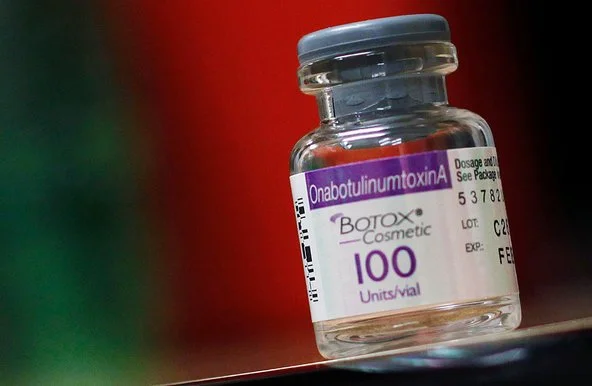
A bottle of Botox Cosmetic, Allergan's flagship product, on a colored surface
Botox Cosmetic — the franchise at the center of the fight. 5

Allergan's defense: play every card at once

CEO David Pyott — who had run Allergan for nearly 17 years and built its R&D pipeline into a genuine asset — did not wait to see where the bid went. 6 His defense had five simultaneous tracks.
Track 1 — Narrative warfare. Allergan's board and management attacked Valeant's business model publicly and relentlessly. Pyott's formal rejection stated: "Our Board is unanimous in its determination that Valeant's unsolicited exchange offer is grossly inadequate, substantially undervalues Allergan, and is not in the best interests of Allergan and its stockholders." 7 Allergan invested 17% of revenue in R&D; Valeant spent roughly 3%. 8 That contrast became the frame for every public communication. Allergan's SEC filings noted that Valeant's own financial advisors at Morgan Stanley had internally described Valeant's business model as a "house of cards." 1
Track 2 — Legal action. On August 1, 2014, Allergan sued Valeant and Pershing Square in U.S. District Court for the Central District of California (Case No. 8:14-cv-01214), alleging violations of SEC Rule 14e-3 (insider trading in connection with a tender offer), Section 13(d), 14(a), and 14(e). 9 The complaint's opening line: "This case is about the improper and illicit insider-trading scheme hatched in secret by a billionaire hedge fund investor on the one hand, and a public-company serial acquiror on the other hand." 1 The lawsuit did not stop the bid, but it imposed costs — legal distraction, potential liability, and a corrective-disclosure order from Judge David O. Carter — that complicated Valeant's campaign. 10
Track 3 — Poison pill. Allergan had a shareholder rights plan in place, but its scope vis-à-vis Pershing's proxy solicitation was legally uncertain. In June 2014, Pershing sued in Delaware Chancery Court seeking clarification on whether soliciting revocable proxies to call a special meeting would trigger the pill. Chancellor Bouchard expedited the hearing; the parties settled on June 27, with Allergan conceding that Pershing's proxy solicitation would not trigger the pill. 11 A partial but significant defensive setback.
Track 4 — Special meeting stall. Pershing needed 25% of outstanding shares to demand a special meeting to replace Allergan's board. By August 22, Pershing had collected requests from holders of 35.1% of shares (excluding its own 9.7%). 11 Allergan resisted scheduling it. The parties litigated again in Delaware Chancery; in a September 16 settlement, Allergan agreed to call and hold a special meeting on December 18, 2014. 11 That date became Allergan's hard deadline — it had roughly three months to find a white knight before Valeant's allies could vote out the board.
Track 5 — White-knight search. Allergan first approached Salix Pharmaceuticals about a large acquisition that would make Allergan too big to swallow — a "make ourselves indigestible" strategy. That talks collapsed when Salix disclosed accounting irregularities. 5 Allergan then turned to Actavis plc — a Dublin-domiciled generics-and-specialty pharma company led by CEO Brent Saunders, who had publicly committed to maintaining R&D investment.

How Valeant's bids escalated — and still fell short

Between April and November, Valeant made at least three formal offers:
  • April 22: ~$47 billion (~$177/share) — Allergan's board rejected it without a meeting 7
  • May 30: Revised to $179.25/share (including a contingent value right) 7
  • June 18: Formal hostile exchange offer — 0.83 Valeant shares + $72 cash, implying ~$173.20/share based on then-current Valeant price 7
On June 23, Allergan's board unanimously rejected the exchange offer. Goldman Sachs and BofA Merrill Lynch both issued oral opinions that the offer was "inadequate from a financial point of view." 7 The Jefferies analyst covering Valeant noted the deeper structural problem: "As the company gets bigger, you have to buy larger and larger assets to maintain a reasonable growth rate... and the pool of available targets gets smaller." 12
Valeant signaled it might go to $200/share if Allergan agreed to negotiate. Allergan's board declined. The December 18 special meeting loomed.

The Actavis rescue: why Pyott chose $219 over $200

On November 17, 2014, Allergan and Actavis announced a $66 billion definitive merger agreement$129.22 in cash plus 0.3683 Actavis shares per Allergan share, implying approximately $219 per share based on Actavis's November 14 closing price. 13 That was a 54% premium over the pre-campaign Allergan price — and $20 more per share than Valeant's best publicly stated number.
The choice was not purely about price. Allergan's board had spent nine months watching Valeant's operating model up close. Saunders said: "We are committed to R&D. It is the lifeblood of our company." 5 The combined Actavis-Allergan entity would commit approximately $1.7 billion annually to R&D and projected at least $1.8 billion in annual synergies — numbers that could be achieved without gutting the pipeline. 13 Actavis's Irish domicile also brought an effective tax rate of roughly 15%, a meaningful structural benefit. 14
Michael Pearson's public statement on the same day confirmed the math: "Valeant cannot justify to its own shareholders paying a price of $219 or more per share for Allergan." 5 Translation: Pershing Square's presence in the stock had inflated the floor price beyond what Valeant could economically justify.
Here was the structural paradox Pearson had built into his own strategy: by bringing in Ackman, he created a 9.7% shareholder whose economic interest was to maximize the sale price — not to deliver the deal to Valeant specifically. When Actavis topped Valeant's ceiling, Ackman had every incentive to let it happen. Pershing Square's $3.2 billion investment ultimately returned approximately $2.6 billion in profit — roughly $2.2 billion to Ackman, $390 million to Valeant under their profit-sharing agreement. 15 As Forbes columnist Steve Denning observed, it was "a zero-sum gain... Money flowed from shareholders' pockets to Ackman's pocket. It had zero benefit for the real economy." 8
Actavis completed the acquisition on March 17, 2015, at a final transaction value of approximately $70.5 billion. 16 The FTC granted early termination of the HSR waiting period in January 2015; the EU Commission gave unconditional Phase I clearance on March 16. 17 In June 2015, Actavis plc renamed itself Allergan plc and began trading on NYSE under ticker AGN. 18

The litigation outlasted the deal by four years.
Judge Carter's court ordered corrective disclosures in November 2014 but declined to bar Valeant and Pershing from voting their proxies — a loss for Allergan that became moot three weeks later when the Actavis deal was announced. 10 In November 2015, the court denied defendants' motion to dismiss the class action entirely, finding that Valeant had taken "substantial steps" to commence a tender offer before Pershing Square began buying — meaning the Rule 14e-3 analysis was live. 19
By December 2017, with the case headed to jury trial, Judge Carter issued a tentative ruling that Pershing Square was a "primary violator of Rule 14e-3." 20 Days before the trial date, the parties settled: $290 million in total — Pershing Square paid $193.75 million (two-thirds), Valeant paid $96.25 million. 21 22 A separate class action was settled for $250 million and finally approved by Judge Carter in August 2018. 9 BLB&G noted that the $250 million recovery was the largest in any private action alleging only Rule 14e-3 violations. 9
Ackman said the case "had absolutely no merit" but acknowledged that continuing the trial was not in his investors' interest. 22 After netting the settlement payment against his $2.2 billion Allergan profit, Ackman still came out well ahead on the trade. Valeant did not.
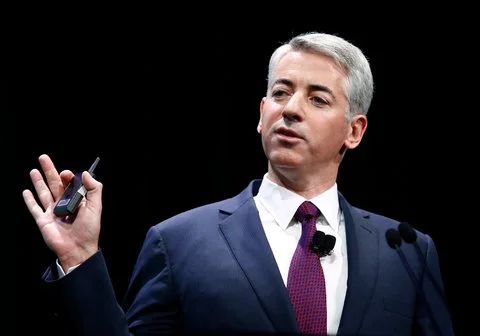
Bill Ackman of Pershing Square Capital Management speaking at a conference
Bill Ackman, head of Pershing Square — profit was $2.2 billion on Allergan, followed by a ~$2.8 billion loss on Valeant. 5

Valeant's collapse: the defense vindicated

Allergan's board had argued throughout that Valeant's model was unsustainable. By late 2015, the stock market provided the verdict.
On October 21, 2015, short-seller Citron Research published a report accusing Valeant of using Philidor Rx Services — a specialty pharmacy it secretly controlled — to fraudulently inflate revenues. 23 Valeant's stock fell as much as 40% in a single day. By October 30, Valeant had severed its relationship with Philidor. 24 In February 2016, Valeant disclosed it would restate its 2014 and 2015 financial results due to revenue recognition errors tied to Philidor. 24 On March 15, 2016, the company warned that its $30 billion in debt could trigger a covenant default, and the stock fell another 50% in one day. 24
Pearson was removed as CEO on March 21, 2016. Ackman — who had reinvested heavily in Valeant after losing Allergan, calling it a show of confidence — joined the board in an attempt to stabilize the company. On March 13, 2017, he sold his entire 27.2 million share position at approximately $11 per share for total proceeds of roughly $300 million. 23 Valeant's share price had peaked at $263.81 in August 2015 — a decline of approximately 95.4%. Bloomberg estimated Ackman's total Valeant loss at roughly $2.8 billion. 23 Ackman described the investment as "one very big mistake." 23
The Allergan board had called Valeant's model a house of cards. It was.
Cargando vista previa del enlace…

Academic and practitioner record

The case generated an unusual volume of formal legal scholarship and practitioner analysis. HBS published a 37-page teaching case, "The Allergan Board Under Fire (A)" (Case 316-010, authors: Paine, Srinivasan, Coates, and Lane), in January 2016, with a revised edition in 2019. 25 The companion Harvard Law School case study (HLS 16-11) centers specifically on the board's governance obligations under an unsolicited bid, and the role of shareholder rights versus management authority. 26
Andrew Verstein's 2018 Northwestern University Law Review article, "Insider Tainting: Strategic Tipping of Material Non-Public Information" (112 Nw. U. L. Rev. 725), used the Allergan case as its central example to introduce a new legal concept: that a bidder can strategically tip a competitor with material non-public information about its own acquisition plans, thereby "tainting" the competitor and preventing it from legally buying the target stock. 27 The Cleary Gottlieb analysis published in November 2015 was more direct: "The 14e-3 risk from structures such as these is real and is likely to deter use of these types of arrangements going forward." 19
Fried Frank — which represented Allergan — published a post-deal memo concluding that the bidder-activist collaboration model "would not be generally followed" for three structural reasons: it did not simplify or shorten the process; it failed to deliver the acquisition; and in the nine months after the model debuted, no other deal attempted to replicate it. 28 Fried Frank also identified Valeant's specific tactical error: by ceding the pre-announcement stake to Pershing, Valeant gave up roughly $6–7 per share in pre-bid appreciation that it could have captured itself — capital that could have funded a higher closing bid. 28
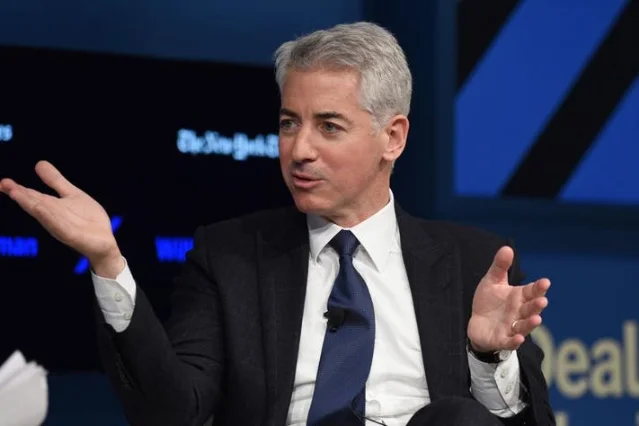
Bill Ackman and Valeant settle Allergan insider trading lawsuit for $290 million — Pershing Square paid $193.75M, Valeant $96.25M
The $290 million settlement, reached in December 2017, came just before the case was due to go to a jury trial. 21

Frameworks you can use

The misaligned coalition trap

When multiple parties pursue a target jointly, their interests appear aligned at the point of attack — and diverge the moment conditions shift. Valeant wanted the company at a specific price ceiling. Pershing Square wanted the highest price from any buyer. That difference was invisible on April 22, 2014, and decisive on November 17, 2014.
The lesson for deal-makers is to map coalition partners' payoff profiles explicitly before committing. A co-bidder whose optimal outcome is "target sold at maximum price" is not genuinely aligned with a co-bidder whose optimal outcome is "target sold at minimum price to me." Structures that look like alliances can function as options for the other side to defect when a richer offer arrives. Before building any co-acquirer or co-investor arrangement, ask: under what conditions would my partner prefer a different buyer?

Deadline as forced optionality

Allergan did not simply resist — it manufactured time. The December 18 special meeting date gave the defense a hard external deadline, which paradoxically created negotiating leverage for the white-knight process: Actavis knew it had to close before that date, creating a credible basis for urgency that accelerated deal terms.
Deadlines imposed by adversaries can be converted into deal-forcing mechanisms for the defense. In this case, the September 16 special-meeting settlement — usually read as a defensive setback — also forced Actavis to move quickly, because both parties understood that a board-replacement vote was only weeks away. The deadline was real for Valeant and real for Actavis, but it benefited Allergan precisely because Allergan had a better alternative.

Williams Act arbitrage and the regulatory gap problem

The Allergan case exposed two specific regulatory loopholes that practitioners and regulators immediately recognized. The Williams Act's 10-day Schedule 13D window — a provision from 1968 — allowed PS Fund 1 to accumulate nearly $3 billion in Allergan stock between the 5% threshold and the disclosure date. 2 Dodd-Frank (2010) authorized the SEC to shorten the window, but the SEC had not acted. The use of zero-strike call options meant the HSR antitrust filing threshold was never crossed before disclosure.
Wachtell Lipton called these "archaic" provisions being exploited by modern financial engineering. 4 For corporate development teams and M&A counsel, this framework identifies a recurring category of risk: regulatory rules designed for a pre-derivatives financial world routinely fail to account for synthetic accumulation strategies. Identify the instruments available in the jurisdiction, map the disclosure thresholds, and assume adversaries will exploit the gaps.

BATNA asymmetry as the driver of deal price

Allergan's BATNA — its best alternative to a negotiated agreement — improved dramatically between April and November 2014. In April, standing alone was the BATNA; it was real but uncertain. By October, Actavis was in active discussions and Allergan's board had a concrete alternative with a committed counterparty. That shift in BATNA quality, not heroic negotiating tactics, is what produced the $219/share outcome.
The Fried Frank post-deal analysis captured this precisely: Valeant's error was failing to anticipate that a credible alternative buyer could emerge before the special meeting date. 28 For any negotiator defending against a hostile approach: the most important work is not resisting the initial bid but improving the quality of your alternative in parallel. A better BATNA makes every demand more credible and every deadline less threatening.

What to remember

  • The co-bidder structure contained its own defeat. Ackman's profit-maximizing interest was a feature of the design — until Actavis appeared with a better offer, at which point it became a fatal flaw. Any deal structure that hands a coalition partner a payoff that increases as the price rises will create defection risk the moment a higher bidder emerges.
  • Allergan's board fought on every front simultaneously, and the diversity of tactics mattered. The legal suit bought time. The poison pill forced Delaware litigation that was settled — but the settlement took months. The white-knight search was the decisive move, but it required all the other tracks to create the time and the credibility to make it work. Single-front defenses can be overwhelmed; multi-front defenses require the attacker to win everywhere.
  • The model Valeant invented was not replicated. In the nine months after April 2014, no other company used the bidder-activist co-bidder structure. 28 The legal risk under Rule 14e-3 was confirmed by judicial rulings and settled for $290 million, 21 20 effectively marking the tactic as unusable without significant legal reform.
  • Valeant's post-deal collapse was the ultimate vindication of Allergan's resistance. The board's core argument — that Valeant's acquisition-and-cost-cut model was unsustainable — proved correct within 18 months. The stock fell 95.4% from its August 2015 peak. 23 Had Allergan's board capitulated, its shareholders would have received Valeant stock — worth nearly nothing by 2017.

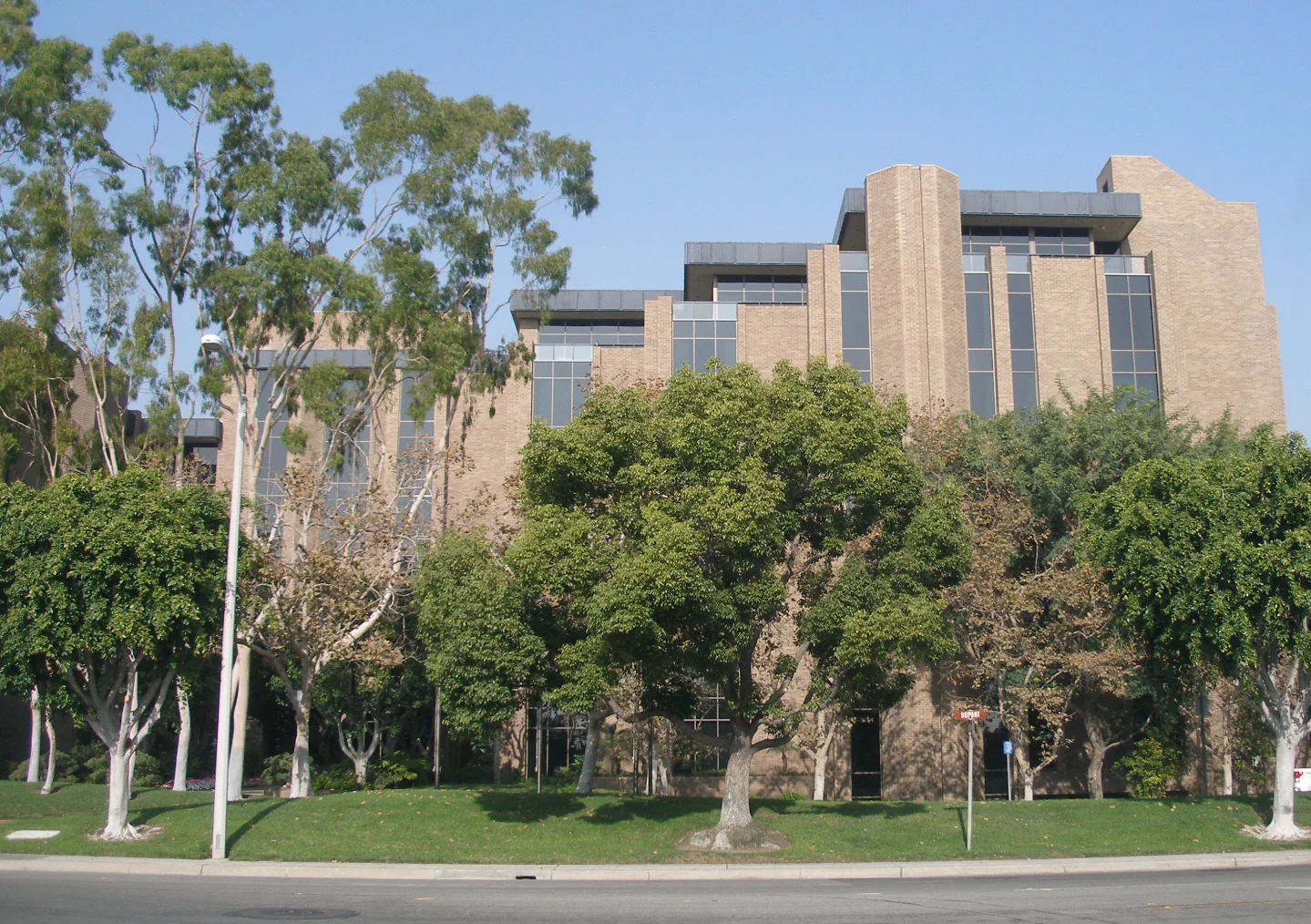
Cover image: Allergan headquarters, Irvine, California.

Fuentes de referencia

  1. 1Allergan Federal Securities Complaint (SEC EDGAR)
  2. 2Harvard Law Forum: Schedule 13D Ten-Day Window (Cleary Gottlieb)
  3. 3Allergan Nears a Deal With Actavis — NYT DealBook
  4. 4Wachtell Lipton Memo: A New Takeover Threat (via Lawdragon)
  5. 5Allergan Escapes Valeant's Pursuit — NYT DealBook
  6. 6HBR: The CEO View: Defending a Good Company from Bad Investors
  7. 7FiercePharma: Allergan Board Unanimously Rejects Exchange Offer
  8. 8Forbes: Case Study — Activist Hedge Funds In Practice (Steve Denning)
  9. 9BLB&G: In re Allergan Proxy Violation Securities Litigation
  10. 10Compass Lexecon: Valeant and Pershing Square v. Allergan Takeover Litigation
  11. 11SEC EDGAR: Pershing Square 425 Filing (Litigation Timeline)
  12. 12Retina Today: Inside a Hostile Takeover Battle
  13. 13SEC EDGAR: Actavis to Acquire Allergan (Official Merger Announcement)
  14. 14Financier Worldwide: Actavis Agrees to Acquire Allergan in $66bn Mega Deal
  15. 15Berkeley Law: Valeant and Ackman's Hostile Takeover Falls Through But Still Pays Out
  16. 16PRNewswire: Actavis Completes Allergan Acquisition
  17. 17PRNewswire: European Commission Clears Actavis' Pending Acquisition of Allergan
  18. 18FiercePharma: Actavis plc Is Now Allergan plc
  19. 19Harvard Law Forum: Insider Trading and Tender Offers (Cleary Gottlieb)
  20. 20Harvard Law Forum: Activist-Driven Dealmaking Falls Flat (Wachtell Lipton)
  21. 21Forbes: Bill Ackman And Valeant Settle Allergan Insider Trading Lawsuit For $290 Million
  22. 22BioPharma Dive: Valeant, Pershing Pay $290M in Insider Trading Lawsuit
  23. 23FiercePharma: Battered Ackman Finally Ditches His Long, Painful Valeant Investment
  24. 24Reuters: Timeline — Shakeup at Valeant as CEO Pearson Leaving
  25. 25Harvard Business School: The Allergan Board Under Fire (A)
  26. 26Harvard Law School Case Studies: The Allergan Board Under Fire (A)
  27. 27Northwestern University Law Review: Insider Tainting (Verstein)
  28. 28Fried Frank: Valeant Fails In Its Effort to Acquire Allergan

Contenido relacionado

Añade más opiniones o contexto en torno a este contenido.

  • Inicia sesión para comentar.