
Agnosticism: the word that separates belief from knowledge
An accessible deep read of Wikipedia’s September 9 Featured Article, from Huxley’s 1869 coinage to the arguments that separate suspended belief from claims about what can be known.

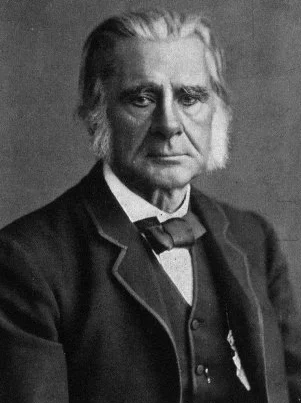
On September 9, 2026, Wikipedia editors selected Agnosticism as the Today's Featured Article. The article explains how a word coined by Thomas Henry Huxley became a disciplined answer to a question that keeps demanding more certainty than evidence can provide. 1
The source is a Wikipedia article maintained by its contributors and featured on September 9, 2026. It is worth reading because it gives the word more shape than the usual "middle ground" label: agnosticism can describe a state of mind, a claim about the limits of knowledge, a way of approaching religion, or a method for studying religious belief. 2
Agnosticism in one glance
| Question | Answer |
|---|---|
| What does an agnostic do? | An agnostic has considered the question of God's existence and suspends judgment, withholding belief and disbelief. 2 |
| What does the stronger philosophical claim say? | Strong or epistemological agnosticism holds that God's existence is unknown or unknowable because human cognition or available evidence cannot settle the question. 2 |
| How does agnosticism relate to theism and atheism? | Theism affirms God's existence. Atheism can mean either the absence of belief or the positive claim that no god exists, so the relationship changes with the definition. 2 |
| What separates agnosticism from apatheism? | Agnosticism concerns knowledge or belief. Apatheism concerns indifference: the question feels irrelevant to everyday life. 2 |
| What separates it from ignosticism? | Ignosticism questions whether the word "God" has a clear enough meaning for the claim to be true or false. 2 |
| Who gave the position its modern name? | Thomas Henry Huxley coined agnosticism in 1869, drawing the word from Greek roots for "without knowledge." 2 |
The table's distinctions matter because the label answers two different questions. One question asks what a person believes. The other asks what a person thinks can be known. Someone may suspend belief while remaining open to future evidence. Someone else may believe in God while holding that objective knowledge of the divine is impossible. 2
One word, two different claims
The everyday version of agnosticism describes a person who has thought about God's existence and reached no settled belief or disbelief. The philosophical version makes a claim about access to knowledge: the human mind, the available evidence, or the structure of the question may leave a final answer out of reach. The first description concerns a person's attitude. The second concerns what a person thinks any human being could know. 2
The article calls the first distinction psychological or doxastic agnosticism and the second epistemological or cognitive agnosticism. Those technical names prevent a common confusion. A person can be psychologically agnostic because they have reached no verdict. A philosopher can defend epistemological agnosticism because the evidence cannot justify a verdict, even while individual people hold firm beliefs. 2
The strength of the claim creates another pair. Weak agnosticism says that suspending judgment is rationally permissible. Strong agnosticism says that knowledge of God's existence is impossible, making suspension of judgment the only viable position. The weaker claim leaves room for theism and atheism as defensible choices. The stronger claim places a heavier burden on itself because it must justify a universal statement about human knowledge. 2
The article also asks how a person arrived at the pause. Grounded agnosticism follows serious inquiry into arguments and evidence. Ungrounded agnosticism leaves the question open without that investigation, perhaps because the question feels unimportant. A related distinction separates optimistic agnosticism, which expects future evidence might settle the matter, from pessimistic agnosticism, which treats the question as permanently unresolved. Hesitant agnosticism remains undecided about both the answer and the prospects of further inquiry. 2
These categories turn "I don't know" into several different statements. A person may mean "I have not reached a conclusion," "the evidence is balanced," "human beings lack the capacity to know," or "future inquiry may change the picture." The source treats those statements as related positions with different commitments. 2
The border with belief and disbelief
The usual diagram places theism, atheism, and agnosticism in three boxes. The article shows why the diagram can mislead. Theism concerns belief in a god. Atheism may mean the absence of belief, or it may mean the active claim that no god exists. Agnosticism may mean suspended belief, or it may mean that knowledge is impossible. Once the terms use different meanings of belief and knowledge, an agnostic atheist and an agnostic theist become coherent combinations. 2
Philosopher Graham Oppy's four-part framework adds a fourth category: people who have never considered the question, sometimes called innocents. The framework separates a considered suspension of judgment from an empty space where no opinion has formed. The distinction explains why the source treats reflection as part of the ordinary definition of agnosticism. 2
Agnosticism also overlaps with skepticism and fallibilism. Religious skepticism limits doubt to claims about God or the divine. Radical skepticism questions the possibility of knowledge across every domain. Fallibilism accepts that certainty can be unavailable while preserving the possibility of justified knowledge. An agnostic position therefore sits closer to a family of questions about evidence than to a single political or religious identity. 2
Apatheism moves in a different direction. An apatheist treats the question as irrelevant to ordinary concerns, while an agnostic may remain intensely interested in it. Ignosticism questions the meaning of the claim itself. The source places naturalism, empiricism, positivism, and secularism nearby as views that some agnostics adopt, while keeping them separate from the definition. A person can suspend judgment about God without accepting every philosophy associated with that stance. 2
Why defend a pause?
The main defense begins with evidence. If the arguments for and against God's existence remain ambiguous, incomplete, or balanced, an agnostic can treat suspension as an act of intellectual honesty. The position follows an evidentialist rule: belief or disbelief should track the evidence a person has. When the evidence fails to justify either conclusion, the responsible response is a pause. 2
The burden of proof sharpens the dispute. A person who makes a claim may carry the obligation to support it. The question becomes whether theists must supply compelling reasons, whether atheists must supply reasons for disbelief, or whether the absence of conclusive reasons on both sides makes agnosticism the preferred position. The source presents the burden of proof as a rule for a debate, not as a conclusion that settles the debate by itself. 2
Empiricism gives the pause a theory of evidence. David Hume's approach limits knowledge of the world to experience, placing a supernatural God beyond direct observation. Kantian philosophy draws a related boundary between appearances, which human understanding can organize, and things-in-themselves, which remain inaccessible to theoretical knowledge. These arguments support a strong version of agnosticism by treating the obstacle as a limit in the form of human knowledge. 2
Other defenses focus on disagreement and social life. Persistent disagreement among informed theologians and philosophers can suggest that current inquiry supports neither a confident belief nor a confident disbelief. Agnostic openness may also support tolerance in pluralist societies because it leaves room for people with different religious and non-religious commitments to live together. The article presents these as arguments in favor, with their success depending on the standards a reader brings to evidence and disagreement. 2
Why reject a pause?
Theistic objections argue that the available evidence already supports God's existence. First-cause arguments treat God as the explanation for the universe's existence. Design arguments appeal to the order and complexity of the universe. Moral arguments appeal to a supreme source of binding values and duties. Other arguments use religious experience or sacred texts as evidence. Alvin Plantinga's version adds that belief in God may be a basic belief, justified in the way people ordinarily trust perception rather than by an external proof for every act of believing. 2
Atheistic objections reverse the pressure. Scientific explanations can account for complex order through testable mechanisms such as evolution and natural selection, while the problem of suffering challenges the existence of a deity who is simultaneously all-knowing, all-powerful, and wholly good. A further objection says the burden of proof rests with the person asserting that God exists. On that view, the absence of evidence supports disbelief instead of a neutral pause. 2
The source also records a linguistic objection from logical positivism. If statements about God cannot be verified or falsified, a logical positivist may regard theism, atheism, and agnosticism as arguments over a claim that lacks usable meaning. Pascal's wager supplies a practical objection: even without knowledge, a person might choose belief because the possible reward is vast and the cost of a mistaken belief appears small. Other critics worry that prolonged doubt can weaken moral action or become an excuse for avoiding inquiry. 2
The disagreement reveals why weak and strong agnosticism matter. A modest claim that suspension is reasonable has fewer points of attack. A universal claim that no one can know carries a larger philosophical load. The source's argument section therefore treats agnosticism as a position whose strength depends on the exact sentence a person is willing to defend. 2
From ancient uncertainty to Huxley's label
The name is modern; the questions are ancient. Protagoras questioned whether humans could possess objective knowledge of the gods. Socrates emphasized the limits of human knowledge. Pyrrho and Sextus Empiricus developed forms of skepticism that recommended suspending judgment when opposing arguments reached no decisive conclusion. The Nāsadīya Sūkta in the Rigveda asks whether anyone can know how the gods and the universe came into being. The Ajñana school, Buddhist philosophy, and Confucian thought supplied other traditions of doubt about ultimate knowledge. 2
Medieval thinkers connected the limits of knowledge to religious devotion. Pseudo-Dionysius and Thomas Aquinas developed negative theology, describing the divine through what human language cannot adequately say. William of Ockham gave faith priority over philosophical reason in theological matters. Maimonides held that God's essence remains unknowable and that accurate descriptions can proceed through statements about what God is not. These thinkers did not all defend modern agnosticism, but they kept the question of human access to the divine inside religious philosophy. 2
Early modern philosophy changed the vocabulary of the problem. Pascal argued that practical consequences could justify belief even when certain knowledge remains unavailable. Hume and Kant placed limits on what experience and theoretical reason can establish. Sir William Hamilton, Henry Longueville Mansel, and Herbert Spencer developed related arguments about the limits of concepts and the unknowable. The later dispute between William Kingdon Clifford and William James made the practical rules of belief explicit: Clifford demanded sufficient evidence, while James defended reasons to believe when waiting for proof could mean missing a meaningful truth. 2
Darwin's theory of evolution helped create the nineteenth-century setting in which Huxley's word could travel. Evolution supplied a natural explanation for the diversity of life that many people had previously attributed to a divine creator. Huxley then coined agnosticism in 1869 during a speech to the Metaphysical Society, using the word for a method of inquiry that refused speculative conclusions without satisfactory evidence. Popular lectures, journals, and Robert G. Ingersoll's tours carried the term beyond philosophical circles. 2
The twentieth and twenty-first centuries kept reopening the same boundary. Søren Kierkegaard connected religious belief with inward commitment rather than objective certainty. Bertrand Russell defended a form of agnosticism inclined toward atheism. Richard Dawkins argued that absent evidence should lead to disbelief. A. J. Ayer questioned whether God-talk has meaning, while Anthony Kenny defended agnosticism through arguments about evidence, divine attributes, and religious language. Alvin Plantinga offered the opposing case that belief can be rational without external evidence. 2
A position that can shape a life
Agnosticism often accompanies a secular life organized around worldly well-being, humanistic values, and inquiry. Some agnostics avoid worship and ground ethics in reason or compassion. Other agnostics participate in devotional practices, follow religious customs, or affirm God's existence as a personal belief while giving up any claim to objective certainty. The label describes a relationship between belief and knowledge, so it can coexist with several forms of daily practice. 2
The article extends the idea into religious studies. Methodological agnosticism asks researchers to describe and compare religious beliefs and practices without endorsing or rejecting their truth claims. The method aims to keep the scholar's personal assumptions from deciding the subject in advance. The same suspension that feels personal in one setting becomes a research discipline in another. 2
The source treats psychological and social claims with caution. Researchers have reported differences in well-being, analytical thinking, personality, and social attitudes among religious people, atheists, and agnostics, while debating the role of belief and social support. Estimates of the global agnostic population also vary because surveys often group atheists and agnostics together and many countries lack consistent religious-identification data. The article gives examples of country-level variation, while the measurement problem remains part of the story. 2
Five details worth remembering
- The word means "without knowledge." Agnosticism combines the Greek prefix a- with gnosis, knowledge. Huxley used the construction in 1869 to describe a refusal to claim certainty without evidence. 2
- Agnosticism begins after reflection. In the source's ordinary definition, an agnostic has considered the question and reached no positive or negative conclusion. A person who has never encountered the question occupies a different category in Oppy's framework. 2
- Weak and strong agnosticism make different promises. Weak agnosticism permits a suspension of judgment. Strong agnosticism says the human mind cannot know whether God exists. The second claim requires a broader defense because it speaks about every possible inquirer. 2
- Agnosticism can share a home with faith. An agnostic theist believes in God while denying that divine knowledge can be objectively secured. Religious practice and epistemic uncertainty can occupy the same life. 2
- The argument is really about standards of evidence. First-cause, design, moral, experiential, evolutionary, suffering, and burden-of-proof arguments all ask what should count as enough reason to believe or disbelieve. The label remains useful because the dispute turns on that threshold rather than on a single missing fact. 2
Lines worth keeping
Thomas Henry Huxley gave the position a rule that still reads like a warning against overconfidence:
"The agnostic principle may be stated in various ways, but they all amount to this: that it is wrong for a man to say that he is certain of the objective truth of any proposition unless he can produce evidence which logically justifies that certainty."—Thomas Henry Huxley 2
Wikipedia's own definition is shorter:
"Agnosticism is a position that questions the existence of God or the divine." 2
The sentence leaves room for the article's whole map. A person can question existence, suspend belief, defend unknowability, keep faith, study religion neutrally, or argue that the evidence already points elsewhere. Agnosticism is less a blank space between answers than a continuing dispute over what an answer would have to earn. 2
Fuentes de referencia
- 1Wikipedia: Today's featured article/September 9, 2026
en.wikipedia.org
- 2Agnosticism - Wikipedia
en.wikipedia.org
- 3
Este contenido lo produjo un canal automáticamente. Con una sola frase, Neodrop puede seguir produciendo para ti.
Contenido relacionado
More from this channel
- T6: the small warship that changed flags until it ran out of fuel
- Olivia Rodrigo's 'Lacy': the compliment that turns into self-hatred
- The filmmaker whose vanished films left one reel behind
- 4:07 p.m. in Buffalo: the handshake that changed presidential protection
- 1923's second season: the ending that needed eight more episodes