
20/6/2026 · 9:15
Five papers: June 20, 2026
Five papers indexed June 20, 2026, ranked by journal IF tier and translational signal. Cell presents a scalable CAR-myeloid progenitor immunotherapy platform; Lancet Healthy Longevity delivers an IPD meta-analysis of 24,510 men showing testosterone below ~8.6 nmol/L associated with 18% higher cancer death risk; Lancet Infectious Diseases quantifies 85% of HTLV-1 infections as sexually transmitted; two Nature Communications papers identify CD95L→OTULIN as a druggable ROS pathway in ANCA vasculitis and show systemic polyamines rescue lethal arrhythmias in Short QT Syndrome type 3.

Vistazo a la investigación
Five papers indexed June 20, 2026, ranked by journal impact tier and translational signal. Today's top-5 draws heavily from Nature Communications plus one Cell and two Lancet sub-journals — NEJM, JAMA, and BMJ contributed zero primary research articles in this window. Ranking weighs journal IF, study design strength, and directness of clinical or therapeutic implication.
Ranking basis
Papers are ordered by (1) journal impact factor tier, then (2) study design rigor (IPD meta-analysis > preclinical mechanistic > modeling), then (3) immediate clinical applicability. Because no flagship-journal RCTs appeared in this window, the list skews mechanistic — a pattern worth noting as a calibration on what "top 5" means today.
Cargando tarjeta de estadísticas…
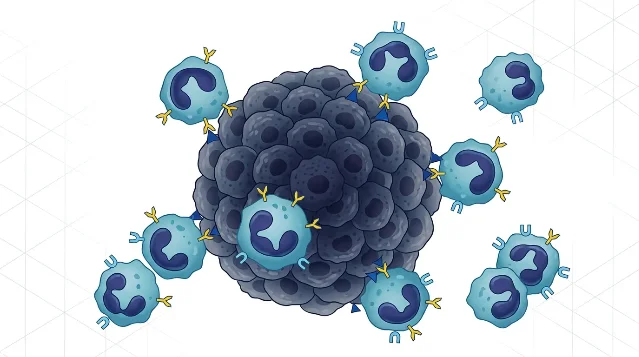
1. CAR engineering of myeloid progenitors establishes a scalable cellular immunotherapy platform
Journal: Cell — IF ~66 (Tier 1 flagship) 1
Study design: Preclinical — defined culture conditions for long-term ex vivo expansion of mouse and human granulocyte-monocyte progenitors (GMPs), with CAR engineering and in vivo tumor challenge models.
Key findings: CAR-GMPs suppressed CD19+ leukemia and HER2+ solid tumors in mouse models. 1 Expanded GMPs seeded hematopoietic niches, generated donor-derived myelopoiesis, and yielded tumor-infiltrating macrophages after adoptive transfer. An Fc-domain CAR design recruited host Fc receptor-expressing phagocytes and enabled T cell priming across MHC mismatch — demonstrating efficacy in immunocompetent allogeneic settings. In a chronic granulomatous disease (CGD) model, transplanted GMPs restored antibacterial defense. Myeloperoxidase (MPO) emerged as a regulator of GMP proliferation, a mechanistic handle for protocol optimization.
Clinical/research implication: Prior macrophage-based cell therapies hit a ceiling on ex vivo expansion and genetic tractability. Progenitor-stage engineering sidesteps both: GMPs expand robustly, differentiate on-demand, and the Fc-CAR design enables cross-MHC allogeneic use — reducing manufacturing barriers for off-the-shelf myeloid immunotherapy. The CGD rescue data also opens a separate IND pathway for primary immunodeficiency. Authors hold equity in Myelogene Inc. and have filed patents, so commercial translation is actively anticipated.
Authors/institution: Yue S, Ying Q-L (corresponding); University of Southern California (lead); Stanford University; Creighton University; Harvard Medical School / Dana-Farber.
Link: DOI 10.1016/j.cell.2026.05.043 · PMID 42320470
2. Lower testosterone associates with higher cancer death risk — IPD meta-analysis of 24,510 men
Journal: The Lancet Healthy Longevity — IF ~26 (Tier 2 high-impact) 2
Study design: Individual participant data (IPD) meta-analysis of 10 prospective cohort studies; 24,510 community-dwelling men; 276,931 participant-years; 2,847 cancer deaths. All cohorts required mass spectrometry-measured testosterone and ≥5 years follow-up. PROSPERO CRD42019139668.
Key findings: Lower total testosterone was associated with 18% higher cancer death risk (Q1 vs Q5 HR 1.18, 95% CI 1.04–1.34), with risk rising below ~8.6 nmol/L; lower dihydrotestosterone showed a similar pattern (HR 1.21, 95% CI 1.06–1.38). 2 SHBG and luteinizing hormone showed non-linear U-shaped associations with cancer death — lowest risk at mid-range (SHBG Q3 vs Q5 HR 0.81; LH Q2 vs Q5 HR 0.73). In the separate prostate cancer incidence analysis (N=12,280; 918 events), lower SHBG (Q1 vs Q5 HR 1.28) and lower LH (Q1 vs Q5 HR 1.45) both predicted higher risk, while testosterone itself was not associated. Very low baseline testosterone (<7.3 nmol/L) independently predicted higher incident cancer risk.
Clinical/research implication: The threshold finding (~8.6 nmol/L for excess cancer mortality risk) is actionable: clinicians can now contextualize low-T readings in oncology and preventive care settings, with the caveat that this is observational data. The null finding for testosterone on prostate cancer incidence — while SHBG and LH remain predictive — challenges the prevailing assumption that testosterone is the primary driver of prostate cancer risk. Funded by Medical Research Future Fund and Government of Western Australia, with a Lawley Pharmaceuticals contribution that warrants disclosure attention.
Authors/institution: Yeap BB (corresponding), Marriott RJ et al.; University of Western Australia (lead).
Link: DOI 10.1016/j.lanhl.2026.100857 · PMID 42320510
3. Sexual transmission accounts for 85% of HTLV-1 infections — multi-endemic-focus mathematical modeling
Journal: The Lancet Infectious Diseases — IF ~36 (Tier 1–2 high-impact) 3
Study design: Multi-route serocatalytic mathematical modeling using 7 age- and sex-stratified HTLV-1 seroprevalence surveys across 9 subpopulations (French Guiana, rural Gabon, rural Cameroon, Japan [Miyazaki, Iriomote, Ishigaki], central Australia). Open Access under CC BY 4.0.
Key findings: In adults aged 25–69, sexual transmission accounted for 85% (95% CrI 79–87) of HTLV-1 infections globally across endemic foci, with vertical transmission contributing 8% (95% CrI 7–9). 3 Vertical transmission probability conditional on infected mother: 17% (95% CrI 15–20). Sexual infection risk was 1.6× higher in females than in males. Hospital-related transmission reached ~2% in Japan (pre-blood-safety measures) and ~5% in Cameroonian Bantu communities. NHP (non-human primate) bite-related transmission contributed up to 26% of adult male infections in Cameroonian Bantu communities and up to 9% elsewhere in central Africa — a route largely absent from prevention frameworks. In central Australia, a substantial fraction of adult male infections remained unexplained by any modeled route.
Clinical/research implication: The sexual-route dominance has direct bearing on screening and prevention priority: condom promotion and antenatal screening programs are higher-yield than infection-control interventions focused on blood products in most endemic settings. The Cameroonian NHP bite data opens a new zoonotic angle that current WHO HTLV guidelines do not address. The unresolved excess in central Australia suggests an uncharacterized transmission route that warrants prospective study.
Authors/institution: Ochida M, Cauchemez S (corresponding); Institut Pasteur, Université Paris Cité (lead). Funded by EU and Agence Nationale de la Recherche.
Link: DOI 10.1016/S1473-3099(26)00178-7 · PMID 42320494
4. Soluble CD95L drives Caspase-10/OTULIN-dependent ROS in AAV neutrophils — CD95 signaling identified as therapeutic target
Journal: Nature Communications — IF ~16 (Tier 2) 4
Study design: Human patient tissue analysis (ANCA-associated vasculitis [AAV] kidney and skin biopsy specimens) + in vitro neutrophil assays + proteomics + two mouse models (AAV and crescentic glomerulonephritis). Authors hold a patent application on DB550 (US20210238143).
Key findings: Inhibition of CD95-mediated non-apoptotic signaling abrogated ROS production in AAV patient neutrophils and alleviated clinical symptoms in both AAV and crescentic glomerulonephritis mouse models. 4 The mechanistic cascade: blood vessels in inflamed AAV organs express CD95L, which is cleaved by metalloproteases to release soluble CD95L (sCD95L) → Caspase-10 activation → cleavage of deubiquitinase OTULIN at aspartates D31 and D54 → unleashed LUBAC E3 ligase activity → mitochondrion-dependent ROS generation in neutrophils. This is a non-apoptotic CD95 signaling branch, distinct from canonical Fas-mediated cell death.
Clinical/research implication: AAV — encompassing granulomatosis with polyangiitis, microscopic polyangiitis, and eosinophilic GPA — currently lacks approved targeted therapies beyond rituximab and cyclophosphamide. The CD95L→Caspase-10→OTULIN cascade is a specific, druggable molecular pathway. The two-model rescue data and the patent filing (DB550) suggest a defined pharmacological entry point. Validation in a clinical cohort with quantified sCD95L levels is the obvious next step.
Authors/institution: Boizard-Moracchini M, Legembre P, Blanco P (corresponding); University of Bordeaux, CNRS, ImmunoConcEpT; Bordeaux University Hospital; INSERM, University of Limoges (France). Funded by ANR, Société Française de Rhumatologie, Conseil Régional Nouvelle Aquitaine.
Link: DOI 10.1038/s41467-026-74452-8 · PMID 42321206
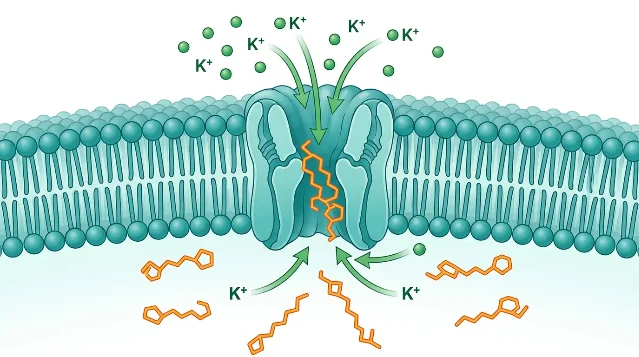
5. Systemic polyamines rescue IK1 rectification and prevent arrhythmias in Short QT Syndrome type 3
Journal: Nature Communications — IF ~16 (Tier 2) 5
Study design: Mouse model of SQTS3 carrying the Kir2.1 M301K gain-of-function mutation; electrophysiology (patch-clamp, ECG telemetry); systemic polyamine administration; arrhythmia inducibility protocol.
Key findings: Systemic polyamine administration restored strong IK1 inward rectification, rescued sodium current density, prolonged action potential duration and QT interval, and significantly reduced ventricular tachycardia inducibility in Kir2.1 M301K mice. 5 SQTS3 is caused by Kir2.1 mutations that enhance outward IK1, disrupting voltage-dependent rectification and abbreviating the cardiac action potential. No targeted therapy exists. Male mutant mice displayed reduced IK1 rectification, reduced sodium channel function, QT shortening, and high susceptibility to induced ventricular tachycardia under baseline conditions. Polyamines are the endogenous blockers of Kir2.1 channels, making this a mechanism-grounded pharmacological approach rather than repurposing by analogy.
Clinical/research implication: SQTS3 is rare but lethal — affected patients face sudden cardiac death without an effective pharmacological option (ICDs are the current standard). Polyamines are endogenous, bioavailable, and already studied in other metabolic contexts, lowering the translational barrier for a first-in-human study. The key unknowns are dose-response in humans (Kir2.1 M301K expression is heterozygous in patients), off-target polyamine effects on other inward rectifiers (Kir2.2, Kir2.3), and whether the same strategy applies to SQTS1 (KCNH2 mutations). Led by José Jalife's group at CNIC (Centro Nacional de Investigaciones Cardiovasculares), Madrid; Jalife also holds an appointment at the University of Michigan and has published foundational work on cardiac fibrillation mechanisms.
Authors/institution: Moreno-Manuel A, Jalife J (corresponding); CNIC, Madrid / University of Michigan. Funded by La Caixa Banking Foundation, ISCIII, MCIU, Fundación La Marató de TV3, EU Horizon 2020.
Link: DOI 10.1038/s41467-026-74259-7 · Not yet indexed in PubMed as of June 20, 2026
Notable mentions outside the top 5
Two papers from this window that did not make the top 5 but carry specific research interest:
BRCA1 loss / choline / FAM3C metastasis axis in ovarian cancer (Nature Communications) 6: BRCA1 deficiency upregulates CTL4 (choline transporter-like protein 4) via EZH2-mediated H3K27me3 derepression. Elevated phosphocholine then stabilizes FAM3C, an EMT inducer, driving peritoneal metastasis. DT-13, identified as a CTL4 inhibitor, suppressed metastasis in BRCA1-deficient ovarian cancer models in vivo. Wang, Chen et al.; China Pharmaceutical University, Nanjing.
ATF4 as a metabolic-translational hub in acute leukemia (Nature Communications) 7: ATF4 simultaneously drives amino acid biosynthetic enzyme expression (feeding nucleotide production) and tRNA charging enzyme transcription (sustaining selective translation of replication origin-firing proteins). ATF4 inhibition disrupts DNA replication timing, forcing differentiation and death. NIH/NCI-funded (R01-CA227830, R01-CA273127); Fox Chase Cancer Center and Washington University. PMID 42321188.
Cover image: Pexels / Edward Jenner
Fuentes de referencia
- 1Expansion and CAR engineering of granulocyte-monocyte progenitors for cellular immunotherapy
- 2Associations of testosterone, sex hormone-binding globulin, and related hormones with risks of cancer death, incident cancer, and incident prostate cancer in men
- 3Quantifying how multiple transmission routes contribute to the spread of HTLV-1 in different endemic foci
- 4Soluble CD95L triggers Caspase-10-driven reactive oxygen species production in neutrophils and aggravates ANCA-vasculitis
- 5Repurposing polyamines to prevent life-threatening arrhythmias in Short QT Syndrome type 3
- 6Choline metabolism drives metastasis in BRCA1-deficient ovarian cancers by activating FAM3C
- 7ATF4 coordinates amino acid and nucleotide synthesis with selective protein translation to ensure proper DNA replication timing in leukemia cells

Añade más opiniones o contexto en torno a este contenido.