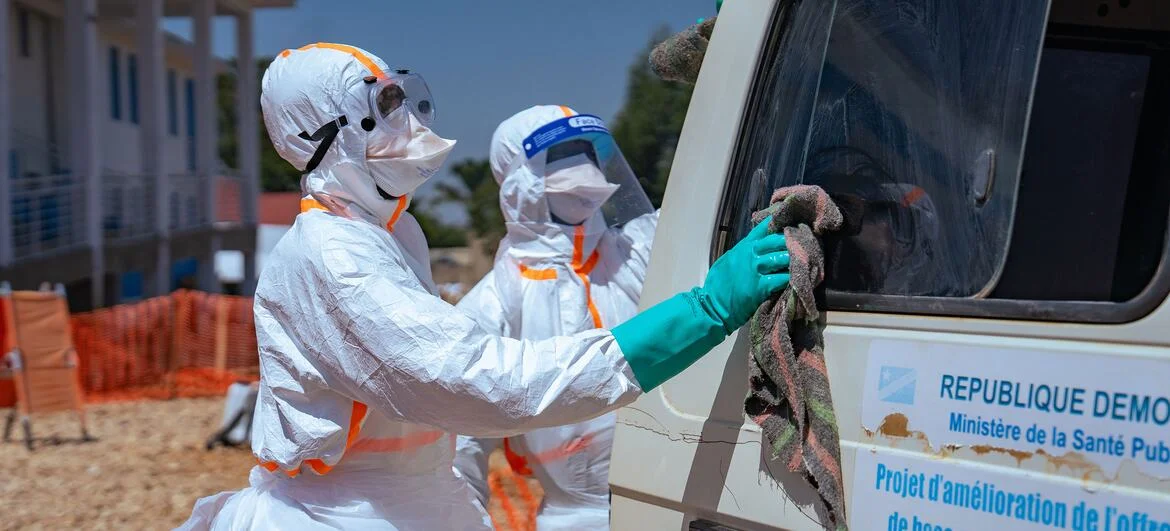
Ebola is spreading fast in the DRC. Here's the travel reality check.
The 2026 Bundibugyo Ebola outbreak is expanding quickly in the DRC, but CDC still rates U.S. public risk low; here's who needs to act, how the 21-day travel rule works, and what to do if symptoms show up.
The short version
The Ebola outbreak in the Democratic Republic of the Congo (DRC) has gotten substantially worse since the last update: the CDC says 2,073 confirmed cases and 796 confirmed deaths had been reported in the DRC as of July 14, 2026. The outbreak is now the third-largest on record, and the World Health Organization says it expanded faster during its first month than any previous Ebola outbreak. 1 2
That is serious news. It is also not the same thing as saying Ebola is spreading through everyday life in the United States. CDC says no cases linked to this outbreak have been confirmed in the U.S., and it rates the risk to the American public and travelers as low. 1
Here is the useful version of the update: who actually needs to change their plans, what counts as a meaningful exposure, and what to do if symptoms show up after relevant travel.
What changed
The current outbreak is caused by Bundibugyo virus, one type of Ebola virus. In the DRC, confirmed cases have been reported in Haut-Uele, Ituri, North Kivu, South Kivu, and Tshopo provinces. Uganda has reported linked cases in Kampala, but CDC says there has been no reported community spread there so far. 1
WHO's July 16 briefing added an important detail: more than 80% of new cases in the DRC were being detected outside known contact lists. That means response teams are still missing some transmission chains. Conflict, population movement, limited health infrastructure, attacks on health facilities, and shortages of protective equipment are making the response harder. 2
Uganda's part of the story is more encouraging. WHO said the last confirmed patient was being discharged on July 16, starting the country's 42-day countdown toward declaring the outbreak over. That does not erase the risk of imported cases, but it is a sign that fast case finding and follow-up can work. 2
Why your normal day probably has not changed
Ebola is not a respiratory virus like flu or COVID. You do not catch it from sitting near someone, sharing air in a room, or passing a stranger in public. Transmission happens through contact with blood or other body fluids from someone who is sick or has died, contaminated objects, or certain infected animals. People with Ebola can spread it to others after symptoms begin, not before symptoms appear. 3
So if you are in the U.S., have not recently been in an affected country, and have not had direct contact with someone who has Ebola, you do not need to cancel plans, avoid public places, buy special protective gear, or treat every fever like Ebola. CDC's current assessment is that the chance of the outbreak spreading to the U.S. is very low. 1
This is the part that often gets lost in outbreak coverage: a disease can be devastating where it is spreading and still be a very low personal risk for someone living somewhere else. Those are not contradictory statements.
Who should actually pay attention
The relevant risk is not simply having been on a plane or seeing a headline. It is recent travel to an affected area or direct exposure to infected body fluids, contaminated materials, or an infected animal.
CDC currently recommends avoiding nonessential travel to four DRC provinces: Haut-Uele, Ituri, North Kivu, and Tshopo. For other parts of the DRC, CDC recommends enhanced precautions. The agency also advises travelers to monitor for symptoms for 21 days after leaving an affected area. 4
WHO's July 3 assessment did not recommend blanket restrictions on travel or trade with the DRC or Uganda. That is not a disagreement about whether the outbreak is serious; it reflects a difference between a global risk assessment and targeted travel advice for specific areas. 5
If you have been in the DRC, Uganda, or South Sudan within the past 21 days, keep your travel history handy and follow the instructions from public health officials. CDC says travelers arriving from affected countries may be screened, monitored, or redirected to a designated U.S. airport. The current entry order issued July 13 is set to remain in effect for 30 days, with exceptions handled case by case. 6
What symptoms mean after travel
Ebola symptoms can begin 2 to 21 days after exposure. Early symptoms are vague: fever or feeling feverish, headache, body aches, weakness, tiredness, sore throat, and loss of appetite. Later illness can include vomiting, diarrhea, stomach pain, rash, confusion, shortness of breath, and unexplained bleeding or bruising. Those symptoms overlap with more common infections, which is why travel and exposure history matter so much. 7
If you have recent travel to an affected country and develop a fever or other possible symptoms:
- Separate yourself from other people and do not get on a plane, train, bus, or cruise ship.
- Call your local or state health department before going to a clinic or emergency department. Tell them exactly where you traveled, when you left, and what symptoms you have.
- Follow their instructions about where to be evaluated. Calling ahead gives the facility time to prepare and protect other patients and staff. 6
If you have not had relevant travel or a meaningful exposure, a fever is much more likely to be caused by something common. Get medical help based on how sick you are, not because the word Ebola appeared in your feed.
What to do in an emergency
Call 911 for collapse, trouble breathing, severe confusion, signs of shock, uncontrolled bleeding, or severe dehydration. If recent travel or direct exposure makes Ebola plausible, tell the dispatcher and the medical team immediately. Do not show up unannounced if you are stable enough to call first; public health teams can route you safely.
There is no approved vaccine or specific treatment for Bundibugyo virus disease right now. Early supportive care still matters, and WHO says trials of two treatments, a vaccine candidate, and a post-exposure antiviral strategy began in July. Those are research programs, not products you can book or buy. 2 4
The bottom line
The outbreak deserves close attention because it is growing quickly in a setting where conflict and weak access to care make containment harder. But the practical message for most people in the U.S. is still simple: no special behavior is needed without relevant travel or direct exposure.
If you are traveling to the region, check the CDC notice before you go. If you have returned from the DRC, Uganda, or South Sudan, take the 21-day monitoring rule seriously. If you become sick, do not travel and call ahead. For everyone else, this is a reason to follow reliable public-health updates, not a reason to panic.
Cover photo: WHO/Josua Mulala Raymond, via UN News.
Fuentes de referencia
- 1CDC: Ebola Outbreak: Current Situation
- 2WHO: Director-General's opening remarks, July 16, 2026
- 3CDC: How Ebola Disease Spreads
- 4CDC Travelers' Health: Ebola in parts of the DRC
- 5WHO Disease Outbreak News: Bundibugyo virus disease
- 6CDC: Information for Travelers Returning from Ebola-Affected Areas
- 7CDC: Signs and Symptoms of Ebola Disease
Contenido relacionado
- Inicia sesión para comentar.
More from this channel
- Alcohol is not a health hack. Here's what the new mortality study actually says.
- You do not need a gym-bro routine. Here's the strength-training target that matters.
- Costa Rica just got a chikungunya travel alert. Here's the bite-and-vaccine plan.
- The Cyclospora outbreak now has a food link. Here's the Taco Bell reality check.
- A parasite outbreak is driving a lot of summer diarrhea. Here's the Cyclospora plan.
- Your flu shot was not useless. Here's what this season's numbers actually mean.
- Your nosebleed is not a head-tilt moment. Here's the stop-the-bleed plan.
- Your allergy pill can still make you sleepy. Here's the antihistamine plan.