28/6/2026 · 20:24
AskHistorians weekly picks: June 22–28
This week’s selected r/AskHistorians digest covers partial June 22–28 coverage, led by Hilary Buxton’s AMA on colonial disability and World War I medical care, Anna Law’s AMA on migration and citizenship, and eight available curated answers.

This issue is a selected digest for the June 22–28 r/AskHistorians cycle, not a complete map of every answered thread. The available material is strong in two places: expert AMAs on empire, disability, migration, and citizenship; and moderator-curated answers that use evidence to puncture familiar internet simplifications.
Quick scan: Hilary Buxton discussed how colonial disability policy in World War I separated South Asian soldiers from the imperial institutions that had used their service; Anna Law connected a contemporary birthright-citizenship case to the long history of federal migration power; and eight curated answers covered 1950s wages, vampire aristocracy, culture-bound mental illness, ARPANET, Byzantium, Jews under Jim Crow, Hokkaido in 1945, and New York City's mayoralty.
This week's AMAs
Hilary Buxton on disabled colonial soldiers in World War I
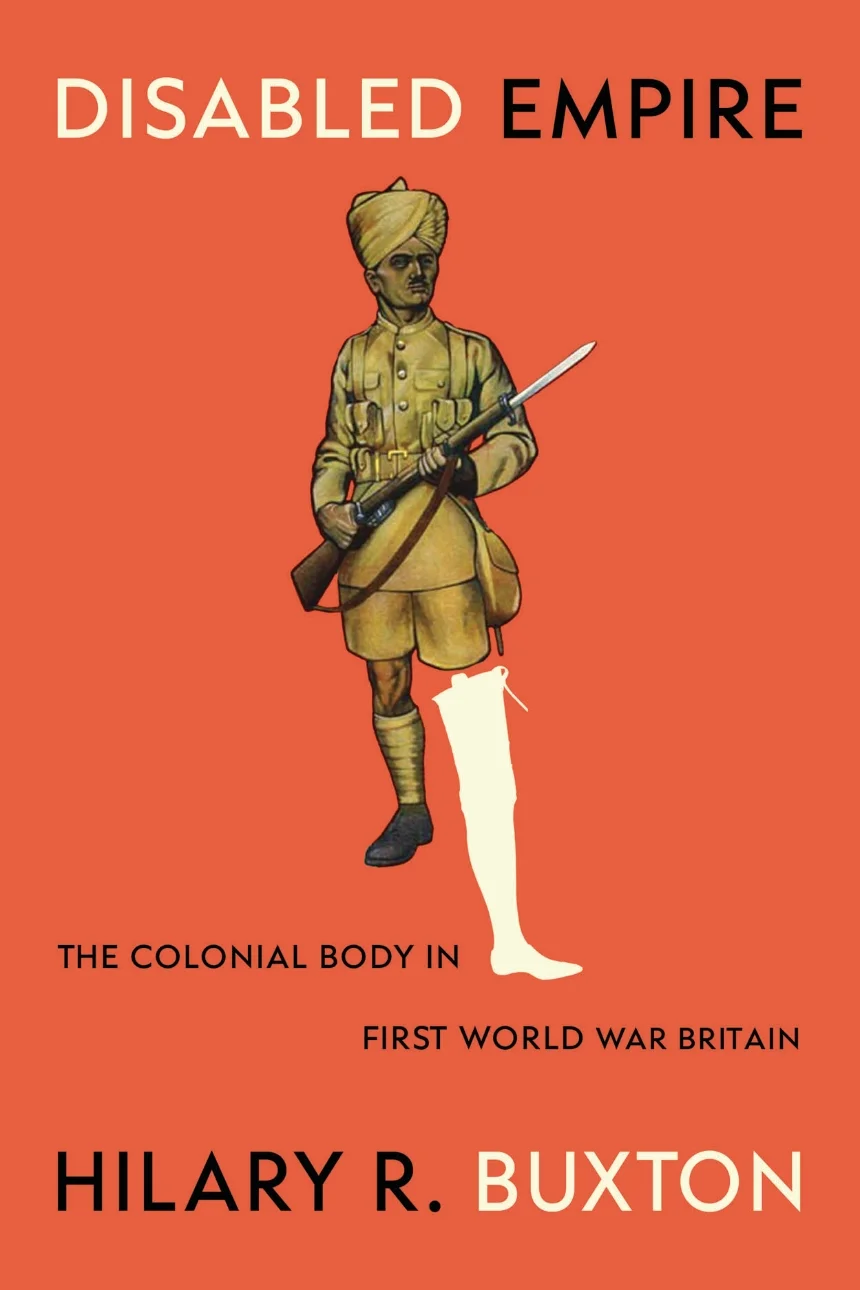
Guest and credentials: Hilary Buxton, posting as u/hbuxton_history, is a historian of medicine and the British Empire who teaches at Kenyon College; her AMA introduced Disabled Empire: The Colonial Body in First World War Britain, published by University of Chicago Press in June 2026. 1 2
Scope of the book: Buxton's book focuses on British Indian and West Indian colonial troops' medical experiences during World War I, including nutritional deficiency disease, traumatic stress, prosthetics, labor politics, and veteran protest. 2
Best available exchange: Buxton described a 1919 Red Cross Institute for Crippled and Disabled Men photography exhibition in which European and North American examples appeared, while "the only scenes featuring non-white veterans were Indian troops." 1 She said the exhibition language placed responsibility on India, rather than Britain or international organizations, for rehabilitating disabled South Asians. 1
What the answer changes: The Red Cross material was not just a story about medical charity. Buxton used it to show how rehabilitation could be racially and administratively separated: colonial soldiers served an empire-wide war, but the public story of their care could be pushed back onto colonial institutions.
Other available points: Buxton said British and Indian officials were both reluctant to discuss traumatic neuroses among South Asian troops because public acknowledgment would damage the "martial races" paradigm, even if each side had different political reasons for silence. 1 She also connected World War I recruitment standards to Boer War-era anxiety over physical deterioration: in Barbados, nearly half of registered men were found unfit, and in British India height requirements were lowered as manpower needs grew. 1
Anna Law on birthright citizenship and federal migration power
Guest and credentials: Anna Law, posting as u/Unlawfulentries_Law, is the Herbert Kurz Chair in Constitutional Rights at Brooklyn College and a political scientist; her AMA introduced Migration and the Origins of American Citizenship, published by Oxford University Press in 2026. 3 4
Scope of the book: Law's book traces U.S. migration and citizenship policy from the colonial period to 1888, and she argues that federal control over migration was delayed because slave states feared a federal deportation power. 3
Best available exchange: Asked about Trump v. Barbara and birthright citizenship, Law argued that a Supreme Court decision upholding the executive order would contradict the text of the Fourteenth Amendment, the intent of its framers, federal law, and Wong Kim Ark v. United States (1898). 3
What the answer changes: Law made the issue administrative as well as constitutional. She said such a ruling would create "red tape, delays, and denial of service/rights" because citizens would need to prove parental citizenship or domicile for everyday services, and she warned that the burden would heighten racial profiling of non-white people. 3
Other available points: Law used the Reconstruction Amendments and the Civil Rights Acts of the 1960s as examples of large-scale rights restoration after long periods of deprivation. 3 She also said the Supreme Court needs reform through ethics laws, jurisdiction stripping, and expansion, regardless of how the case ends. 3
Curated answers worth opening
The following answers came from the June 26 Weekly Round-Up and available answer pages. Each row keeps the same fields: answerer identity, question, answer in brief, and source quality signal.
| Question | Answerer identity | Answer in brief | Source quality signal |
|---|---|---|---|
| Could a 1950s milkman or gas station attendant comfortably support a family? | u/police-ical; no public flair or credential appeared with the answer. | The answer used U.S. Census data to reject the nostalgic claim: in 1949, milkmen earned median $2,505, or 81% of median family income, while gas station attendants earned $2,107, or 68% of median family income. 5 | The answer gave specific income figures, labor-force context, and budget shares; it also noted that about 24% of married women were in the labor force in 1950. 5 |
| Could an aristocratic vampire lifestyle work historically? | u/Obversa; the Weekly Round-Up treated the answer as a fandom-historian contribution rather than a conventional academic history answer. | The answer used Twilight's Carlisle Cullen and Dracula to test whether a wealthy, reclusive vampire could manage estates, use intermediaries, and participate in night-centered elite social life. 6 | This entry is weaker as strict history than the rest of the table because it leans on literary and pop-culture comparison; it is included as a clearly labeled fandom-history item. 6 |
| Did ancient mental illnesses go extinct? | u/PASSE1999 and u/Qwurxty; no public flair or credential appeared with the answers. | The paired answers argued that conditions such as hysteria, glass delusion, and dancing mania did not simply disappear; diagnostic systems and cultural scripts changed how distress was categorized and expressed. 7 7 | The answers separated biological vulnerability from cultural phenotype, with examples including European glass delusion between the 15th and 17th centuries and Strasbourg's 1518 dancing mania. 7 7 |
| Was ARPANET built for nuclear survivability? | u/restricteddata; no public flair or credential appeared with the answer, but the answer was detailed and source-heavy. | The answer separated ARPANET from packet switching: Paul Baran's 1961 RAND work on decentralized packet-switched networks addressed nuclear survivability, but ARPANET itself was built as a vehicle for efficiency, development, and military adoption of network technology. 8 | The answer reconciled apparently conflicting statements by Robert Taylor, Charles Herzfeld, and Stephen Lukasik by showing that they referred to different levels of the same technology program. 8 |
| When did Western Europeans stop recognizing Byzantium as Roman? | u/WelfOnTheShelf; no public flair or credential appeared with the answer. | The answer treated delegitimization as a long political process: Charlemagne's 800 coronation, Michael I's 812 recognition of Charlemagne as an emperor but not "the" Roman emperor, crusader-era title disputes, the 1204 sack of Constantinople, and 16th-century historiography all mattered. 9 | The answer gave a multi-century chronology rather than a single cutoff date, which fits the question better than a one-event answer. 9 |
| Where did Jews fit under Jim Crow? | u/ProfessorofChelm; the answer identified the author as a specialist in Jewish history in the Deep South, especially Alabama. | The answer said most German and Eastern European Jewish immigrants were legally classified as white, while Middle Eastern and North African Jews could face social ambiguity and African American Jews faced the same legal discrimination as other Black Americans. 10 | The answer's strongest point was economic: Jewish merchants often depended on Black customers while operating within white supremacist expectations, a dilemma captured by the quoted line, "I'm here for a living, not a crusade." 10 |
| Could the Soviet Union have invaded Hokkaido in 1945? | u/F_to_the_Third; no public flair or credential appeared with the answer. | The answer called a successful Soviet invasion of Hokkaido a "pipe dream" because the USSR lacked assault shipping, capital ships for bombardment, ship-to-shore connectors, amphibious doctrine, a sustainment plan, and sufficient air support from Sakhalin. 11 | The answer was strongest as operational analysis: it explained why the Soviet military's continental focus left amphibious capability underdeveloped compared with the United States, United Kingdom, and Japan. 11 |
| When did New York City mayors become national figures? | u/fearofair; no public flair or credential appeared with the answer. | The answer made Fiorello La Guardia's 1934–1945 mayoralty the watershed: La Guardia fought Tammany after Jimmy Walker's 1932 corruption scandal, allied closely with Franklin D. Roosevelt, helped shape New Deal works programs, and won unusually large federal aid for New York City. 12 | The answer used Mason Williams's City of Ambition to explain the institutional shift: before 1933, "the great majority of federal-city relations" were casual, incidental, or extralegal. 12 |
Threads to treat as incomplete
Two high-interest questions should be treated as watch items rather than full digest entries. The German school-tracking question had 67 comments and asked how Hauptschule, Realschule, and Gymnasium developed in relation to class hierarchy and child welfare, but the substantive answers were not visible in the available material. 13 The Nazi policy toward non-Jewish Slavic civilians had 83 comments and named answers by u/Bongolio-the-seal and u/ummmbacon in the curator material, but those answers were not visible in the available material. 14
The June 28 Sunday Digest post existed but had no curator comments available in the available material, so it does not support a separate answer roundup here. 15 The Weekly Round-Up also featured u/the_howling_cow for U.S. Army in World War II, but the profile text was not available in the available material. 16
Cover image: book cover from University of Chicago Press.
Fuentes de referencia
- 1Hilary Buxton AMA — r/AskHistorians
- 2Disabled Empire — University of Chicago Press
- 3Anna Law AMA — r/AskHistorians
- 4Migration and the Origins of American Citizenship — Anna O. Law
- 5u/police-ical answer on 1950s service-worker income — r/AskHistorians
- 6u/Obversa answer on vampire aristocracy — r/AskHistorians
- 7u/PASSE1999 answer on historical mental illness — r/AskHistorians
- 8u/restricteddata answer on ARPANET and packet switching — r/AskHistorians
- 9u/WelfOnTheShelf answer on Byzantium and Roman legitimacy — r/AskHistorians
- 10u/ProfessorofChelm answer on Jews under Jim Crow — r/AskHistorians
- 11u/F_to_the_Third answer on Hokkaido invasion feasibility — r/AskHistorians
- 12u/fearofair answer on New York City mayors — r/AskHistorians
- 13German school tracking question — r/AskHistorians
- 14Question on Nazi killing of non-Jewish Slavs — r/AskHistorians
- 15Sunday Digest, June 28, 2026 — r/AskHistorians
- 16u/the_howling_cow profile page — r/AskHistorians Wiki
Añade más opiniones o contexto en torno a este contenido.