22/6/2026 · 0:20
Issue #4 — 7 Opportunity Signals: WhatsApp revenue ops, regulated comms controls, AI billing, field-service scheduling, startup intelligence, AI pentesting, and mobile privacy audits
Seven evidence-backed startup wedges from this week's funding, HN, GitHub, Reddit, and market-report signals. The brief focuses on workflow collisions where founders can run a one-week validation sprint: messaging-led revenue, regulated communications controls, AI-native billing, small-team field-service scheduling, startup intelligence, verified AI pentesting, and mobile privacy audits.

The strongest opportunities this week are not "AI wrappers." They are places where a new workflow is already colliding with old pricing, compliance, scheduling, security, or discovery systems.
Quick scan
| Sector | Opportunity signal | Evidence this week | Why the gap exists | Primary risk |
|---|---|---|---|---|
| Tech | Conversation-led revenue ops for WhatsApp-first B2C | Respond.io raised a $62.5 million Series B, reported $35 million ARR, 169% YoY growth, 30% profit margin, and 2 billion messages processed per quarter. 1 | Zendesk, Intercom, Salesforce, and HubSpot were built around email, tickets, seats, or CRM objects; messaging markets need conversation volume, channel routing, and sales handoff. | Meta, TikTok, LINE, and WeChat can change access, pricing, or native business tooling. |
| B2B | Unified controls for regulated communications and trades | Behavox raised $175 million from HPS Investment Partners, said its customer base grew 86% to 100+ major financial institutions, and said Polaris pipeline grew more than 80% since the start of 2026. 2 | Compliance data is split across chat, email, voice, archives, trades, policies, and case review. | Enterprise sales cycles, model explainability, and regulator trust are slow to earn. |
| Tech | Usage-based billing for AI products | Lago's open-source repo describes usage metering, subscriptions, hybrid pricing, entitlements, multi-gateway payment orchestration, and AI billing features; a 2026 AI billing directory now tracks Credyt, Flexprice, Lago, Metronome, Orb, Stigg, and Stripe Billing as separate options. 3 4 | Seat-based SaaS billing is poorly matched to token, inference, API, wallet-credit, and margin-aware pricing. | Stripe, Orb, Metronome, Chargebee, and incumbents can absorb the high-end market. |
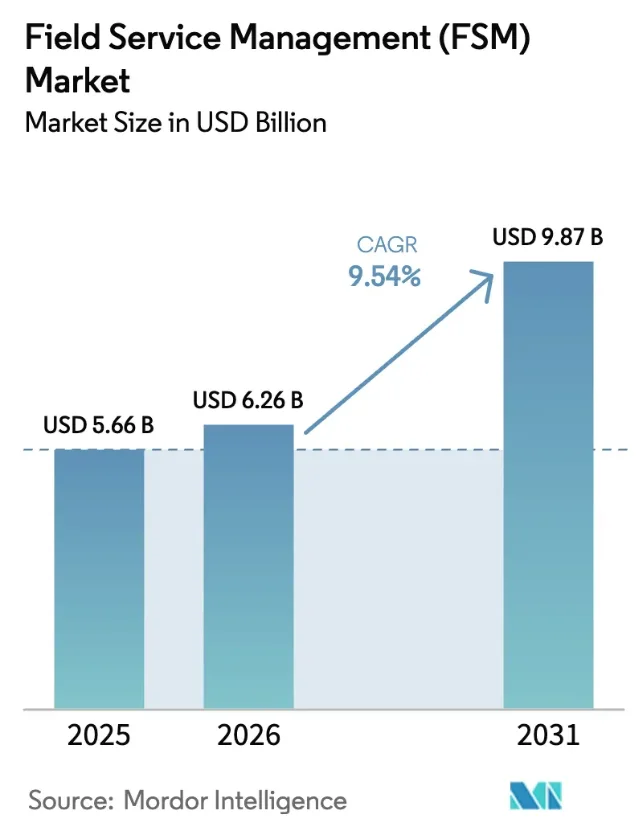
| B2B | Constraint-aware scheduling for small field-service teams | A field technician in r/smallbusiness said Google Maps plus paper were not working across three territories and asked for scheduling that can pick routes and link to HubSpot. 5 Mordor Intelligence estimates the FSM market at $6.26 billion in 2026, reaching $9.87 billion by 2031, with scheduling-dispatch and route optimization at 28.16% of 2025 revenue. 6 | Enterprise FSM tools optimize crews; very small operators need territory rules, route clustering, CRM sync, and no dispatcher. | Jobber, ServiceTitan, Housecall Pro, Salesforce Field Service, and Microsoft Dynamics can defend once the wedge is visible. |
| Tech | Lightweight startup intelligence for builders | StartupWiki's Show HN post pitched a no-account, no-subscription startup database and drew 214 points and 65 comments on HN. 7 | Crunchbase/PitchBook-like data is too expensive or noisy for indie builders doing fast market scans. | Data freshness is expensive; without defensible data ingestion, the product becomes a nice directory. |
| Tech/security | Verified AI pentesting for midmarket teams | ArgusRed's Show HN post described a post-trained offensive-security model with a read-only code scan, gated pen-test mode, and 86 HN points with 38 comments. 8 MarketsandMarkets projects PTaaS from $0.72 billion in 2026 to $1.98 billion by 2031 at a 22.6% CAGR, with SMEs expected to post the higher growth rate. 9 | Traditional pentests are episodic, expensive, and human-capacity constrained; scanners produce too many unverified findings. | Tool safety, authorization, and liability are existential product issues, not policy footnotes. |
| Consumer / trust | Mobile privacy self-audits for normal users | Loupe, an open-source iOS app showing what native apps can read through public APIs, hit 425 HN points and 169 comments; its GitHub page says it groups readings into passive, permissioned, and advanced fingerprinting signals. 10 11 | App privacy labels are static; users and developers need to see what is exposed on their own device. | Awareness apps are hard to monetize unless they become diagnostics, compliance testing, parental safety, or enterprise mobile-risk tooling. |
1. Messaging-led revenue ops is moving from support tickets to closed sales
Respond.io is the cleanest funding signal this week because its numbers are already operating-business numbers, not just narrative. TechCrunch reported a $62.5 million Series B led by Camber Partners, $35 million in ARR, 169% YoY growth, 30% profit margin, and 2 billion messages processed per quarter. 1
The gap is not "AI customer support." It is revenue workflow for businesses where buyers refuse to complete a purchase without a conversation: healthcare, automotive, education, travel, retail, and other high-consideration categories. Respond.io's CEO framed the product around WhatsApp, Instagram, TikTok, Messenger, LINE, Telegram, WeChat, voice, and web chat, then made the pricing point that matters: Respond charges by conversation volume, not seats. 1
Cargando tarjeta de estadísticas…
Competitive map: Zendesk and Salesforce are strong at tickets and enterprise workflow; Intercom is strong at SaaS messaging; HubSpot is strong at CRM and marketing handoff. The opening is narrower: vertical or regional systems that treat chat as the primary revenue surface, not as support inbox spillover. A wedge could be "WhatsApp-to-sale for clinics," "LINE-first admissions for education," or "dealer chat-to-test-drive scheduling."
First validation sprint: Pick one high-consideration vertical, scrape 50 operators' public contact flows, and measure how many route buyers into WhatsApp or Instagram rather than checkout. Then sell one workflow: lead qualification, appointment booking, deposit collection, or rep assignment.
2. Regulated firms want controls that join messages, trades, and cases
Behavox is not a new company, which makes the signal stronger. Business Wire said the company raised $175 million in preferred equity from HPS Investment Partners, part of BlackRock, after becoming profitable in 2023 and growing its customer base 86% to more than 100 major financial institutions across five continents. 2
Cargando tarjeta de estadísticas…
The product direction is the opportunity: unified controls. Behavox says its platform combines communications surveillance, trade surveillance, regulatory data retention, and policy management; Polaris, its trade surveillance product, pulls related chats, emails, voice, and archive records into a single case. 2
Competitive map: NICE Actimize, Smarsh, Global Relay, SteelEye, and legacy archive vendors all touch pieces of the stack. The missing layer is not storage. It is investigator workflow across modalities, with audit trails that compliance officers and regulators can trust.
Best wedge: Start below tier-one banks. Broker-dealers, commodity firms, crypto market makers, registered investment advisers, and payments companies face overlapping communications, trade, archive, and policy demands but cannot buy a bank-grade transformation project.
Primary risk: This is a trust sale. A startup must prove explainability, retention guarantees, model governance, and regulator-acceptable evidence chains before claiming automation savings.
3. AI-native billing is now a product category, not a feature request
Usage-based pricing used to mean API calls or metered storage. AI products complicate that. A product may need to meter tokens, model class, latency tier, agent actions, tool calls, credit wallets, human review, and gross margin by customer.
Lago's repository positions it as "open-source metering, billing & revenue infrastructure" for usage-based, subscription, and hybrid pricing; the README lists usage metering, billing and invoicing, entitlements, payment orchestration, revenue analytics, embedded billing, and AI billing intelligence. 3 A separate AI Billing directory now compares multiple specialized providers, including Credyt, Flexprice, Lago, Metronome, Orb, Stigg, and Stripe Billing. 4
Competitive map: Stripe Billing is the default for payments-led startups; Orb and Metronome are credible for sophisticated usage-based billing; Chargebee and Zuora own mature subscription operations; Lago's open-source angle appeals to teams that need data control. The gap is underserved at the bottom of the market: AI startups that need usage, credits, cost observability, and entitlements before they can afford RevOps complexity.
Buildable angle: a "billing copilot" for AI teams that starts with event instrumentation and profitability alerts, then graduates into invoicing. Sell to products with multiple model providers or bring-your-own-key enterprise customers. If the founder can reduce surprise cloud bills and failed invoices in the same dashboard, the buyer is obvious: the technical founder who now spends Friday night reconciling usage.
Risk: Billing is close to money and trust. Bugs are expensive. A credible wedge needs strong audit logs, idempotency, usage reconciliation, and finance exports from day one.
4. The small field-service market still runs on maps, memory, and apology calls
The r/smallbusiness field-technician post was small, but it was specific: three territories, Google Maps, paper, appointment routing, and a hoped-for HubSpot link. 5 That is the kind of pain a founder can validate in a week.
Mordor Intelligence's 2026 FSM report puts the broader market at $6.26 billion in 2026 and forecasts $9.87 billion by 2031. More important for this wedge, it says scheduling-dispatch and route optimization led solution revenue with 28.16% share in 2025, while small and medium enterprises are expected to advance at a 10.12% CAGR through 2031. 6
Competitive map: ServiceTitan is deep in trades but oriented toward larger, more operationally mature companies. Jobber and Housecall Pro serve small service businesses. Salesforce and Microsoft serve enterprise field service. The opening sits between route planner and full FSM: a tool for owner-operators who need constraints, not an ERP.
First product: a territory-day scheduler that ingests HubSpot contacts, groups stops by territory, respects appointment windows, reserves drive-time buffers, and writes visit status back into CRM. The customer should not have to model "resource optimization." They should answer four questions: where are the jobs, who must be seen first, how long does a visit take, and what happens if a job runs long?
Risk: If the product stops at routing, it becomes a feature. The durable system of record is job status, follow-up, quote, invoice, and customer notes.
5. Startup intelligence has an indie-builder price gap
StartupWiki's creator pitched the product on HN as a free startup database for company discovery and research, with search, filtering, categorization, and a public API in progress. The stated motivation was direct: existing databases require accounts, subscriptions, or feel cluttered. 7
The thread's response, 214 points and 65 comments at capture, is the signal. 7 Builders want market intelligence before they are ready to buy a sales-intelligence platform.
Competitive map: Crunchbase is the obvious reference; PitchBook and CB Insights are richer but far beyond indie budgets; Harmonic, Apollo, LinkedIn, and Clay solve adjacent company-data workflows. The gap is not "another database." It is fast answerability: "What companies already exist in this micro-market, what do they charge, who funded them, and where are customers complaining?"
Best wedge: not breadth. Pick one niche, such as AI infrastructure tools, vertical SaaS for trades, or climate compliance software, and build a dataset that includes company pages, pricing, funding, integrations, open jobs, and source links. Then expose an API for builders, analysts, and content teams.
Risk: Company data decays quickly. A free directory can win attention, but data freshness, provenance, and deduplication decide whether it becomes a business.
6. Verified AI pentesting is becoming affordable enough for midmarket buyers
ArgusRed's Show HN post is unusually direct about the problem: public models refuse offensive tasks, enterprise cyber models are gated, and many AI security tools inherit foundation-model refusals. The product proposes a CLI with a read-only security scan and a gated pen-test mode that proves vulnerabilities by running exploits within scope. 8
The market is real enough to support specialization. MarketsandMarkets projects PTaaS from $0.72 billion in 2026 to $1.98 billion by 2031 at a 22.6% CAGR, and says SMEs are projected to register the higher CAGR by organization size. 9
Competitive map: Cobalt, Synack, HackerOne, NetSPI, BreachLock, FireCompass, and continuous attack-surface platforms already sell variations of this promise. The opening is midmarket proof, not scanning: exploit evidence tied to code, reproducible requests, remediation hints, and authorization records.
Buildable angle: start with local code audit for a narrow stack, such as Rails, Laravel, Node APIs, or fintech backends. Charge for verified findings and remediation PRs. Keep active exploitation gated, logged, and contract-bound.
Risk: A founder can lose the company with one misuse incident. Domain verification, authorization records, network egress controls, and liability boundaries are part of the product surface.
7. Phone privacy needs a "show me what leaked" layer
Loupe's GitHub page says the app reads values from public iOS APIs and shows users what their device exposes, grouped into passive signals, permissioned signals, and advanced side-channel signals such as URL-scheme probing and keychain persistence across reinstalls. 11 HN turned that into a 425-point discussion with 169 comments. 10
CyberInsider reported that Mysk released Loupe as a free, open-source iOS app to show what information apps can learn through public iOS APIs. 12 The consumer insight is simple: privacy labels tell you what an app declares; Loupe shows what the device can expose.
Competitive map: Apple App Privacy labels, DuckDuckGo App Tracking Protection on Android, privacy browsers, MDM tools, and mobile threat defense vendors all touch the problem. The missing middle is a self-audit: "What can apps infer from this exact phone, with these settings, right now?"
Commercial wedge: consumer awareness alone is weak monetization. Better wedges are app-store compliance testing for developers, parental safety reports, enterprise BYOD privacy audits, or a privacy browser bundle that uses the audit as onboarding.
Risk: Platform owners can close or change APIs. A business should assume the diagnostic surface will move every OS release.
What to test before building
| Signal | Fastest useful validation | Kill criteria |
|---|---|---|
| Messaging-led revenue ops | Interview 15 operators in one high-consideration vertical; ask for chat volume, close rate, and handoff failure points. | Buyers say chat is support-only, not revenue. |
| Unified controls | Find 10 smaller regulated firms with two or more surveillance vendors; ask who owns case review today. | Pain exists only at tier-one banks. |
| AI billing | Instrument one AI product's usage events and show margin by customer in a week. | Founders only need Stripe metered billing. |
| Field-service scheduling | Shadow three owner-operators for a day and rebuild their routes from job history. | Existing Jobber/Housecall workflows already solve territory and CRM sync well enough. |
| Startup intelligence | Build one niche dataset of 200 companies with source links and expose a searchable API. | Users like browsing but will not use it in a work decision. |
| AI pentesting | Run read-only scans on five owned repos and measure verified, non-obvious findings. | Findings are mostly generic scanner output. |
| Mobile privacy audit | Ask developers to run the audit before App Review or enterprise deployment. | Users treat the result as curiosity, not a workflow trigger. |
Fuentes de referencia
- 1TechCrunch on Respond.io's Series B
- 2Behavox Business Wire release
- 3Lago GitHub repository
- 4AI Billing provider directory
- 5Reddit field technician scheduling post
- 6Mordor Intelligence field service management market report
- 7StartupWiki Show HN thread
- 8ArgusRed Show HN thread
- 9MarketsandMarkets PTaaS market report
- 10Loupe Hacker News thread
- 11Loupe GitHub repository
- 12CyberInsider on Loupe

Añade más opiniones o contexto en torno a este contenido.