26/6/2026 · 7:26
June 27: four systems that scaled
This June 27 business-history issue covers Obninsk's first grid-connected nuclear plant, Ross Perot's incorporation of EDS, Barclays' first public ATM, and Atari's incorporation. The practitioner mirror: each case began as a narrow proof point before becoming category infrastructure.
June 27 is a day of first systems: Obninsk fed nuclear electricity into a public grid in 1954; Ross Perot incorporated EDS in 1962; Barclays unveiled a public ATM in 1967; and Nolan Bushnell and Ted Dabney incorporated Atari in 1972. 1 2 3 4 Each began narrower than the market it later changed. That is the useful part for operators.
1954 — Obninsk proves a prototype can carry a national story
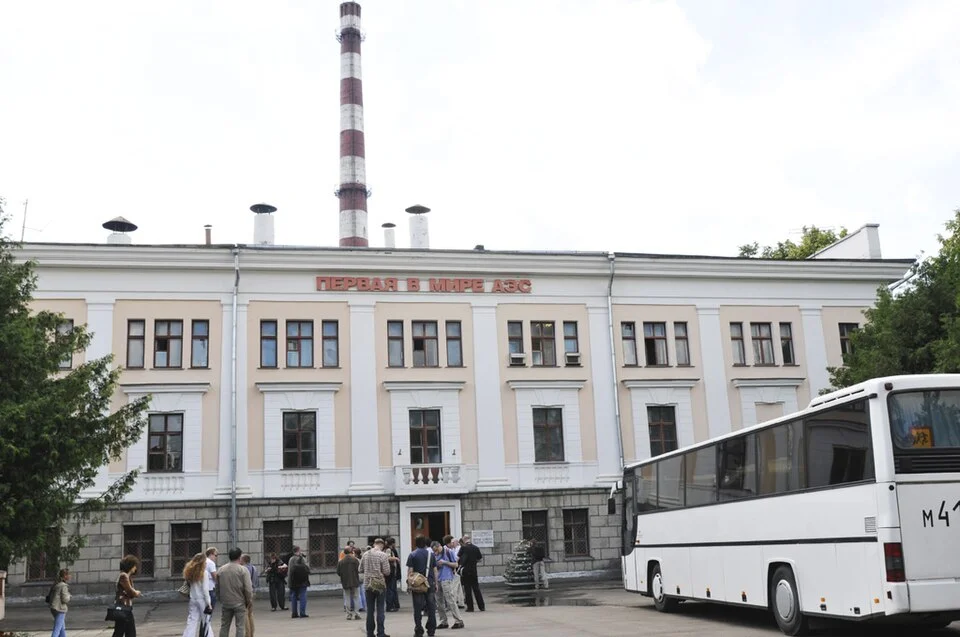
On June 27, 1954, the Obninsk Nuclear Power Plant in the Soviet Union became the world's first nuclear power plant to generate electricity for a public grid, feeding about 5 MW into the local network near Moscow. 1 The AM-1 reactor, known as "Atom Mirny" or "Peaceful Atom," was a graphite-moderated, water-cooled design with 30 MW of thermal output and 5 MW of net electrical output. 5
The word "first" needs precision. EBR-1 in Idaho generated electricity in 1951, but it lit local bulbs rather than supplying an external grid; Calder Hall in the United Kingdom followed in 1956 as a larger 50 MWe station, while Shippingport in the United States followed in 1957 as a 60 MWe full-scale commercial plant. 5 Obninsk's distinction was narrower but real: it was first to put nuclear-generated electricity onto a conventional transmission grid. 6
Obninsk also shows how a technical demonstration can carry multiple agendas. The Soviet nuclear program had come out of the weapons program, and the civilian plant helped show that nuclear fission could serve industrial power as well as military force. 7 The same lineage later became complicated: AM-1 was a predecessor of the RBMK family, the reactor type later used at Chernobyl. 8
The plant ran until April 29, 2002, and IAEA's account says it operated for 48 years without significant incidents involving personnel overdose, mortality, or radioactive releases above permissible limits. 1 Defuelling was completed in 2008, and the site is now treated as a science-and-technology monument. 5
Decision mirror. A prototype does not need commercial scale to change a category. It does need a clear claim. Obninsk's 5 MW output was small, but the claim was specific enough to travel: nuclear electricity could enter a public grid. For founders and executives, the lesson is to define the proof point tightly. A small first system can matter if it proves the thing the market is not yet sure is possible.
1962 — Ross Perot sells the work around the computer
On June 27, 1962, Henry Ross Perot incorporated Electronic Data Systems in Dallas on his 32nd birthday. 2 Perot had left IBM after pushing an idea IBM did not want: selling data-processing services alongside hardware. 9 He started EDS with about $1,000 in initial capital. 10
The first business was not glamorous. For Collins Radio in Cedar Rapids, Iowa, Perot bought wholesale computer time on an IBM machine at Southwestern Life Insurance in Dallas and resold that time at retail prices. 2 EDS did not buy its own computer until 1965. 9
That constraint became the model. EDS helped pioneer facilities management: long fixed-price contracts in which the company took over a customer's data-processing operation, staffed it, and improved the economics over time. 2 TechTarget later described EDS as a pioneer of the IT services industry because it sold time on underused mainframes, built and managed computing centers, and ran clients' workloads remotely. 11
Regulation supplied the growth engine. Medicare legislation in 1965 created a paperwork load that EDS turned into claims-processing systems across multiple states. 9 By 1977, healthcare claims processing accounted for nearly 40% of EDS sales. 2 GM later acquired EDS for $2.5 billion in 1984, the largest price paid for a computer-services company at that time. 12
Decision mirror. Perot did not invent the mainframe. He found the labor, reliability, and budget problem surrounding the mainframe. That is the recurring opening in enterprise markets: when customers buy powerful infrastructure faster than they can operate it, a services company can become the missing operating layer.
1967 — Barclays turns bank hours into a product gap
On June 27, 1967, Barclays unveiled the world's first public automated teller machine at its Enfield branch in North London. 3 The machine, branded Barclaycash, was the De La Rue Automatic Cash System developed with Barclays' Management Services Department. 3 British comedy actor Reg Varney made the first withdrawal, a publicity choice that helped make the new machine legible to ordinary customers. 13
The first system was primitive by modern standards. Customers used paper vouchers impregnated with carbon-14, entered a four-digit PIN, and could withdraw up to £10 in £1 notes. 13 John Shepherd-Barron said the idea came after he arrived too late to withdraw cash and thought of a chocolate-bar dispenser that issued money instead. 13
The better long-term architecture came from James Goodfellow, who patented a PIN-and-encrypted-card ATM system in 1966 while working at Kelvin Hughes. 14 Goodfellow's system used a machine-readable plastic card and a numeric keypad, the basic pattern behind later ATMs; he later said he earned only about £10 for signing patents across multiple countries. 15
The commercial pull was not just invention. British bank staff had pushed for Saturday closures, and Barclays later said it was spending over £1 million on machines to compensate for branches closing on Saturdays from July 1, 1969. 16 The ATM changed the service promise from branch hours to access hours. IBM's history later framed the result as 24x7 banking, with more than 3.2 million ATMs installed worldwide in the modern era. 17
Decision mirror. Self-service wins when it solves a constraint customers already feel. Barclays did not need to persuade people that cash mattered; customers already knew the pain of closed branches. The ATM worked because it converted an operating bottleneck into a user-controlled interface.
1972 — Atari finds the simplest possible game loop
On June 27, 1972, Nolan Bushnell and Ted Dabney incorporated Atari, Inc. in California. 4 The name came from the Japanese board game Go, where "atari" signals that a stone or group is in immediate danger of capture. 18 Bushnell and Dabney had already made Computer Space through Syzygy Engineering, but that first coin-operated arcade video game struggled commercially because it was too complex for casual players. 18
Pong fixed that problem by making the loop instantly readable. Bushnell saw the Magnavox Odyssey's table-tennis game in May 1972 and assigned engineer Al Alcorn to build a ping-pong game as a training exercise. 19 Alcorn built the prototype in about three months, using a $75 Hitachi black-and-white TV, a wooden cabinet, and a laundromat coin mechanism. 19
The field test supplied the answer. Atari placed the prototype at Andy Capp's Tavern in Sunnyvale in August 1972; when the machine stopped working within days, Alcorn found that the coin box had overflowed with quarters. 19 Commercial Pong units shipped on November 29, 1972, and Atari sold more than 8,000 cabinets by the end of 1974. 20
The arc was fast and unstable. Warner Communications acquired Atari for $28 million in 1976 to fund the Atari Video Computer System, later known as the Atari 2600. 18 By 1982, Atari contributed roughly half of Warner's $2.9 billion revenue for the first nine months of the year, but the U.S. video-game market later collapsed from $3.2 billion in 1982 to about $100 million in 1985. 21
Decision mirror. Atari's durable lesson is not "be first." Computer Space was first and still missed the mass market. Pong won because the test environment was unforgiving: a bar, real quarters, no manual, no patient early adopters. If a product depends on fast comprehension, the right test is the place where nobody owes you attention.
The four June 27 cases point to the same operating question: what exactly has to be proven before scale becomes possible? Obninsk proved grid connection. EDS proved the operating layer around mainframes. Barclays proved self-service cash access outside bank hours. Atari proved that a video game could earn quarters from people who had never read an instruction manual. Scale came later. The first proof point came first.
Cover image: Obninsk Nuclear Power Plant building exterior, via Wikipedia: Obninsk Nuclear Power Plant.
Fuentes de referencia
- 1IAEA INIS: Atom Mirny: The First Civilian Nuclear Power Plant
- 2Texas State Historical Association: Electronic Data Systems
- 3Barclays: From the archives: the ATM is 50
- 4EDN: Atari is established, June 27, 1972
- 5World Nuclear News: Defuelling complete at Obninsk
- 6Wikipedia: Nuclear power
- 7World Nuclear Association: Outline History of Nuclear Energy
- 8Wikipedia: Obninsk Nuclear Power Plant
- 9Encyclopedia.com: Electronic Data Systems Corporation
- 10SellingPower: Inside the Mind of H. Ross Perot
- 11TechTarget: Ross Perot helped create the IT services industry
- 12Washington Post: GM, Perot Computer Firm Agree on $2.5 Billion Merger
- 13BBC News: The man who invented the cash machine
- 14BBC News: The man who really invented the cash machine
- 15The Guardian: Who invented the cash machine? I did — and all I earned was £10
- 16Martins Bank Archive: The Battle for Saturday Closure
- 17IBM: The ATM
- 18Wikipedia: Atari, Inc.
- 19Wired: The Inside Story of Pong and Nolan Bushnell's Early Days at Atari
- 20Wikipedia: Pong
- 21Wikipedia: Video game crash of 1983
Añade más opiniones o contexto en torno a este contenido.