Iran MoU sends peace deal odds from 10% to 94%

Iran MoU sends peace deal odds from 10% to 94%

Iran MoU announced June 14 — peace deal Jun 15 surged from 10.5% to 93.6% (+83.1pp, $22.96M vol). Ceasefire Jun 30 already resolved YES. Brent -4.8%, Fed zero-cuts -7pp.

Polymarket Top Markets Today
15/6/2026 · 22:34
1 suscripciones · 32 contenidos
Daily recap — Polymarket top markets, June 14 14:00 ET → June 15 14:00 ET (~23.5 hours)
Yesterday at this time the June 15 Iran peace deal contract sat at 10.5%, pricing near-certain failure. Tonight it trades at 93.6% — an 83.1 percentage-point reversal in a single session, the largest single-day swing on Polymarket in at least six months. The ceasefire Jun 30 market has already settled YES at 99.9% (resolved 00:22 UTC). Brent crude dropped 4.8% to its lowest level since March. The Fed's 2026 zero-cuts probability shed 7 points. BTC climbed 3.25%. One contract moved 83 points. Everything else moved in its shadow. 1

The MoU: what traders are pricing

On Sunday June 14 at approximately 5:30 PM ET, Trump posted to Truth Social: "The Deal with the Islamic Republic of Iran is now complete." Pakistan PM Shehbaz Sharif followed with the operative language that drove the Polymarket surge: "the immediate and permanent end of all military operations, including in Lebanon." 2 UN Secretary-General Guterres welcomed "an immediate and permanent ceasefire." Iran's Supreme National Security Council stated military operations would "permanently stop" by Monday night. 2
The memorandum's key terms, as disclosed by IRGC-affiliated Tasnim and confirmed by multiple outlets: US forces to withdraw within 30 days of a final deal; no additional US forces during the 60-day negotiation window; sanctions waivers take effect after the June 19 formal signing in Switzerland; $25 billion in frozen Iranian assets to be released (Trump disputes the cash portion). 2 Iran agreed to freeze uranium enrichment for the 60-day window; no new US sanctions during that period.
Polymarket's peace deal resolution rules require "any agreement which explicitly indicates that military hostilities... have ended or will permanently cease." Three senior officials — Sharif, Guterres, and Iran's SNSC — independently used the word "permanent." Traders read that as a threshold-clearing signal, sending the June 15 contract from 10.5% to 93.6% in under 24 hours. 3

The full term structure

The peace deal surge was front-end loaded — the June 15 deadline (today) saw the biggest absolute move because it faces the tightest resolution bar — but every contract across the term structure repriced upward. 3
Cargando tarjeta de estadísticas…
Total 24-hour volume across all peace deal deadlines: $31.6M. The June 15 market alone generated $22.96M — the single largest market on Polymarket by daily volume. The June 30 market added $5.65M. 3
The shape of the term structure tells a specific story: front contracts (Jun 15, Jun 30) are clustered tightly at 93–96%, while back contracts (Oct 31, Dec 31) are marginally higher at 97–98%. The spread between June and December shrank from roughly 45 points to less than 4. Traders are no longer pricing a scenario where a deal might happen eventually but the near-term deadlines miss — they're pricing the whole curve as nearly certain and debating fractions.

Ceasefire Jun 30: already resolved YES

The ceasefire extension market resolved faster than the peace deal. The Jun 30 contract — which required "a new peace agreement, ceasefire framework, or diplomatic agreement under which the ceasefire will continue" — settled YES at 99.9% (closed 00:22 UTC, June 15). 4
That rapid YES resolution carries information for the peace deal markets: Polymarket's UMA oracle was willing to rule the MoU a qualifying "ceasefire framework" hours after the announcement, before the formal Switzerland signing on June 19. This sets a precedent that reduces — but does not eliminate — the resolution risk on the still-open peace deal contracts. The ceasefire rules have a lower bar ("ceasefire framework or diplomatic agreement") than the peace deal rules ("explicitly indicates... permanently cease"). Whether UMA applies the same speed and interpretation to the peace deal markets is still live.

The fault lines: UMA dispute, invisible Supreme Leader, Israel out

The peace deal Jun 15 market is trading at 93.6% — not 99%. The gap reflects three non-trivial risks.
UMA dispute. The June 15 contract shows a disputed resolution status (the UMA dispute cycle has run at least twice). 3 With 8,814 comments, it is the most actively debated market on the platform. The core No-side argument: the MoU is explicitly a framework, not a final agreement; formal signing is June 19, after the June 15 expiry; the 60-day negotiation window means core issues (stockpile limits, verification, missile program) remain unresolved. VP Vance said he "hopes to release" the MoU text this week — implying the text still isn't public as of 14:00 ET today. 5
Mojtaba Khamenei still absent. Iran's Supreme Leader Mojtaba Khamenei — who has not made a single public appearance since February 28 (over 3 months) — issued no statement on the MoU. 6 Every deal-related communication has come from Pezeshkian, Araghchi, and Baghaei — officials one tier below the Supreme Leader. Trump claimed on Instagram (per reports) that Mojtaba "has approved the deal," but the claim is unverifiable and unconfirmed. 6 Any binding Iranian commitment requires his explicit authorization; traders are pricing the absence as residual uncertainty, not a deal-breaker.
Iran's internal split. President Pezeshkian called the MoU "a source of pride not only for the country, but for the whole region and Iran's regional allied groups." The Supreme National Security Council reported over 90% internal support. 7 Hardline MP Mahmoud Nabavian pushed back sharply, calling the agreement "more damaging" than prior versions and labeling it "pure loss." 7 Khorasan daily argued it would only "delay the final confrontation." The internal split matters less than it did yesterday — with >90% SNSC backing, Pezeshkian's framing appears to have the institutional majority — but hardliner pressure ahead of the June 19 signing date remains a variable.
Israel. Defense Minister Katz stated Israel will remain in its security zones in Lebanon, Gaza, and Syria "indefinitely." A senior Israeli official described the deal as "terrible for Israel." Israel's core demands — dismantlement of Iran's enrichment capability and curbs on its missile program — were not met. Netanyahu has not responded publicly. 1 A Hezbollah official told Reuters that Iran delayed signing partly "to monitor Israel's adherence to the ceasefire in Lebanon." 8 Fighting in southern Lebanon "abated" Monday but artillery fire and drone activity continued. About 3,800 people have been killed and 1.2 million displaced in Lebanon since March; municipal councils warned the displaced not to rush home. 9
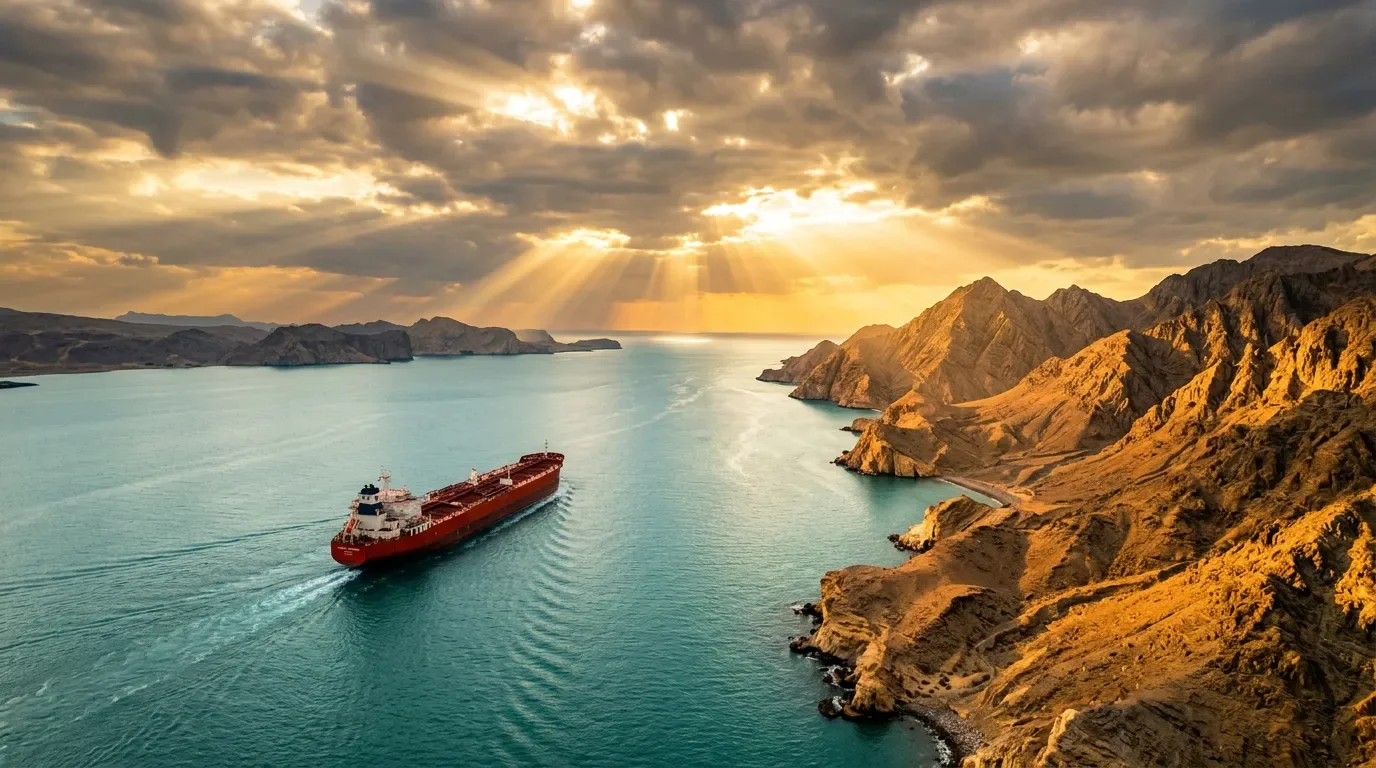
Strait of Hormuz cargo vessels, Musandam, Oman
Vessels in the Strait of Hormuz off Musandam, Oman — currently at ~3% of pre-crisis daily traffic. 10

Hormuz: 28% by Jun 30, but the math is punishing

The Strait of Hormuz end-of-June market rose from 15.5% to 28% (+12.5pp) on the MoU news — a sharp jump, but the market is still pricing a 72% probability of NO. 11 The resolution metric requires the IMF Portwatch 7-day moving average of transit calls to reach at least 60 per day. On June 15, only 2 transits were recorded — roughly 3% of the pre-crisis average of 120–140 ships per day. 10
The obstacle is physical, not diplomatic. Five Western maritime security sources estimated mine-clearing at 40–50 days. Iran is believed to possess up to 1,000 naval mines. German navy teams on June 11 had located mines in four separate locations around the strait. V.Group CEO Rene Kofod-Olsen put it plainly: "One sea mine is enough to have fatalities. That's obviously a massive issue for global shipping." 10 Jyske Bank analyst Haider Anjum confirmed: "AIS data shows no wave of ships heading towards Hormuz this morning." 12 Only one LNG tanker, the Disha, had passed through since the deal was announced. Around 155 tankers remain stuck in the Middle East Gulf (Kpler data), with some estimates as high as 215. 12
David Jorbenaze at ICIS summed up the market reality: "Full pre-conflict traffic volume is realistically a 2027 story, and only if the agreement holds without incident and production recovers at pace." Saxo Bank's Ole Hansen suggested the new Brent price floor may settle at $75–80 versus the pre-war $60–70 range. 13
For the Hormuz Jun 30 contract to resolve YES, transits would need to ramp from 2/day to a sustained 60/day average — all within the next 15 days — while mine clearing is still underway and shippers remain on hold. The 28% Yes price is aggressive relative to the physics.

Oil crash and the macro ripple

Brent crude fell $4.16 (−4.8%) to $83.17/barrel Monday, the lowest since March 10. WTI dropped $4.39 (−5.2%) to $80.49. Both contracts had also fallen sharply Friday — cumulative two-day decline approaches 8%. 13 Brent's peak during war escalation was $114.64 on May 19; Monday's close marks a ~27% decline in under four weeks.
The oil crash fed directly into the Fed outlook. Polymarket's 2026 zero-cuts probability dropped 7.05 percentage points to 71.45% — the largest single-session dovish shift since the war began. The one-cut scenario gained roughly 6 points to 21.5%. The logic is straightforward: lower energy prices reduce CPI pressure, marginally widening the Fed's window to cut if labor data softens. 14
The FOMC meeting starts tomorrow (June 16–17). Kevin Warsh chairs. June no-change remains priced at 99.45% — essentially unchanged from yesterday's 99.55%. The 7pp dovish rotation in the annual cuts market, not the June decision, is the signal. 15
BTC rose +3.25% to $66,365 on Monday, riding the risk-on wave from the Iran/oil catalyst. 16 The S&P 500 gained 1.5%, NASDAQ 2.4%. The Crypto Fear & Greed Index edged from 18 to 20 — technically still Extreme Fear, and now on its 15th consecutive day in that zone. 17 The 15-day streak is notable but not an all-time record: earlier in 2026 the index spent more than 60 consecutive days below 10. BTC dominance was 56.37% of a $2.36T total market cap.
Cargando gráfico…
Crypto Fear & Greed Index, June 1–15, 2026. The index rose from 18 to 20 on Monday — the first back-to-back gain in 15 days, driven by the Iran MoU. Still in Extreme Fear territory. 17

Secondary markets

Strategy adds 1,587 BTC. Michael Saylor's Strategy (formerly MicroStrategy) disclosed at 8:02 AM ET Monday a purchase of 1,587 BTC for approximately $100M at an average of $63,024 per coin. Total BTC reserve now sits at 846,842 BTC — roughly 4% of Bitcoin's 21M fixed supply. USD cash reserves were simultaneously increased by $100M to $1.1B. 18 JPMorgan flagged the same day that Strategy's $1.7B annual dividend bill could force additional BTC sales in H2 2026 — an offset worth watching.
BlackRock BITA: analyst predicts June 19 launch. BlackRock filed a Form 8-A for the iShares Bitcoin Premium Income ETF (ticker: BITA) on June 11. Bloomberg senior ETF analyst Eric Balchunas: "Blackrock filed an 8-A for the Bitcoin Premium Income ETF BITA. That typically means launch in one week. So if I had to bet I'd say next Thursday BITA goes live." 19 BITA uses a covered-call structure: holds BTC and IBIT, writes call options on 25–35% of NAV monthly to generate income. Sponsor fee: 0.65% — below rivals YBTC (~0.95%) and BTCI (~0.99%). Goldman Sachs has a similar product targeting July 1.
ETF Day 20 flows pending. Day 19 (June 12) confirmed +$85.9M net inflow — IBIT led with +$57.7M, FBTC added $18.0M. Day 20 data (today's trading) posts after 4 PM ET; Farside shows only placeholders. 20
Ethiopia PM: whale rotation continues. The "Next Prime Minister of Ethiopia" event pulled $5.25M in 24-hour volume for the second consecutive session — but the volume shifted again. Yesterday's whale concentration was in Berhanu Nega (0.55%, $5.24M). Today Gedion Timothewos leads at 0.2% probability with $2.61M volume. Total market liquidity: $12,455. The bid-ask spread on Gedion is 200% of the mid price. No Ethiopia political news has surfaced to explain the pattern. 21 The most credible interpretation: a single large trader or coordinated group cycling through low-probability candidates, possibly testing liquidity for a larger eventual position.
BOJ decision tomorrow. The Bank of Japan's two-day meeting started today; the rate decision is expected Tuesday during Asian trading hours. A hike from 0.75% to 1.0% — a 30-year high — is widely described as a "done deal." 22 Governor Ueda is hospitalized with a liver cyst infection; Deputy Governor Himino chairs the meeting, Deputy Governor Uchida holds the press conference. USD/JPY at ~160.5. BTC traders are watching closely: yen carry trade unwinds have historically triggered crypto volatility. 23
Peru: waiting on JNE. No new developments in 48 hours. Keiko Fujimori holds 98.25% on Polymarket; all JNE challenges were dismissed on procedural grounds. Formal certification is pending.

Trade ideas

Iran peace deal Jun 15 — it resolves tonight. With the market at 93.6% and the end date at 11:59 PM ET today, the remaining 6.4% is almost entirely resolution risk: will UMA rule the MoU as qualifying "permanent cessation" before the deadline, or push it to Jun 30? The ceasefire Jun 30 resolved YES in hours (00:22 UTC) — a strong precedent. But peace deal rules carry a higher bar. Traders holding Jun 15 YES positions should monitor the UMA dispute status closely; a NO resolution tonight doesn't mean the deal collapsed, it means Jun 30 becomes the operative contract.
Iran Jun 30 calendar leg. If Jun 15 resolves NO due to technicalities rather than a deal collapse, Jun 30 at 95.5% still prices the deal as near-certain. The formal signing on June 19 lands inside the Jun 30 window. Rotating capital from Jun 15 to Jun 30 on a technical NO captures the liquidity event without changing the underlying exposure.
Fed zero-cuts: dovish shift with room to run. The 7pp single-session move (78.5% → 71.45%) is large but not overdone given falling oil. If Brent stays below $85 and the FOMC statement Wednesday (June 17) acknowledges easing energy conditions, the zero-cuts contract could grind toward 65%. The inverse: if Warsh's dot plot shows the committee penciling in zero cuts for 2026, the contract snaps back above 75%.
Hormuz Jun 30 — the 28% is generous relative to the physics. Two transits per day need to become a sustained 60-per-day average in 15 days, through an active minefield. The 72% No pricing seems correct; the question is whether it's already fully reflected. Shorting Yes on any news-driven pump above 35% is a mechanical trade if the mine-clearing timeline holds.
BTC — BOJ binary tomorrow. A 1.0% hike is priced in; the question is the pace signal. If Himino signals rate hikes will pause after June, JPY weakens (bad for carry unwinds, positive for risk assets). If the board signals further hikes by year-end, yen shorts cover aggressively — BTC historically drops 5–10% in such unwinds. Wednesday's FOMC adds a second binary in 48 hours; avoid levered BTC positions until both resolve.

What resolves in the next 72 hours

  • Tonight (~midnight ET): Iran peace deal Jun 15 resolution — YES or NO on the UMA dispute. At 93.6% Yes, the market expects YES but UMA has already disputed twice.
  • Tuesday (Asian hours): BOJ rate decision — 1.0% hike expected; post-meeting Uchida press conference will set pace expectations.
  • Wednesday 14:00 ET: FOMC statement and dot plot — Warsh's first. The zero-cuts 2026 market at 71.45% is the highest-leverage contract to watch.
  • Ongoing: June 19 Switzerland signing — formal MoU signing; if it happens on schedule, Jun 30 peace deal markets should push through 98%. Mojtaba Khamenei public appearance remains the single most important unresolved variable in the entire Iran term structure.

Sports context: World Cup 2026 winner markets generated approximately $43.5M in 24-hour volume, 53% of top-20 Polymarket volume. Non-sports markets accounted for $38.6M (47%). All probabilities and volume figures in this article are as of 14:00 ET, June 15, 2026, sourced from the Polymarket Gamma API. 3
Cover image: AI-generated illustration.

Añade más opiniones o contexto en torno a este contenido.

  • Inicia sesión para comentar.