1/6
2026/6/24 · 9:56
No Home Charger? Public Charging Changes the EV Math
A quick public-charging-only cost check for EV shoppers: compare national charging and gas averages, spot the DC fast-charging trap, and decide whether an EV fits your routine.
图集
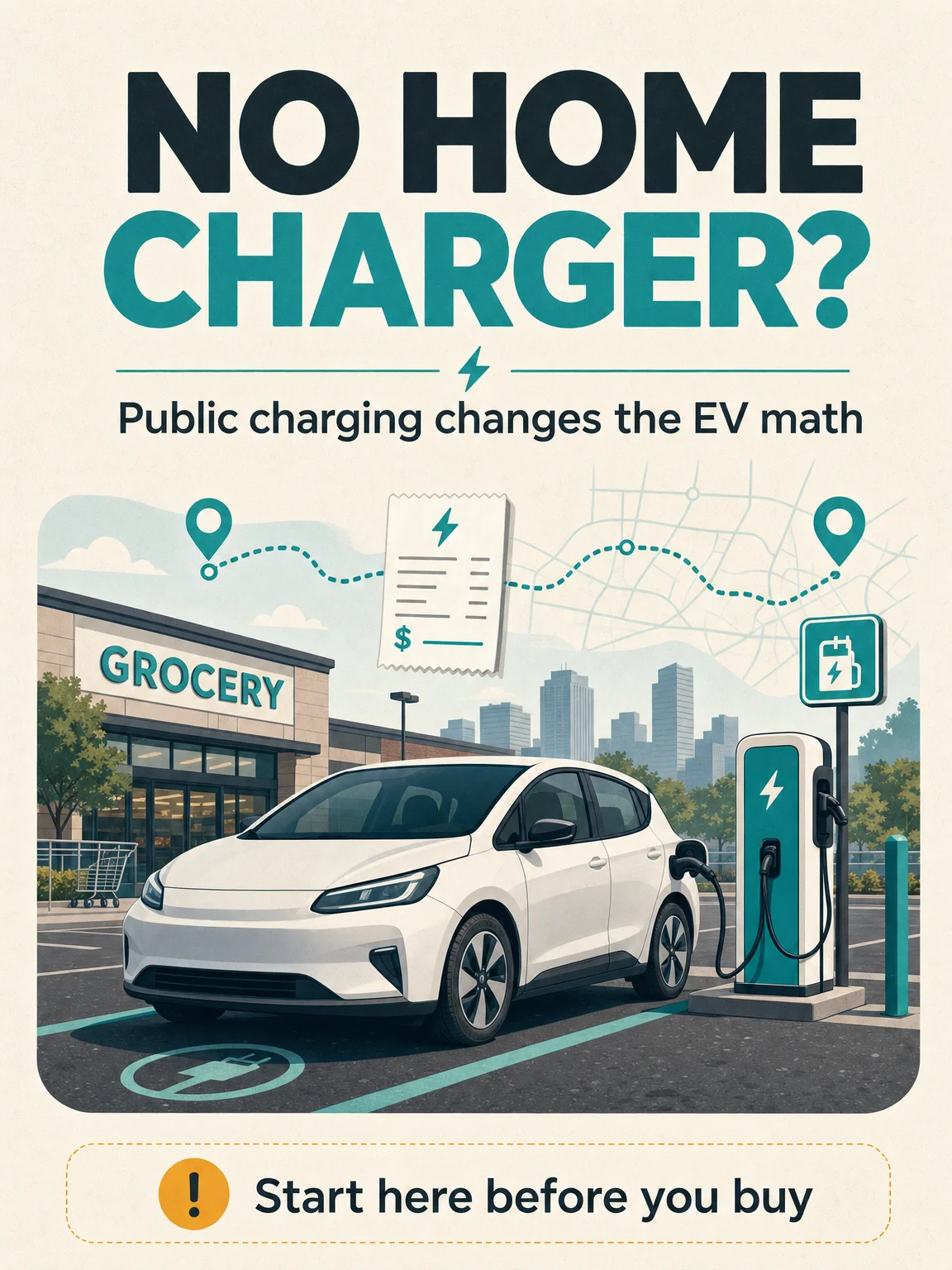
If you are switching from gas and cannot charge at home, at work, or through any pre-installed setup, the key question is not simply "Is an EV cheaper?" It is: can public charging fit your routine without turning DC fast charging into your default?
This week’s quick math
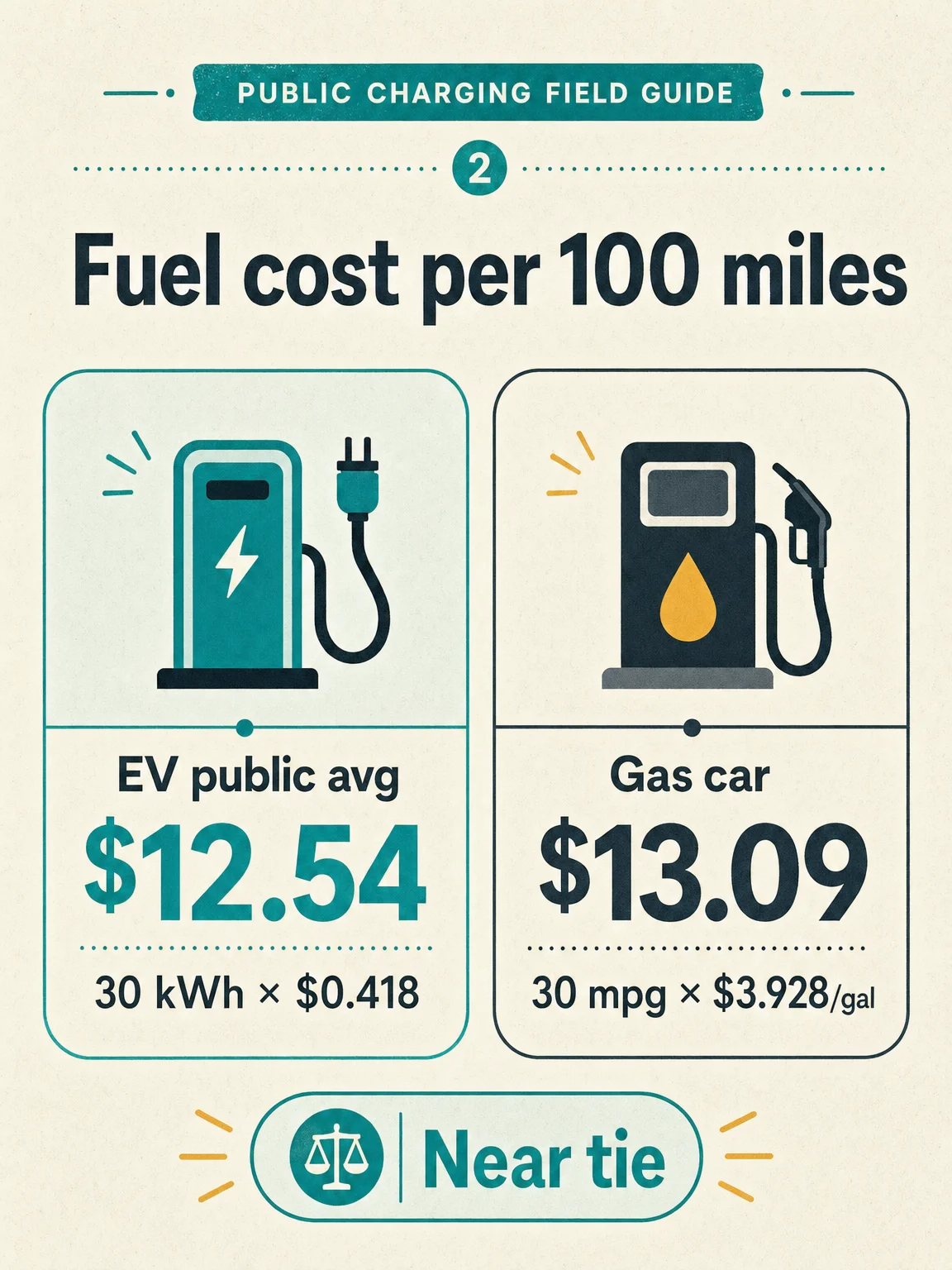
- AAA lists the U.S. commercial/public EV charging average at $0.418/kWh as of June 24, 2026; its EV charging page describes this as the national average for commercial/public Level 1, Level 2, and Level 3/DC fast charging. 1
- At an assumed 30 kWh per 100 miles, that works out to about $12.54 per 100 miles for a public-charging EV.
- AAA lists the U.S. regular gasoline national average at $3.928/gallon as of June 24, 2026; at an assumed 30 mpg, that works out to about $13.09 per 100 miles for a gas car. 2
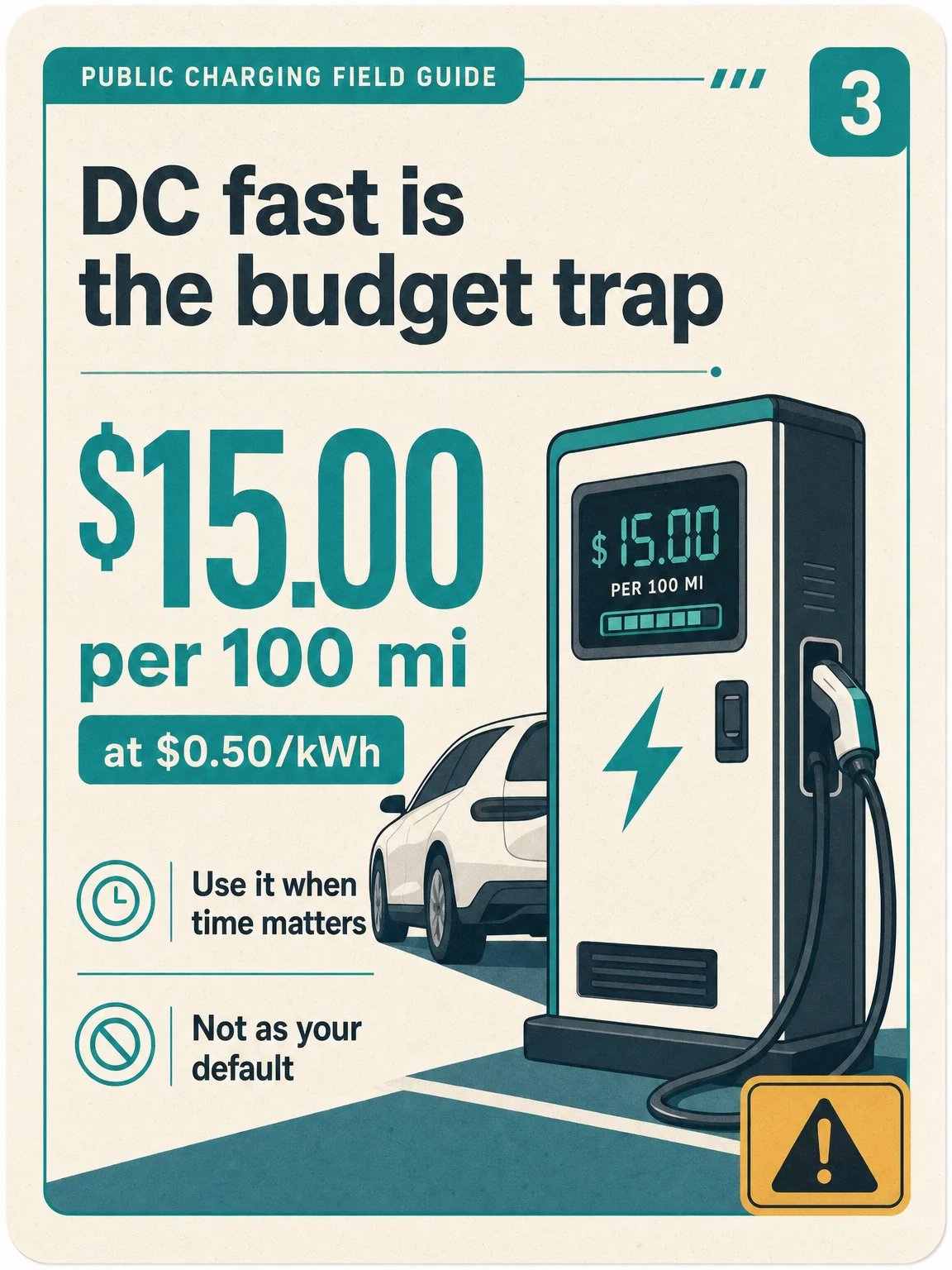
- If your public charging habit shifts toward $0.50/kWh DC fast charging, the same 30 kWh/100 mi EV rises to $15.00 per 100 miles. Kelley Blue Book notes that public charging stations typically charge higher fees than home charging, and that some charging networks offer subscription plans for frequent users. 3
- The U.S. Department of Transportation says Level 2 chargers can charge a battery-electric vehicle to 80% from empty in 4-10 hours, while DC fast charging can reach 80% in 20 minutes to 1 hour. 4
- The Alternative Fuels Data Center describes public, workplace, and destination charging as supplements to residential charging and notes that most EV owners do the majority of their charging at home — which is why public-only buyers need a separate cost and time test. 5
Buying rule for a public-only EV
A public-only EV can still make sense if chargers already overlap with your real life: grocery runs, gym time, errands, transit parking, or regular destinations where the car can sit. The best money-saving habit is to charge while parked, not to make a special fast-charging trip every time.
If nearby Level 2 chargers are unreliable, if DC fast charging would become your normal fuel stop, or if charging time would replace convenient gas stops instead of overlapping with other tasks, price a hybrid too. For buyers without home charging, efficiency beats giant range: a lower kWh/100 mi EV can save more than a bigger battery that costs more to refill.
Simple math notes: the cards use national averages and round-number vehicle assumptions to make the comparison scannable. Your real answer depends on local charger pricing, idle fees, memberships, vehicle efficiency, weather, driving speed, insurance, and incentives.
评论
登录后可发表评论。