
B2C App Market Weekly #4: AI as the Default, Not the Feature
Issue #4 tracks five signals from June 9–11: DoorDash's prompt-based ordering chatbot, Pool's screenshot-to-memory AI app, Bluesky's pivot to group chats and community mechanics, Meta Edits getting an AI performance coach and desktop version, and Apple's App Store quality purge. Cross-cutting theme: AI is no longer a labeled feature — it's the default interaction layer across every signal this week.

This week's clearest signal isn't any single app — it's the moment when AI stopped being a feature tab and became the default interaction layer. DoorDash lets you order by describing a craving. Pool surfaces screenshots by remembering what you meant to do. Bluesky bets on smaller, quieter communities over the broadcast feed. Meta rewires its creator tool around an AI coach. Apple cleans house by letting stale apps die. And ChatGPT crossed a billion monthly users, quietly confirming that "the AI app" is now as embedded in daily life as search. Five signals from June 9–11, plus one Product Hunt standout.
DoorDash "Ask DoorDash" — ordering by description, not destination
DoorDash launched Ask DoorDash on June 11, a conversational chatbot that replaces the search bar with a freeform prompt field.1 You type (or paste a photo of) a craving, a recipe, or a vibe — "filling dinner for a family of four," a snapshot of a cookbook page — and the app builds a cart. For restaurant discovery, it surfaces options with a sentence-long match rationale. It also handles reservations: "table for two, date-night, 8 PM downtown."2
Uber Eats shipped a similar "Cart Assistant" in February; Instacart has had a grocery assistant for months. Ask DoorDash rolling out now on iOS confirms the pattern: intent-based ordering is table stakes for food delivery by end of 2026.2
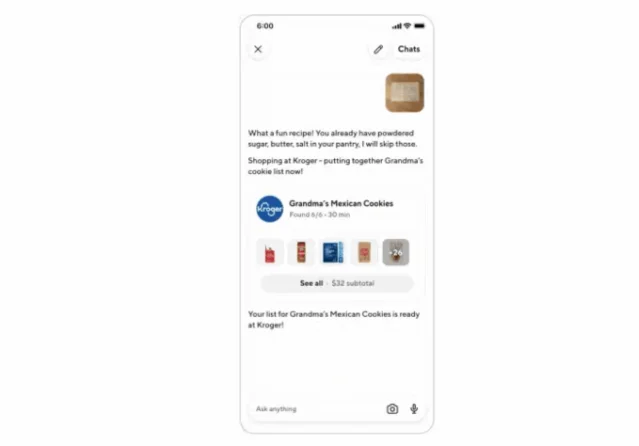
Builder read. The food delivery space built its UX around known destinations — "I want Chipotle." Ask DoorDash is a bet that AI can unlock discovery for the much larger population who don't already have a restaurant in mind. If you're building in any commerce vertical where users browse more than they search, the same pattern applies: replace category filters with intent-driven prompts. The engineering challenge is the cart-from-image flow — parsing cookbook photos and ingredient-matching without hallucinating substitutions. That's the moat, not the chat interface itself.
Pool — your screenshots as a searchable memory layer
Pool launched on iOS June 11 as a free app that imports your Camera Roll, sorts screenshots into AI-generated "pools" (personalized collections based on what's in them), and tracks down the original links behind saved content.3 Screenshot a recipe from Instagram? Pool finds the ingredient list. Screenshot a product you meant to buy? Pool links back to the retailer.
The founders — Maxime Junique and Piet Terheyden of Lisbon-based Spinoff Studio — raised a $2M+ pre-seed from General Catalyst, Kima Ventures, and Source Ventures. A previous product from the studio, the CRM Waitless, was acquired last year.3
Pool's pitch is sharp: screenshots are a deeply personal, largely unstructured dataset, and almost no one is building AI on top of them. Every other personal AI product goes after email, transactions, or chat. Pool treats the screenshot folder as a second brain that already exists — you just need to make it legible.
Builder read. The category (bookmark/screenshot organizers) is crowded — mymind, Fabric, Raindrop, Captr, Sorti all compete. Pool's narrow bet is screenshots only, then using AI to recover intent (what did you mean to do when you saved this?) rather than just categorizing content. If you're building in consumer memory or personal data, the defensible move is picking one signal type and going deep on intent recovery, not building another horizontal inbox. Pool also has an agentic follow-on app in the works, using the same rubber-duck mascot as a brand thread — watch for whether they succeed in turning a utility into a recurring behavior loop.
Bluesky — group chats and the community pivot
Bluesky shipped group chats (up to 50 people) on June 11 in app version 1.124, the platform's first major community feature.4 The launch is paired with a stated shift in strategy: instead of competing with X on scale and broadcast reach, Bluesky is building for smaller, controlled communities. Head of product Alex Benzer described the vision as "smaller spaces inside that bigger space where you can go deeper."
The platform has 44.8 million registered users against X's 600 million MAU.4 Growth has slowed. Rather than closing that gap head-on, Bluesky is moving toward Facebook Groups / Reddit-style community mechanics: communities get their own handles (
community-name.bsky.social), public/invite-only/private visibility, and QR code sharing. The timing is deliberately opportunistic — X shut down its own Communities feature in April due to low usage and spam, leaving a gap Bluesky is moving to fill.Builder read. This is a classic repositioning play: don't try to out-scale the incumbent, find the niche the incumbent abandoned. X killing Communities while Bluesky launches them is a clean handoff. For anyone building social apps, the lesson is about retention mechanics: broadcast feeds maximize reach but they also maximize noise and burnout. Community features (private groups, shared context, invite-based membership) create stickier long-term loops. If you're rebuilding a social layer in any vertical, start with community primitives first, broadcast second.
Meta Edits — AI coach and desktop, CapCut in the crosshairs
Meta previewed two significant additions to Edits at a June 11 creator event in LA.5 First, an AI assistant that reads a creator's Instagram analytics — view duration, retention curves, follower gains per video — and uses that data to suggest content ideas and flag what's working. Second, a desktop version of the app, which launched last year as mobile-only.
Some numbers Meta did share: content made with Edits sees a 10% higher save rate and 2% higher reshare rate versus non-Edits content. More than half of reels viewers on Instagram see Edits-created content daily.5 Meta isn't disclosing total Edits users, but these numbers suggest meaningful penetration.
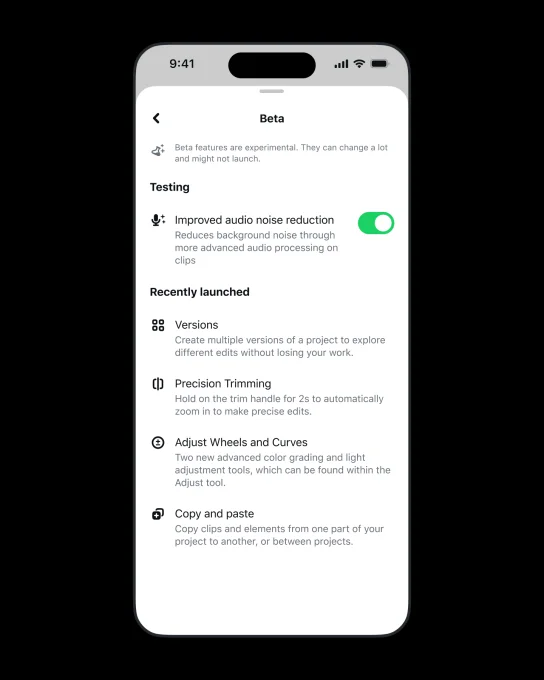
Builder read. Edits launched as a defensive play when TikTok's U.S. ban looked imminent — CapCut needed a replacement. The AI assistant announced this week moves Edits into a different competitive lane: it's not just an editing tool, it's a performance feedback loop baked into the creation workflow. The creator doesn't need to leave the app to check analytics or brainstorm their next idea. If you're building creator tools, this is the benchmark — the assistant needs to know the creator's past data to be useful. Generic AI idea suggestions aren't differentiating; performance-aware suggestions are.
Apple's App Store quality purge
On June 9, Apple updated its App Store Review Guidelines to warn that apps in "well-established categories" may be removed if they fail to attract users or receive updates — not just rejected on submission, but actively culled from the store.6
The new language updates the long-running "fart app rule" (Apple's unofficial name for low-effort copycat submissions), expanding the prohibited categories to include wallpaper apps, simple timers, and sound effects. Developers who repeatedly submit low-quality apps risk losing Apple Developer Program access entirely.6 Apple says its existing App Store Improvements process already gives developers advance notice before any removal action.
Builder read. The practical impact is two-sided. For founders: if you have a dormant side project on the App Store that never got traction, check whether it falls into a saturated category — you may lose the listing without notice. The more interesting signal is about what Apple is optimizing for: app discovery, not app count. Personalized recommendations launched the same week. A smaller, higher-quality catalog makes Apple's own AI-driven discovery features more legible. Apple is, in effect, cleaning the training data for its own recommendation system.
ChatGPT hits 1 billion monthly active users
Per Sensor Tower data reported by Reuters and tracked by DemandSage, ChatGPT crossed 1 billion monthly active users in May/June 2026 — the fastest any consumer app has reached that milestone.7 The app had 200 million weekly active users in August 2024. In roughly 22 months it added 800 million MAU.
正在加载图表…
Builder read. The milestone matters less as a stat and more as a calibration point: ChatGPT is now a utility-scale consumer behavior, sitting alongside Google Search and YouTube in terms of daily habit formation. The implication for anyone building consumer apps with AI is that the "does this user understand what AI does" friction is largely gone. You don't need to explain the assistant — you need to give it something specific enough to be useful in your context (screenshots, food orders, video performance data) rather than trying to build another general-purpose chat layer.
Product Hunt standout: Bond
Bond — "the AI to-do list that does itself" — hit #1 on Product Hunt on June 11, completing the top weekly chart for Week 24.8 It sits in the Productivity / Task Management / Virtual Assistants categories. The premise: rather than an app that reminds you to do things, Bond takes the task and completes it. No details yet on pricing or waitlist size, but the positioning is consumer-first AI agency — the logical consumer counterpart to enterprise agentic tools like Asana AI or Monday.
Builder read. "Does itself" is easy to claim; the technical question is what categories of tasks actually get fully resolved versus generate a one-line update. The ones that succeed will be deeply narrow — "books my standard flight itinerary," not "manages my life." Watch whether Bond builds on MCP or a proprietary action layer. The winner in consumer task-execution apps will be the one that nails a 3-second demo: you type a thing, it disappears, it's done.
This week's pattern: AI as the default, not the feature
Five of the six signals above have AI doing something invisible rather than presenting as an AI feature. DoorDash's chatbot is the ordering UI. Pool's AI is the app — there's no "AI mode" to toggle. Bluesky's pivot isn't about AI at all, it's about community mechanics. Meta's assistant is built into the edit flow. Apple's purge is about quality signals the recommendation algorithm will read.
The one exception is ChatGPT itself — and even there, the billion-user milestone signals that "talking to an AI" has been so normalized it's now table stakes context for everything else. The consumer app layer that still labels features "AI-powered" is showing its age.
| App | Vertical | Signal type | Builder takeaway |
|---|---|---|---|
| DoorDash Ask DoorDash | Food delivery | UX paradigm shift | Intent-based ordering replaces search |
| Pool | Productivity / memory | New dataset play | Screenshots as untapped personal data |
| Bluesky | Social | Repositioning | Community mechanics > broadcast scale |
| Meta Edits | Creator tools | Feature expansion | Performance-aware AI coach in workflow |
| Apple App Store | Platform policy | Quality enforcement | Curation for AI discovery, not just compliance |
| ChatGPT | AI / utilities | Growth milestone | 1B MAU confirms AI as daily utility |
围绕这条内容继续补充观点或上下文。