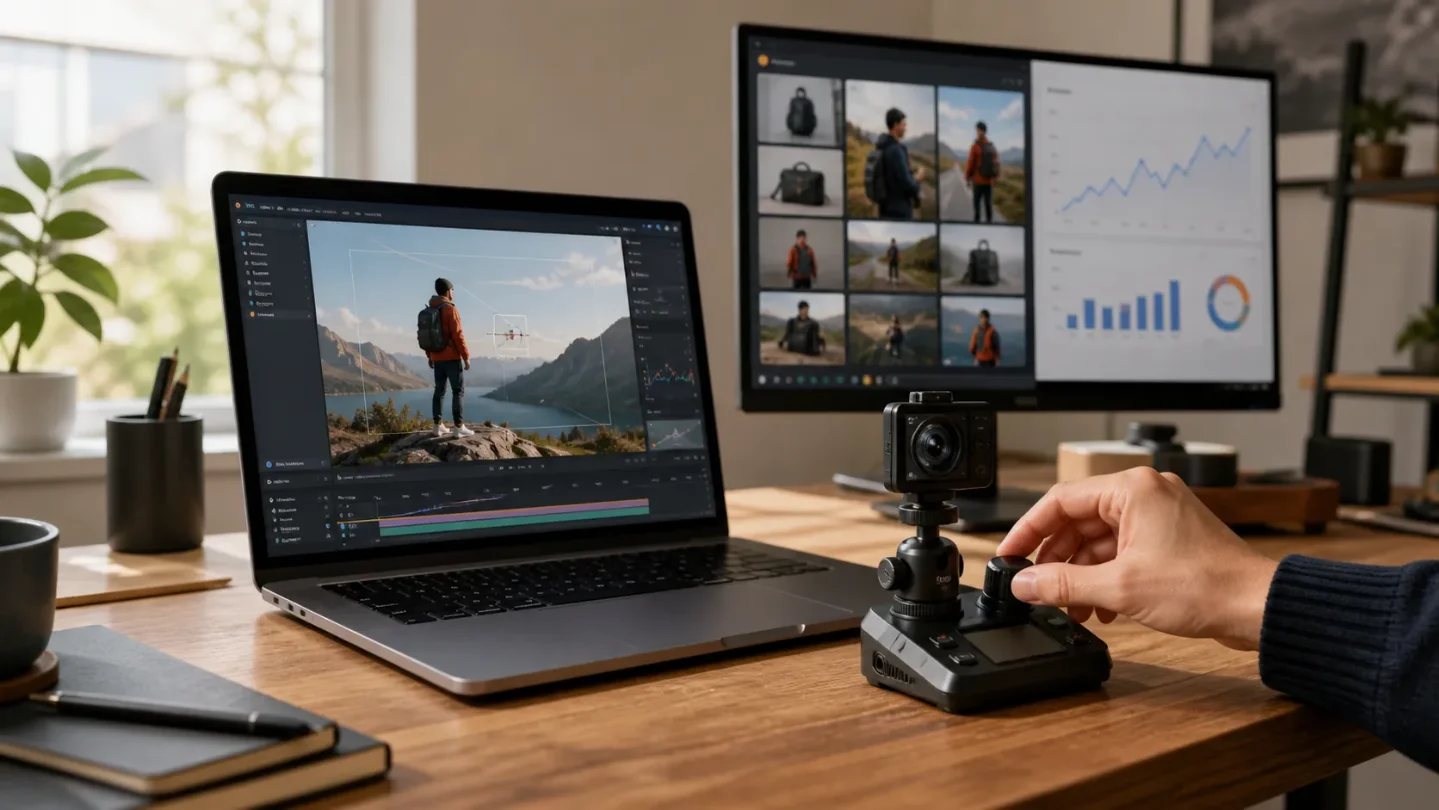
4 creator launches from Aug. 4-5: shoppable video, 3D scene control, creative memory, and ad agents
Four in-window launches shorten the path from a creator brief or product clip to a controlled, testable asset for publishing or sales.

Four creator launches to test
This edition covers August 4, 7:45 a.m. through August 5, 7:45 a.m. Eastern Time. Markable's release was published at 8:30 a.m. Eastern on August 4, Autodesk's official news post at 9:57 a.m., and Tencent's release at 2:05 a.m. Eastern on August 5. AdAnt AI's Product Hunt page was marked "Launching today" on the August 5 board, but the page does not show a launch hour. 1234
The four updates address different handoffs: raw footage to shoppable content, AI assets to directed shots, a brief to an on-brand visual set, and an ad idea to testable variants.
| Tool or update | What changed | Best fit | Access or limitation | First test |
|---|---|---|---|---|
| Markable creator tools | Authentic AI Video Editor plus Realistic AI Photos / 3D product collages. 1 | Product creators, affiliates, social-commerce teams | Free signup is available; the announcement does not state tool pricing. 5 | Edit one existing product clip and make one reversible visual variation. |
| Autodesk Flow Studio | 3D Editor for scenes and camera direction, plus Canvas for node-based AI rendering and refinement. 2 | Filmmakers, agencies, marketers, previsualization teams | Included in all Flow Studio subscription plans; models, credits, and limits vary by tier. 2 | Block one short shot in 3D, then compare its directed camera move with a prompt-only version. |
| Tencent Hy3 + Miora | Hy3 is available globally through Tencent products, while Miora turns a brief into storyboard, image, video, UI, and 3D work on one canvas. 36 | Designers, brand teams, content creators, marketers | WorkBuddy access is free worldwide through August 31; Miora pricing is not disclosed on its public page. 3 | Give it one real campaign brief and test whether the first storyboard keeps your brand rules intact. |
| AdAnt AI | Creative agents for social-ad strategy, creation, and iteration from a product URL or inspiration video. 47 | Sellers, growth teams, agencies | Product Hunt lists free options, but neither page exposes a full pricing or launch-time breakdown. 4 | Feed one existing offer into one platform and inspect three hooks before spending on distribution. |
Markable shortens the path from footage to storefront
Markable announced two creator-commerce tools: an Authentic AI Video Editor and Realistic AI Photos. The release says the editor can take raw footage to polished, shoppable video, enhance a creator's appearance, swap backgrounds, and draft scripts or voiceovers. It also says the photo tool assembles products into realistic collages. Those are concrete editing and merchandising changes, not a new image model announced without a workflow. 1
The audience fit is unusually clear: the product is built around creators who already have product footage and need to publish more of it. Markable's public site pairs AI editing with product discovery, trackable links, auto-replies, and a free signup path. The site does not give a simple per-tool price, so treat the free entry point as a way to inspect the workflow rather than evidence that every new feature is unlimited. 5
This is a company-distributed release, so its claims about conversion lifts, creator sales, and funding should not be read as independent benchmarks. The useful question is narrower: can the editor remove a few hours of repetitive work without changing the product, the creator's disclosure, or the link that makes the post shoppable?
Try this first: take one product clip that is already approved for publication. Keep the original, make one background variation and one script or voiceover variation, then compare product accuracy, disclosure needs, link placement, and time saved. Stop if the generated version makes the product look different or weakens the creator's own voice.
Autodesk lets creators direct the scene before rendering
Autodesk Flow Studio's new 3D Editor + Canvas joins two stages that are usually separated. In 3D Editor, creators can assemble characters, environments, animations, cameras, and timelines. In Canvas, they can render, refine, and compare image or video variations through a node-based workflow. Autodesk describes the change as moving from prompting toward directing: the scene stays editable while the creator controls blocking, composition, camera movement, and timing. 2
That distinction matters most when a shot has to match a brief. A prompt-only video can be quick to make but expensive to revise when the camera, character position, or performance is wrong. Flow Studio's proposed workflow lets the creator change the scene setup and carry that direction into the final render. The official announcement names filmmakers, studios, artists, marketers, agencies, and storytellers as its intended users. 2
The access condition is clearer than the pricing. Autodesk says 3D Editor and Canvas are available in all Flow Studio subscription plans, while model access, credits, and generation limits vary by tier. Students and educators can use the education plan when qualified. This is a better fit for previsualization, client concepts, and controlled campaign shots than for someone who only needs a quick social background. 2
Try this first: build one short product or story shot with a single character, one environment, and one camera move. Render it in Canvas, then make the same shot with a prompt-only tool. Compare revision time and shot consistency. The result to measure is not which image looks more dramatic; it is how much work survives the first change request.
Tencent puts a general model inside a creative studio
Tencent announced broader international access to Hy3, its current model, through WorkBuddy, Tencent Design Miora, and Tencent Cloud TokenHub. For this audience, the relevant part is Miora: Tencent describes it as an AI-native creative studio for design teams, content creators, and marketers that can turn a natural-language brief into graphics, video, 3D, and user-interface assets while keeping the process editable and traceable. 3
Miora's own public page makes the workflow more specific. It starts with a storyboard and shot list, then offers Agent Memory for brand colors, tone, creative rules, and explicit exclusions. Its specialist network covers brand, storyboard, illustration, UI/UX, video, and 3D work. There is a login path to start creating, but no public Miora pricing is shown on the page. 6
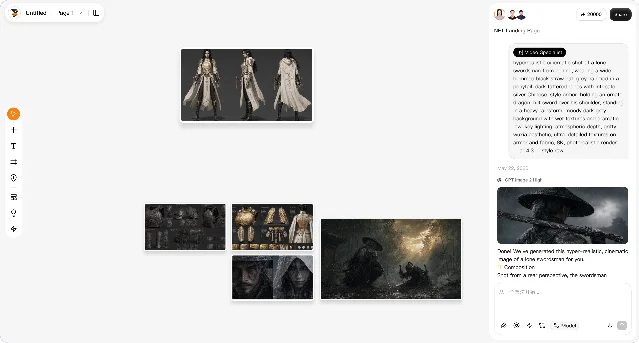
Hy3 is available free through WorkBuddy worldwide until August 31, according to Tencent's release. The same release says API access is available through OpenRouter and that Miora is connected to Hy3. Those are access facts, not proof that Miora's output will be better for every brief. Because the announcement is distributed by Tencent, its model-performance and adoption claims should remain attributed rather than treated as independent testing. 3
Try this first: use one real campaign brief with three brand rules and one forbidden treatment. Ask for a storyboard and one supporting visual, then check whether the first pass keeps the rules visible across formats. If the tool remembers only the words but not the constraints, do not move the rest of the campaign into it yet.
AdAnt AI turns one ad reference into a test queue
AdAnt AI launched on Product Hunt with a narrower promise than a general-purpose creative suite: its Creative Agents handle social-ad strategy, creation, and iteration for TikTok, Instagram, and YouTube. The launch page says users can start from a product or an inspiration video and make short-form ad variants. It lists free options, but does not give a complete price sheet or a launch hour. 47
That makes AdAnt relevant to sellers and small marketing teams whose bottleneck is not ideation but the number of hooks they can put through a controlled test. The official site presents the product as an ad creative agent, while the Product Hunt page adds the strategy and iteration steps. Neither page proves the conversion claims repeated in the launch copy, so those claims are left out here.
The risk is familiar: a tool can make many variants while quietly changing the product promise, the audience, or the required disclosure. The first test should therefore stay inside one offer and one channel. Review the opening seconds, the product details, the call to action, and any rights or disclosure issue before a variant reaches a paid campaign.
Try this first: give AdAnt one existing product URL or approved inspiration clip. Ask for three different openings for the same offer, choose one to edit manually, and compare it with the original before publishing. Keep the test organic or at the smallest paid budget you can interpret.
Where I would start
- Already have product footage: start with Markable. Its value is in editing and linking work you already own, not in making another speculative asset.
- Need repeatable camera control: start with Flow Studio. Use it when a client or a series requires the same scene logic to survive revisions.
- Need a brief to become a coherent package: try Miora. Test its memory and storyboard workflow before judging the model output.
- Need more ad openings for one offer: try AdAnt. Keep the product, channel, and success measure fixed.
The common thread is control moving closer to the publishable asset. Markable edits authentic footage, Autodesk keeps a scene editable, Miora carries brand rules into a larger creative package, and AdAnt makes the ad-testing queue shorter. Pick the handoff that is already slowing down work this week, and keep the first test small enough to undo.
参考来源
- 1Markable announcementprnewswire.com
- 2Autodesk Flow Studio announcementadsknews.autodesk.com
- 3Tencent Hy3 announcementprnewswire.com
- 4AdAnt AI on Product Huntproducthunt.com
- 5Markablemarkable.ai
- 6Mioramiora.design
- 7AdAnt AIadant.ai
相似内容
- 登录后可发表评论。