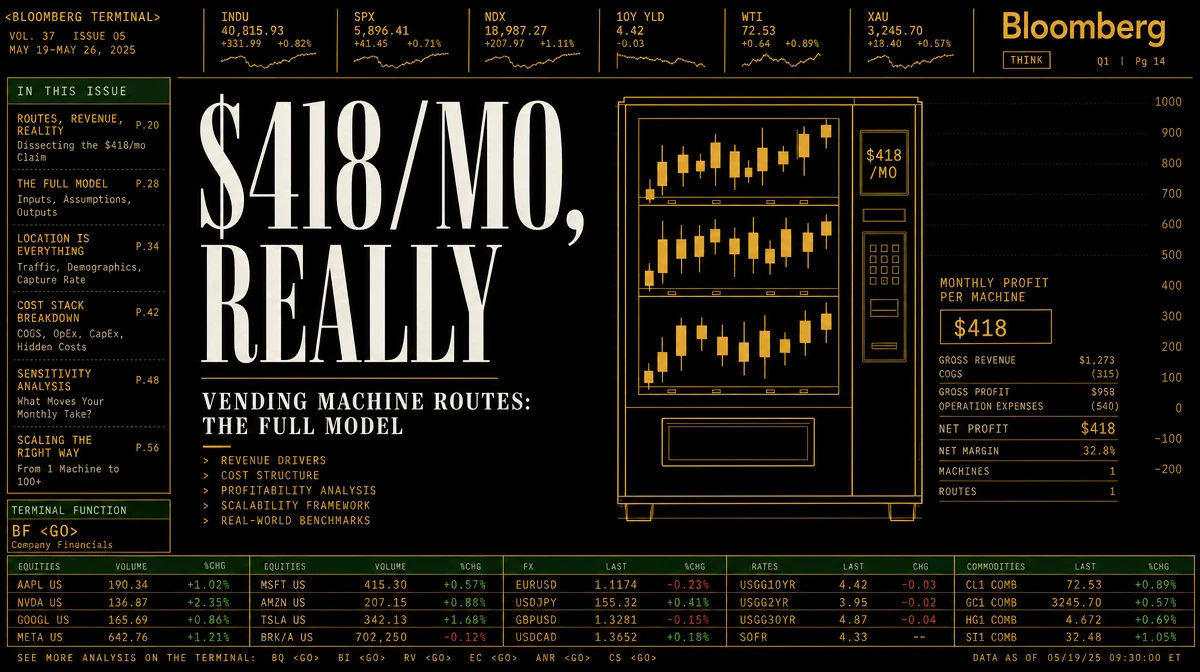
$418/Mo per Machine. Here's Why It's Worth Looking At.
The unsexy economics of owning a snack-and-beverage vending route: a real 28-machine P&L, location tier upside, what it actually costs you in time, and how to know if it's the right fit.

Issue #1 — Vending Machine Routes
There's a 28-machine vending route in the Midwest — factories and warehouses, snacks and sodas, nothing remarkable — that nets $3,622 a month after every cost. The owner works 14 hours a week. He has no investors, no pitch deck, no brand. He has a van, a Costco card, and signed location contracts.
Nobody writes about this on LinkedIn. That's the point.
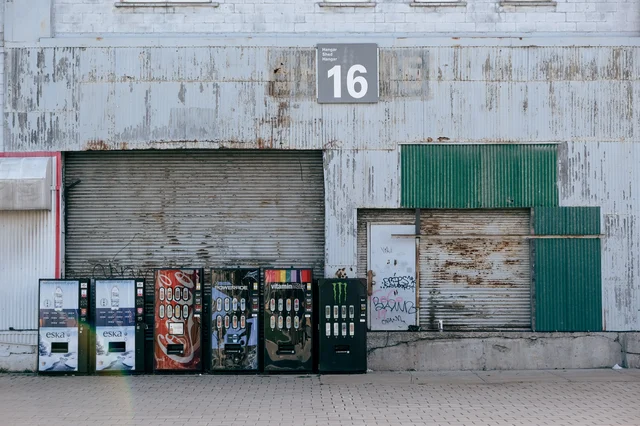
While the financial internet argues about SaaS metrics and AI valuations, a quiet category of businesses keeps doing something more boring and more reliable: generating cash. Vending routes, laundromats, car washes, ATMs — none of them trend. None of them go viral. And none of them need to.
The reason to pay attention isn't that they're hidden gems. It's that the attention economy actively filters them out. They're too slow, too physical, too un-story-able for a tweet thread. That friction is protective. Returns compress when a deal gets popular. These deals don't get popular.
A vending route won't make you rich in a year. What it gives you is a repeating, inspectable, improvable cash flow that you own outright — one you can stress-test before you buy and optimize after. In an era of over-leveraged speculation, there's something almost countercultural about a machine that takes quarters and gives back sandwiches, and still throws off a 28% net margin.
The actual numbers
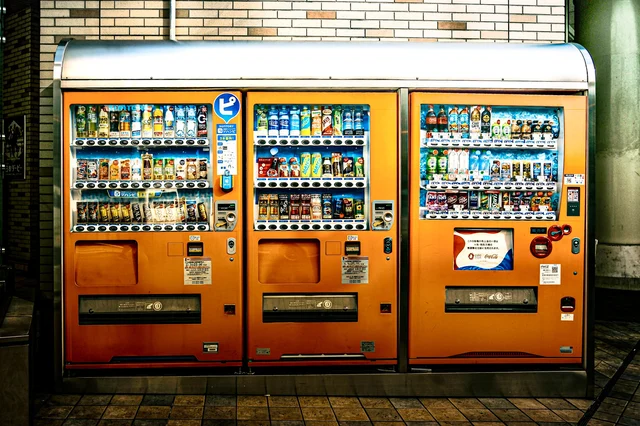
Here's an honest P&L for that 28-machine route — real operator data from 2025, primarily serving auto parts factories and distribution warehouses.1
正在加载图表…
| Line item | Monthly | Annual |
|---|---|---|
| Gross revenue | $12,800 | $153,600 |
| COGS — product (Vistar) | −$5,600 | −$67,200 |
| Location commissions (15% avg) | −$1,920 | −$23,040 |
| Card processing + telemetry | −$658 | −$7,896 |
| Gas + vehicle | −$650 | −$7,800 |
| Repairs + maintenance | −$350 | −$4,200 |
| Net profit (pre-tax) | $3,622 | $43,464 |
That's $418/machine/month net at a 28% margin.2 What the gross-revenue cheerleaders leave out: product cost alone eats 44% of revenue before you touch a single operating expense.
Where the real upside lives — location tier:
| Location tier | Monthly net/machine |
|---|---|
| S-tier — large factory (200–1,000 employees) | $1,000–$2,200 |
| A-tier — large apartments, distribution centers | $650–$1,400 |
| B-tier — hospitals, call centers, colleges | $400–$900 |
| C-tier — small offices, gyms, dealerships | $150–$350 |
Assumes cashless readers installed. Source: operator survey, 18,000+ machines.
The gap between an S-tier and a C-tier machine is $800–$1,800 a month — from the same equipment. Location isn't one factor among many. It is the factor.1 An auto parts factory with 400 workers running three shifts is worth more than ten small office break rooms. This is the first thing to get right.
How you get in
Buying an existing route is the faster path for most first-time buyers. You're not buying machinery — you're buying verified cash flow, signed location contracts, and a customer base that already exists.
What a deal looks like in practice:
- National median asking price: ~$135,0003
- Typical pricing: 2.2–3.1× trailing 12-month net profit4
- With seller financing (50–70% carried at 6–9%): cash out of pocket can be as low as $25,000–$50,000 on a $120,000–$150,000 deal1
The one thing that matters in due diligence: don't trust the seller's revenue numbers. Ride along for three full service days and count the cash collected yourself. Pull 12 months of raw telemetry data directly from the payment processor. The seller says machines average $1,400/month? Verify it before you wire anything. Routes priced above 3.2× net are almost always priced for the seller's optimism, not yours.
What it actually costs you
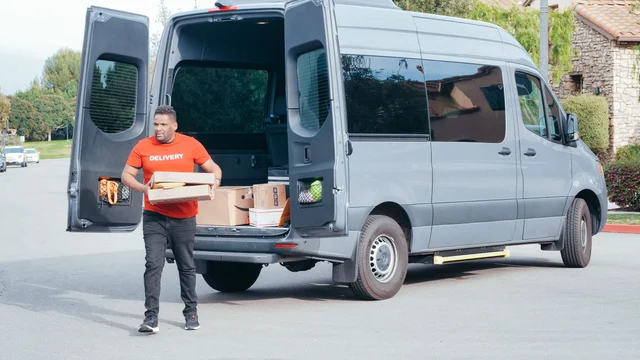
The word "passive" gets attached to vending constantly. Here's what it actually looks like at 28 machines:
| Task | Frequency | Hrs/week |
|---|---|---|
| Restocking runs | 2× weekly | 6–8 |
| Supplier ordering + pre-kitting | Weekly | 2 |
| Repair calls | ~1/month | 0.5 avg |
| Bookkeeping | Weekly | 1 |
| Total | ~12–14 hrs |
It's a part-time logistics operation, not a portfolio asset you check on a dashboard. The machines don't call you, but every location needs physical presence every 1–2 weeks. The math on this changes dramatically with route density — machines clustered within a 20-mile radius versus spread across 80 miles is the difference between a 3-hour Tuesday and an all-day one.
That said: 14 hours a week for $43k annual net is a reasonable trade. Unlike most part-time work, the cash flow compounds — each new location you add is incremental revenue on an existing infrastructure.
Who this works for
Good fit:
- You have a van (or can get one) and flexible weekday hours
- You're within 30 miles of industrial zones, distribution warehouses, or large apartment complexes
- You like systems — scheduling, supplier relationships, route optimization
- You're willing to start with a verified existing route, not machines sitting in a garage
Not a good fit:
- You need liquidity within 12 months (payback period is typically 12–24 months)
- You're buying into the "passive income" narrative without accepting the operational reality
- Your first move is buying machines before you have signed location contracts (this is how most operators lose money)
The cash flow is real. The "passive" part is not. If that tradeoff looks good to you, the model holds up.
Next issue: laundromats — the coin-operated asset that looks like a simple cash register and turns out to be a real estate play in disguise.
围绕这条内容继续补充观点或上下文。