
Cornerstones of an Effective Leniency Program — Scott Hammond, DOJ (2004)
The definitive official statement of the three pillars behind the DOJ's corporate leniency program — the mechanism that made the Sotheby's–Christie's prosecution possible.

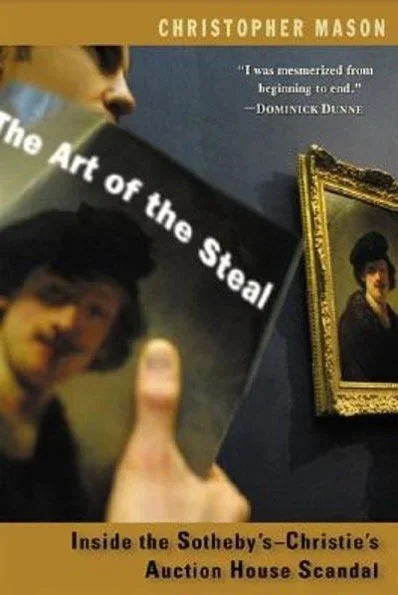
From 1993 to 1999, the chairmen of Sotheby's and Christie's met secretly to fix seller's commissions across a market they jointly controlled at more than 90%, extracting over $225 million in excess fees. The cartel collapsed when Christie's CEO Christopher Davidge, newly fired, turned over the conspiracy's "Rosetta Stone" memo to the DOJ in exchange for full immunity and $8 million. Chairman A. Alfred Taubman was convicted and served ten months in federal prison; the civil class action settled for $512 million. The case remains the definitive illustration of the DOJ's Corporate Leniency Program operating as a structural Prisoner's Dilemma.

| Party | Stated objective | Leverage | BATNA | Hidden preference |
|---|---|---|---|---|
| A. Alfred Taubman (Sotheby's chairman) | Restore profitability after the 1990–91 art-market collapse | Controlling shareholder and architect of the conspiracy; ~$700M net worth | Fight charges with a world-class defense team | Walk away with no criminal exposure; blame subordinates |
| Sir Anthony Tennant (Christie's chairman) | Eliminate ruinous price competition on seller's commissions | Initiated the first meeting; designed Exhibit 48 | Remain in the UK beyond U.S. extradition reach — BATNA of infinite value | Never face a courtroom |
| Diana "Dede" Brooks (Sotheby's CEO) | Survive with her reputation and freedom intact | Only witness who could directly testify to Taubman's orders | Cooperate and receive reduced sentence vs. three years in federal prison | Cooperate — but only once her options collapsed |
| Christopher Davidge (Christie's CEO) | Full immunity and a generous exit package | Held detailed contemporaneous notes of every conspiracy meeting | Cooperate first under DOJ Corporate Leniency, receive full protection | Defect before Sotheby's did — and profit from it |
| François Pinault (Christie's owner from 1999) | Protect his $1.1 billion acquisition | None — purchased Christie's without knowledge of the conspiracy | None — legally obligated for Christie's liabilities | Minimize financial exposure; stay out of prison |
| DOJ Antitrust Division | Criminal conviction of the conspirators | Corporate Leniency Program as structural mechanism | Inconclusive investigation — subpoenas had stalled since 1997 | Landmark prosecution of a major international cartel |
"As from Sept 93 we will give no straight guarantees, make no advances on single lots, make no loans below LIBOR and offer trade vendors nothing better than 5% with vendor paying his own insurance. We will not offer more than 90 days credit to trade buyers."
"I said to him, 'They did it.' He said to me, 'Congratulations.'" 7

"People in the same trade seldom meet together even for merriment and diversion, but the conversation ends in a conspiracy against the public or in some contrivance to raise prices." 12


"Regardless of what height we may attain in life, no one is above the law. Price-fixing is a crime whether it is committed in a local grocery store or the halls of a great auction house." 13
The definitive official statement of the three pillars behind the DOJ's corporate leniency program — the mechanism that made the Sotheby's–Christie's prosecution possible.
Princeton economists reconstruct the cartel's formation and collapse using the trial record — the most rigorous economic analysis of the case, including the finding that buyers likely suffered no harm while sellers bore the full cost.
Art critic Judd Tully's courtroom diary of the Taubman trial: direct quotes, jury deliberation detail, and the paper trail that overrode eight defense attorneys.
围绕这条内容继续补充观点或上下文。