

GM's 40-day bankruptcy: how the government rewrote creditor rules to save an industry

GM's 40-day bankruptcy: how the government rewrote creditor rules to save an industry

In June 2009, the Obama Auto Task Force engineered the largest industrial bankruptcy in U.S. history in just 40 days — dispatching GM's CEO, cramming $27 billion in bondholder claims to a 10% equity stub, granting the UAW's VEBA far better economics than comparable creditors, and handing the U.S. government a 60.8% ownership stake. This case study dissects how monopoly control of DIP financing, Section 363 process engineering, creditor fragmentation, and a compressed timeline together produced an outcome that no standard bankruptcy proceeding would have reached.

On June 1, 2009, at roughly 8:00 a.m. Eastern time, General Motors Corporation filed for Chapter 11 protection in the Southern District of New York. The petition listed $82.3 billion in assets against $172.8 billion in liabilities — the fourth-largest bankruptcy in U.S. history at the time. 1 GM had less than $2 billion in cash on hand. By 8:00 p.m. that same day, the court had approved $15 billion in debtor-in-possession financing. The only provider willing and able to supply it was the U.S. government.
Forty days later, on July 10, a new company called General Motors Company completed the purchase of virtually all of Old GM's operating assets. 2 The process had consumed more than $27 billion in additional government money, dispatched a sitting chief executive, crammed down $27 billion in bondholder claims to a 10% equity stub, and handed the federal government a 60.8% ownership stake in one of the country's most iconic corporations. What looked, from a distance, like a rescue was actually a multi-party negotiation in which one party held the money, set the rules, controlled the timeline, and designed the outcome before most of the other parties understood what was happening.

The parties and their positions

PartyStated objectiveReal leverageBATNAHidden preference
U.S. Treasury / Obama Auto Task Force (Rattner/Bloom)Preserve jobs, minimize taxpayer lossOnly DIP financing source; controls bankruptcy timeline; sole authority over TARP disbursements"Orderly wind-down" — tolerable as a signal to other claimantsComplete a fast restructuring before the political window closed; demonstrate government was not "Obama Motors"
GM management (Wagoner → Henderson)Preserve company, obtain bridge financing"Too big to fail" — systemic risk to 200,000+ direct employees and Midwest supply chainChapter 11 liquidation — management almost certainly replaced in any scenarioRetain as many brands, plants, and jobs as possible; avoid precedent of government-mandated CEO removal
UAW / GettelfingerProtect active workers' wages and retiree healthcarePolitical leverage in swing states; organized strike threat; 2007 contract positioned VEBA as priority creditorGM liquidation would wipe out 61,000+ active jobs and leave VEBA with near-zero recoverySecure VEBA healthcare funding via equity stake; ensure long-term union influence in a restructured company
Unsecured bondholders (~$27B, Ad Hoc Committee)Fair recovery on $27B face value; parity with UAWRight to block out-of-court restructuring; $27B legal claim; public sympathy as "individual investors and retirees"Chapter 11 litigation — legally viable but facing an opponent with unlimited DIP financing leverageMaximize percentage recovery; expose perceived government favoritism of labor over capital
U.S. Treasury secured DIP lenders (~$50B committed)Full TARP loan repaymentControl over DIP financing terms; can structure bankruptcy process to maximize its own recoveryAccept losses — CBO estimated a 73% subsidy rate on overall auto support 3Achieve a fast exit from GM ownership before political headwinds intensified
Canada/Ontario governmentProtect Canadian auto manufacturing (GM Oshawa)GM's Canadian plants were integral to North American supply chainNegotiate separately — but no independent leverage without U.S. coordinationMatch U.S. terms to protect Canadian jobs; emerge as minority equity holder

Background: four years of losses and one catastrophic year

General Motors entered the financial crisis already carrying wounds that had been accumulating for thirty years. From 2005 through 2008, the company lost a cumulative $82 billion — $10.6 billion in 2005, $2 billion in 2006, $38.7 billion in 2007 (then the largest annual loss in automotive history), and $30.9 billion in 2008. 1 By the end of 2008, GM held only $14 billion in cash while burning through $19.2 billion that year alone.
The structural causes were not a mystery. GM carried enormous legacy obligations — its U.S. pension plan alone had $32.1 billion in unrecognized actuarial losses. 4 It operated too many brands (eleven globally), too many dealerships (5,900 in the U.S. alone), and too many factories (47 in America). Its market share had fallen from 46% in the 1950s to under 19% by early 2009. 5 Its cost structure was built for a world that no longer existed. Harvard Business School professor Nancy Koehn put it directly: several generations of executives had failed, from the first oil shock in 1973 onward, to do the three things that had made GM great — pay attention to how consumers' lives were changing, watch the competition, and make bold bets on new products.
On November 7, 2008, GM publicly warned that without government assistance or a merger, it might run out of cash by mid-2009. 1 The Bush administration responded in December 2008 with an $13.4 billion bridge loan via the Automotive Industry Financing Program — an emergency use of TARP funds that was legally contested from the start. TARP had been designed to purchase troubled assets from financial institutions, and GM was an automaker. 3 Twenty-six Republican lawmakers wrote to President Bush arguing the diversion was unauthorized. The legal challenge was never adjudicated — but the ambiguity would haunt the process throughout.

The Obama task force takes over

When the Obama administration took office in January 2009, it inherited both the TARP loans and a company that its own financial review would determine was nowhere close to viable. The Presidential Task Force on the Auto Industry was co-chaired by Treasury Secretary Timothy Geithner and National Economic Council director Lawrence Summers. 6 Its operational leads were Steven Rattner — a Wall Street dealmaker who had spent two decades at investment firms — and Ron Bloom, a former Lazard banker who had spent the previous decade working on union-side restructurings.
Neither man had automotive experience. What they had instead was financial analysis capability and a specific mandate: "I want you to be tough and I want you to be commercial." 2 The team had roughly five weeks to learn the auto industry, review GM's and Chrysler's restructuring plans, develop a course of action, and sell it to the President.
What the review found at GM alarmed them. "GM could not tell you on any given day within $500 million how much cash they had," Rattner later said, "and the result was they had to operate over $10 billion, sometimes $11 billion, of cash — far more than any other company of its same size or scale." 4 The operational and management dysfunction was, in Rattner's assessment, "horrifying." A company of GM's scale that could not track its own cash within half a billion dollars was not going to restructure itself.
On March 30, 2009, Obama formally rejected GM's viability plan, called it insufficient "in its current form," and gave the company 60 days to produce a more credible one. 6 The same day, GM chairman and CEO Rick Wagoner stepped down — at the government's request.
"It seemed obvious to all of us that it's very hard to put that amount of new money behind a CEO who's not only driven the bus off the cliff, but doesn't even realize where the bottom of the cliff is."
— Steven Rattner, NPR interview, September 2010 4
Obama's public statement was careful not to frame the resignation as punishment. But the precedent it set was unmistakable: the U.S. government had just removed the chief executive of one of the world's largest corporations. Fritz Henderson, GM's president and COO, became CEO. Kent Kresa was named interim chairman.
Rattner portrait
Steven Rattner, the Obama administration's "car czar," whose task force ran the GM restructuring 4

The negotiation table: bondholders, UAW, and asymmetric recovery

The 60-day window was the crux of the negotiation. GM had three major creditor groups whose cooperation — or capitulation — was required.
The bondholders rejected, then capitulated. GM owed approximately $27 billion to unsecured bondholders. In late April, the government proposed an exchange: every $1,000 in face-value bonds would convert to 225 shares of New GM common stock — equivalent to a 10% equity stake in the restructured company. Acceptance required 90% of bondholders. 7 The ad hoc committee, representing roughly 20% of the debt and dominated by institutional investors, rejected the offer publicly. Its statement did not mince words:
"We believe the offer to be a blatant disregard of fairness for the bondholders who have funded this company and amounts to using taxpayer money to show political favoritism of one creditor over another."
— GM bondholder ad hoc committee, April 27, 2009 7
The committee's specific grievance was the comparative math: the UAW's VEBA, with roughly $20 billion in unsecured healthcare claims, was to receive 17.5% equity plus $6.5 billion in 9% perpetual preferred stock plus a $2.5 billion note — a recovery rate far above what was being offered to bondholders holding the same unsecured legal status. 8
The government's response was to sweeten the offer modestly — adding warrants to purchase an additional 15% of New GM — while leaving the 10% equity unchanged. By May 31, 2009, more than 1,000 bondholders representing at least 54% of the $27 billion had agreed to tender. 9 The ad hoc committee's final statement was a study in capitulation hedged as pragmatism: the revised offer "represents the best alternative for bondholders in the current difficult and dire situation," and "rejecting this offer in the expectation that the bondholders will do better in a litigated outcome was a risk the committee is unwilling to take." 9
Remaining holdouts — representing roughly 46% of bonds by count — would be crammed down in bankruptcy court.
The UAW accepted painful terms, but on favorable economics. UAW president Ron Gettelfinger was navigating a genuinely difficult position. The union's 2007 contract had created the VEBA specifically to move retiree healthcare obligations off GM's balance sheet. By 2009, that trust held only $9.4 billion in cash assets — enough to cover roughly three years of escalating healthcare costs for GM's 377,000 retirees. 10 Gettelfinger called the equity and notes the VEBA would receive "paper money" — stock and instruments from a virtually bankrupt company. "We're going into this with an equity value of zero," he said. 10
What the UAW accepted in exchange for that risk was significant: members gave up cost-of-living adjustments, accepted cuts to retiree benefits, eliminated work rules, and agreed to a two-tier wage structure. 1 The deal was ratified by the membership on May 29, 2009. The VEBA's eventual outcome vindicated the gamble: by the November 2010 IPO, New GM shares had real market value, and the trust received equity in a company generating positive cash flow.

Designing the surgery: the Section 363 architecture

When it became clear that unanimous out-of-court agreement was not achievable, the task force activated a mechanism it had been preparing as a contingency: a Section 363 asset sale under the Bankruptcy Code.
The concept was architecturally clean. A new entity — NGMCO Inc., backed by the U.S. government — would purchase GM's viable operating assets "free and clear of all liens, claims, encumbrances, and other interests." 11 Old GM would retain the toxic liabilities — the closed plants, environmental obligations, and legacy claims — and become Motors Liquidation Company. The 363 structure made two things possible that a standard Chapter 11 plan could not: it moved fast enough to prevent consumer confidence from collapsing, and it extinguished successor liability claims that would have followed the company into its new form.
GM's lead bankruptcy counsel, Stephen Karotkin of Weil, Gotshal & Manges, later described the decision plainly: "When it became apparent that the exchange offer would fail, everyone agreed that a 363 sale was the best way to get it out." 12
GM filed Chapter 11 on June 1, 2009. The court set a timetable that compressed years of normal process into weeks: objections due June 19, bid deadline June 22, final hearing June 25, target sale closing July 10. 1
Approximately 850 objections were filed. 11 The most prominent came from: the F&D Bondholders Committee (representing roughly 0.01% of bonds), attorneys general from approximately 45 states (objecting to the loss of Lemon Law claims), consumer organizations, asbestos personal injury claimants, and non-UAW unions who complained their retirees were treated less favorably than UAW retirees. The secured creditors — approximately $6 billion in bank loans — received full payment under the DIP structure, which defused their opposition.
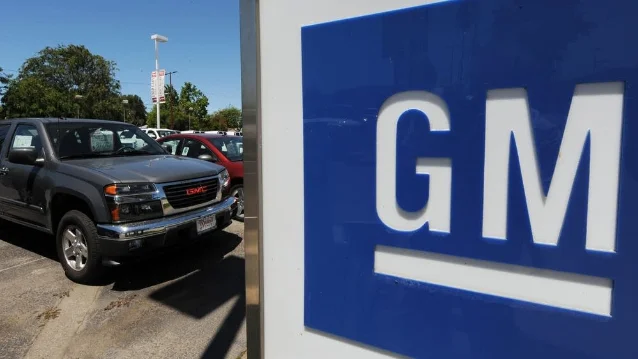
GM dealership with GMC trucks
A GM dealership in May 2009; the restructuring would shrink GM's U.S. dealer count from 5,900 to a target of approximately 3,600 9
The state attorneys general achieved the single most significant non-legal concession: after negotiation at the hearing itself, New GM agreed to assume Lemon Law liabilities — a result the Second Circuit later cited, in the ignition switch litigation, as proof that non-legal, business-minded objections can change the terms of a 363 sale. 13
On July 5, 2009, Judge Robert E. Gerber issued the sale order. His reasoning on the central objection — that the sale was an impermissible "sub rosa" reorganization plan that bypassed creditor voting rights — was blunt: "The objectors' real problem is with the decisions of the Purchaser, not with the Debtor, nor with any violation of the Code or caselaw." 11 On the question of whether the entire proceeding was premised on a government bluff that bankruptcy would be allowed to proceed, Gerber was equally direct:
"Bankruptcy courts have the power to authorize sales of assets at a time when there still is value to preserve — to prevent the death of the patient on the operating table."
— Judge Robert E. Gerber, Sale Order, July 5, 2009 11
The sale closed on July 10, 2009 — exactly 40 days after the petition date.

The Opel subplot: when geopolitics crashed the restructuring

While the domestic bankruptcy was grinding toward closure, a parallel negotiation was unfolding in Europe that illustrated a different kind of leverage problem: what happens when a foreign government gets between a distressed seller and its preferred buyer.
GM's European subsidiary, Opel/Vauxhall, employed approximately 25,000 workers in Germany. As GM's U.S. bankruptcy loomed, German Chancellor Angela Merkel declared the Opel situation Chefsache — a matter requiring personal attention at the top — and pledged up to €4.5 billion in state guarantees, but only for one bidder: Magna International, a Canadian-Austrian parts maker, partnered with Russia's Sberbank. 14 On September 10, 2009, GM announced that Magna and Sberbank would acquire a 55% stake — a deal timed, visibly, for three weeks before Germany's federal election.
Then, on November 3, 2009, GM's board reversed course and voted to keep Opel. CEO Fritz Henderson cited "the most stable and least costly approach for securing Opel/Vauxhall's long-term future." 15 The reversal came after EU Competition Commissioner Neelie Kroes formally challenged whether Germany's €4.5 billion in state support had been structured to favor Magna exclusively — a potential violation of EU competition rules — giving GM's board a legitimate procedural reason to reopen the process. 16
The German reaction was furious. Merkel had personally called President Obama; now she faced a transatlantic dispute she had walked into through a process she had tried to control. Bodo Ramelow of Die Linke captured the mood: "GM's management is leading the government around by the nose and abandoning the Opel workers." 14 The Opel saga ended only in 2017, when GM finally sold the unit — to France's Groupe PSA for €2.3 billion, eight years after the abortive Magna deal.
The episode offered a counterpoint to the domestic negotiation's logic. In the U.S., the government's unilateral control of DIP financing had concentrated leverage. In Europe, leverage was fragmented across competing political actors with incompatible objectives, and the result was that no stable deal could hold.

Outcome: new GM, $10.5 billion lost, and a functioning industry

The restructuring produced a company that was, by objective measures, far healthier than the one that entered bankruptcy. New GM launched with:
  • 4 brands (Chevrolet, Buick, GMC, Cadillac) vs. 11 before
  • 34 U.S. factories vs. 47 before (target: 31)
  • ~68,500 U.S. employees vs. 91,000 before
  • $17 billion in debt vs. $94.7 billion before
  • A breakeven point roughly halved: from approximately 390,000 vehicles/month to approximately 200,000 17
New GM's ownership: U.S. Treasury 60.8%, Canada/Ontario 11.7%, UAW VEBA 17.5%, Old GM bondholders 10%. 18
On November 18, 2010, New GM completed its IPO on the NYSE — 478 million shares at $33 per share, raising $15.8 billion in common stock and an additional $4.35 billion in mandatory convertible preferred, for a total offering of approximately $23.1 billion. 19 It was the third-largest IPO in U.S. history at the time.
The government sold its last GM shares in December 2013. The final tally depends on the accounting methodology: the Congressional Research Service calculated $50.2 billion invested and $39.7 billion recovered — a net loss of approximately $10.5 billion. 20 The SIGTARP (Special Inspector General for TARP) put the figure somewhat higher at approximately $11.2 billion, depending on how foregone interest and timing adjustments are counted. 21 Rattner's own framing of that loss was consistent regardless of which number you use: "The $10 billion was money well spent to save this sector." 2
Austan Goolsbee and Alan Krueger — both former Obama economic advisers — concluded in a 2015 NBER retrospective that without the bailout, the recession would have been deeper and longer, and that GM and Chrysler were "healthy by most measures" five years on. 21 The study was careful about causation: some of New GM's early profits came from a consumer demand rebound that exceeded even the most optimistic projections — the restructuring created a company capable of capturing that rebound, but did not cause it.
GM NYSE listing sign at IPO
GM's return to the NYSE on November 18, 2010 — 16 months after emerging from Chapter 11 19
One consequence of the 363 sale's speed proved costly later. The "free and clear" provision that made the restructuring legally clean also meant creditors holding claims based on pre-bankruptcy defects — including future victims of the defective ignition switches that Old GM engineers had known about since 2003 — received only publication notice of the sale rather than actual notice. The Second Circuit ruled in 2016 that this violated due process, opening New GM to billions in successor liability claims it had believed were extinguished. 13 New GM ultimately forfeited $900 million in a deferred prosecution agreement with the U.S. Attorney's Office. The lesson Dechert LLP drew was precise: the protections of a 363 sale "are only as good as the notice given."

Frameworks you can use

Framework 1: Government-as-dominant-creditor — when rules collapse

The defining structural feature of the GM negotiation was not the government's political authority or even its regulatory power. It was that the government was simultaneously the largest creditor, the only provider of DIP financing, the regulator setting the terms of TARP, and the party with the most public accountability for the outcome. No private sector deal has that structure.
Under normal bankruptcy rules, the Absolute Priority Rule governs: secured creditors are paid before unsecured creditors, who are paid before equity holders. In the GM restructuring, that hierarchy was substantially inverted. The government's $50 billion TARP claim — theoretically senior debt — was converted to equity and placed at the top of the ownership structure. The UAW VEBA, an unsecured creditor, received far better treatment than the bondholders holding the same legal status. The secured bank lenders were paid in full via DIP financing, but their leverage in shaping the deal's terms was minimal because the government controlled the DIP. 11
Rattner's pushback on the ideology critique was direct: "At no time during our months of work did the White House ever ask us to favor or punish any stakeholder." 22 Whether that is accurate or not, the effect was to benefit labor-side claimants over financial creditors — and no court exercising conventional bankruptcy jurisprudence would have reached that result. The mechanism that made it achievable was the government's monopoly on financing.
Transferable principle: whenever government emergency authority concentrates financing power in a single actor, expect creditor priority rules to bend toward that actor's policy objectives. This is not a flaw in the system — it is what emergency authority is designed to do. In future negotiations involving government-backed financing, whether in banking (TARP), aviation (CARES Act), or energy (DOE loan guarantees), the party holding the emergency capital will shape distributions regardless of contractual seniority.

Framework 2: 363 sale as forced consensus — weaponizing the liquidation floor

The Section 363 structure was not simply a legal mechanism. It was the task force's primary negotiating tool, and it worked by setting the floor against which every other number was measured.
The logic was: GM's liquidation value in a distressed wind-down was approximately $6–10 billion against $116.5 billion in general unsecured claims — an effective recovery rate near zero. 11 Once that floor was established — and credible, because the Lehman Brothers precedent had demonstrated the government would allow large firms to fail — any offer above that floor was, by definition, better than the alternative. The bondholders received 10% equity that, at IPO, was worth real money. Against a liquidation alternative of near-zero, 10% in a restructured company is a rational outcome.
Task Force member Ron Bloom described the dynamic plainly: "Everybody needed to know there was a very bad alternative that awaited them if they didn't come to the table." 17 Rattner's public-facing reassurance — "Bankruptcy is not our focus. Bankruptcy is not our goal" — was, in his own framing, a deliberate messaging strategy to reduce consumer purchasing hesitation, not a reflection of the task force's internal calculus.
Transferable principle: in any multi-party restructuring, before accepting the existing BATNA structure as fixed, ask what procedural mechanism could change what the BATNA delivers. The 363 structure made a hostile competitor acquisition impossible by moving too fast for any alternative bidder to organize. It made litigation essentially self-defeating for holdouts by guaranteeing the worst outcome for those who did not consent. Designing the process to determine the outcome is not manipulation — it is the highest-order negotiating skill.

Framework 3: Creditor fragmentation as leverage — isolating the holdout minority

GM's bondholders held $27 billion in legal claims. On paper, a coordinated block could have forced a negotiated plan of reorganization with full creditor voting rights — a process the government explicitly wanted to avoid, because it would have taken years. In practice, the fragmentation of the bondholder group made organized resistance functionally impossible.
The fragmentation ran in multiple directions. Institutional holders and retail investors had different time horizons and recovery expectations. Holders of credit default swaps had financial incentives to trigger a bankruptcy event — a bankruptcy filing could be good for them, making their negotiating position fundamentally different from holders without CDS exposure. 7 The ad hoc committee represented roughly 20% of the debt — meaning it could not speak for the majority even had it wanted to coordinate. And the speed of the process — 40 days from filing to close — meant that no alternative coalition had time to form, retain advisers, develop a counter-proposal, and litigate simultaneously.
The government exploited each dimension. It offered the warrant sweetener specifically to tip the acceptor count above 50%, isolating the holdouts as a minority. It designed the 363 timeline to make prolonged resistance strategically pointless. It used public framing — characterizing the holdouts as individual investors and retirees who had been let down by an intransigent institution — to raise the social cost of continued opposition for any creditor with regulatory relationships or public-facing business.
Transferable principle: in any multi-stakeholder negotiation, the fastest path to consensus is rarely persuading every party. It is identifying the minimum coalition needed to execute your preferred outcome, targeting each claimant group's specific fragmentation pressure point, and designing a timeline that prevents the minority from organizing effectively.

Framework 4: Speed as an agenda-control weapon — the 40-day restructuring

The most underappreciated element of the GM restructuring was not the legal architecture or the financial structure. It was the timeline. A company with $150+ billion in revenues, 200,000+ employees, and $172 billion in liabilities completed a Chapter 11 in 40 days. The Delaware bankruptcy of Delphi — GM's former parts subsidiary — lasted more than three years. 22
That speed was not an accident of circumstance. It was a designed feature. The task force had been negotiating the 363 structure before the bankruptcy was filed, so the court arrived at a proceeding with all the terms substantially pre-agreed. The DIP financing — sole-source from the government — expired on a specific date, giving the court and all parties a hard constraint that was not subject to negotiation. The government issued public warranty guarantees to maintain consumer confidence during the process, reducing the "melting ice cube" problem that makes bankruptcy dangerous for consumer-facing businesses. Ron Bloom, who later described the overall approach to creditors, offered the underlying logic: deadlines work when "everybody needed to know there was a very bad alternative."
The 363 speed also foreclosed specific resistance strategies. A creditor who wanted to propose an alternative reorganization plan needed time — to hire advisors, draft a competing proposal, file motions, secure discovery. Forty days provided none of that. The F&D Bondholders Committee, which called the government's July 10 deadline "just posturing," found that Judge Gerber disagreed: "The problem is that if the 363 Transaction got off track... the U.S. Government would see that there was no means of early exit for GM... that customer confidence would plummet." 11 The court refused to take that gamble. The deal was done.
Transferable principle: the party that controls the timeline controls the menu of available outcomes. When you hold the critical resource — financing, regulatory approval, the controlling vote — compressing the timeline is often more valuable than improving the terms. Speed destroys the option value of delay for every other party. The constraint must be credible (the cash really runs out on that date) and the party setting the deadline must be willing to live with the consequences of missing it — but a negotiator who can credibly collapse the timeline has structural power that no amount of clever term-shaping can replicate.

What to remember

  • Monopoly on emergency capital trumps contractual seniority. The government's control of DIP financing — and its willingness to be the only provider — was the structural fact that made every other negotiating position irrelevant. Secured creditors, unsecured bondholders, and the UAW all faced the same choice: accept the government's terms or get less in liquidation. When one party controls the only available lifeline, formal creditor priority rules bend toward that party's objectives.
  • The 363 sale was designed, not discovered. Karotkin and the task force built the 363 mechanism as the explicit backstop before the bankruptcy was filed. The choice of legal structure shaped the outcome before any creditor sat down. Controlling the process — not just the position — is the highest-order negotiation skill in a distressed transaction.
  • Speed destroys the option value of resistance. Forty days from filing to close left no time for alternative coalition-building, competing reorganization plans, or effective litigation. A negotiator who can credibly compress the timeline forces every other party to reveal its true reservation price before it can organize the delay tactics that might extract better terms.
  • Fragmented creditors cannot act collectively. The bondholder group's CDS exposure, its retail-institutional mix, and its 0.01%-versus-20% representation structure made coordinated resistance impossible — and the government understood this before the negotiations began. When facing dispersed opposition, identify what fractures the group and design the offer to tip the majority while isolating the holdouts.
正在加载链接预览…
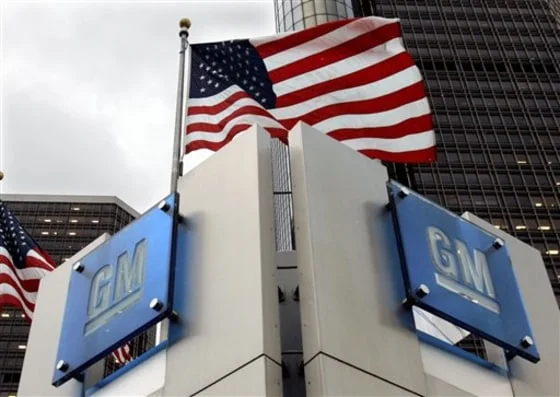
Cover image: GM headquarters in downtown Detroit, June 2009. Photo by Carlos Osorio / AP. 23

参考来源

  1. 1Wikipedia: General Motors Chapter 11 reorganization
  2. 2Stanford GSB: Steven Rattner — The 2009 U.S. Auto Bailout Was Necessary
  3. 3Congressional Oversight Panel: September 2009 Report on TARP and the Auto Industry
  4. 4NPR: Inside Obama's Auto Industry 'Overhaul'
  5. 5Harvard Business School Working Knowledge: GM — What Went Wrong and What's Next
  6. 6White House: Remarks by the President on the American Automotive Industry, 3/30/09
  7. 7NYT DealBook: G.M. Faces Obstacle From Unsecured Creditors
  8. 8White House: Fact Sheet on Obama Administration Auto Restructuring Initiative for GM
  9. 9Forbes: Major GM Creditors Accept Bankruptcy Plan
  10. 10TIME: Why Detroit Retirees Have Health-Care Anxiety
  11. 11In re General Motors Corp., 407 B.R. 463 (Bankr. S.D.N.Y. 2009) — SDNY Sale Order
  12. 12NYT DealBook: 2 Lawyers on the G.M. Case Tell Their Story
  13. 13Dechert LLP: Protection Granted in Section 363 Sale Orders is Only as Good as the Notice Given (2016)
  14. 14TIME: GM and Germany Still Wrangling Over Opel
  15. 15MotorAuthority: GM to keep Opel, sale to Magna off
  16. 16Automotive News: EU concern over Magna deal prompted GM to keep Opel
  17. 17Chicago Fed: Detroit Back from the Brink? (Klier & Rubenstein, 2012)
  18. 18GAO-11-471: TARP — Treasury's Exit from GM and Chrysler
  19. 19Renaissance Capital: General Motors prices IPO at $33
  20. 20CRS Report R41978: The Role of TARP Assistance in the Restructuring of General Motors
  21. 21NBER Working Paper 21000: Goolsbee & Krueger, A Retrospective Look
  22. 22Fortune/Rattner: The Auto Bailout: How We Did It
  23. 23NBC News: UAW trust to get large chunk of GM shares

围绕这条内容继续补充观点或上下文。

  • 登录后可发表评论。