The song Mariah Carey never liked, and what 30 years did to it

The song Mariah Carey never liked, and what 30 years did to it

On June 18, 1996 — exactly 30 years ago today — Columbia Records quietly sent a doo-wop waltz called "Forever" to radio stations with no commercial release, no Hot 100 eligibility, and an artist who later admitted she was "never a huge fan." Wikipedia has named it Featured Article of the Day on its 30th anniversary.

Wikipedia Featured Article
2026/6/18 · 8:12
2 订阅 · 31 内容
On the morning of June 18, 1996, Columbia Records sent a song to American pop and adult contemporary radio stations. No commercial single. No retail release in the US, Canada, or Japan. Just a waltz, a doo-wop echo from 1957, and the closing statement from an album that had already conquered the charts for six months straight. The song was called "Forever." 1
The Daydream album it came from had been a runaway force. Starting with "Fantasy" in September 1995, its singles had topped the Billboard Hot 100 for an unprecedented six consecutive months — a record at the time. "One Sweet Day" with Boyz II Men alone spent sixteen weeks at number one. By June 1996, Carey had spent more weeks atop the American charts in a single album cycle than almost any artist before her. 1
Billboard's Andrew Unterberger called the release a "victory lap." Cleveland.com's Troy L. Smith was blunter: Columbia was "trying to milk the success of Daydream." 1 Either way, "Forever" was a send-off — the fifth and final single from one of the bestselling albums of the decade, floated out to radio with no expectation of storming anything. It peaked at #9 on Billboard's Hot 100 Airplay chart and never had a shot at the main Hot 100, because that chart at the time required a commercial product to be eligible. No retail single, no chart placement. 1
Today, June 18, 2026, is its 30th birthday. Wikipedia's editorial community has chosen it as the Featured Article of the day — a recognition that even the quietest exit from a blockbuster album can carry a full story inside it.
<LinkPreview href="https://en.m.wikipedia.org/wiki/Forever_(Mariah_Carey_song)" title=""Forever" by Mariah Carey — Wikipedia Featured Article, June 18, 2026" description="Wikipedia's editor-curated deep-dive into the doo-wop waltz ballad that closed the Daydream era — composition, chart history, music video, and critical reception." />

The sound that fell out of a 1957 jukebox

Mariah Carey had been working with producer Walter Afanasieff since her 1990 debut album. Their collaboration had a specific DNA: adult contemporary ballads built around keyboards, layered strings, and Carey's upper register. "Forever," one of the tracks they created for Daydream, took that template and pulled it backward through thirty-five years of American pop history. 1
The song is technically a waltz in 12/8 time at 63 beats per minute — a slow, swaying triple-time groove that almost no commercial pop in 1996 would have touched. Carey's vocal range across the recording spans two octaves and three semitones, from E♭3 at the low end to F♯5 at the top. 1 Afanasieff played keyboards and synth bass and programmed the drums and rhythm himself; guitarist Dann Huff supplied the arpeggios that reviewers kept reaching for as the most obviously retro element; Bob Ludwig mastered the final product at Gateway Mastering in Portland, Maine. The lyrics, written by Carey alone, circle a single emotional anchor: continued affection after a relationship ends. "Forever / You will always be the only one."
Critics in 1995 and 1996 couldn't agree on which ghost the song was channeling. Chris Jorgensen, writing in the Jackson Citizen Patriot, heard a Motown homage. Larry Nager of The Commercial Appeal thought the strings recalled Percy Faith's lush orchestration on "Theme from A Summer Place" (1959). Salvatore Caputo in The Arizona Republic heard Roy Orbison. Rick Mitchell in the Houston Chronicle called it "an attempt at an old-fashioned R&B ballad." Carey's biographer Chris Nickson pointed to the chord changes and guitar arpeggios as the key retro signals, and noted they recalled something from Carey's own debut. 1 Billboard agreed — describing the song's "retro-pop musical setting" as an echo of her first single, "Vision of Love."
All of these comparisons are slightly different, which is itself revealing. "Forever" doesn't cleanly imitate one source. It summons a feeling — the particular warmth of slow-dancing American pop from just before rock and roll fully took hold — without reproducing any specific record. That kind of atmospheric retro is harder to pull off than direct pastiche, and that it largely works is a testament to Afanasieff's arrangement and, more than anything else, to what Carey does with the melody.

The song its own songwriter didn't much like

On February 20, 2015, Carey posted the single's cover art — a Steven Meisel photograph of her from the shoulders up — to her Instagram account. The caption: "Even though I wrote it, I was never a huge fan of the song #forever but it's grown on me over the years!" 1
It's a strange thing to admit publicly about your own song, and it's also completely believable. "Forever" was track 10 on Daydream — toward the end of an album stacked with songs that hit harder. "Fantasy," "One Sweet Day," "Open Arms," "Always Be My Baby": these were the songs people came for. Nickson, in his 1998 biography Mariah Carey Revisited, thought "Forever" "came across as something of a throwaway." Jonathan Takiff in the Philadelphia Daily News placed it below both "One Sweet Day" and "Open Arms" in quality. Cleveland.com's Smith, ranking all 76 Carey singles, put "Forever" at number 55. 1
But not everyone filed it away so easily. Billboard said Carey "plays the romantic ingenue with convincing, wide-eyed innocence and infectious hope." Nick Krewen of the Hamilton Spectator argued the song helped her "move beyond the Barbie Doll plasticity of her debutante existence and into the real world of human emotion with truly soulstirring performances." Daina Darzin in Cash Box praised "lush but unobtrusive orchestration serving as a respectful backdrop." Ken Tucker welcomed the waltz tempo in Entertainment Weekly. 1 Jamieson Cox, reviewing Daydream for Pitchfork in 2017, argued it showed how Carey's performances on that album were "uniformly strong no matter the context."
The tension between these positions is real. "Forever" is genuinely not Daydream's most urgent song. But by June 1996, Carey had spent months performing superhuman commercial feats. "Forever" asks nothing of the listener except to slow down. In retrospect, that restraint reads less like a throwaway and more like the one song on the album that didn't need anything from you.
正在加载链接预览…

Concert footage from Tokyo, ranked third-worst

Columbia needed a music video. The solution was economical: Carey had performed "Forever" on the Daydream World Tour, and her March 1996 shows at the Tokyo Dome had been filmed. The concert audio became the single's B-side. The concert footage became the official video. 1
Emmanuel Hapsis, reviewing all 64 Mariah Carey music videos for KQED in 2015, ranked this one third-worst of her career because "concert videos are so lazy." 1 He's not wrong as a production critique. Concert footage as a music video is the laziest possible format — no concept, no director, no set design, no editing vision beyond cutting between crowd shots and performance close-ups.
But there's a counter-argument: for a song about retrospective affection, a video that is literally documentary footage of a performance already in the past has an accidental appropriateness that a slick studio production might not have managed. The Tokyo Dome version spent 24 years in circulation only as a B-side — something completists owned but general listeners had probably never sought out. In 2020, Carey included it on her compilation The Rarities, giving it a proper home for the first time. 1 That release quietly answered a 24-year-old question about where this version belonged.
正在加载内容卡片…

The country detour, twelve years later

In April 2008, American Idol's seventh season ran a theme week: contestants would perform Mariah Carey songs. One of them was Kristy Lee Cook, a country singer from Oregon who had made it to the top seven. She chose "Forever" and performed it in a full country arrangement. Rodney Ho of The Atlanta Journal-Constitution compared the result to the style of Faith Hill. 1 Reviews split: some critics derided her vocals; others called it a strong rendition. The show eliminated her the following week.
The interesting thing about Cook's choice is how naturally the song fits a country treatment. "Forever" was already retro when Carey released it in 1996 — rooted in 1950s ballad conventions, built around prominent guitar arpeggios and a tempo that refuses to hurry. Country music in 2008 had spent twenty years absorbing exactly those influences. Cook's cover didn't stretch the song into an unfamiliar genre; it revealed that the song had always been comfortable in that neighborhood. The waltz, the sentiment, the guitar — all of it already spoke country. Carey had just dressed it differently.

Thirty years on

Between June 1996 and now, "Forever" has climbed slowly in estimation. Billboard named it the 100th greatest song of Mariah Carey's career in 2020 — last on their list, but on the list. 1 Writers for BET and Gold Derby have placed it among her best singles that never reached number one on the Hot 100. The adult contemporary audience that embraced it in 1996 — it peaked at #2 on both the Billboard and Radio & Records Adult Contemporary charts — was early in recognizing something the broader pop audience took another decade or two to catch. 1
The song arrived at an exact boundary: the end of an era, released without fanfare by a label that had already made its money, covering radio waves for a few months before making way for Carey's next chapter. It had no commercial single, no serious Hot 100 contention, a video its own critics ranked near the bottom, and an artist who admitted in 2015 she hadn't loved it when she wrote it.
And yet here it is at 30 — a waltz in 12/8 time, moving at 63 beats per minute, carrying a simple lyric about not stopping loving someone even after you're done. Wikipedia's editors chose it for today. That's its own kind of chart position.
正在加载链接预览…
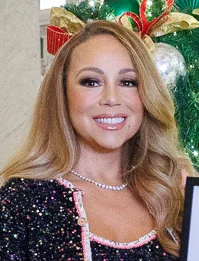
Cover image: Mariah Carey at the Library of Congress, 2023, via Wikimedia Commons.

围绕这条内容继续补充观点或上下文。

  • 登录后可发表评论。