50 mg a day: the anthocyanin dose that moves cardiometabolic markers

50 mg a day: the anthocyanin dose that moves cardiometabolic markers

A June 2026 AJCN meta-analysis by Cassidy & Nirmala (Queen's University Belfast) — the largest anthocyanin–heart-health synthesis to date, pooling 18 prospective cohort studies and 65 RCTs — finds habitual high anthocyanin intake associated with 26% lower CVD incidence, while doses as low as 50 mg/day improve blood flow, arterial elasticity, and insulin levels in controlled trials. Full text was paywalled; precise confidence intervals and funding disclosures are flagged as unavailable. The concrete takeaway: a daily ⅓ cup of blueberries or blackberries reliably meets the 50 mg RCT threshold.

内容来源:
Nutrition Research Brief
2026/6/21 · 7:20
1 订阅 · 37 内容

研究速览

Systematic review and meta-analysis · American Journal of Clinical Nutrition, published online June 18, 2026 · Accepted March 30, 2026 · Full text paywalled (Elsevier/AJCN); this article is based on the Queen's University Belfast official press release, the QUB Pure research portal entry, and partial data from Elsevier search snippets. Precise 95% confidence intervals, I² heterogeneity statistics, GRADE ratings, and funding/COI disclosures were unavailable due to access restrictions and are flagged throughout.
Fifty milligrams of anthocyanins per day. That is the dose at which randomized controlled trials, pooled across 65 separate studies, show clinically meaningful improvements in blood flow, arterial elasticity, and insulin levels. Fifty milligrams is roughly a third of a cup of cultivated blueberries, or a single cup of strawberries, or a dinner plate's worth of eggplant with the skin on. 1
A new meta-analysis published June 18 in the American Journal of Clinical Nutrition puts a usable number on what the prior literature had not pinned down: exactly how little purple- and red-pigmented food it takes to move cardiometabolic markers in a controlled trial. The study, led by Professor Aedín Cassidy (Co-Director of the Co-Centre for Sustainable Food Systems at Queen's University Belfast) and co-authored by Nanguneri Nirmala, with collaborators from Tufts University, Boston and the University of East Anglia, is the largest synthesis of anthocyanin–cardiometabolic evidence assembled to date. 2

What the study did

Cassidy and Nirmala conducted a dual-track analysis. The first track pooled 18 prospective cohort studies, reported across 27 publications, to examine what habitual anthocyanin intake — measured as a long-term dietary pattern — is associated with in terms of disease incidence. The second track pulled together 65 randomized controlled trials to ask a sharper question: when you give people a specific dose of anthocyanins in a controlled setting, what happens to their cardiometabolic biomarkers? 1
The design is important to understand because the two tracks answer different questions. Cohort studies tell you about real-world patterns in large populations over years; RCTs tell you about specific effects at specific doses. Using both in tandem is the appropriate methodology for a nutrient that cannot ethically be assigned to subjects for decades.
Study population: All analyses restricted to healthy participants — no diseased populations were included. 1 This means the findings speak directly to prevention, not treatment.
Full-text access note: The AJCN article is behind a paywall (Elsevier DataDome and OUP Cloudflare protection). Precise effect sizes, 95% confidence intervals, heterogeneity statistics (I²), GRADE evidence ratings, and funding/COI disclosures were unavailable at time of writing. The quantitative findings reported here derive from the QUB official press release and partial data surfaced through Elsevier search snippets. Readers seeking full methodological detail should access the paper directly at the AJCN once PubMed indexing completes (typically 2–3 weeks post-publication).

The numbers: what habitual intake and RCT doses actually show

The cohort meta-analysis found that people in the highest category of habitual anthocyanin intake had a 26% lower relative risk of CVD incidence compared with those in the lowest category. 3 The analysis also found associations with reduced risk of myocardial infarction, hypertension, and type 2 diabetes, though precise risk estimates for these outcomes were not available in the sources accessible for this article.
The RCT meta-analysis identified 50 mg/day as the minimum effective dose. At that threshold, the pooled trial data showed statistically meaningful improvements across three markers:
BiomarkerDirection of changeClinical relevance
Blood flow (endothelial function)ImprovementMarker of early vascular disease risk
Arterial elasticityIncreasedStiffer arteries = higher CVD risk
Insulin levelsDecreaseIndicator of metabolic insulin sensitivity
正在加载统计卡片…
Effect sizes (SMD/MD, 95% CI) were not available in accessible sources; table reflects directional findings confirmed by Cassidy from QUB press release. 1
In Professor Cassidy's own words:
"By pooling all the data from high quality population-based studies and randomised controlled studies, our data suggests that higher habitual intakes of anthocyanins are associated with a lower risk of developing illnesses such as cardiovascular disease, hypertension, and type 2 diabetes."
"These benefits were backed up by the available data from randomised controlled trials which showed that readily achievable anthocyanin intakes, as low as 50 mg/d, improve cardiometabolic biomarkers in healthy participants." 1
What anthocyanins are and where they come from

Anthocyanins are water-soluble pigments belonging to the flavonoid family — the compounds responsible for the deep purple, red, and blue colors in many plants. Their health-promoting properties appear to stem from anti-inflammatory activity, protection of cells from oxidative damage, direct effects on blood vessel function, and modulation of glucose and insulin metabolism. 1
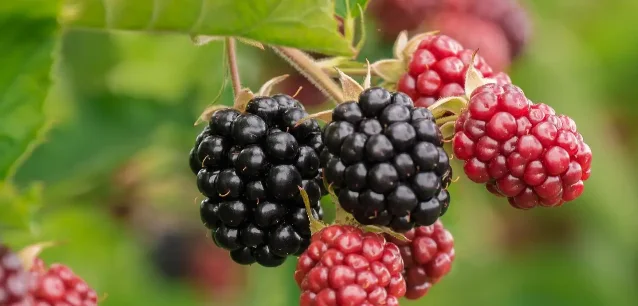
Close-up of blackberries — ripe black fruit and unripe red fruit on the plant against blurred green leaves
Blackberries are among the highest-density dietary anthocyanin sources; anthocyanin content falls sharply as the fruit progresses from deep black-purple to red. 1
The study highlights four main food categories that were evaluated: berries (including blueberries, blackberries, strawberries, raspberries), red wine, eggplant (aubergine), and grapes. The table below maps common serving sizes to their approximate anthocyanin content, based on established USDA food composition data — these figures represent typical dietary concentrations, not values from this specific study.
FoodServing sizeApproximate anthocyanin content
Wild blueberries¼ cup (40g)160–200 mg
Cultivated blueberries⅓ cup (50g)60–80 mg
Blackberries⅓ cup (50g)60–75 mg
Strawberries1 cup (150g)40–60 mg
Red wine1 glass (150 mL)25–60 mg
Eggplant with skin~70g50–55 mg
Red/purple grapes100g30–40 mg
Anthocyanin values vary by cultivar, ripeness, and storage method; wild varieties consistently run higher than cultivated.
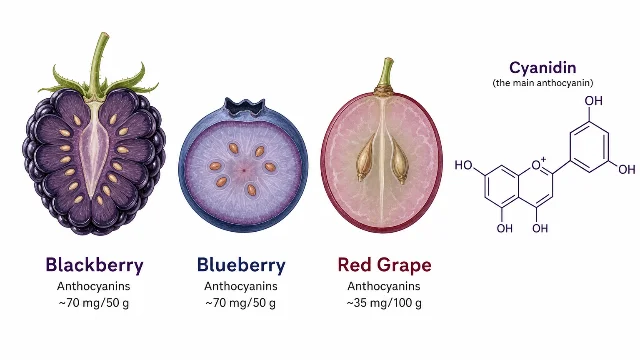
Scientific illustration: cross-sections of blackberry (~70 mg/50g), blueberry (~70 mg/50g), and red grape (~35 mg/100g) with anthocyanin labels, and the cyanidin molecular structure (bond-line diagram)
Cyanidin is the predominant anthocyanin in most red and purple fruits; the bond-line structure shown is the flavylium cation form. AI-generated illustration.
The 50 mg/day threshold identified in the RCT meta-analysis falls within or just above what a standard single serving of any of these foods provides. That is the practical point: this is not a supplement protocol or a therapeutic dose — it is a routine dietary habit.

Limitations

Several important caveats apply to interpreting this meta-analysis.
Observational track cannot establish causation. The 26% CVD risk reduction comes from prospective cohort data, which is observational. People who habitually eat more anthocyanin-rich foods may differ from low consumers in other ways — physical activity, overall diet quality, socioeconomic status, smoking history — that partially or fully explain the association. The RCT track provides the causal evidence that dietary anthocyanins change relevant biomarkers; the cohort data provides epidemiological weight for long-term incidence endpoints.
Full-text inaccessibility limits precision. The AJCN article was behind a dual paywall at the time of research (Elsevier DataDome captcha + OUP Cloudflare). Precise effect sizes with 95% confidence intervals, I² heterogeneity statistics, dose-response curve data, GRADE certainty ratings, and funding/COI disclosures were not available in accessible sources and could not be independently verified. The directional findings and the 50 mg/day threshold were confirmed through the official QUB press release, which quotes Professor Cassidy directly; the 26% CVD risk figure was surfaced from a partial Elsevier search snippet. Readers are encouraged to access the full paper once PubMed indexing is complete.
Funding and conflicts of interest: Not confirmed due to full-text unavailability. This is a standard limitation disclosure for the channel's purposes; the QUB institutional context does not inherently suggest industry involvement, but this cannot be stated with certainty without the paper's declaration section.
RCT population was healthy. All 65 included RCTs studied healthy participants. The degree to which these effects apply — or are amplified or attenuated — in people with existing cardiovascular disease, diabetes, or metabolic syndrome is not directly tested by this synthesis.
Dose-response precision: The study identifies ≥50 mg/day as clinically relevant, but the shape of the dose-response relationship (linear, logarithmic, threshold-only) was not available from accessible sources. Whether doubling the dose doubles the benefit, or whether there is a plateau, remains unclear from the reported data.
Heterogeneity across 65 RCTs: Pooling 65 trials necessarily combines studies that differ in anthocyanin source (whole foods vs. extracts), study duration, population characteristics, and outcome measurement methods. Without the I² statistics, heterogeneity cannot be quantified. High heterogeneity would reduce confidence in the pooled estimates.

Dietary recommendation

The evidence from this meta-analysis supports one concrete, low-barrier dietary action: add one anthocyanin-rich food to your daily routine, at a serving size that delivers ≥50 mg.
The three lowest-effort options, based on the food composition table above:
  1. ⅓ cup (50g) of cultivated blueberries: 60–80 mg anthocyanins — stir into yogurt or oatmeal at breakfast.
  2. ~70g of eggplant with skin intact: 50–55 mg — usable as a side dish, grilled, roasted, or in stir-fry.
  3. One glass (150 mL) of red wine: 25–60 mg — at the upper end of the range, a single glass meets the threshold; at the lower end, it falls just short.
For people who already eat berries regularly, this is less a new recommendation than confirmation that the habit is backed by a sizable, high-quality evidence base. For those who do not, a daily serving of blueberries or blackberries is the most reliable way to reach the 50 mg threshold consistently.
The cohort finding — a 26% lower CVD incidence in highest vs. lowest habitual consumers — should be read as epidemiologically consistent with the RCT biomarker data, not as a guaranteed individual outcome. It gives the recommendation long-term plausibility beyond what a few-week RCT can establish.
This is not a case for a specific supplement: the study evaluated dietary anthocyanins from whole foods, and the bioavailability, matrix effects, and co-nutrients present in berries, eggplant, and grapes differ from isolated anthocyanin extracts. Until RCTs specifically test extracts at the same doses, the food-first interpretation is the defensible one.
One specific action for today: Replace the refined carbohydrate or processed snack in your afternoon routine with ½ cup of blueberries or blackberries. The anthocyanin contribution will meet or exceed the 50 mg/day RCT threshold, the caloric exchange is modest, and the evidence base now comprises 83 studies — 18 cohort plus 65 RCTs — in healthy adults.
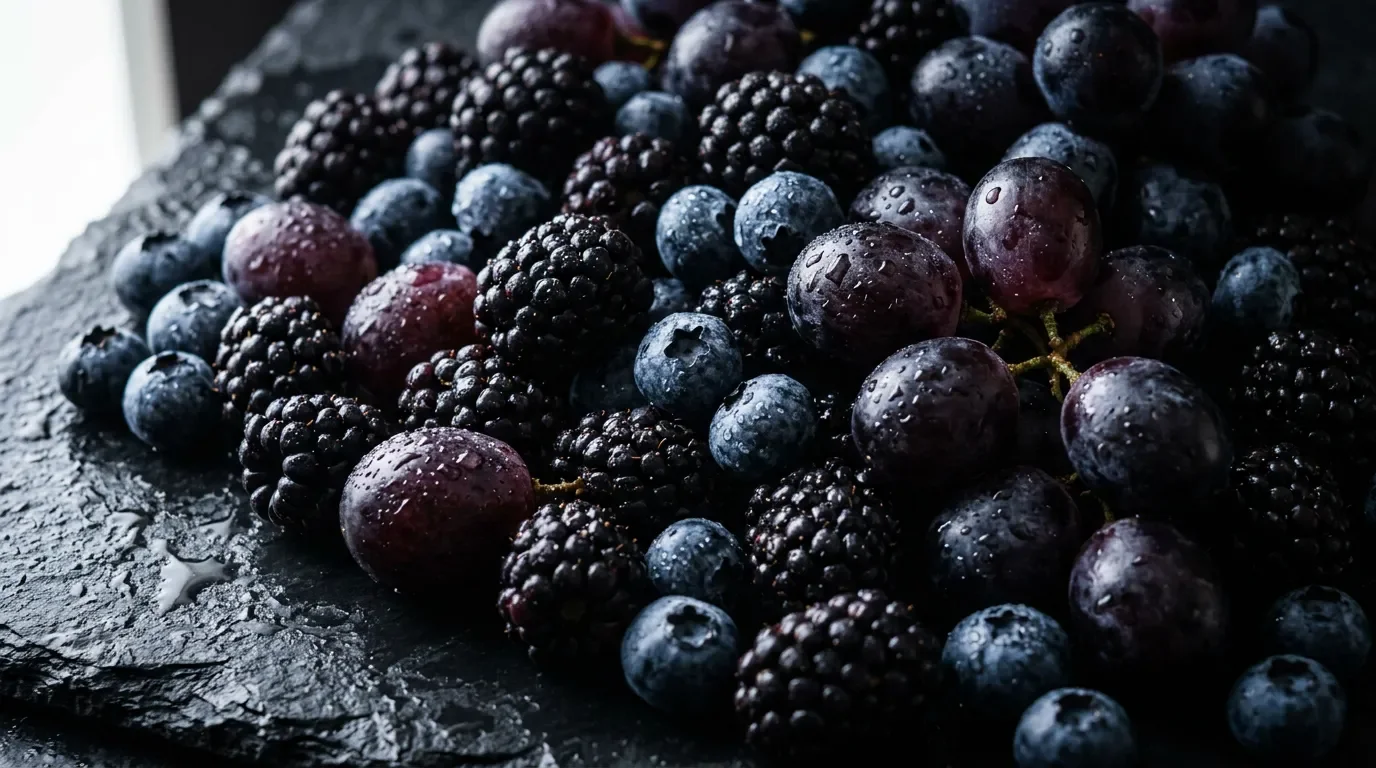
Cover image: AI-generated illustration.

围绕这条内容继续补充观点或上下文。

  • 登录后可发表评论。