为什么全人类都在悄悄往左走?科学家至今没有答案
《纽约时报》2026年6月10日报道:一项发表于《自然·通讯》的研究发现,无论文化、性别、惯用手还是年龄,人类行走时普遍偏向逆时针转向,33次实验中32次如此,原因至今成谜。本期精读这篇行为科学文章,附完整中英对照译文、10个核心词汇(含counterclockwise/locomotion/biomechanical/asymmetry/vortex)及两段长难句语法拆解。

🗞 标题导读
原文标题: Nearly Everyone, Everywhere, Veers Left When Walking
「标题党」式译名: 全人类都在悄悄往左走——这件事,科学家至今无法解释
背景简介:
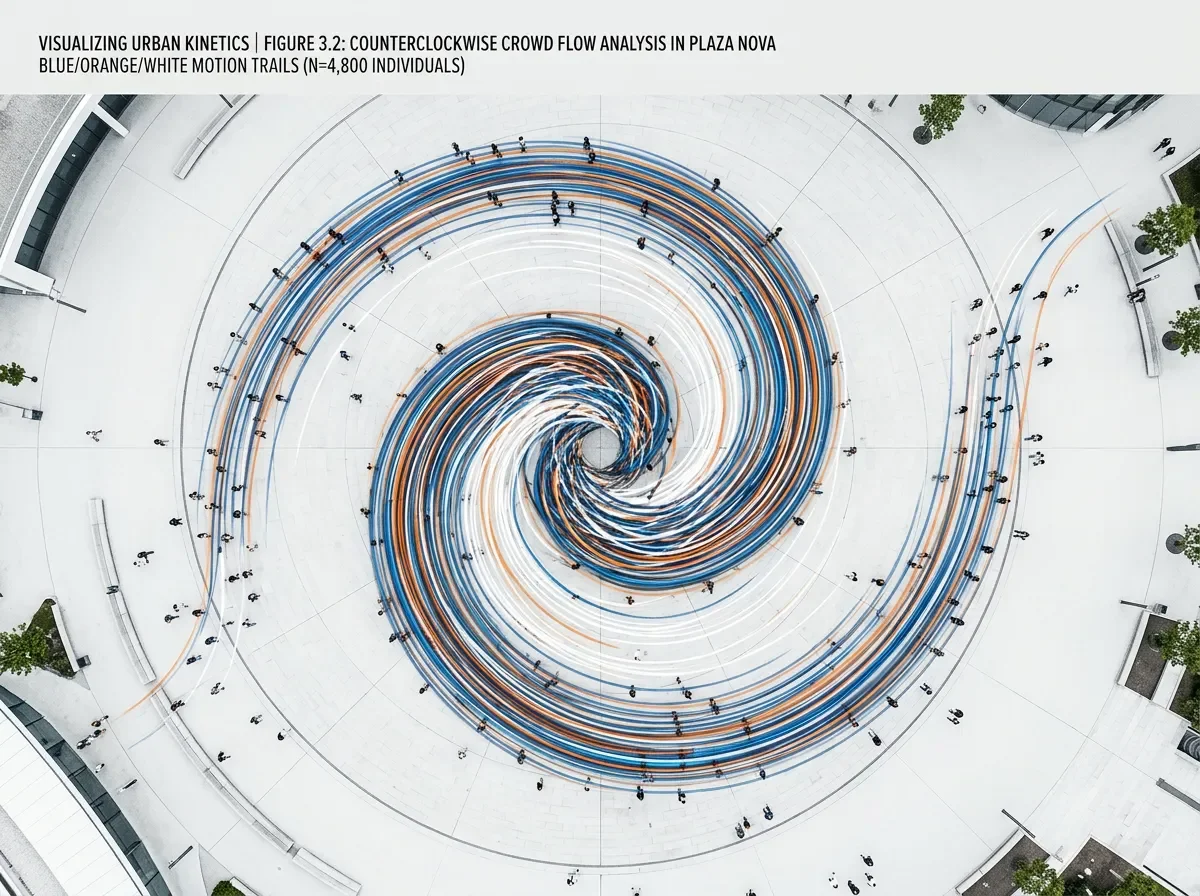
你有没有注意到,在操场或广场上随意走动的人群,最终往往会形成一个逆时针旋转的涡流?2026 年 6 月,发表于《自然·通讯》(Nature Communications)的一项研究证实了这一惊人规律:无论男女老幼、无论西班牙还是日本、无论惯用左手还是右手,人类步行时都有向左转、逆时针运动的天然偏好。33 次实验中有 32 次出现了相同结果,令研究者既惊喜又困惑——因为至今没人知道原因是什么。1
📖 原文与参考译文
Para. 1
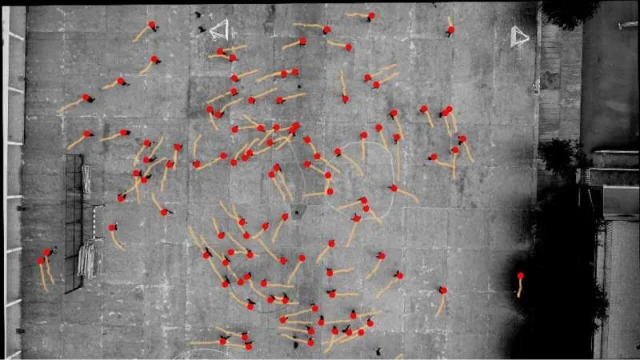
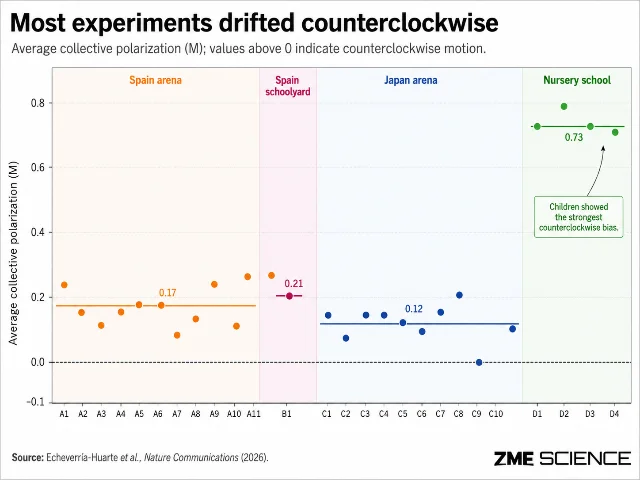
Put a small crowd of people in an open space and ask them to walk around, and something odd happens. They do not move as randomly as you might think. Again and again, in experiments in Spain and Japan, groups of pedestrians began drifting counterclockwise, as if an invisible current had started to pull them around the room. The effect was consistent time and time again. In one early set of trials, 32 out of 33 groups showed the same counterclockwise tendency.
译文: 把一小群人放进一片空旷地,让他们随意走动,奇怪的事就会发生。他们的移动并不像你想象的那样随机。在西班牙和日本的实验中,成群的行人一次次地开始向逆时针方向漂移,仿佛一股看不见的暗流在牵引着他们绕圈。这一效应反复出现,几乎从不失手。在最初一批实验中,33 组受试者里有 32 组表现出了相同的逆时针倾向。2
Para. 2
"When analyzing the experiments, my colleagues realized by chance that in 32 out of 33 experimental trials, as people moved and turned, they noticeably preferred to turn counterclockwise," said Claudio Feliciani, a project associate professor at the University of Tokyo. "This was completely unexpected as, at least instinctively, when people walk around randomly, you imagine people turn as their needs suit them, with little sign of an overall preference. But there was a definite, measurable tendency for people to turn counterclockwise over clockwise, all things being equal."
译文: 「在分析这些实验数据时,我的同事们偶然发现,33 次实验试次中有 32 次,人们在行走和转向时明显更偏向逆时针,」东京大学副教授 Claudio Feliciani 说,「这完全出乎意料。直觉上,你会以为随机行走的人会按照自身需要转向,没什么整体偏好。但在其他条件相同的情况下,人们明显更倾向于逆时针而非顺时针,这种趋势是真实可测的。」3
Para. 3
The researchers kept narrowing the possibilities. They analyzed children in a Japanese nursery school during a free-running activity. The counterclockwise motion appeared even more strongly there. The children, about 5 years old, often moved in a stable vortex-like pattern, with most of the group circling in the same direction. Young children have had less time to absorb adult conventions about walking routes, sports tracks or public-space etiquette. It does not prove the bias is innate, but it weakens the case that culture alone explains it. The researchers also surveyed 168 people in Spain to see whether an unwritten social rule might exist. The responses did not reveal a clear norm favoring counterclockwise movement. If anything, many respondents expected clockwise motion.
译文: 研究人员不断缩小可能的解释范围。他们分析了日本一所幼儿园里孩子在自由活动时的运动数据,结果发现逆时针偏向更加明显。这些大约 5 岁的幼儿往往形成稳定的涡旋状运动模式,大多数人沿同一方向绕圈。幼儿还没来得及吸收成人世界关于行走路线、运动跑道或公共场所礼仪的约定俗成,这虽然不能证明偏好是天生的,但至少削弱了「纯粹文化因素」这一解释的说服力。研究人员还对西班牙 168 人进行了问卷调查,试图发现是否存在某种不成文的社会规范,结果没有发现明显的逆时针偏好规范——恰恰相反,许多受访者预期人们应该按顺时针方向行走。4
Para. 4
More than 200 people walked alone, one at a time, inside an enclosure. Their paths still showed a counterclockwise bias. This latter result is perhaps the most telling. It suggests the effect does not require a crowd. A crowd can make the pattern easier to see, but the source appears to lie in individual movement. The cause remains unknown. "It likely does not come from the eyes, because we tried to patch people's left or right eyes and the bias was still there," Feliciani said. "And some people asked us if it might be large-scale phenomena like the Coriolis force or Earth's magnetic field, but this seems unlikely given what we have managed to point to so far." The authors suggest that subtle biomechanical or neurological asymmetries may be involved.
译文: 超过 200 人被逐一单独放入围栏内行走,他们的路径依然呈现出逆时针偏向。这或许是最有说服力的一个结果——它表明这一现象不需要人群才会出现。人群能让规律更容易观察,但根源似乎在于每个人的个体运动倾向。原因至今不明。「这很可能与眼睛无关,因为我们尝试遮住受试者的左眼或右眼,偏向仍然存在,」Feliciani 说,「也有人问我们,是否可能与科里奥利力或地球磁场这类大尺度现象有关,但根据我们目前掌握的证据来看,这不太可能。」论文作者认为,细微的生物力学或神经系统不对称可能是原因所在。3
📚 核心词汇
| 词汇/短语 | 音标 | 词性 | 中文释义 | 语境说明 |
|---|---|---|---|---|
| veer | /vɪər/ | v. | 突然转向,偏转 | 文章标题核心词,指行人不自觉地向左偏转方向 |
| counterclockwise | /ˌkaʊntərˈklɒkwaɪz/ | adj./adv. | 逆时针(方向)的 | 与 clockwise(顺时针)相对;北美英语,英式常用 anticlockwise |
| pedestrian | /pəˈdestriən/ | n./adj. | 行人;步行的 | 考研高频词,也可引申为「平凡乏味的」(作形容词);本文取「行人」义 |
| locomotion | /ˌloʊkəˈmoʊʃn/ | n. | 运动(尤指生物体的移动方式) | 学术正式词,区别于 movement(泛指);locomotor bias 即「运动方向偏好」 |
| biomechanical | /ˌbaɪoʊməˈkænɪkl/ | adj. | 生物力学的 | 由 bio-(生命)+ mechanical(机械的)构成;指从力学角度研究生物运动的学科 |
| asymmetry | /eɪˈsɪmətri/ | n. | 不对称(性) | 反义词为 symmetry;文中指人体左右两侧可能存在微小的神经或力学不对称 |
| bias | /ˈbaɪəs/ | n./v. | 偏向;偏好;使产生偏见 | 雅思高频词;既可指「思想偏见」,也可指「统计或实验中的系统性偏差」 |
| inborn / innate | /ˌɪnˈbɔːrn/ /ɪˈneɪt/ | adj. | 天生的,与生俱来的 | 两词近义,均为六级/考研词汇;innate 更常见于学术语境,如 innate preference |
| vortex | /ˈvɔːrteks/ | n. | 涡流;漩涡 | 复数 vortices;文中形容幼儿群体运动形成稳定的「涡旋状」集体模式 |
| etiquette | /ˈetɪkət/ | n. | 礼仪;(社交)规范 | 源自法语;文中指公共场所不成文的行走规则,与 norm(社会规范)近义但更偏日常礼仪 |
🔍 长难句语法拆解
句子一
Young children have had less time to absorb adult conventions about walking routes, sports tracks or public-space etiquette.
主谓宾结构(SVO):
| 成分 | 内容 |
|---|---|
| 主语(S) | Young children |
| 谓语(V) | have had(现在完成时:have + had,强调「到目前为止」的累积状态) |
| 宾语(O) | less time to absorb adult conventions |
语法现象拆解:
- 现在完成时 have had:表示「截至目前所拥有的时间较少」,与过去时「had less time」相比,强调的是一种持续到现在的状态,而非单次过去事件;
- 不定式作后置定语 to absorb:修饰 time,表示「用来吸收……的时间」,相当于 time that is spent absorbing;
- 并列名词短语 walking routes, sports tracks or public-space etiquette:三个短语并列作 conventions 的同位修饰,对应「行走路线惯例、运动跑道惯例、公共场所礼仪惯例」,注意 etiquette 不可数;
- 隐含逻辑:这句话在说,幼儿逆时针偏向反而更强,是因为他们还没被文化规范「矫正」过——这是一个以「相对剥夺」(less time)作为论据、为「天然倾向」辩护的推理句。
白话理解: 小孩子接触成人世界的时间还短,还没来得及学会关于「走哪条路线」「怎么绕运动跑道」「公共场合该往哪走」的那些潜规则。
句子二
It suggests the effect does not require a crowd. A crowd can make the pattern easier to see, but the source appears to lie in individual movement.
主谓结构分析(两句连读):
| 成分 | 内容 |
|---|---|
| 主语(S₁) | It(形式主语,指代前文「200 人单独行走实验」的发现) |
| 谓语(V₁) | suggests |
| 宾语从句(that-clause) | (that) the effect does not require a crowd |
| 主语(S₂) | A crowd |
| 谓语(V₂) | can make(使役动词,接复合宾语) |
| 宾补(OC) | the pattern easier to see(形容词性宾补,原型为 make sth. adj.) |
| 转折从句 | but the source appears to lie in individual movement |
语法现象拆解:
- 形式主语 It 指代上文整段实验结果,这是科学写作中极常见的前指(backward reference)结构;
- 使役动词结构 make + O + adj. = make the pattern easier to see,注意 adj. 后接不定式 to see 构成「形容词 + 不定式」形式,表示「让规律变得更容易被观察到」;
- appear to do 表示「看起来/似乎」,是学术写作中常用的「限定语气」(hedging language),比直接断言 the source lies in... 多一层不确定性——作者诚实地承认这是推断而非已证之事;
- lie in 固定短语,意为「根源在于,在于……之中」,注意不要与 lie(说谎)混淆,此处是不规则动词 lie-lay-lain(躺/位于)的第三人称单数现在时形式。
白话理解: 这说明逆时针效应不需要人群才会出现。人群能让这个规律更容易被看见,但根源似乎在于每个人自身的运动方式。
延伸思考: 你现在就可以做个小实验——在一片空地上随意走几圈,看看自己最终是逆时针还是顺时针转了。如果你也向左偏,那你不过是在重复人类几百万年演化写进身体里的某个神秘程序。科学家最诚实的一句话也许是文中 Feliciani 说的那句:"This was completely unexpected."——真正好的科学,永远从「意想不到」开始。
围绕这条内容继续补充观点或上下文。