71 new species named Friday: 57 Miocene microgastropods resurface after 15 million years, plus cave spiders, cliff primroses, and nudibranchs from New Caledonia
71 species named Friday: 57 Miocene gastropods, 4 Turkish cave spiders, 5 nudibranchs

Friday June 19, 2026 — 71 new species confirmed today, the highest single-day count in this channel's monitoring history. The bulk came from one place: a 152-page Zootaxa monograph on Miocene microgastropods that had been largely overlooked for 15 million years. The remaining 14 living species span Turkish cave spiders, Bornean planthoppers, New Caledonian nudibranchs, a Chongqing cliff primrose, two Kerala fungi, and a pair of Yellow Sea nematodes.
| Source | New species | New genera |
|---|---|---|
| Zootaxa 5835(1) — Magnolia Press | 57 | 6 |
| Phytotaxa 763(2) — Magnolia Press | 3 | — |
| ZooKeys 1282 — Pensoft | 4 | — |
| EJT 1069 — European Journal of Taxonomy | 2 | 1 |
| WoRMS (Journal of Natural History) | 5 | — |
| WoRMS (ZooKeys 1277) | 2 | — |
| Total | 71 | 7 |
正在加载图表…
The fossil avalanche: 57 new Miocene gastropods from an inland sea
The Miocene Central Paratethys Sea covered much of what is now Austria, Hungary, Romania, and the western Balkans — a vast, brackish-to-marine inland basin that existed roughly 23 to 5 million years ago and finally dried out when the Alpine orogeny closed its connections to the world ocean. It was ecologically rich and geographically isolated, the sort of enclosed sea that breeds endemism the way island arcs do. What it has not been, until now, is well known for its tiny gastropods.
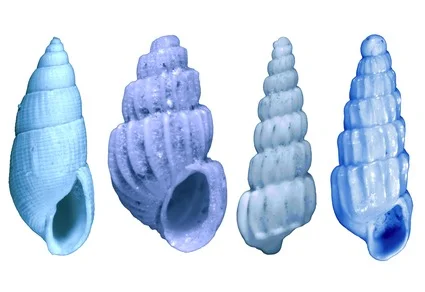
Mathias Harzhauser (Natural History Museum Vienna), Pasquale Micali (Italy), and Bernard M. Landau (Naturalis Biodiversity Center / University of Lisbon) have spent years with the microfauna of Paratethyan limestone exposures, and today they published the results in Zootaxa 5835(1): a 152-page systematic monograph covering the families Cimidae and Pyramidellidae — specifically the subfamilies Cingulininae, Chrysallidinae, and Turbonillinae. 1 Of the 120 species treated, 57 are new to science — about 45% — and six require new genera to house them.
Pyramidellidae and Cimidae are ectoparasitic microgastropods — tiny, high-spired, often translucent shells rarely exceeding 15 mm. In life they drill into invertebrate hosts (polychaetes, bivalves, barnacles) with a needle-like buccal tube, feeding on body fluids. As fossils they preserve beautifully in fine-grained sediments, which is why Harzhauser and colleagues can now enumerate them with such precision. The six new genera are Hesychianola gen. nov., Aglaianilla gen. nov., Asmundanilla gen. nov., Euterpenilla gen. nov., Metisnilla gen. nov., and Parapyrgiscus gen. nov., all placed in Chrysallidinae or Turbonillinae. 1
The 57 new species distribute across 18 genera. Turbonilla (14 new spp.), Chemnitzia (9), and Parthenina (10) account for most; the six new genera contribute a further 11 between them. One outlier is Paraturbonilla pliocaenica sp. nov., described not from the Paratethys but from a Pliocene exposure at Estepona, Spain — a geographic and temporal coda that extends the monograph's range beyond the basin itself.
The authors note something worth sitting with: the very high rate of new species among the treated material is almost certainly not a biological signal. Harzhauser et al. write that the fauna's apparent endemism "is more likely a result of insufficient study of the coeval proto-Mediterranean fauna than a genuine biogeographic pattern." In other words, when comparable material from Italian, Spanish, and North African Miocene deposits gets the same systematic attention, many of these "endemic" Paratethyan species will probably turn out to have Mediterranean counterparts waiting to be recognized. Today's 57 names are not so much a discovery about the past as a first honest accounting of what we still don't know about it.
Living plants and fungi: cliffs, bamboo, and a lichen that eats light
Primula chongqingensis — a cliff primrose from the Wu Ling Mountains
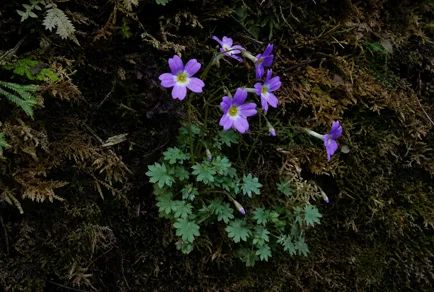
Primula chongqingensis K.Liang & S.R.Yi, sp. nov. (Primulaceae, sect. Ranunculoides) grows on moss-covered rock faces and dripping cliffs beside streams in shaded valley woodland in Qianjiang District, Chongqing, China — the Wu Ling Mountains (武陵山), a range that straddles the border of Hunan, Guizhou, Hubei, and Chongqing and has already yielded a long list of narrow endemics. 2
The describers are Ke (Jungle) Liang (Royal Botanic Gardens Kew / University of Amsterdam) and Si-Rong Yi (Chongqing Three Gorges Medical College), with Hong-Jing Zhang. They place it in sect. Ranunculoides alongside P. ranunculoides — its closest relative and a plant already famous among alpine gardeners for its distinctive buttercup-like divided leaves. P. chongqingensis separates from that species consistently on several characters: smaller leaves with fewer lateral segments, stable long-homostylous flowers (rather than the mixed pin-and-thrum condition of most Primula), pedicels and calyces dotted with short glandular hairs, and a calyx that runs to only about one-third the length of the corolla tube rather than half.
As Liang et al. put it, "these combined vegetative and reproductive differences support its recognition as a distinct species rather than an infraspecific taxon of P. ranunculoides." 2 The paper provides a key to all species in sect. Ranunculoides and a provisional conservation assessment — the species is a narrow endemic, and its cliff-face habitat in a single district places it in the kind of precarious, low-AOO situation that typically triggers a threatened listing.
Primula currently contains around 500 accepted species, concentrated in the temperate mountains of Asia. Sect. Ranunculoides is a small, tight group; P. chongqingensis is only its fourth or fifth described member, depending on how recent revisions are counted.
Periconia bharata — a bamboo mould with forked conidiophores
Periconia bharata Paraparath, Rajeshkumar et al., sp. nov. (Periconiaceae, Pleosporales, Dothideomycetes) was collected from dead culms of Ochlandra travancorica, a reed bamboo endemic to Kerala, India. 3 Sruthi O. Paraparath, K.C. Rajeshkumar, and nine colleagues from the National Fungal Culture Collection of India (NFCCI) and MACS Agharkar Research Institute in Pune characterized it using light microscopy, maximum-likelihood phylogenetics across four loci (LSU, ITS, SSU, tef1-α), and MALDI-TOF mass spectrometry — the last of these generating a peptide fingerprint intended for rapid future identification.
The species is diagnosed by branched setuliform (bristle-like) conidiophores bearing mono- or polyblastic conidiogenous cells — a combination that, in the authors' words, "resembles species of Trichobotrys" but is phylogenetically distinct, sitting as a sister to P. muchuanensis within Periconiaceae with strong bootstrap support. The paper also documents Periconia thailandica as a new record for India, recovered from Bambusa vulgaris. Conservation status: not yet evaluated.
Periconia is a diverse hyphomycete genus with species on decaying grasses, palms, and bamboos across tropical and subtropical Asia. India's Periconia flora was previously undersampled; this paper brings the known count to at least 11 native or naturalized species.
Omphalina microcarpa — a tiny lichen-forming mushroom from subtropical China
The third Phytotaxa 763(2) species is unusual enough to deserve a brief detour into biology. Omphalina microcarpa Duan, Yang, Xia et al., sp. nov. (Omphalinaceae, Agaricales, Basidiomycota) is a basidiolichen: not a conventional fungus, not a conventional lichen, but a mutualism in which a basidiomycete (a mushroom-forming fungus) and a photosynthetic alga form a persistent, morphologically integrated partnership. 4
Most lichens are formed by ascomycetes; basidiolichens are rare. Omphalina is the main basidiolichen genus, and its species — small, pale, fan- to spoon-shaped caps emerging from algal mats on damp soil and mossy rock — are genuinely easy to walk past. O. microcarpa from subtropical southern China is smaller than most: cap diameter 3–12 mm, pleurotoid (attached off-center) to flabelliform, white to pale yellow. The basidiospores are lacrymoid to amygdaliform (teardrop to almond-shaped), 4.5–6 × 4–4.5 µm. A diagnostic feature is the presence of maize yellow to deep yellow ellipsoid algal cells visible at the gill edges and stipe base. ITS rDNA analysis, conducted by Xiangdong Duan and colleagues from Tibet Agricultural and Animal Husbandry University (Nyingchi) and Guangdong Academy of Sciences, shows the new collections form an independent, undescribed lineage within Omphalina, separate from all described species. Conservation status: not yet evaluated.
Four Turkish spiders: caves, cobwebs, and a boot-shaped organ
ZooKeys 1282 carries a paper by Alireza Zamani (University of Turku), Yuri M. Marusik (Russian Academy of Sciences), and Rahşen S. Kaya (Aydın Adnan Menderes University) titled "New data on spiders (Arachnida, Araneae) of Türkiye, with descriptions of four new species." 5 Three of the four are cave-dwellers; all four lack IUCN assessments despite micro-endemic distributions that the authors flag as conservation concerns.
Cybaeus anatolicus Zamani, Marusik & Kaya, 2026 (Cybaeidae) — known from females only, collected on 16 May 2012 at Taşkent-Ermenek plains, Konya Province (36°50′20″N, 32°34′17″E, 1,651 m elevation). Total length 3.95 mm. The species stands out in the family for its transversal copulatory opening, undivided epigynal plate, two pairs of receptacles without distinct copulatory ducts, and a single pair of ventral spines on tibia I — none of these features match any described Cybaeidae. The authors are candid: "The generic placement is tentative and based mainly on similarities in the habitus." The male is unknown. Not Evaluated; this is the only terrestrial (non-cave) species in the paper. 5
Dictyna caligaformis Zamani, Marusik & Kaya, 2026 (Dictynidae) — cave-dwelling, from Great Oylat Cave (Büyük Oylat Mağarası), İnegöl District, Bursa Province (519 m). Both sexes described: male 3.10 mm, female 2.95 mm. The species name — from Latin caliga (military boot) and -formis (shaped like) — refers to the shape of the posterior arm of the conductor in the male palp, which curves like the toe of a hobnailed boot. Females are "almost indistinguishable" from the widespread D. uncinata externally; only dissection of the epigyne reveals consistent differences in the copulatory ducts. Cribellate (silk-combing) spider. Not Evaluated. 5
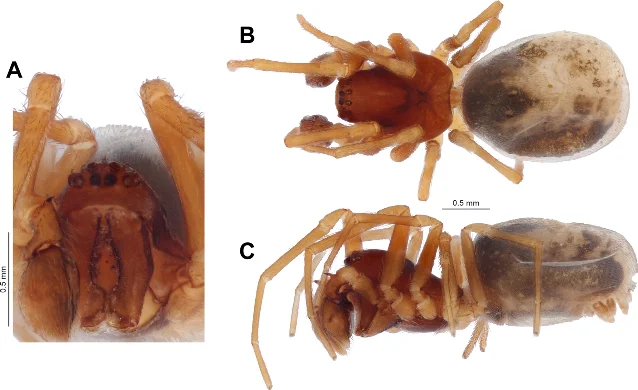
Leptonetela ayvaensis Zamani, Marusik & Kaya, 2026 (Leptonetidae) — cave-dwelling, from Ayvaini Cave, Nilüfer District, Bursa Province (40°07′27″N, 28°42′04″E). Both sexes described, though the female endogyne was lost before photography, leaving that character unrecorded for this species. Male carapace 0.65 mm — a spider you'd need a hand lens to find. The palpal tibia carries five strong prolateral spines, and the bulb bears a conical sclerite with four teeth and two membranous lamellae. It is the third Leptonetela recorded from Türkiye (the genus runs to 124+ species from Greece to China). Closest to L. deltshevi from Ordu Province but consistently smaller (carapace 0.65 vs. 0.78 mm), with a shorter femur and no ventrobasal tibial bulge. Not Evaluated. 5
Leptonetela oylatensis Zamani, Marusik & Kaya, 2026 (Leptonetidae) — cave-dwelling, also from Great Oylat Cave, same cave as Dictyna caligaformis but collected nineteen years earlier, on 22 July 2003 by R. Kaya. Male only (1.85 mm total length); female undiscovered. The femur is 6.3× longer than wide, bearing four long ventral setae; the palpal tibia carries a very strong acute ventro-basal spine — the key separator from the similar L. turcica, where the equivalent spine tip is widened rather than sharp. Six teeth on the terminal sclerite. This is the fourth Leptonetela from Türkiye, and the second species sharing a cave with another taxon in this paper. Not Evaluated. 5
The paper also records Drassodes robatus Roewer, 1961 (Gnaphosidae) from Türkiye for the first time, based on specimens from Nizip District, Gaziantep Province — its westernmost known occurrence, previously restricted to Iran and Afghanistan. And it documents an oddity: an unidentified Drassodes individual from Konya and Isparta provinces with bilaterally asymmetric retrolateral tibial apophyses — the left and right palps of the same spider had differently shaped clasping structures, a condition the authors note is rare in spiders. 5
Two Bornean planthoppers and a new genus — EJT breaks its drought
European Journal of Taxonomy Vol. 1069, published today, describes a new genus of Issidae planthoppers (Hemiptera: Fulgoromorpha) from Borneo, authored by Jérôme Constant (Royal Belgian Institute of Natural Sciences, Brussels). 6 This ends a six-day absence of Issidae novelties from EJT's monitoring window and is the first new planthopper genus described from Borneo in the tribe Sarimini in several years.
The new genus is Pseudomiklukha gen. nov. (Sarimini, Issidae), with the type species Pseudomiklukha auriculata gen. et sp. nov. — entirely new to science, described from Borneo. A second species from the genus, Pseudomiklukha maclayi (Gnezdilov, 2010) gen. et comb. nov., is transferred from the genus Nikomiklukha, which it closely resembles. The paper also describes a third new species in Nikomiklukha itself: Nikomiklukha floreni sp. nov., also from Borneo, possibly named after collector A. Floren (detail pending PDF availability).
Issidae is the planthopper family most prone to morphological confusion: many genera were established on fragmentary specimens, and the limits between Nikomiklukha and its neighbors have been debated since the genus was erected. Constant's work here reshuffles part of that cluster, placing the maclayi lineage in its own genus while adding two new species to the Bornean fauna. Not yet evaluated for conservation. 6
Five New Caledonian nudibranchs named after expedition supporters
The World Register of Marine Species registered five new nudibranch species at 19:12 UTC on June 18, all described by K. Lam and Á. Valdés in Journal of Natural History 60(25–28): 1465–1511 (2026), all from New Caledonia. 7 8 9 10 11
All five belong to Trapania (Goniodorididae, Doridida) — a genus of small, often cryptically colored nudibranchs that feed on entroprocts and are found in tropical and warm-temperate seas worldwide. The five new species are:
| Species | Named after |
|---|---|
| Trapania rollandi Lam & A. Valdés, 2026 | Serge Rolland |
| Trapania rocherensis Lam & A. Valdés, 2026 | Rocher à la Voile, a diving site in Nouméa |
| Trapania bourdili Lam & A. Valdés, 2026 | Luc Bourdil |
| Trapania joannotae Lam & A. Valdés, 2026 | Pascale Joannot |
| Trapania mechineaui Lam & A. Valdés, 2026 | Olivier Mechineau |
All five were collected during the Quinzaine des Nudibranches expeditions — a series of dedicated nudibranch surveys of New Caledonian reefs organized with local dive operators and citizen scientists — and all are named after the collectors and expedition supporters who made the material available. The paper, published in Journal of Natural History, is behind a paywall; morphological descriptions and color photographs are in the original. None have been assessed for IUCN status. Philippe Bouchet (MNHN, Paris) registered all five in WoRMS.
Trapania currently contains around 45 accepted species. New Caledonia sits at the northern edge of the Coral Triangle and has exceptionally high marine endemism across invertebrate groups — five additions to a single nudibranch genus from a single archipelago in one paper is, while not unprecedented, a signal of how incompletely the local fauna has been systematically sampled.
Two Yellow Sea nematodes, registered via WoRMS
Dorylaimopsis zhangi Huang & Li, 2026 and Dorylaimopsis sinica Huang & Li, 2026 (Comesomatidae, Araeolaimida, Chromadorea) were both described from the Yellow Sea, China, in ZooKeys 1277: 227–243, and registered in WoRMS on June 18–19. 12 13 The holotype of D. zhangi (YS3825-3-0-2) and D. sinica (MBMCAS S3600-42-1) were registered by William Johnson da Silva; both are marine, free-living nematodes from Yellow Sea sediments. Full morphological descriptions and differential diagnosis are in the ZooKeys paper.
Dorylaimopsis (Comesomatidae) is a genus of free-living marine nematodes common in soft-bottom sediments across the Indo-Pacific and temperate Atlantic. The genus now includes these two Yellow Sea species, both described by M. Huang and X. Li. Conservation status: not evaluated (nematode species rarely undergo formal threat assessment).
Conservation snapshot: Friday June 19, 2026
| Status | Count | Notes |
|---|---|---|
| Not applicable (fossil) | 57 | All Miocene fossil gastropods |
| Not yet evaluated | 13 | Four Turkish spiders, two Bornean planthoppers, five nudibranchs, two nematodes |
| Narrow endemic / provisional | 1 | Primula chongqingensis — pending formal IUCN assessment |
| Not yet evaluated (fungi) | 2 | Periconia bharata, Omphalina microcarpa |
No IUCN Red List categories have been formally assigned to any of today's 71 species. The Turkish cave spiders are the clearest gap: three of the four new species come from named caves under tourist pressure, their populations confined to single subterranean localities, with no formal assessment pending. The research summary notes that all four lack evaluation "despite noted tourism pressure at type localities." For the living species, Primula chongqingensis carries the most explicit conservation signal — the authors describe it as a narrow endemic and provide a provisional assessment in the paper.
Cover image: fossil Pyramidellidae from the Miocene Central Paratethys Sea — cover image of Zootaxa 5835(1), published by Magnolia Press. 1
参考来源
- 1Zootaxa 5835(1): The Cimidae and Pyramidellidae of the Miocene Central Paratethys Sea
- 2Phytotaxa 763(2): *Primula chongqingensis* (Primulaceae), a new species from Chongqing, China
- 3Phytotaxa 763(2): *Periconia bharata* sp. nov. and *P. thailandica* as a new record from India
- 4Phytotaxa 763(2): *Omphalina microcarpa* (Omphalinaceae, Agaricales), a new basidiolichen fungus from subtropical China
- 5ZooKeys 1282: New spiders of Türkiye, with descriptions of four new species
- 6EJT 1069: A new genus and two new species in the planthopper tribe Sarimini from Borneo
- 7WoRMS: *Trapania rollandi* Lam & A. Valdés, 2026
- 8WoRMS: *Trapania rocherensis* Lam & A. Valdés, 2026
- 9WoRMS: *Trapania bourdili* Lam & A. Valdés, 2026
- 10WoRMS: *Trapania joannotae* Lam & A. Valdés, 2026
- 11WoRMS: *Trapania mechineaui* Lam & A. Valdés, 2026
- 12WoRMS: *Dorylaimopsis zhangi* Huang & Li, 2026
- 13WoRMS: *Dorylaimopsis sinica* Huang & Li, 2026
围绕这条内容继续补充观点或上下文。