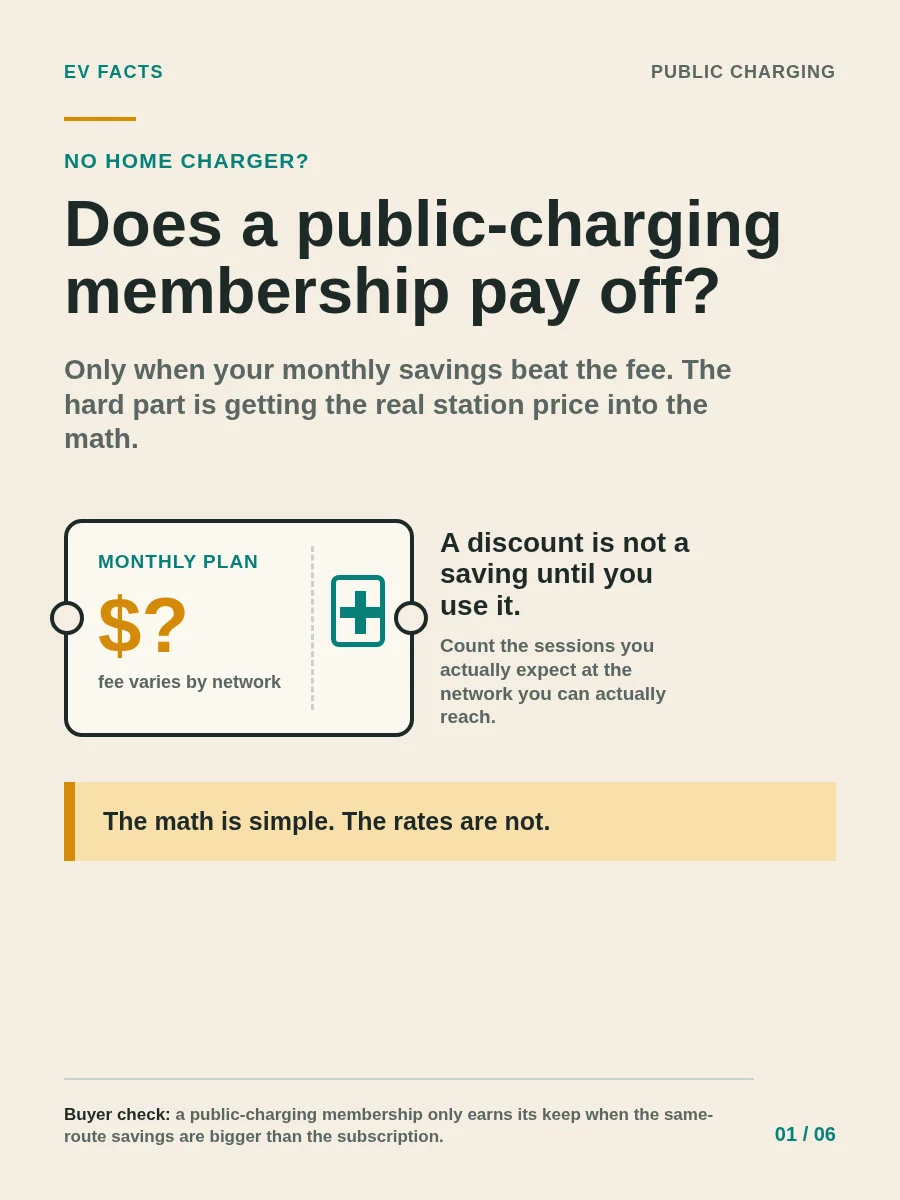
Public charging can make a membership useful, but only when the savings beat the monthly fee on the network you actually use.
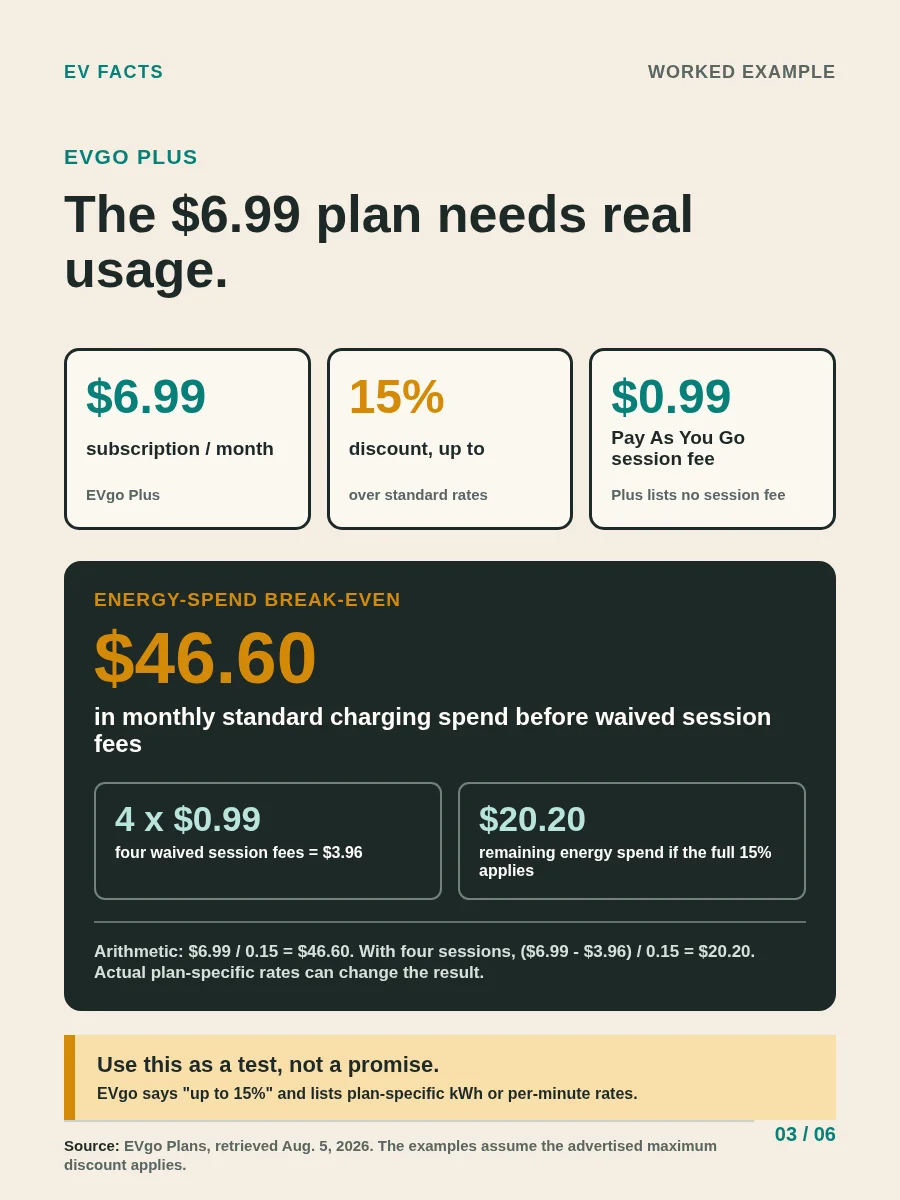
EVgo's current plan page lists Plus at $6.99/month with savings of up to 15%, no session fees, and free reservations. The fee-only break-even is $6.99 / 0.15 = $46.60 in monthly standard charging spend. If you charge four times, the waived $0.99 session fees contribute $3.96, leaving a $20.20 energy-spend threshold if the full discount applies. PlusMax is $12.99/month and up to 30% off, so its fee-only threshold is $43.30. These are arithmetic examples, not local quotes: EVgo says rates are plan-specific and may be per kWh or per minute. 1
Do not use a discount headline as your price. Electrify America says Pass+ saves about 25%, but its public pricing page does not show the exact monthly fee. It says pricing depends on location, plan, energy delivered, and at some stations the time of day; idle fees may apply. Check the app or charger screen before you subscribe. 2
The same stop can also price differently by operator or payment path. ChargePoint says station owners or roaming partners set prices and that its app price is the amount billed on roaming stations. Its driver FAQ also lists service fees for some paid sessions. 34
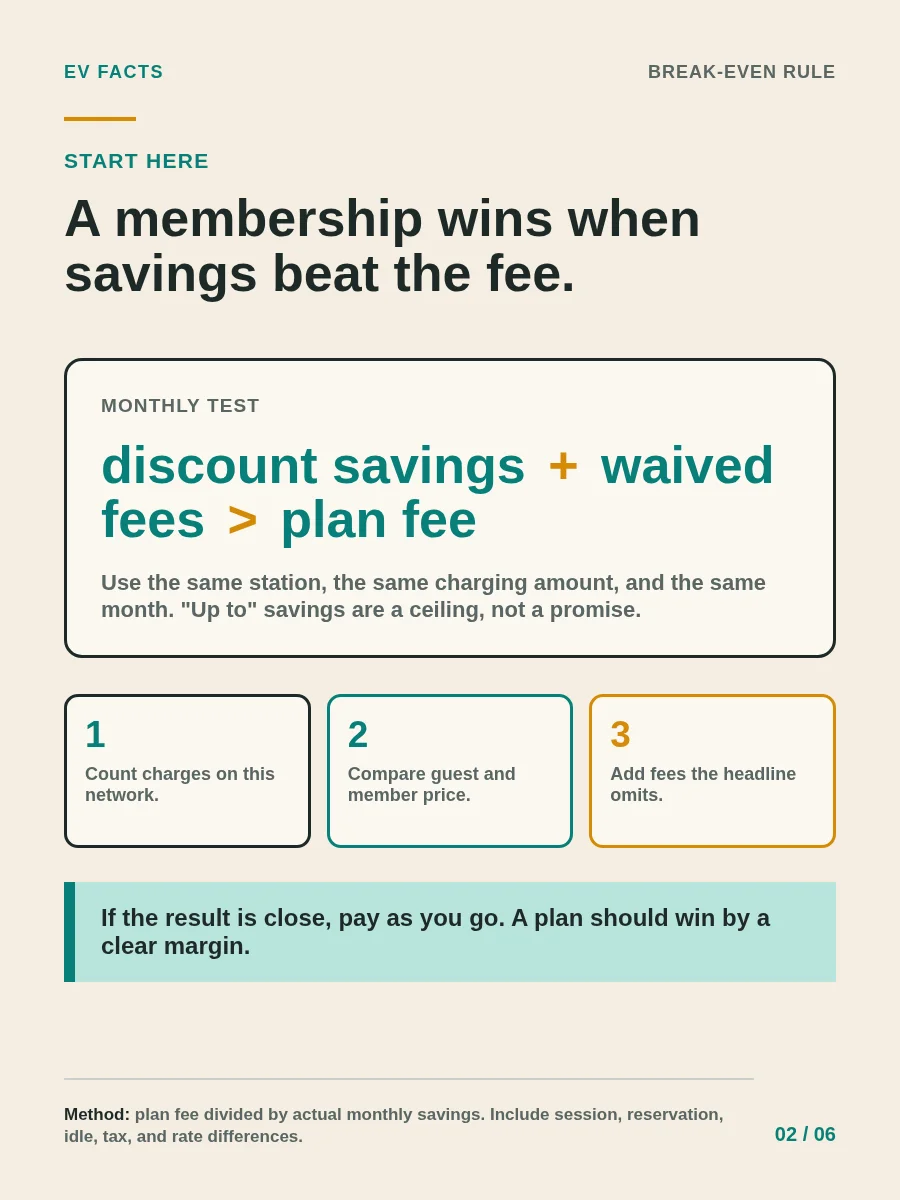
For a public-only routine, count next month's charges at the reachable network, compare guest and member pricing at the same station, and include session, reservation, idle, tax, and rate differences. DOE recommends checking station availability, connector compatibility, and the charger-to-charger route. If the plan does not clearly win, stay pay-as-you-go; if public charging still misses your time or budget, compare a hybrid or PHEV before buying. 5
参考来源
- 1EVgo Planshelpcenter.evgo.com
- 2Pricing and Plans for EV Chargingelectrifyamerica.com
- 3
- 4What is the service fee?chargepoint.com
- 5Electric Vehicles for Consumersafdc.energy.gov
评论
登录后可发表评论。