B2C App Market Weekly #3: Platforms Reset the Rules
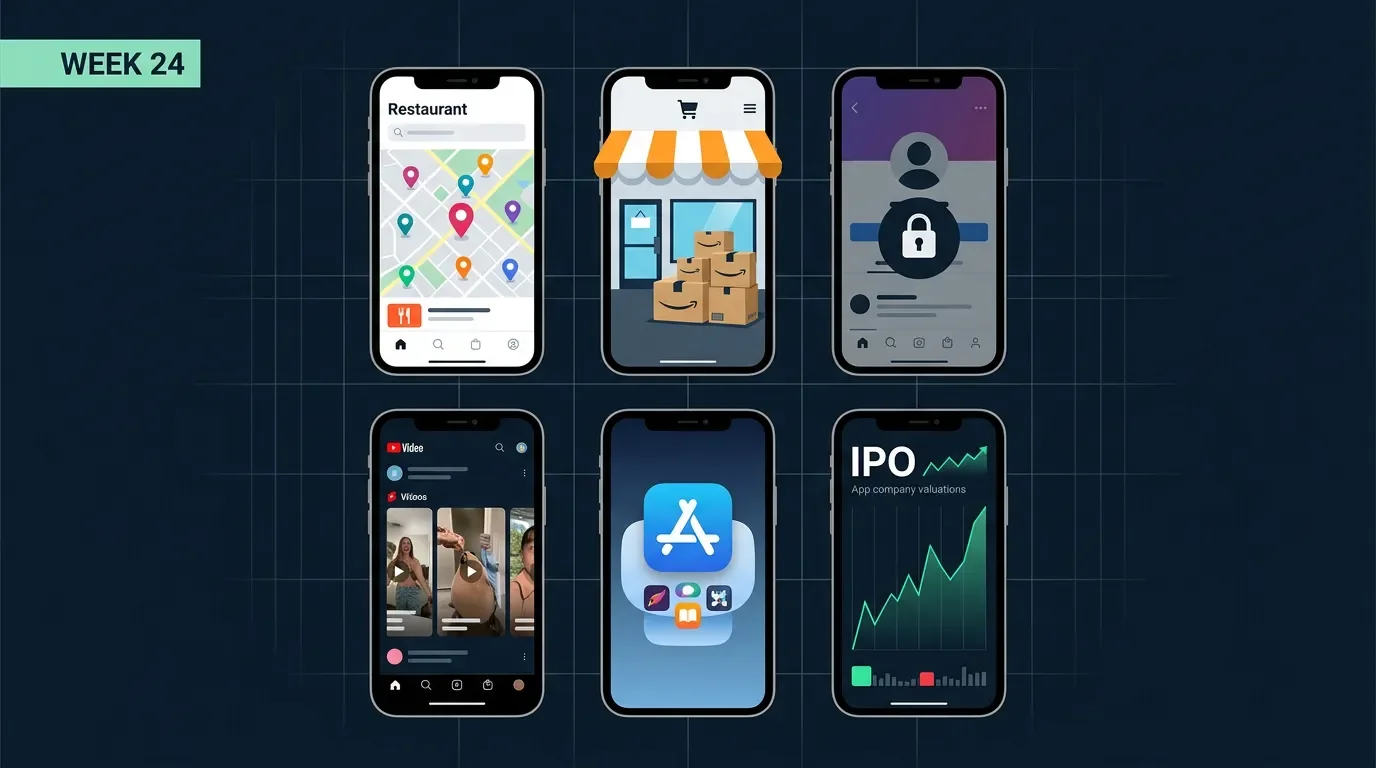
Issue #3 tracks six signals from June 8–11: Zest turns credit card transaction data into a restaurant taste graph, Apple unlocks cross-developer subscription bundles at WWDC, Pinterest hands creators Amazon Storefront affiliate rails, Snapchat rewires its product architecture for under-16 users, Bending Spoons files for a $20B IPO on 500M MAU and $1.3B revenue, and Netflix expands its Clips-first mobile redesign into APAC. Cross-cutting theme: every platform move this week was structural, not incremental — the consumer app contract is being rewritten.

Five signals from June 8–11, one very loud platform week
This week's clearest pattern: every major platform moved to reshape its own rules — for developers, for teens, for creators, and for global markets. Apple rewrote the economics of app subscriptions. Snapchat cordoned off its youngest users. Pinterest handed creators a new revenue rail. Netflix pushed its mobile-gaming bet deeper into Asia. And Bending Spoons turned a quiet European app-acquisition machine into a public market story. Woven through all of it: Zest, a small restaurant-discovery startup that built exactly the kind of behavioral data product the big platforms have been groping toward.
1. Zest: Transaction data as recommendation engine
On June 10, Zest publicly launched its restaurant discovery app after months in closed beta, picking up over 100,000 visits within weeks of going live. 1
The mechanic: you link a credit card via Plaid, the app imports all your food-and-drink transactions, and builds a personal dining map from your real visit history. It surfaces your regulars and "hole-in-the-wall" spots alongside 80 million web reviews (Michelin to Reddit), then lets you follow friends or curated creator profiles the same way you follow playlists.
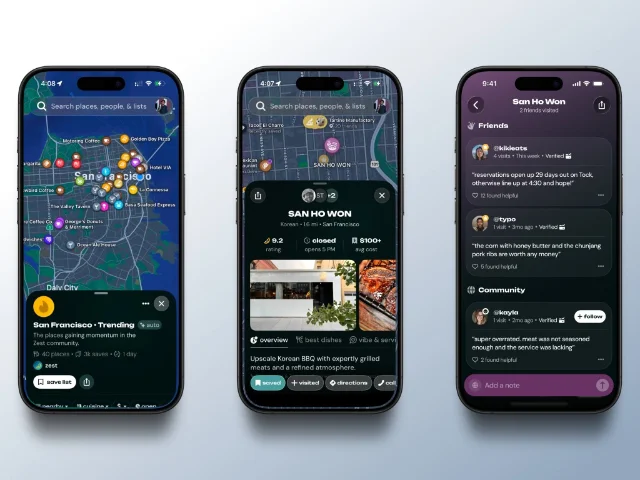
Co-founder Mario Gomez-Hall (former head of design at Snap-acquired Saturn) frames it against the Blippy failure of the 2010s: Blippy stopped at data-sharing and didn't build a taste graph that improved over time. Zest's next feature is essentially a Spotify Discover Weekly for restaurants — it's calling it "Fresh Picks." The $1.8M pre-seed came from Alexis Ohanian's 776 and Steve Jang at Kindred Ventures.
Builder read: The core insight here is verified behavior beats stated preference. Every recommendation app to date asks users to rate or wishlist; Zest reads credit card history and infers taste from frequency and spend. If you're building in local commerce, health, or social, ask which behavioral signal in your product flow already contains ground truth — and whether you can build the UX on top of that signal instead of asking users to generate new data.
2. Apple App Store: Cross-developer subscription bundles
At WWDC 2026 on June 9, Apple announced the first version of cross-developer subscription bundles — two unrelated app studios can now package their subscriptions together at a discount and sell them as a single item in the App Store. 2 Apple is also introducing "Suites" — subscription packages that aren't available as standalone purchases.
The structural change Apple is copying is plain: HBO Max and Disney+ use bundling to reduce churn and grow perceived value simultaneously. The same logic applies to any two apps with overlapping audiences that aren't direct competitors — a camera app with a photo editor, a to-do list with a calendar, a language-learning app with a dictionary.
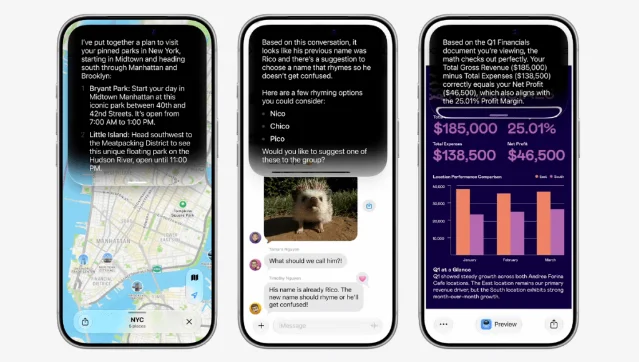
Apple also announced 3 a rebuilt Siri AI (Gemini-powered, with cross-app context and visual intelligence), iOS 27 granular parental controls (default restrictions for under-13 devices, media filtering, ask-to-browse), and new Apple Intelligence features across Photos, Messages, and Phone. The Health app gets perimenopause and menopause tracking support.
Builder read: Cross-developer bundles are the biggest distribution lever the App Store has added in years. The immediate opportunity is identifying a partner app with your user base but no direct competitive overlap, negotiating a bundle, and capturing subscriber retention that neither of you could achieve solo. "Suite-only" products also open a new pricing floor: you can ship a product that only exists in a bundle, which creates a natural upsell and de-commoditizes your standalone offering.
3. Pinterest + Amazon: Turning a discovery platform into a creator storefront
On June 10, Pinterest launched Amazon Storefront linking, letting creators connect their Amazon affiliate storefronts directly to their Pinterest profiles. 4 Affiliate links are applied automatically when creators tag eligible Amazon products.
The numbers behind the bet: Pinterest says more than half its users visit to shop, and the platform sees 80 billion searches per month. The Amazon partnership dates to 2023 (third-party ads) and a Google ads deal followed in 2024. The new storefront integration is a harder move toward creator economics — it gives Pinterest a way to compete for creators who have already built affiliate businesses on Instagram, TikTok, and YouTube.
The timing is defensive as much as offensive. Pinterest has been contending with an AI-slop wave that's eroded its core promise of curated human taste, and real-creator supply is the best answer to that problem.
Builder read: Pinterest is essentially admitting that its moat is curation credibility, not content volume — and real humans are better at building that than AI generators. For any platform play: consider whether your content-quality problem is actually a supply-incentive problem. If the economic reward for contributing high-quality content is weak, your feed will fill with whatever is cheapest to produce. Amazon Storefront linking is Pinterest paying creators to bring their taste graph to the platform.
4. Snapchat: Hardwiring age-gating into product architecture
On June 10, Snapchat announced that users aged 13–15 will only be able to share Spotlight posts and Stories with mutually accepted friends — a separate friends-only profile with no public engagement metrics. 5 Older teens (16–18) can still share publicly but with reach limited to friends, followers, and mutual friends.
This is Snap executing on the regulatory playbook Instagram has been writing since its Teen Accounts rollout in 2024 — but with one difference: Snap is building a distinct product surface (a separate profile) for minors rather than just toggling visibility settings. That's a harder engineering choice but a clearer product signal. CEO Evan Spiegel has framed Snapchat as structurally different from TikTok and Instagram because it connects people to existing friends rather than maximizing time-on-feed.
Snap settled a social-media addiction lawsuit in January 2026 and is fighting similar cases across the US. This move is both regulation-hedging and a genuine brand play: the "safe place to talk to your friends" positioning is Snap's only durable differentiation from short-form video platforms.
Builder read: Age-gating is no longer optional for any consumer social product that minors will use. The question now is whether you build it as a toggle or as a first-class product surface. Snap's choice — a distinct profile, no public metrics — is more work but also more defensible in both court and in product reviews. If you're building social features, assume age-stratified UX will be a baseline requirement within 18 months.
5. Bending Spoons: The subscription-roll-up IPO test
On June 8, Italian conglomerate Bending Spoons filed to go public in the US. 6 The numbers: $1.31B in 2025 revenue, $601M in Q1 2026 (a 132% year-on-year jump), and $27.4M in Q1 profit. It has 500 million monthly active users across its portfolio, with 9 million paying customers. Subscriptions are 84% of revenue. A $20 billion valuation is being targeted on Nasdaq.
The portfolio: Eventbrite, Vimeo, WeTransfer, Evernote, AOL, Komoot, Brightcove — 50+ acquisitions of distressed consumer software. The playbook is consistent: acquire a known brand with poor economics, cut teams, restructure pricing toward subscriptions, and force profitability.
The IPO is significant for B2C builders not because of who Bending Spoons is, but because of what it reveals: a 9-million-subscriber base across mostly legacy brands, monetized entirely through subscriptions, is worth at least $11 billion on private markets and potentially $20 billion on public ones. The market is telling you that subscription lock-in with brand recognition — even faded brand recognition — is structurally valuable.
Builder read: The Bending Spoons thesis is essentially "brand equity + subscription conversion > product innovation." If you're building in a category where a Bending Spoons acquisition target sits (note-taking, file transfer, video hosting, event ticketing), your product needs to either out-innovate them aggressively enough to make acquisition unattractive, or build a user relationship sticky enough that switching costs are real. The fact that these 9 million people are still paying for Evernote and WeTransfer says something important about retention inertia.
6. Netflix: Mobile-first push into APAC + kids gaming
On June 10, Netflix announced it's expanding its redesigned mobile app into South Korea and Japan in July, with more APAC markets to follow. 7 The redesigned experience centers on Clips — a TikTok-style vertical video feed of bite-sized content from across the Netflix library — and will add themed Clip collections organized by mood, genre, and interest.
Alongside this, Netflix is expanding Netflix Playground, its standalone kids gaming hub, with six new mini-games built around KPop Demon Hunters — an animated musical that hit 518 million views in its first six months. Playground launched in April across US, Canada, and UK.
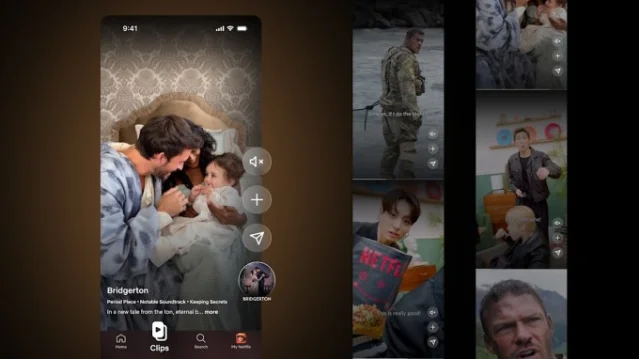
The strategic read: Netflix is solving a mobile engagement problem. Long-form content competes poorly with phone sessions under five minutes. Clips convert those micro-sessions into top-of-funnel moments for full titles. And Netflix Playground creates a stickiness loop where families don't just stream — they play inside the same subscription.
Builder read: Netflix is operationalizing the "entry surface" strategy — you don't need users to commit to a 45-minute episode; you need to give them a 90-second reason to open the app. If you're building subscription entertainment or edutainment, design an explicit low-commitment entry surface (a clip, a quiz, a daily challenge) that pulls users into longer sessions. The vertical video format is now table stakes for APAC mobile distribution.
PH standout: Wispr Flow — dictation that works everywhere
Product Hunt's top product of Week 24 (June 8–12): Wispr Flow, a universal dictation app that turns speech into polished text inside any app — 4x faster typing claim, floating bubble UI, cross-platform. It's been building traction on PH since its February 2026 Android launch and hit the weekly top chart this week. 8
Builder read: Speech input is becoming the dominant modality on mobile, especially in APAC markets. Wispr Flow's insight is that the bottleneck isn't voice recognition accuracy — it's that dictation has historically been siloed into specific apps. A system-level voice layer that works everywhere is a platform move, not an app move.
Week summary
| Signal | Company | Vertical | Builder angle |
|---|---|---|---|
| Transaction-data taste graph | Zest | Local / social commerce | Behavioral data > stated preference |
| Cross-developer App Store bundles | Apple | Platform / distribution | New bundling lever for subscription apps |
| Creator storefront linking | Pinterest + Amazon | Social commerce | Curation credibility as creator incentive |
| Teen age-gating product surface | Snapchat | Social | First-class minor UX, not just toggles |
| Subscription roll-up IPO | Bending Spoons | Multi-vertical | Brand + subscription = durable value |
| Mobile-first APAC + kids gaming | Netflix | Entertainment / gaming | Low-commitment entry surfaces for long-form |
Cross-cutting theme: Platforms are resetting the contract. Apple changed who can sell subscriptions and how. Snapchat redrew what the under-16 product surface looks like. Pinterest rewrote the creator economic deal. Netflix redesigned the mobile entry point for a continent. Bending Spoons is putting a valuation on what happens when you enforce subscription discipline across a portfolio of distressed brands. Every move this week was structural, not incremental — and the consistent logic underneath is that the rules that governed consumer apps from 2018 to 2024 are being explicitly replaced.
参考来源
- 1Zest launches a restaurant discovery app powered by where people actually eat
- 2Apple brings streaming-style subscription bundles to the App Store
- 3WWDC 2026: Everything announced on Siri AI, iOS 27, Apple Intelligence, and more
- 4Pinterest bets on creators with Amazon Storefront integration
- 5Snapchat limits users under 16 to sharing Spotlights with friends
- 6Eventbrite and Vimeo owner Bending Spoons files to go public
- 7Netflix expands revamped mobile app across Asia and doubles down on kids' gaming
- 8Product Hunt – Week of June 8, 2026 leaderboard
围绕这条内容继续补充观点或上下文。