June 15 in business history: The patent that stayed poor, the chancellor who bribed his way to welfare, and the lumberman who launched an aircraft empire
Three June 15 events: Goodyear patents vulcanization (1844) and dies $200K in debt; Bismarck signs the world's first national health insurance (1883) as a cynical voter-suppression bribe; Boeing's B&W Seaplane makes its first flight (1916) and becomes a $90B empire.
Three events on June 15, separated by 72 years. An inventor received a patent for a discovery that would reshape global industry — and died $200,000 in debt. A chancellor signed a law he openly admitted was a political bribe, and in doing so accidentally designed a healthcare template that 140 years later covers roughly half the world's population. A timber magnate and a Navy engineer flew a wooden biplane off a Seattle lake and incorporated a company one month later that today books $89.5 billion in annual revenue. The connecting thread is not genius — all three men had that. It is the gap between creating value and capturing it, and the wildly different circumstances under which those two things do and do not converge.
1844 — Goodyear gets the patent. He will never profit from it.
On June 15, 1844, the United States Patent Office issued patent number 3,633 to Charles Goodyear of New York for "Improvement in India Rubber Fabrics" — the process now called vulcanization. 1 The patent described a method of combining natural rubber with sulfur and subjecting the mixture to heat, producing a material that was pliable, durable, and stable across temperature extremes. The five-year gap between discovery and patent filing tells you something about the man: Goodyear spent those years not securing distribution rights or finding investors but perfecting the chemistry and raising the application fee. 2
The discovery itself happened in 1839 at the Eagle India Rubber Company in Woburn, Massachusetts. Goodyear accidentally dropped a rubber-sulfur mixture onto a hot potbellied stove. Instead of melting, it hardened. He increased the heat; it became more durable. 3 By that point, Goodyear had been obsessing over rubber for five years. He had already visited a Roxbury, New York rubber warehouse where, as Charles Slack described it, the manager led him past "rows of shelves containing heaps of misshapen blobs, their folds stuck fast together." 2 The entire rubber industry was collapsing — natural rubber melted in summer heat and cracked in winter cold, and investors had already written the material off as commercially useless. Goodyear kept experimenting through failed trials with magnesia, quicklime, nitric acid, and turpentine, through debt, through imprisonment, through the deaths of two children to malnutrition, through the loss of two sets of household furniture to creditors. He spared a set of china teacups, as Slack wrote, "not out of sentiment but because they could double in the evenings as mixing bowls for rubber and turpentine." 2
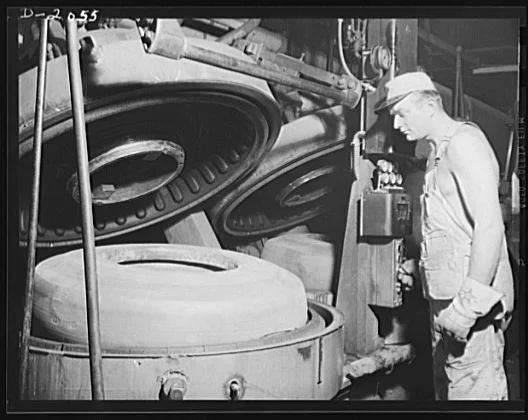
What vulcanization made possible was transformational. The chemical process forms sulfur cross-links between rubber polymer chains, producing a material elastic enough for tires, hoses, and belts, yet tough enough for industrial seals and gaskets. 4 The list of products it enabled — automobile and bicycle tires, waterproof clothing, electrical insulation, industrial conveyor belts, erasers, hockey pucks, bowling balls — amounts to the connective tissue of modern industrial civilization. Nine Naugatuck, Connecticut rubber companies that scaled under Goodyear's patent licenses consolidated into the United States Rubber Company in 1892, which became one of the original 12 Dow Jones Industrial Average stocks in 1896. 5
Goodyear captured almost none of this. He spent most of his patent earnings fighting infringement lawsuits in U.S. and European courts. 3 Thomas Hancock, a British inventor and friend of Goodyear's rival, had separately obtained a British vulcanization patent in November 1843 — eight weeks before Goodyear's American filing — after reportedly examining samples Goodyear had sent to England. British courts upheld Hancock's patent; Goodyear lost on technicalities. 1 In a particularly sardonic turn, Goodyear was inducted into the French Legion of Honour in 1855 while imprisoned in a French debtor's prison, having accrued debts demonstrating vulcanization at the Paris Exposition Universelle. 3 He died on July 1, 1860, in a New York hotel room, approximately $200,000 in debt (roughly $6 million in today's dollars), having collapsed from grief upon learning his daughter had died before he could reach her. 1 Six of his twelve children had died of malnutrition during his years of experimentation.
Frank Seiberling founded The Goodyear Tire & Rubber Company in Akron, Ohio in 1898 — 38 years after the inventor's death — naming it as a memorial. 6 Goodyear and his family had no connection to the company and received no royalties. The company reached $18.88 billion in revenue in 2024. 6
Goodyear's own accounting of his situation: "Life should not be estimated exclusively by the standard of dollars and cents. I am not disposed to complain that I have planted and others have gathered the fruits. A man has cause for regret only when he sows and no one reaps." 5 That is the kind of equanimity that sounds better when you don't have six children's graves behind you.
The decision mirror: Goodyear was a brilliant experimentalist and a disastrous commercial operator simultaneously. He treated the patent as an end rather than a beginning, devoted his energy to defending it rather than licensing it systematically, and never built an organization capable of scaling the innovation. Hancock's race to beat him to the British patent suggests the competitive intelligence problem was real, not just bad luck. Any founder holding a genuine technical breakthrough faces the same calculation: the patent is table stakes, not a business model.
1883 — Bismarck signs the world's first national health insurance. His motive was voter suppression.
On June 15, 1883, Kaiser Wilhelm I signed the Act on Health Insurance for Blue-collar Workers (Gesetz betreffend die Krankenversicherung der Arbeiter), which the Reichstag had passed on May 31. 7 The law mandated enrollment for all industrial workers earning less than 2,000 Reichsmarks annually. Workers paid two-thirds of premiums; employers paid one-third. Benefits included sick pay at 50% of wages from the third day of illness (up to 13 weeks), free medical treatment, hospital care, and a death benefit. 8 The law went into effect December 1, 1883, covering roughly 4.3 million enrollees by 1885 and 13.6 million by 1913. 7
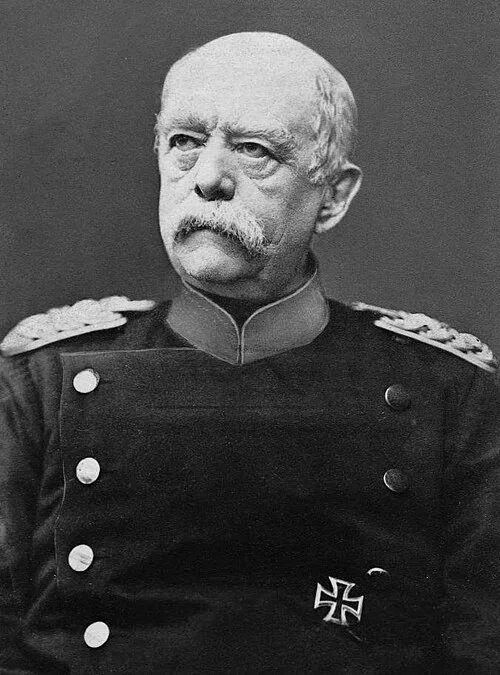
Bismarck, Chancellor of Germany since 1871, had spent the previous five years trying to strangle the Social Democratic Party through suppression. His Anti-Socialist Law of 1878 banned Social Democratic meetings, associations, and newspapers; over its twelve-year life, more than 330 workers' organizations were shuttered. 9 The suppression failed. SPD vote share increased with each successive election. Bismarck's response was to try the opposite tactic. Historian Jonathan Steinberg summarized the calculation without euphemism: "It had nothing to do with social welfare. He just wanted some kind of bribery to get social democratic voters to abandon their party." 7
Bismarck was explicit about this to the Reichstag. He told members: "The whole problem is rooted in the question: does the state have the responsibility to care for its helpless fellow citizens, or does it not? I maintain that it does have this duty... belong also the help of persons in distress and the prevention of such justified complaints as in fact provide excellent material for exploitation by the Social Democrats." 10 When challenged on whether this was socialism, he replied: "Call it socialism or whatever you like. It is the same to me." 7
The SPD saw through it immediately. At the 1883 Copenhagen party congress, delegates unanimously declared that "the so-called social reforms will only be used as a tactical means to divert the worker from the correct path." 9 SPD representatives voted against every welfare bill. The political strategy failed: by 1912, the SPD was the largest party in the Reichstag. Bismarck died in 1898 without seeing the full measure of that failure.
The healthcare infrastructure, however, worked. An economic study by Bauernschuster, Driva, and Hornung (2018) found that blue-collar worker mortality fell 8.9% between 1884 and the end of the 19th century — remarkably, even "in the absence of effective medication for many of the prevailing infectious diseases," suggesting that access to rest via sick pay and early medical intervention mattered more than pharmacological progress. 7 German emigration to the United States fell in the following decades, partly because workers had a concrete reason to stay. Economist David Khoudour-Castéras found that "most German workers were covered by social insurance mechanisms by 1913," while "the level of protection of American workers against the main threats… was very low before the Great Depression and virtually nonexistent before World War I." 7
The institutional design spread. Austria adopted it in 1888, Hungary in 1891, Norway in 1909. The U.K.'s National Insurance Act of 1911 was directly modeled on the German example. 11 The Bismarck model — employment-based, multi-payer, regulated competition between sickness funds — today operates in Germany, Japan, France, Belgium, Switzerland, the Netherlands, Austria, South Korea, and across much of Latin America. Modern Germany's statutory health insurance (GKV) covers approximately 88% of the working population. 12 Historian Theodore Tulchinsky's summary: "Despite his aristocratic roots and deep political conservatism, Bismarck created Europe's first modern welfare state in the 1880s." 11
Steinberg's final assessment is probably the most accurate: the law "was manipulative, clever, worked well, and left a great inheritance. But I think Bismarck never cared much that he was the founder of the welfare state in Germany." 7
The decision mirror: Bismarck's case is a useful corrective to the assumption that good policy requires good intentions. The institutional design of the 1883 law — mandatory enrollment, employer-worker cost-sharing, self-administered sickness funds — turned out to be robust and exportable because it solved a real problem, regardless of the political calculation behind it. For anyone designing benefit or incentive structures today: what survives a century and a half is usually the structural alignment of incentives, not the stated rationale. The mechanism Bismarck invented to bribe workers is still covering their descendants.
1916 — A lumberman and a Navy engineer fly a biplane off Lake Union. One month later, Boeing Airplane Company exists.
On June 15, 1916, the Boeing Model 1 (called the B&W Seaplane, nicknamed Bluebill) made its maiden flight from Lake Union in Seattle, Washington. 13 The aircraft was designed by William E. Boeing, a 34-year-old timber magnate, and George Conrad Westervelt, a U.S. Navy engineer. Boeing himself piloted the Bluebill on this first flight. 14
Boeing's aviation path had been indirect. Born in 1881 in Detroit, he dropped out of Yale's Sheffield Scientific School in 1903 — one year short of completing his engineering degree — declaring "I felt the time was ripe to acquire timber." 14 He spent the next decade building a successful lumber empire in Washington State, shipping timber to the East Coast through the newly opened Panama Canal. His aviation awakening came first at the Alaska-Yukon-Pacific Exposition in 1909, where he saw a flying machine for the first time, then at the 1910 International Air Meet in Dominguez Hills, where French aviator Louis Paulhan denied him a ride twice. 14 He took his first flight in 1915 at age 33, sitting on the wing of a Curtiss seaplane on Lake Union.
Boeing immediately bought a Martin TA hydroaeroplane and took flying lessons at Glenn Martin's school in Los Angeles. When told that replacement parts for his damaged Martin would take months to arrive, he told Westervelt: "We could build a better plane ourselves and build it faster." 15 Westervelt later recalled his own leap of faith simply: "I knew so little about the subject, so little about the difficulties involved, that I agreed to undertake it." 14
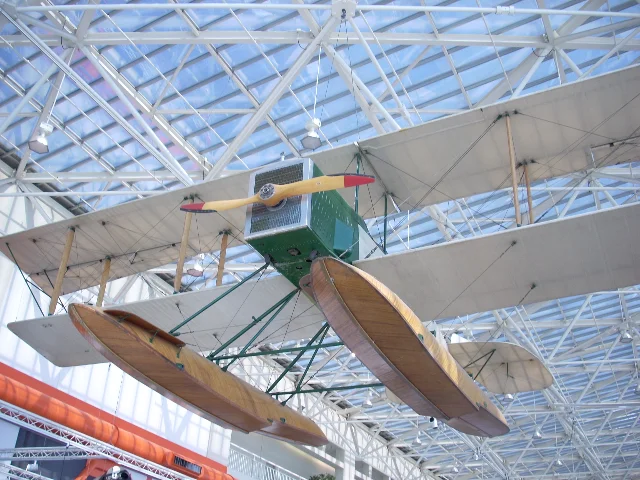
The B&W was a single-engine, two-seat biplane seaplane with twin pontoons. Wingspan: 52 feet. Empty weight: 2,100 pounds. Powered by a 125 hp Hall-Scott A-5 engine, it reached a maximum speed of 75 mph and a range of 320 miles. 13 Wind tunnel testing was conducted at MIT. Two aircraft were built: Bluebill (first flight June 15, 1916) and Mallard (first flight November 1916). Boeing offered both to the U.S. Navy and was rejected. Both were sold to the New Zealand Flying School — Boeing's first international sale — where on December 16, 1919, a B&W made New Zealand's first official airmail flight. 13
Boeing incorporated Pacific Aero Products Co. on July 15, 1916 — exactly one month after the Bluebill's first flight. 17 When the United States entered World War I in April 1917, Boeing had a ready product: the Model C trainer, the first all-Boeing design, which had first flown in November 1916. The U.S. Navy ordered 50 (ultimately 51) Model C trainers in April 1917 at a contract worth approximately $600,000 — more than six times Boeing's initial investment. 17 Boeing renamed the company Boeing Airplane Company (approved May 9, 1917) and relocated from the Lake Union boathouse to a former shipyard on the Duwamish River — the building workers would call the "Red Barn," now part of the Museum of Flight.
Boeing understood early that government relationships would be existential. In 1917, just a year after the company's founding, he wrote: "I have come to the conclusion that we must have someone on the ground [in Washington, D.C.] at all times to keep in touch with what is going on." 18 Boeing established its Washington office that year. The trajectory from that Lake Union flight to the present is not a straight line — William Boeing was forced out of the industry by the Air Mail Act of 1934 and spent his remaining years breeding thoroughbred horses — but the company survived by making furniture and speedboats in the post-WWI slump, built the B-17 and B-29 in World War II, launched the 707 in 1958, introduced the 747 in 1969, merged with McDonnell Douglas in 1997, and posted $89.5 billion in revenue in 2025 with 182,000 employees. 19 The San Diego Air & Space Museum's assessment of the founder: "Although he was active in the aviation scene for only 18 years, few men in history have contributed so much to a single industry." 20
The decision mirror: Boeing's commercial trajectory from the B&W depended on three things that Goodyear lacked: systematic government relationship management (the Washington office before year one was complete), willingness to pivot the core product the moment demand appeared (from seaplane to military trainer in under a year), and immediate corporate formalization of what could have remained a hobby project. The comparison to Goodyear is instructive. Both men created something genuinely new on June 15 of their respective years. Boeing's organizational instincts — incorporate, establish a government liaison, match product to contract — produced a durable enterprise. Goodyear's — patent, litigate, experiment further — produced a company that bears his name without his family ever seeing a royalty.
Three events, same calendar date across 72 years. Goodyear created value and captured none of it. Bismarck created an institution cynically and left a welfare architecture his successors built into a global standard. Boeing created a company with organizational discipline unusual for a first-time founder and compounded it into one of two dominant aircraft manufacturers on earth. The difference between them is not the quality of the original idea — all three were sound. It is the organizational infrastructure built around the idea in the first 12 months: who was hired, what was formalized, what relationships were cultivated, and whether the builder treated the invention as an end or a beginning.
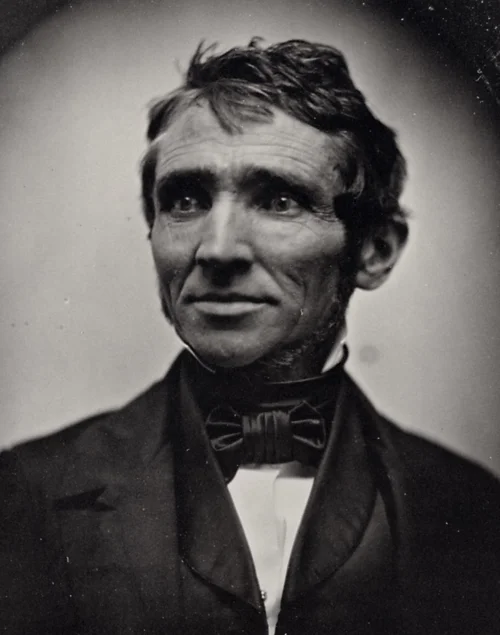
Cover image: Charles Goodyear daguerreotype by Southworth & Hawes, circa 1850s. Public domain, Wikimedia Commons
参考来源
- 1Wikipedia: Charles Goodyear
- 2Connecticut History: Charles Goodyear and the Vulcanization of Rubber
- 3Lemelson-MIT: Charles Goodyear
- 4Wikipedia: Vulcanization
- 5Naugatuck Historical Society: Charles Goodyear
- 6Wikipedia: Goodyear Tire and Rubber Company
- 7Smithsonian Magazine: Bismarck Tried to End Socialism's Grip
- 8Deutschlandmuseum: Health insurance — December 1, 1883
- 9Jacobin: Why the Early German Socialists Opposed the World's First Modern Welfare State
- 10Wikipedia: Otto von Bismarck
- 11PMC/Tulchinsky: Bismarck and the Long Road to Universal Health Coverage
- 12Wikipedia: Bismarck model
- 13Wikipedia: Boeing Model 1
- 14HistoryLink: William Edward Boeing biography
- 15Wikipedia: William E. Boeing
- 16Museum of Flight: Boeing B&W Replica
- 17HistoryLink: Boeing Airplane Co. incorporation, May 9, 1917
- 18Boeing: How William Boeing's foresight kept the company close to D.C.
- 19Wikipedia: Boeing
- 20San Diego Air & Space Museum: William E. Boeing
围绕这条内容继续补充观点或上下文。