1/4

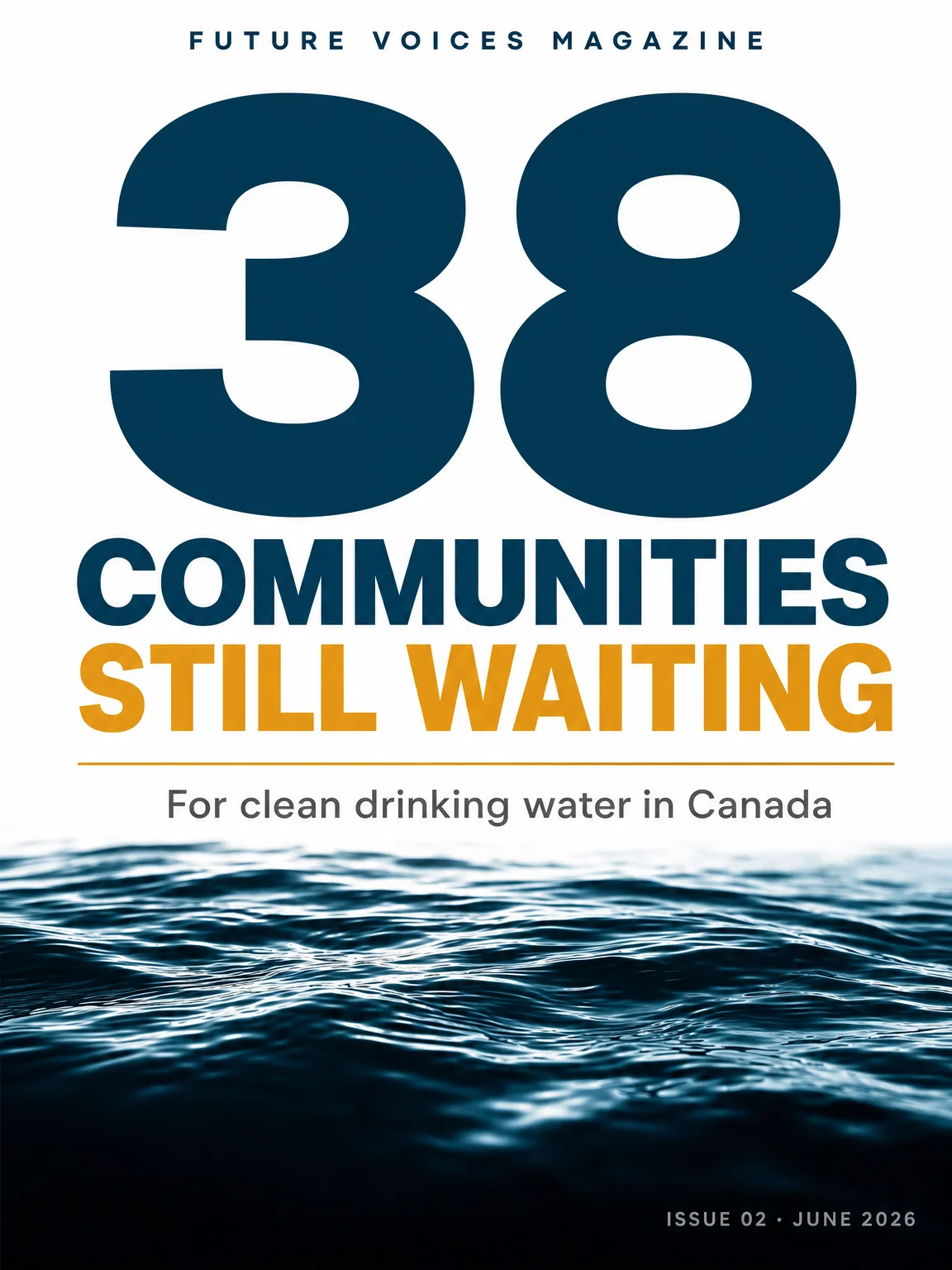
38 Communities. Still Waiting.
2026/6/15 · 8:08
图集
She was 8 years old the first time she saw it: mothers in a First Nations community washing their babies with bottled water. No tap. No safe water. Just the daily calculation of a crisis that Canada has never properly fixed.
That moment — witnessed at Serpent River First Nation in 2012 — set Autumn Peltier on a path that brought her to the UN General Assembly, to the Chief Water Commissioner role for the Anishinabek Nation, and to a decade of public testimony that still has not produced the outcome she's demanding.
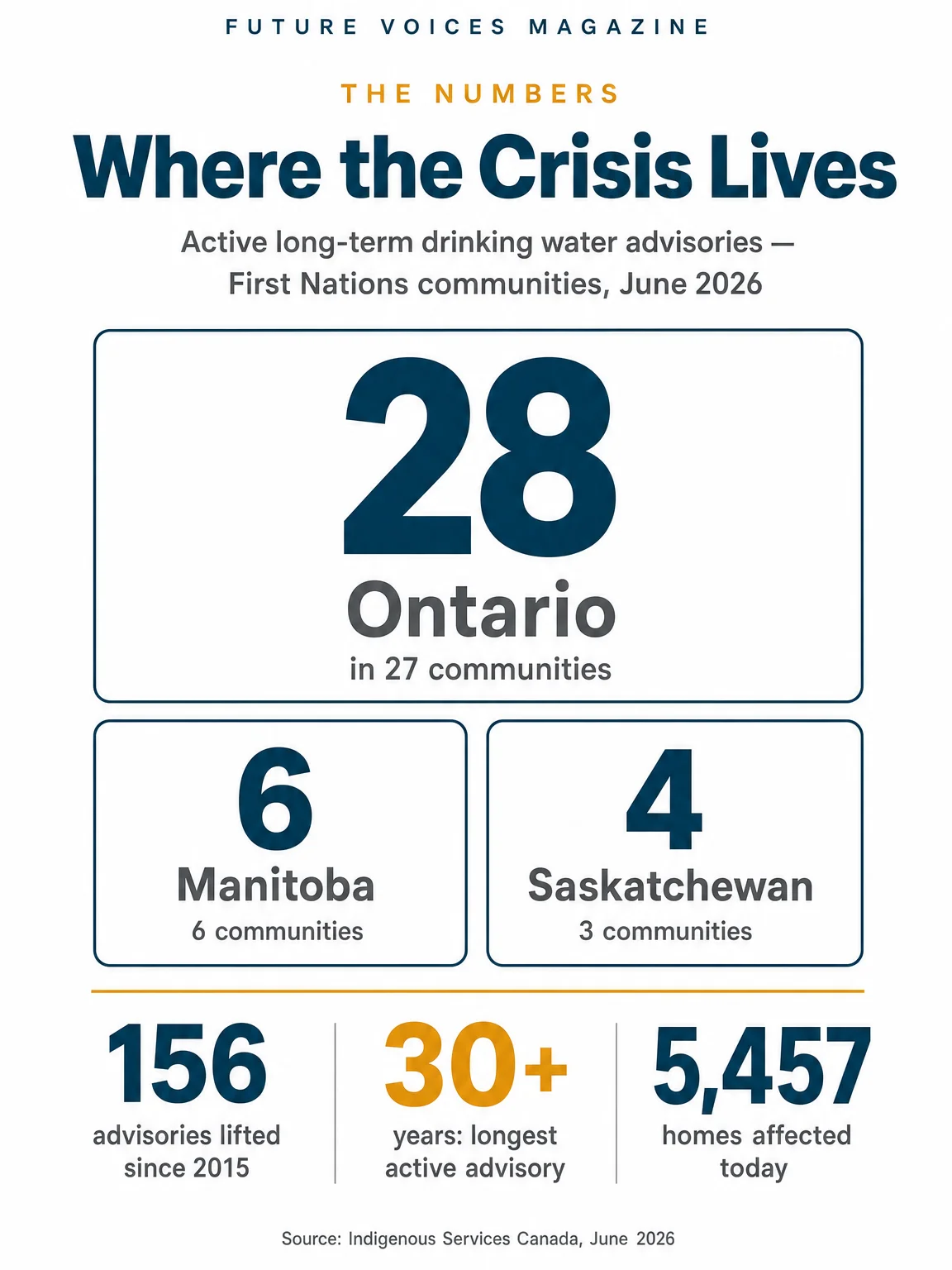
As of June 2026, 38 long-term drinking water advisories remain active in First Nations communities across Canada. Ontario carries 28 of them. Some have been in place since before Autumn Peltier was born.
The numbers behind the crisis
The Canadian government has lifted 156 long-term advisories since 2015 — real progress that took infrastructure investment and political will. But the trajectory has stalled. In 2025, 11 new advisories were added while only 3 were lifted. As of June 4, 2026:
- 38 advisories remain active in 36 communities
- 5,457 homes and 334 community buildings are affected
- 28 of those advisories are in Ontario — Autumn Peltier's home province
- 47% of affected systems already have infrastructure capable of producing clean water; the barrier is operational, not physical
"Some for more than 20 years"
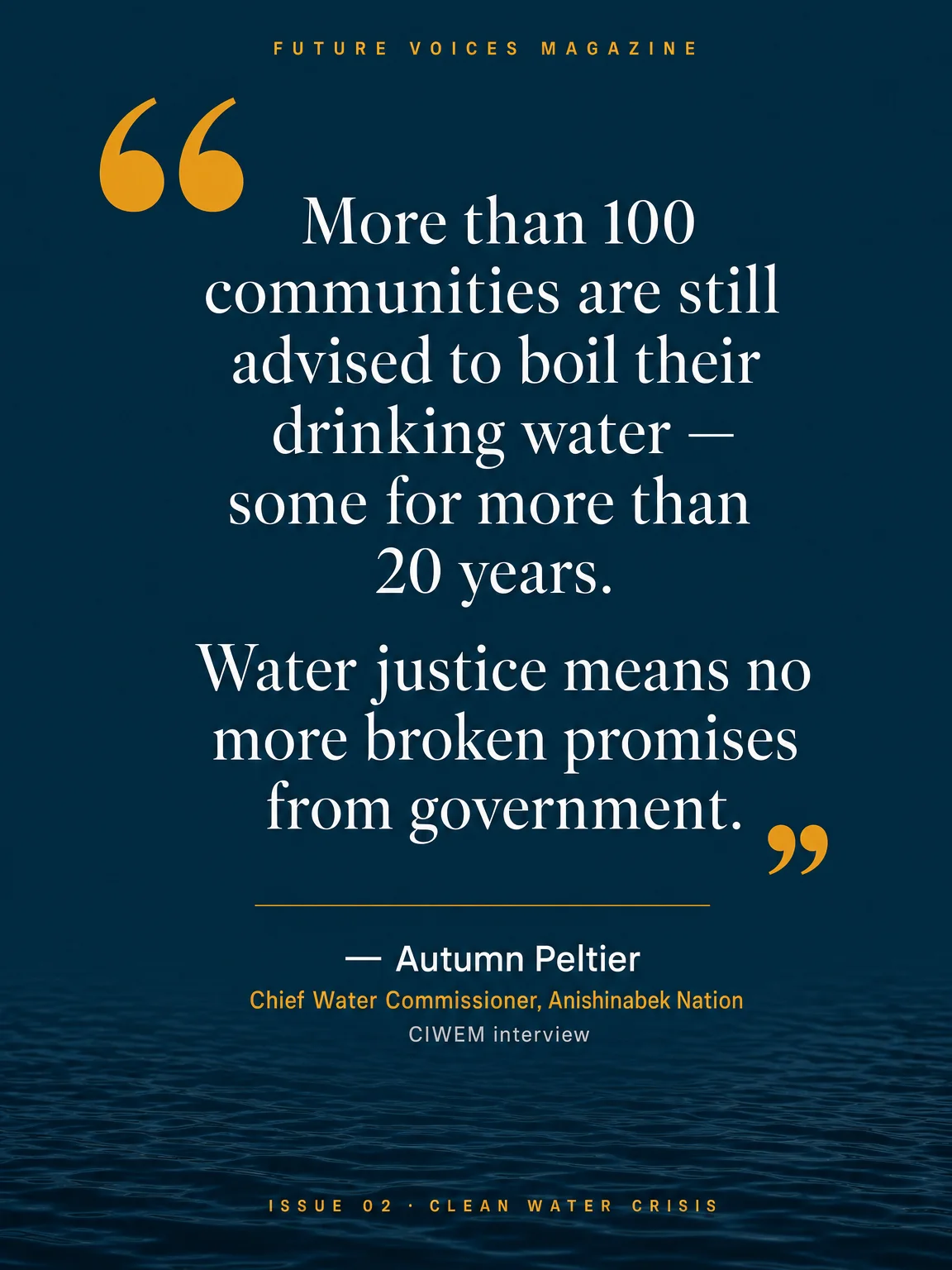
"More than 100 communities are still advised to boil their drinking water — some for more than 20 years. Water justice means no more broken promises from government."— Autumn Peltier, CIWEM interview
The most stark example: Neskantaga First Nation in northern Ontario. Boil-water advisory issued February 1995. Still active in June 2026. Thirty-one years. A generation of children in that community — 76 homes, 6 community buildings — have never turned on a tap and trusted what came out.
Peltier's first encounter with this reality changed her. "I found out that First Nations communities have had boil water advisories for over 20 years," she told Innovating Canada. "I was confused because Canada isn't a third-world country, but my people live in poor third-world conditions. My blood began to boil. This was the day I knew I had to do something."
Why it persists
The root is structural. Canada's 630 First Nations communities were assigned to land that nobody else wanted — often near polluted waterways, old uranium mines, and landfill sites. Provincial and territorial laws guaranteeing safe drinking water to other Canadians do not extend to reserves. That legal gap has never been closed.
Trudeau's government pledged to end all long-term advisories by March 2021. That deadline passed. In 2022, Peltier delivered a 112,000-signature petition to the House of Commons. In 2023, she received a Community Hero Award at the Canada Walk of Fame Gala. The advisories kept accumulating.
The work continues
Autumn Peltier speaks for 40 First Nations in Ontario as Chief Water Commissioner. She has addressed the UN three times. She is studying Indigenous politics. And she is clear about her long-term goal:
"I don't want to be doing this until the day I die. As a chief I can make things change — that's my end goal."
The 38 communities still waiting deserve that outcome.
Sources: Indigenous Services Canada (sac-isc.gc.ca), June 2026 · CIWEM interview with Autumn Peltier · Innovating Canada Q&A, 2022 · APTN News · Assembly of First Nations records
评论