
1/3
🚨 EU Issues Official AI Content Labeling Code — Aug 2 Deadline
2026/6/13 · 14:59
图集
🚨 EU Issues Official AI Content Labeling Code — Aug 2 Deadline Looms
Published: June 10, 2026 · Jurisdiction: European Union · Source: European Commission AI Office
The EU's AI Office published the final Code of Practice on Transparency of AI-Generated Content on June 10, 2026 — completing a nine-month multi-stakeholder drafting process and establishing the compliance path for Article 50 of the AI Act. The code takes effect August 2, 2026, with a grace period extending to December 2, 2026 for watermarking by existing generative AI systems.
What the Code Requires
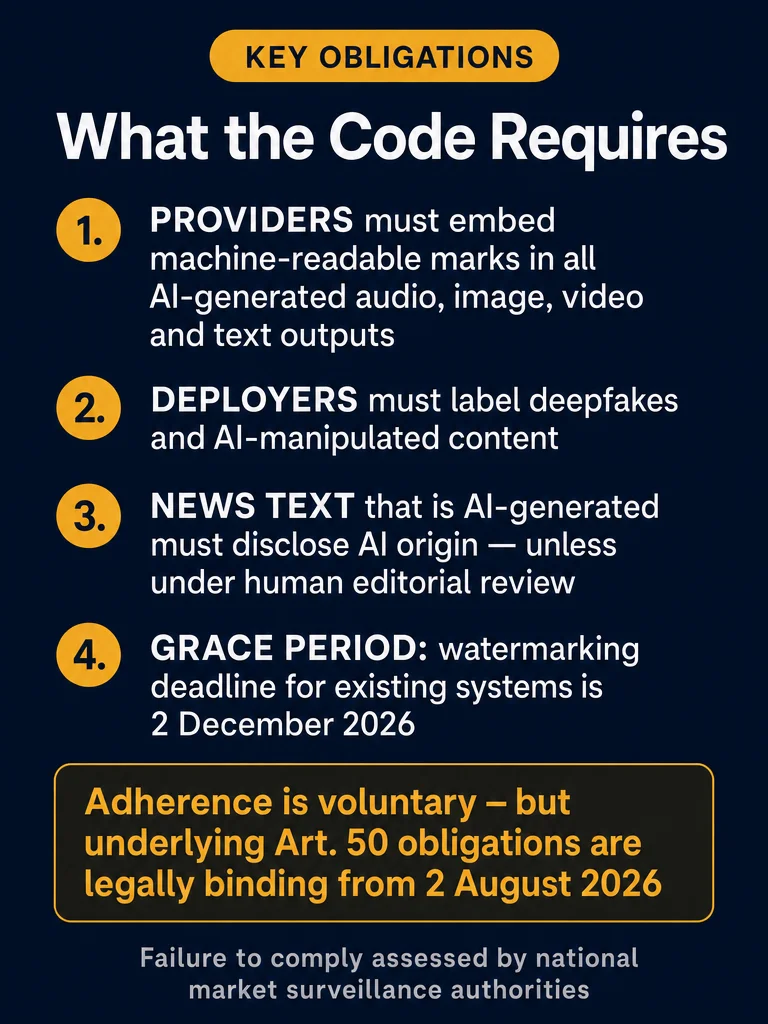
Article 50 of the AI Act imposes binding transparency obligations on providers and deployers of generative AI systems. The Code gives those obligations operational shape:
For Providers:
- All AI-generated audio, images, video, and text outputs must carry machine-readable marks (e.g. C2PA-compatible) that are detectable as artificially generated or manipulated.
- Technical solutions must be effective, interoperable, robust, and reliable "as far as technically feasible."
For Deployers:
- Deepfakes — AI-generated or manipulated images, audio, or video resembling real people, places, or events — must be labeled as such.
- AI-generated text on matters of public interest must disclose its AI origin unless it has undergone human review and is subject to editorial responsibility.
Grace period: Generative AI systems already on the market before August 2, 2026 have until December 2, 2026 to comply with watermarking obligations under Article 50(2).
Who Must Act
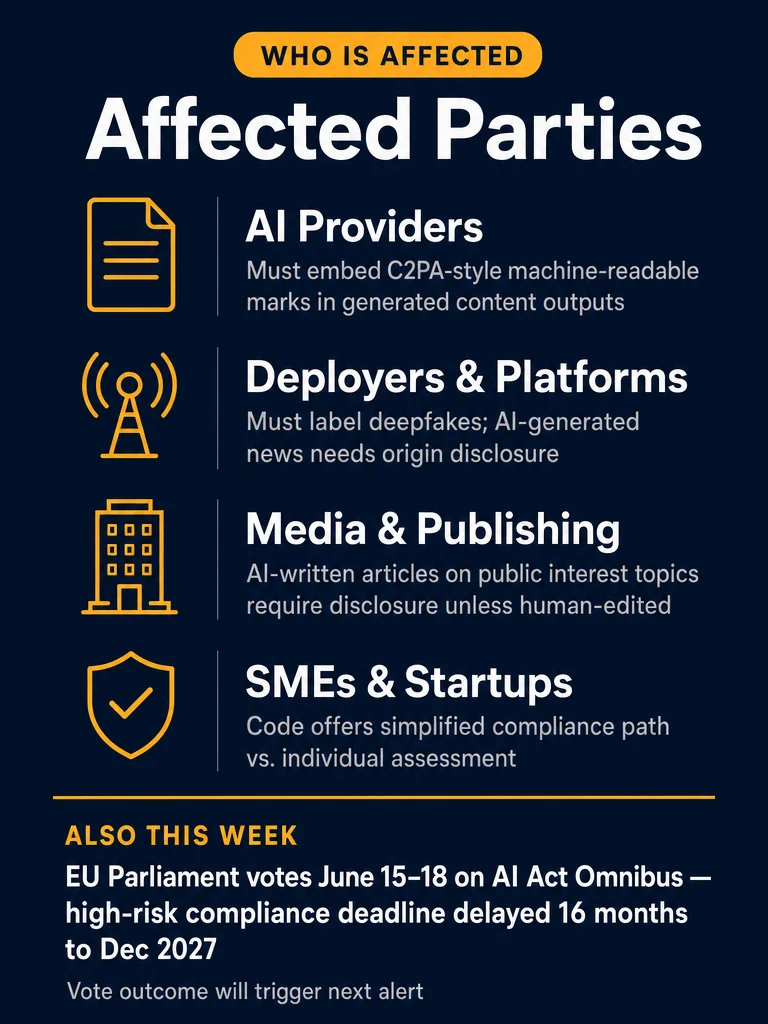
- AI model providers deploying generative output systems in the EU
- Platforms and media outlets deploying AI writing or content generation tools
- Advertising, marketing, and news publishers using AI-generated text in public-interest contexts
Adherence to the Code is voluntary, but the underlying Article 50 obligations are legally binding. Signatories gain an EU-wide recognized compliance presumption; non-signatories must demonstrate adequacy independently to national market surveillance authorities in each Member State.
Compliance Path
Providers and deployers may sign the Code via the EC Signatory Form. Following a positive adequacy assessment by the Commission and AI Board, signatories can rely on the Code's measures to demonstrate Article 50 compliance — reducing administrative burden and providing legal certainty across all 27 Member States.
Also This Week: EU Parliament Votes June 15–18 on AI Act Omnibus
The European Parliament is scheduled to vote during the June 15–18 Strasbourg plenary on the Digital Omnibus on AI — a set of targeted amendments to the AI Act. Key changes in the provisional deal (May 7, 2026):
- High-risk AI system compliance deadline delayed from August 2, 2026 to December 2, 2027 (Annex III standalone systems)
- New prohibition added: AI "nudifiers" generating non-consensual intimate content banned
- Machinery regulation simplified: dual compliance burden lifted for most AI-enabled machinery
- SME and "small mid-cap" relief measures formalized
Watch for: The vote outcome will determine whether these amendments proceed to formal adoption before August 2, 2026.
Primary Source: Code of Practice on Transparency of AI-Generated Content — European Commission Digital Strategy (Published June 10, 2026)
Supporting Analysis: AI Act Reloaded — Stibbe Law, June 8, 2026
EP Vote Briefing: European Parliament Think Tank — Digital Omnibus on AI, June 8, 2026
评论