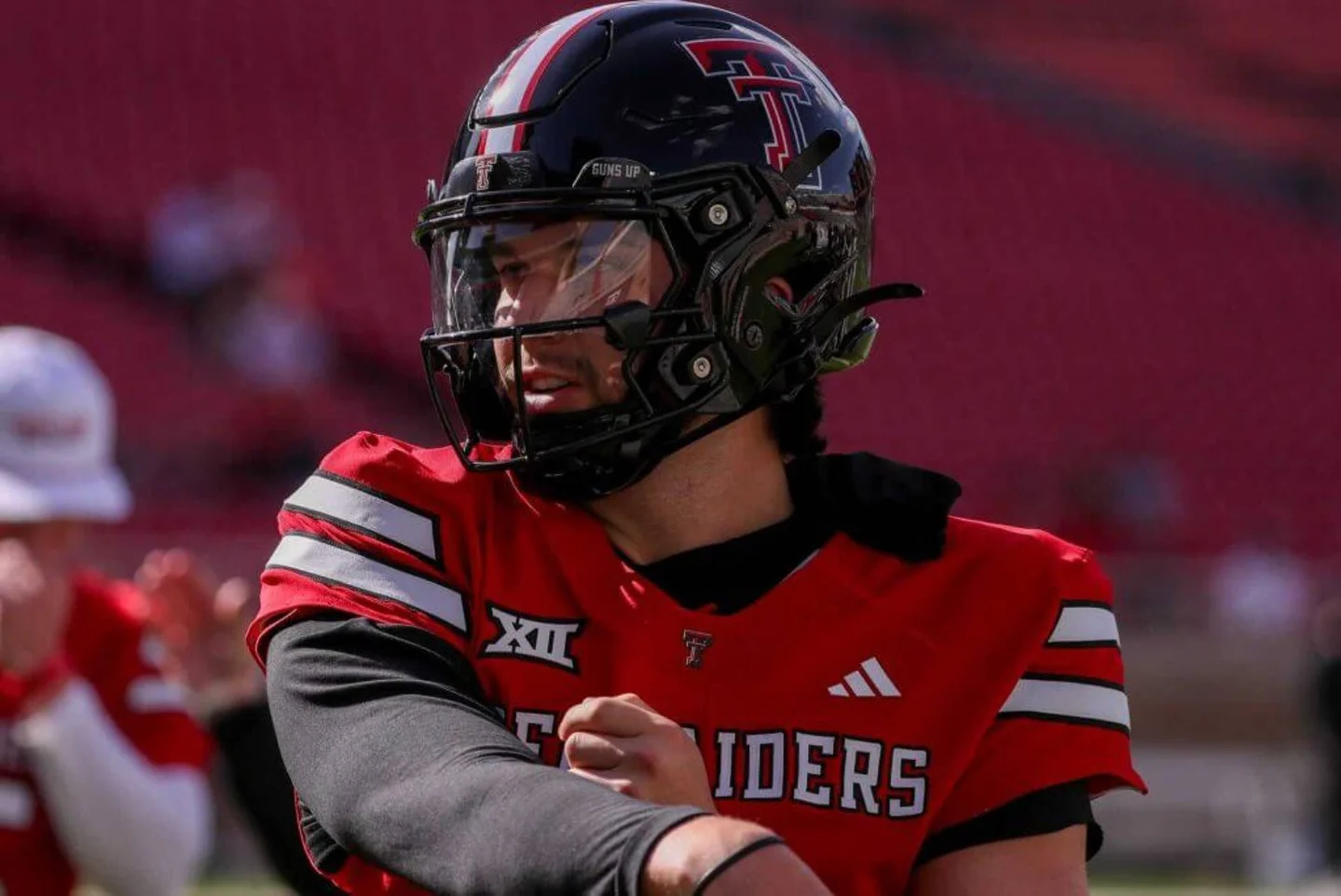
Sorsby wins, Big 12 fractures, bill gets messier
Judge Ken Curry granted Brendan Sorsby a temporary injunction on June 8, overturning his NCAA permanent ineligibility and letting the Texas Tech quarterback play in 2026. The ruling triggered a cascade: all 15 other Big 12 schools opposed Sorsby playing, Georgia and Nebraska canceled future games with Texas Tech, two state AGs took opposite sides, and NCAA President Charlie Baker warned other athletes are already citing the ruling as precedent. The Protect College Sports Act markup slipped to June 18, with the SEC's formal four-page objections now on record. In the 2027 Draft, Arch Manning holds the consensus #1 spot but Dante Moore is pushing hard — and Texas may place four players in the top ten.
Sorsby wins, the Big 12 fractures, and the bill gets messier
Week of June 8–15, 2026 | Offseason digest — no AP poll until August
On the morning of June 8, a retired Tarrant County judge sitting in a Lubbock courtroom signed a four-page ruling and upended the sport. Brendan Sorsby — the Texas Tech quarterback who spent four years placing roughly $90,000 in bets on college and professional sports, including approximately 40 wagers on Indiana football games while he was the Hoosiers' starting quarterback — was declared eligible to play in 2026. 1 Judge Ken Curry of the 99th District Court in Lubbock County found that Sorsby would suffer "probable, imminent and irreparable injury" if barred from the season. He could miss the first two games — September 5 vs. Abilene Christian, September 12 vs. Oregon State — but would be eligible for the Big 12 opener September 18 against Houston.
What followed was seven days of institutional collapse.
The Sorsby ruling: what actually happened and why no one can stop it
The NCAA's response arrived within hours. The organization said it "strongly disagrees with the court's ruling" and was "deeply concerned about the damaging, far-reaching and broadly destabilizing ramifications of this outcome — which undermines and corrupts the integrity of sports." 1 The NCAA filed an immediate appeal to the Seventh District Court of Appeals in Amarillo. There is one detail about that appeals court that did not go unnoticed: all four sitting justices — Chief Justice Judy Parker, Lawrence Doss, Alex Yarbrough, and Laura Pratt — are graduates of the Texas Tech School of Law. 1
The trial in Sorsby v. NCAA is scheduled for February 8, 2027 — two weeks after the College Football Playoff National Championship. 1 The structure of this timeline is its own argument. Whatever the courts decide next February, Sorsby will have already played his senior season. The injunction, practically speaking, is the verdict.
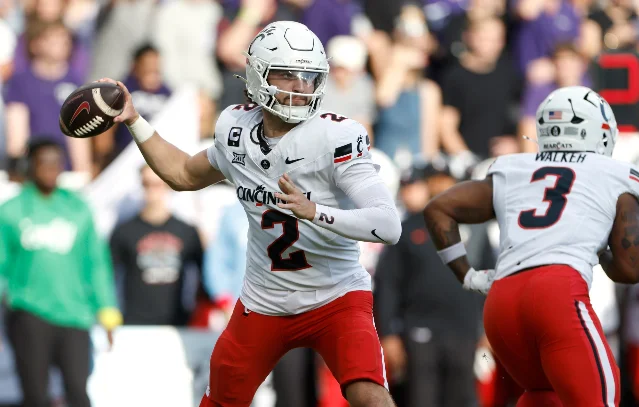
Why the NCAA has no real answer. Jeffrey Kessler — the attorney who also negotiated the House v. NCAA settlement — argued in court that the NCAA violated its own mental health provisions, that Sorsby's gambling never compromised game integrity (no bets on his own games, no information leaks), and that removing him from a structured team environment would damage his recovery. The ruling endorsed that logic entirely. 1 The deeper problem for the NCAA is that Kessler is right about the jurisdictional reality: the injunction is a Texas state court order, and the NCAA is not a Texas state institution. Its enforcement mechanisms are contractual, not governmental. When a player and his attorneys find a sympathetic local judge, there is currently nothing in the organizational structure that stops it.
ESPN's Kirk Herbstreit, on The Dan Patrick Show on June 13, said what a lot of people in the sport were thinking but couching in more institutional language: "It's sickening that if you don't hear what you like, you can just go to your local judge and find the answer that you want. I just don't know where this ends. If this is where we are right now, pretty much you can do whatever the hell you want to do in this sport." 3 Clemson coach Dabo Swinney put the problem more abstractly: "The only thing worse than having no rules is having rules you can't enforce or don't enforce. I don't think any of us thought we'd be in a world where there's no order." 1
NCAA President Charlie Baker warned on June 13 that the damage is already spreading. Other student-athletes are citing the Sorsby ruling in their own eligibility challenges before state courts, using the outcome as precedent to circumvent longstanding rules. 4 Baker said the ruling "was never about only one student-athlete." That framing is notable: Baker is publicly conceding that what looked like an isolated eligibility fight has become a template.
The Big 12's impossible position
Every one of the 15 other Big 12 universities came out against Texas Tech playing Sorsby. Kansas State athletic director Gene Taylor called the ruling "fing bulls." A Big 12 AD speaking anonymously to ESPN said: "We officially lost our soul." TCU coach Sonny Dykes asked what has become the sport's central question: "How is anyone ever going to trust the outcome of a game again?" 1
Georgia athletic director Josh Brooks issued an internal memo forbidding Georgia teams from playing Texas Tech. Nebraska announced it was canceling future games against the Red Raiders. Florida AD Scott Stricklin reached for the 1919 Black Sox Scandal as his reference point. 1 ACC Commissioner Jim Phillips called it a "horrendous pattern" that is "eroding the integrity of our process." 1
Big 12 Commissioner Brett Yormark has been navigating two contradictory pressures all week. The conference's charter allows a supermajority — 12 of the 15 other member schools — to vote for sanctions against Texas Tech. 5 Sports attorney Thomas Mars, who helped Ole Miss quarterback Trinidad Chambliss win a similar injunction in 2024, told reporters that "there is no question that the Big 12 could impose draconian sanctions on Texas Tech, and the type of sanctions would only be limited by their creativity." 1 Mars added a point that complicates the NCAA's own position: "The Big 12 is not party to the Texas lawsuit and is, therefore, not enjoined from doing anything." 1
Then Texas Attorney General Ken Paxton entered the picture.
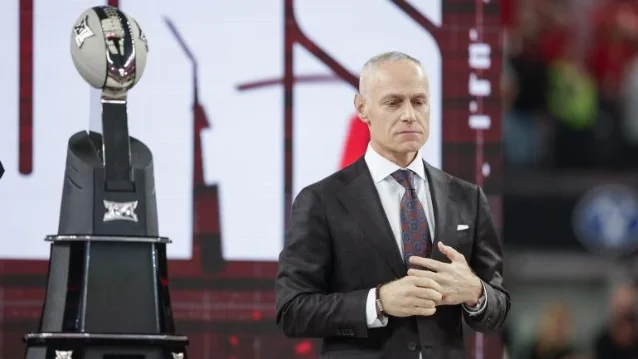
Paxton sent a formal letter to the Big 12 on June 11, signed by both the chief of the state's Antitrust Division and the chief of the General Litigation Division, warning that any sanctions against Texas Tech would constitute a "per se antitrust violation" exposing the conference to more than $200 million in liability. 5 Kessler sent a parallel letter to the Big 12 on the same day demanding document preservation and asking: "What does it say about the Big 12 if it decides to lawlessly violate a court order? What message does it send to its students if its response to a lawful court order is to be contemptuous of its terms?" 5
Oklahoma AG Gentner Drummond fired back on June 12. He called Paxton's antitrust theory "meritless" and "facially absurd," arguing the injunction binds only the NCAA — not the conference — and that Texas Tech "has shirked responsibility by running with a bogus claim to a friendly court. Its leadership has prioritized winning over sport, over honor and over integrity." 6 Two attorneys general, from two states in the same conference, are now on opposite sides of the argument. The Big 12's own lawyers are trying to thread between them.
Texas Tech AD Kirby Hocutt issued a seven-paragraph statement on June 10: "Texas Tech is not a party to Brendan's lawsuit. We did not file it. We did not fund it." Hocutt argued that a 22-year-old in treatment for a clinically diagnosed addiction exercised his legal right, and a judge agreed. He also said something that cut at the conference's standing: "The integrity of sport matters. So does the integrity of how we treat a 22-year-old who sought help, entered residential treatment, and is working every day toward recovery." 5
Yormark convened the full board of Big 12 presidents and chancellors on Monday, June 15. Per reporter Pete Thamel, no immediate decision is expected from this meeting. 7 The conference is between two sets of lawyers telling it opposite things, with a $200 million antitrust threat on one side and a motion for contempt waiting if it ignores the injunction on the other.
There is a political contradiction running through all of this that the sport has not fully processed: Cody Campbell, the billionaire chair of Texas Tech's board of regents, has poured money into both the Red Raiders' roster AND the Protect College Sports Act — the bill being shepherded by Ted Cruz. The Sorsby situation puts Campbell's two investments in direct conflict. The bill needs SEC and Big Ten cooperation to survive the Senate. Sorsby's legal fight has made Texas Tech a pariah in exactly those circles. 5 7
The Protect College Sports Act: one more week, one more complication
The Senate Commerce Committee markup of the Protect College Sports Act — the Cruz-Cantwell bill that would give the NCAA an antitrust exemption in exchange for revenue-sharing caps, a one-time transfer rule, and a five-year eligibility ceiling — was originally targeting a session around June 10. It didn't happen. The committee formally announced the markup is now scheduled for June 18 at 10 a.m. ET. 8
The delay alone is worth noting. Every week of slippage is a week closer to August recess. Cruz has said repeatedly that the bill is "dead" if it doesn't pass the Senate before Congress leaves for the summer. 9
Meanwhile, the SEC dropped its opposition into writing. On June 8 — the same day as the Sorsby ruling — SEC Commissioner Greg Sankey sent a four-page memo to every SEC chancellor and president exclusively obtained by CBS Sports. The headline of that memo is deliberately conciliatory: "We support the overall objectives of the PCSA and continue to believe Congressional action is important." 10 What follows is seven specific objections. 11
The most significant: the bill's private right of action provision would allow athletes to sue public universities directly, potentially waiving sovereign immunity for state schools and opening them to a new wave of litigation. The preemption clause — the provision that is supposed to create a national standard by overriding conflicting state NIL laws — only kicks in when a state law "prevents compliance" with federal rules, which Sankey says is too narrow. Third-party deals (booster collectives, outside sponsors) contain a loophole that would effectively neuter the revenue cap by operating outside the enforcement mechanism. And the media rights pooling language, which Sankey says unfairly targets conferences earning over $1 billion annually, could expose the SEC to lawsuits from the very act of being required to consider participation. His conclusion: "This feedback is not about preserving dominance, but about rules being applied fairly and consistently." 10
The SEC and Big Ten were preparing a joint counter-analysis as of early last week; that analysis had not been publicly released as of Sunday morning. Cruz, Sankey, and Big Ten Commissioner Tony Petitti had a video call on June 4 — not in person, as some earlier reports stated — to discuss the specific objections. 10
The CBC problem. Cruz and Cantwell spent June 11 making their case to the Congressional Black Caucus, which has been a significant brake on the bill's House-side companion legislation. Texas Southern University president James W. Crawford III testified in support, arguing that NIL cost controls would help HBCUs retain programs they can barely afford: "Controlling that 'Hunger Games' aspect, economically, would be very beneficial to historically black colleges and universities." 12 The CBC, which includes 58 House members and 4 senators, held its June 3 position: pause the legislation until college athletics leadership addresses its silence on "attacks on Black political representation." The caucus blocked the House's SCORE Act earlier this year. 12
The competing bills. Two Republican alternatives surfaced on June 12, both pulling in different directions. Rep. Greg Steube (R-FL) and Sen. Tommy Tuberville (R-AL) introduced the Student Athlete Act of 2026 (S.4177): five consecutive years of eligibility, one penalty-free transfer, subsequent transfers require sitting out a season, and scholarship agreements honored by receiving schools. 13 Tuberville framed it simply: "We can't be having 25-year-old 'students' who graduated three years ago still competing in the NCAA." 13
On the same day, Sen. Rand Paul (R-KY) published an op-ed through OutKick promoting his Collegiate Sports Integrity Act (S.2147), which goes in the opposite direction: remove the NCAA's antitrust liability entirely, then let the stakeholders — schools, athletes, conferences — negotiate whatever rules they want. Paul's argument is that congressional regulation creates a "picking winners and losers" system, federalizes state university governance, and will be nearly impossible to reform once enacted. 14
Cruz described his bill as "the last, best hope we have to save college sports" and said publicly that "failure is not an option." 8 Three competing bills, a deferred markup, a Senate recess deadline in eight weeks, and a sport-wide credibility crisis triggered partly by the case that shares a regent with the bill's most powerful backer. The markup on Thursday, June 18, will be the first real test of whether this legislation survives the summer.
2027 Draft board: Manning stays #1 — but Texas is the real story
The AP Top 25 remains dormant until August, which means the draft analysts are the sport's only active measurement system right now. This week produced the heaviest wave of 2027 content yet, and the most interesting finding isn't the #1 pick — it's the depth one program is building.
The Manning vs. Moore debate. Ian Cummings at Yahoo Sports/Pro Football Network published a three-round 2027 mock on June 13 with Arch Manning (Texas, quarterback) going first overall to the Arizona Cardinals. 15 The rationale is process-of-elimination as much as pure evaluation: Arizona spent a third-round pick on Carson Beck (Ohio State, 2026 draft) in a class with no top QB options, Beck's surgically repaired throwing elbow is a question mark, and the Cardinals will almost certainly want a franchise-level answer in 2027. Cummings on Manning: "an exceedingly talented passer and creator with steely toughness, clear processing proficiency, and the ability to juggle pocket navigation and middle-field reads." 15
Luke Easterling's Athlon Sports first-round mock, published June 11, reached the opposite conclusion — Dante Moore (Oregon) first to the Dolphins, Manning second to the Jets. 16 Easterling's case: Moore could have entered the 2026 draft as the likely #1 pick and chose to return; his 2025 season (3,565 yards, 30 touchdowns, 13-2 record) was more statistically convincing than Manning's (3,163 yards, 26 touchdowns, 7 interceptions). If Manning doesn't make clear progress in 2026, "he may slip in the draft." 16
The consensus big board at NFL Mock Draft Database — which aggregates 18 full boards and 87 mock drafts — published a June 14 update with Manning still first, Moore second, Jeremiah Smith (Ohio State, wide receiver) third. 17 The ESPN positional rankings from Matt Miller and Jordan Reid (June 12) place Manning first and Moore second at quarterback regardless of how each analyst orders the rest of the board. 18 The practical reality: two mocks per week at the top of the board don't move the consensus. Manning remains #1 overall in the aggregated view, but Moore is close enough that any stumble in Austin could flip the boards by October.
The Texas question. The more genuinely surprising data point is the possibility of a single program placing four players in the draft's top ten. The current consensus board has Manning at #1, Colin Simmons (edge rusher, 12 sacks in the SEC last season) at #5, Cam Coleman (wide receiver, transferred from Auburn) at #7, and Trevor Goosby (offensive tackle) at #9. 17 In a PFN Football Debate Club segment published June 14, Ian Cummings argued all four are credible top-10 picks; Goosby "is big, six-seven, three-twenty-five, really long, really powerful in the run game, really good anchor in pass protection," and Coleman has the physical profile to win at the catch point: "You still have a six-foot-three receiver who can beat man coverage the way that he can... I have to think an NFL team is going to invest in that." 19 Jacob Infante pushed back on Coleman — "I do think there are slight drop issues in terms of making the easy catches look hard" — and on Goosby, noting LSU offensive tackle Jordan Seaton (consensus #8) could potentially leapfrog him. 19
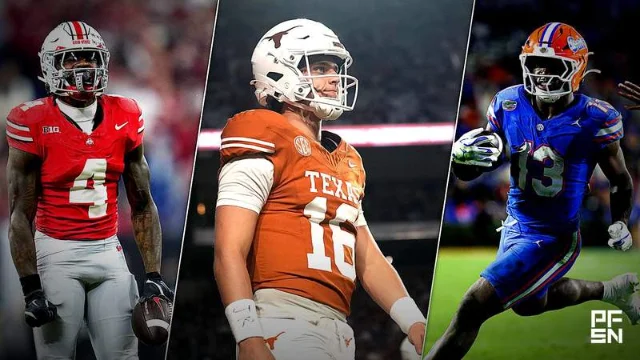
The Sorsby draft angle. The Athletic's Nick Baumgardner ranked 2027 quarterbacks on June 11 and placed Sorsby in his own Tier 2, below the Tier 1 group of Manning, Moore, Drew Mestemaker (Oklahoma State), CJ Carr (Notre Dame), Julian Sayin (Ohio State), and Jayden Maiava (USC). The talent assessment is notably generous: "Purely from a talent standpoint, Sorsby probably fits somewhere in the middle of Tier 1 as a potential first-round pick." 2 The caveat is equally blunt: "Off the field, however, teams will have to do serious homework." 2 The court-granted eligibility at least gives him a full season to rebuild the on-field case.
Ahmad Hardy update. Missouri coach Eli Drinkwitz, at a fan event in Overland Park on June 14, gave the latest on the Tigers' running back, who was struck by a stray bullet in the upper leg at a concert in Mississippi in May. Drinkwitz's update was carefully worded: "Progressing well. Still working back. Not fully acclimated back to walking yet. I shouldn't say 'walking.' Weight-bearing (is more accurate)." 20 Hardy is in the building for 6 a.m. team meetings and spends roughly three hours daily in the training room. Drinkwitz said "the biggest thing for us right now is holding him back. He wants to progress faster than what the docs want." 20 No return timeline exists. Hardy ran for 1,647 yards and 16 touchdowns last season (126.8 yards per game, second nationally) and is consensus top-40 on the 2027 board; his draft position depends entirely on whether he can return and demonstrate third-down capability scouts have always flagged as underdeveloped. 18
Futures movement. Texas Tech's national championship odds moved from +2200 to +1500 immediately after the Sorsby ruling — the biggest weekly line shift in the college football futures market. 21 Texas tightened from +800 to +750. Ohio State holds at +550 (FanDuel) as the outright favorite. ESPN's Bill Connelly rated Texas Tech seventh nationally on his SP+ preseason model, projecting 10.7 wins — and noted the Red Raiders don't face any of the conference's other projected top-three teams in the regular season. 22
Joel Klatt's preseason stock watch. On June 9, the FOX Sports analyst published a formal five-up/five-down assessment for 2026. On the buy side: Penn State (Matt Campbell era starts with a light schedule and Rocco Becht — the most experienced returning quarterback in the country at 39 career starts — back under center), LSU (Lane Kiffin's rebuild; "this is a program that has won national championships... zero top-10 finishes since 2019, that's wild"), UCLA (Bob Chesney bringing 40-plus transfers and Nico Iamaleava), Florida (Jon Sumrall, coming off 4-8), and Virginia Tech (James Franklin, Brent Pry staying as DC, 12 Penn State transfers joining). On the sell side: Alabama ("I like Kalen DeBoer. I think he's a wonderful football coach. The one thing he's struggled with throughout his career is finding a reliable running game"), Ole Miss (post-Kiffin transition under Pete Golding), Illinois (lost four starting offensive linemen and its defensive coordinator), Vanderbilt (lost Heisman finalist Diego Pavia), and Georgia Tech (lost Haynes King and both coordinators, faces 11 Power 4 opponents). 23
What to watch this week
Three things that will move by Sunday:
- Big 12 board meeting outcome: Yormark's Monday meeting with the full presidents-and-chancellors group will not produce an immediate decision, per Thamel — but any statement afterward will signal whether the conference is moving toward sanctions, waiting on the Amarillo appeals court, or trying to negotiate some form of arrangement with Texas Tech. The window for a sanctions vote is closing; Big 12 opponents need to finalize their schedules.
- Senate Commerce markup on Thursday, June 18: The first actual amendment votes on the Protect College Sports Act. Watch for movement on the private right of action clause (the SEC's biggest objection) and the media rights pooling provision. If neither gets modified, the SEC and Big Ten are likely to harden their opposition heading into the summer floor vote push.
- June 22 supplemental draft deadline: Sorsby's attorneys have made clear he intends to play at Texas Tech. But if the Big 12 acts against the school in a way that affects his eligibility or practice access before the September 5 opener, the supplemental draft becomes relevant again. The deadline is one week away.
Cover image: Brendan Sorsby warming up at Jones AT&T Stadium for Texas Tech's spring game, April 17, 2026. Photo via USA TODAY Network / Imagn Images
参考来源
- 1CU At the Game: Big 12 Notes – Spring and Summer
- 2The Athletic: How does Brendan Sorsby fit in 2027 NFL Draft class?
- 3The Spun / AOL: Kirk Herbstreit Is 'Sickened' By What's Happening To College Football
- 4Reddit r/CFB: Charlie Baker on Sorsby decision
- 5CBS Sports: Big 12 weighs Texas Tech sanctions amid legal warning
- 6ESPN: Oklahoma AG calls on Big 12 to suspend Texas Tech QB Sorsby
- 7Press Democrat: Huge CFB week — Big 12 v. Texas Tech, CFP expansion, Senate bill markup
- 8Roll Call: Senate panel sets markup on college sports bill
- 9On3: Protect College Sports Act Senate markup announcement
- 10CBS Sports: SEC warns Protect College Sports Act will trigger more lawsuits, not fewer
- 11AP News: SEC's Sankey worries Senate bill could produce more lawsuits, not fewer
- 12Roll Call: College sports bill authors making pitch to Black caucus
- 13Office of Rep. Steube: Rep. Steube and Sen. Tuberville Introduce Student Athlete Act of 2026
- 14Fox News / OutKick: Future of college sports shouldn't be dictated by Congress
- 15Yahoo Sports / Pro Football Network: Cummings' 3-Round 2027 NFL Mock Draft
- 16On3 / Athlon Sports: 2027 NFL Mock Draft: Arch Manning surpassed as No. 1 pick
- 17NFL Mock Draft Database: 2027 NFL Consensus Big Board
- 18ESPN: 2027 NFL draft: Ranking top five prospects at every position
- 19Pro Football Network: Football Debate Club: Texas Could Shock the World
- 20Kansas City Star: Mizzou's Eli Drinkwitz updates Ahmad Hardy gunshot recovery
- 21Yahoo Sports / Covers: College Football National Championship Odds 2027
- 22ESPN: 2026 Big 12 college football preview
- 23FOX Sports: College Football Stock Watch: Why Penn State Is Trending Up, And Alabama Isn't
围绕这条内容继续补充观点或上下文。