Pulisic is now a matchday call, not a hunch
Mauricio Pochettino says Christian Pulisic is much better but still not confirmed for USA vs. Australia. This update explains what the late medical decision means, how each replacement option changes the U.S. left side, and why Australia's compact 5-4-1 makes the choice more delicate.

Pochettino finally moved the Pulisic story from training-watch ambiguity to a matchday decision. Christian Pulisic is "much better," the U.S. coach said Thursday, but the staff planned to decide after a Thursday night medical meeting whether he can face Australia on Friday. Pochettino's cleanest line was also the most revealing: "If he's not available for tomorrow, he will be available for the next game." 1
That changes the frame for USA-Australia. This is no longer just "will Pulisic start?" It is whether Pochettino wants to spend a not-quite-ready left winger on a match the U.S. can still manage with its depth, or protect him for Türkiye and the knockout path.
What changed Thursday night
The U.S. still does not have a public ruling. It does have a clearer risk signal.
Pulisic trained apart from teammates for a fourth straight day because of the left-calf issue, according to the Associated Press report carried by Sportsnet. He joined the pre-warmup huddle with a calf sleeve, then went inside for individual gym work rather than the team session. 2 The Athletic also described him as questionable for the Group D match and reported that Pochettino would decide after consulting the performance staff. 3
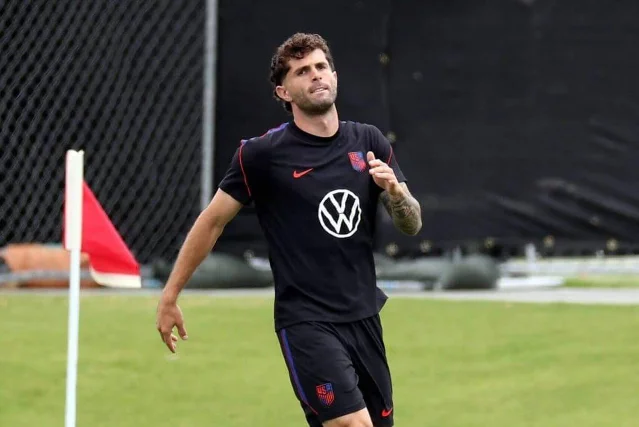
The softer details still matter. Pochettino said Pulisic is "doing a massive effort trying to be ready," and Weston McKennie told reporters he hoped Pulisic could be there because "he really wants to be." 1 But those lines are about intent, not availability. The hard evidence is that he has not returned to full team training.
The decision tree before kickoff
| Question | What the latest reporting supports | Why it matters |
|---|---|---|
| Is Pulisic ruled out? | No. Pochettino said the decision would come after a medical meeting and that Pulisic is "much better." 1 | A start, bench role, or scratch all remain live until lineup release. |
| Is he fully cleared by public evidence? | Also no. Thursday was his fourth straight day apart from teammates. 2 | A 90-minute plan would be hard to justify unless the private medical read is much stronger than the public training view. |
| Who replaces him if he sits? | ESPN named Brenden Aaronson, Gio Reyna, Tim Weah and Alejandro Zendejas as the likely pool; The Athletic also floated moving Malik Tillman higher with another central midfielder added. 1 3 | The replacement is not one player. It decides the whole left-side attacking shape. |
The most conservative read is a bench role. It lets Pochettino keep Pulisic available if the game tightens, without asking him to sprint repeatedly against a compact block from minute one. It also limits the worst-case scenario: aggravating the calf in a match where the U.S. does not need to chase the game from the start.
The more aggressive read is to start him and try to win the group race early. That only makes sense if the staff thinks the calf is no longer limiting his acceleration. Against Australia, a half-available Pulisic may not be better than a fully available Weah, Reyna, Aaronson or Zendejas doing a narrower job.
If he sits, the replacement says what Pochettino wants
This is the part to watch when the lineup drops.
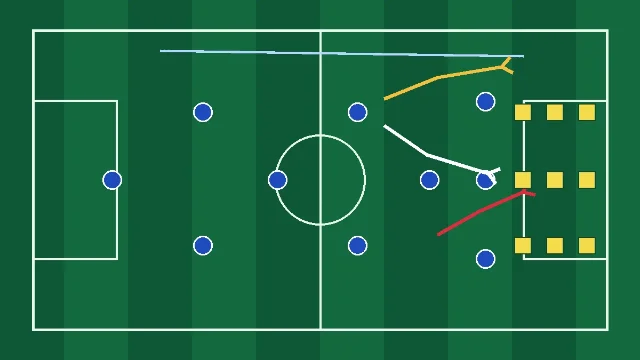
A Weah start would point to direct running and transition protection. He can stretch the left side, recover quickly, and keep Australia from cheating too much toward Antonee Robinson. Aaronson would make the game more frantic, pressing the first pass and turning Australia's buildup into loose touches. Reyna would be the lock-picker if Pochettino expects Australia to live in a deep 5-4-1 and force the U.S. to create in tight areas. Zendejas is the pure winger bet: carry, isolate, shoot, repeat.
The Tillman-to-attack option is different. It would probably mean adding another central midfielder, protecting the middle, and asking Robinson to provide more width. Forbes projected one version of that logic, with Malik Tillman deeper in a 4-2-3-1 and Gio Reyna plus Alex Zendejas in the attacking line. 4 Treat that as analysis, not team news, but the idea fits the game state: if Australia sit low, the U.S. may need one more passer between the lines rather than another vertical runner.
The Australia problem has not changed
The match is still a top-of-the-table Group D game. The U.S. opened with a 4-1 win over Paraguay, Australia beat Türkiye 2-0, and ESPN's preview says a win would seal qualification. Kickoff is listed for 19:00 on June 19 at Lumen Field, Seattle, with U.S. coverage on Fox Sports. 5
Australia's opener explains why the Pulisic call is so awkward. ESPN's preview projected a 5-4-1, noted that Australia allowed 30 Türkiye shots but only 1.36 expected goals, and credited Patrick Beach with eight saves. 5 That is exactly the kind of opponent that tempts a coach to use his best dribbler. It is also exactly the kind of opponent that can make a not-quite-fit winger do too many dead sprints into traffic.
So the cleanest pre-kickoff read is this: if Pulisic starts, Pochettino believes the medical clearance is real. If he is on the bench, the U.S. is choosing tournament management over one-game urgency. If he is left out entirely, the Türkiye match has become the true target.
None of those outcomes would be surprising now. The surprise would be pretending Thursday's update left the situation unchanged.
参考来源
- 1ESPN: USMNT's Christian Pulisic 'much better,' still in doubt vs. Australia
- 2Sportsnet/AP: Christian Pulisic trains separately for fourth straight day
- 3The Athletic: Christian Pulisic questionable for USA vs. Australia
- 4Forbes: USMNT vs. Australia projected lineups
- 5ESPN: USMNT vs Australia at World Cup 2026
围绕这条内容继续补充观点或上下文。