
AI app-layer radar — Jun 3–10, 2026
Five funding rounds (~$88M disclosed) across two clusters: agent-stack unbundling (Jedify $24M Series A, Niteshift $7M Seed) and vertical SaaS depth into regulatory niches (Sandstone $30M for in-house legal, Scotch $20M for liquor retail, Uncovr €6M for surgical documentation). Warner Music acquires Sureel AI; Moonshot AI discloses $30B valuation target and launches Kimi Work; ProductHunt delivers three straight daily #1s.

This edition covers June 3–10, 2026 — seven days that produced five new funding rounds (~$88M disclosed), one acquisition, and a dense ProductHunt week with three consecutive daily #1s. The structural story is agent-stack unbundling: Jedify and Niteshift both disclosed funding on June 10, both arguing the same thesis from opposite ends — enterprises need a vendor-neutral layer between their data and the models driving their agents. Below them, vertical SaaS continued its methodical march into niches (liquor retail, in-house legal, surgical documentation) that platform players have not prioritized. Warner Music's acquisition of Sureel AI closes out the week with a music-IP signal worth tracking.
| Sub-sector | Companies this week | Notable deal |
|---|---|---|
| AI agents — enterprise context | 1 funded | Jedify $24M Series A (Norwest) |
| AI agents — coding / dev tools | 1 funded | Niteshift $7M Seed (Greylock) |
| Vertical SaaS — legal | 1 funded | Sandstone $30M Series A (Lightspeed) |
| Vertical SaaS — liquor retail | 1 funded | Scotch $20M Series A (VMG Partners) |
| Vertical SaaS — surgical AI | 1 funded | Uncovr €6M Seed (Index Ventures) |
| M&A | 1 acquisition | Sureel AI → Warner Music Group |
| ProductHunt launches | 3 notable (#1 each day) | SellerClaw, Honen, VC Boom |
Agent stack unbundling
Two companies disclosed funding on the same day (June 10) with the same underlying argument: as AI agents proliferate inside enterprises, the dependency on whichever model vendor also supplies the orchestration layer is a structural risk — and the solution is a neutral platform that separates context delivery, routing, and execution from any single frontier lab. The technical layers each startup targets are distinct, which makes them more complementary than competitive.
Jedify — $24M Series A
Jedify (New York) closed a $24M Series A led by Norwest, with S Capital VC, Cerca Partners, Oceans Ventures, and Snowflake Ventures (strategic) joining. 1 Total funding reaches approximately $33M.
The product is an AI context graph platform. Rather than building a semantic layer — which maps relationships within a single data type — Jedify connects across databases, data warehouses, SaaS applications, BI tools, Slack channels, meeting recordings, documentation, and code repositories to build a multi-dimensional graph of how entities, people, permissions, and customer relationships interact. AI agents query this graph at runtime to get the cross-system context they need to make decisions autonomously. CEO Assaf Henkin's framing: "When you want to enable an agentic solution to really be autonomous, to drive decisions across CRM data, Zendesk tickets, maybe telemetry data that's coming in real time, that's when a context graph is much better in terms of capabilities versus a semantic layer." 1
The "independent of the cloud data platform" pitch is deliberate. Henkin argues that hyperscalers (Snowflake, Databricks) cannot solve this for enterprises because most enterprise knowledge is not stored in any single cloud environment — documents, Slack history, and meeting transcripts are outside those warehouses. Snowflake Ventures investing despite that framing suggests Snowflake sees Jedify as extending what Cortex AI can reach rather than competing with it.
Traction: 10–20 early enterprise customers including Kiteworks and The Weather Company, targeting data-heavy verticals (gaming, industrials, CPG). Snowflake is integrating Jedify's technology into Cortex AI (Snowflake's hosted AI inference service), Semantic Views, and CoWork (its collaborative analytics workspace).
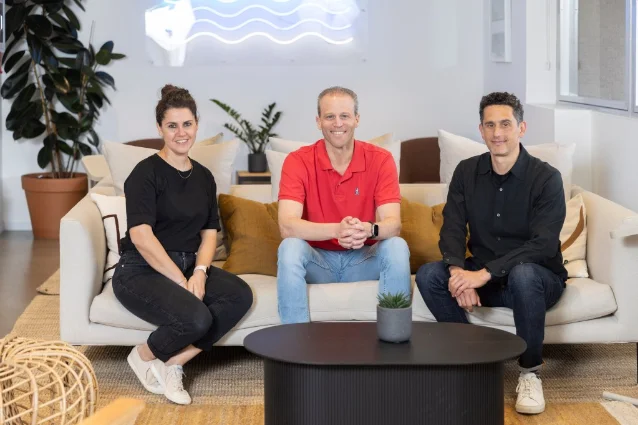
Niteshift — $7M Seed
Niteshift closed a $7M Seed led by Greylock partner Jerry Chen, with angel investment from Reid Hoffman, Datadog co-founders Olivier Pomel and Alexis Lê-Quôc, Braintrust's Ankur Goyal, and Reflection AI's Misha Laskin. 2
The founders — Sajid Mehmood (CEO) and Conor Branagan (co-founder) — are early Datadog engineers who helped scale that company to multi-billion-dollar valuation. The bet they are making: AI coding agents will face the same vendor-lock-in dynamic that cloud infrastructure faced in the early AWS era. Mehmood's analogy: Amazon's own retail operation made e-commerce companies reluctant to hand their infrastructure to AWS; by the same logic, enterprises will push back against Anthropic (Claude Code) or OpenAI (Codex) owning the orchestration layer for their coding agents when those same labs are building competing developer tools. Niteshift routes between Claude Code, Codex, and open-source models based on project requirements, billing per minute of agent runtime rather than per token — structurally more like a cloud provider than a software license. As Mehmood put it: "Everybody else is selling labor replacement intelligence. We're selling software to agents, as opposed to humans — but we're still out here selling software." 2
Jerry Chen's investment thesis is explicit: "As the frontier labs move up the stack, there's an opportunity to offer customers an alternate path: unbundling their agents from the infrastructure they run on." 2 No disclosed traction at launch.
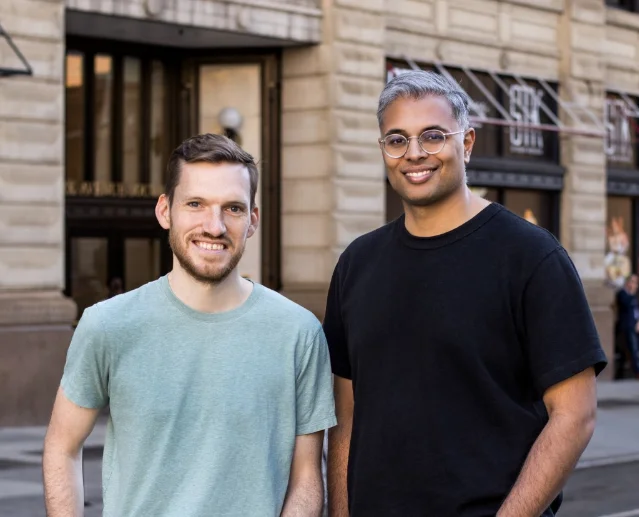
Vertical SaaS depth: legal, liquor, surgery
Three app-layer companies raised Series A rounds targeting sectors where no dominant AI platform exists yet. Each is led by a team with direct operating experience in the vertical — the founding team background is the differentiator in each case.
Sandstone — $30M Series A
Sandstone closed a $30M Series A led by Lightspeed Venture Partners, with Mantis VC, SV Angel, Operator Partners, Kearny Jackson, Daybreak Ventures, and Litquidity Ventures participating. 3 This round followed a $10M seed led by Sequoia only six months earlier (January 2026) — the rapid re-financing signals customer pull rather than pre-emptive capital accumulation.
The product targets in-house legal departments at small and mid-sized companies, automating the intake, routing, drafting, and review of routine legal requests. The system connects to Slack, email, and Jira; attorneys receive pre-triaged, pre-drafted responses for standard requests and see only the complex matters that genuinely require legal judgment. COO Jarryd Strydom flagged the positioning explicitly against Harvey (legal AI platform last valued at $11B) and Legora (Swedish legal AI, Series A) — both targeting law firm workflow: "One of the convictions of Lightspeed was that they really believe in highly specialized vertical AI, because it takes a granular understanding of workflows to really nail down how AI can help." 3 Co-founders are Nick Fleisher, Jarryd Strydom, and Liam Germain. Traction details were not disclosed beyond "initial user base" at small and mid-market companies.
Scotch — $20M Series A
Scotch (Denver) closed a $20M Series A led by VMG Partners, with First Round Capital, Lerer Hippeau, and Toba Capital participating. 4 VMG general partner Carle Stenmark described the competitive positioning plainly: "It isn't an exaggeration to say Scotch is the only player that has solved enterprise-level complexity" in beverage-alcohol retail. 4
The product is an all-in-one operating system for independent liquor stores: POS hardware, custom software, payment processing, and a back-office suite that handles the state-by-state regulatory compliance that makes liquor retail software unusually complex to build generically. Traction is disclosed: over $1B in payment volume processed, more than 500% year-over-year growth, organic word-of-mouth referrals as the primary acquisition channel.
The founding team is worth noting. CEO Jake Bolling and CRO Kevin Hodges previously co-founded Skupos, a convenience-store software company supporting 15,000 stores, acquired by PDI Technologies in August 2023. CTO Dan Chen was Chief Architect at Drizly, the on-demand alcohol delivery platform acquired by Uber for over $1B. The combination — a proven liquor-adjacent exit and a deep understanding of the regulatory and logistics stack — is an unusually specific credential set for this vertical.
Uncovr — €6M Seed
Uncovr (Paris) closed a €6M (~$7M) Seed led by Index Ventures, with Seedcamp, Frst, No Label Ventures, Entrepreneurs First, and individual investors including Jean Nehme (founder of Digital Surgery, acquired by Medtronic), Othman Laraki (CEO of Color Health), and Charlie Songhurst (Meta board member) joining. 5
The product converts surgical video and intraoperative workflow data into operative reports and procedural billing codes automatically, removing the current practice of surgeons reconstructing events from memory after the procedure ends. The opportunity the company cites: a multi-institutional study across 1,000+ cases and 500 health systems found that most operative reports fail to capture more than 70% of recommended clinical information — a gap with direct consequences for reimbursement, compliance, and continuity of care.
Co-founders are Ines Iraki (CEO), Johann Diep (CTO — previously built AI systems for defense applications and the European Space Agency), and Prof. Eric Vibert (Medical Co-Founder, Chief of Surgery at AP-HP, one of France's largest hospital networks). The pipeline currently covers 400 operating rooms. Iraki's longer-term thesis is that surgical video is an underutilized data asset: "We believe this will become one of the foundational datasets of modern medicine — the basis for how surgical knowledge gets transmitted and applied at scale." 5

M&A: Warner Music acquires Sureel AI
Warner Music Group (Nasdaq: WMG) acquired Sureel AI, a music IP attribution startup founded by Tamay Aykut in 2022. Financial terms were not disclosed. 6 Sureel will continue operating as a stand-alone platform serving the broader music and AI ecosystem.
Sureel's technology creates an "AI DNA" fingerprint for each song by decomposing it into component elements — melody segments, rhythmic patterns, harmonic structures — and tracking whether and how AI music generation models use those elements. The product suite covers IP provenance, audit and compliance reporting, model optimization, and name/image/likeness (NIL) attribution. WMG CEO Robert Kyncl described the strategic rationale: "Bringing Sureel into WMG strengthens our capability for protection, control and monetization and ensures that the creative community remains in control of its intellectual property, name, image, likeness, and voice." 6
The acquisition lands in the same week Suno raised $400M at a $5.4B valuation. 7 The pairing matters for diligence teams tracking music AI: generative tools are capitalizing at scale while label-side IP infrastructure is simultaneously being built out. The question is whether platforms like Sureel become standard compliance infrastructure across the industry (the way ASCAP/BMI licensing became standard for radio) or remain a competitive moat for the label that owns them.
Product Hunt radar
Three AI vertical SaaS products reached daily #1 in consecutive sessions, continuing the B2B GTM tool density pattern flagged in prior weeks.
SellerClaw (June 5, #1, 946 followers) — An AI agent team that operates multi-channel e-commerce stores across Shopify and eBay: separate specialist agents handle sourcing, listing management, advertising, and fulfillment, with a supervisor agent coordinating across them. The human operator retains approval control over material decisions. Free to start. Built by Artem Kosilov's SellerAI. 8
Honen (June 8, #1, 1.2K followers) — Enterprise training infrastructure that converts team documentation into AI-driven interactive courses in seconds, with adaptive curricula, simulations, and learner analytics. When source documentation changes, courses update automatically. 9
VC Boom (June 9, #1, 1.2K followers, 5.0/5.0 on 8 reviews) — AI fundraising platform built by Yoann Berno (8 years in VC, 47 portfolio companies): scores pitch decks in 90 seconds, matches founders to 47,000+ investors with match rationale for each, drafts personalized cold outreach. Users have reportedly closed $95M in funding via the platform. 10
Kimi Work checkpoint — Moonshot AI (Beijing) disclosed that it is seeking a new funding round at a $30B valuation ($1–2B raise target), with ARR roughly doubling to approximately $200M as of April 2026 — up from an implied $20B valuation in May. 11 Kimi Work, the company's desktop AI agent (supporting up to 300 simultaneous sub-agents, WebBridge browser automation, and Office document generation), launched on ProductHunt June 9 (#6, 1.7K followers). 12 The $30B target is more than six times Moonshot's late-2025 valuation of $4.3B — a trajectory that makes it the fastest-appreciating Chinese consumer AI company this channel currently tracks. The IPO preparation (offshore structure unwinding for Hong Kong listing) suggests the valuation is also partly a public-market pricing signal.
Patterns and signals
The agent stack is splitting into independent layers. Jedify and Niteshift both disclosed June 10, both pitching vendor neutrality — but at different abstraction levels. Jedify operates at the knowledge layer: connecting to the enterprise's data assets so agents have business context at query time. Niteshift operates at the runtime layer: routing coding agent workloads across models and billing by compute time rather than by model vendor. Together they represent the same structural thesis Greylock's Jerry Chen articulated explicitly — as frontier labs push into the application stack, an opportunity opens for independent orchestration infrastructure. The diligence question: whether enterprise security and procurement teams treat knowledge management and agent runtime as one purchasing decision (favoring platform consolidation, which would advantage one or the other) or as separate vendor relationships (which would allow both to develop independently). Snowflake's strategic investment in Jedify while simultaneously integrating with Niteshift's preferred model set is one data point suggesting the platform players are hedging rather than consolidating.
Vertical SaaS is selecting for regulatory complexity. Sandstone (legal intake), Scotch (state-by-state liquor compliance), and Uncovr (operative reports and procedural billing codes) all share a structural trait: the workflow they are automating is not just operationally complex but legally constrained in ways that make generic tools inadequate. State-regulated liquor licensing, HIPAA-adjacent surgical documentation, and in-house legal triage all require compliance infrastructure that horizontal AI platforms have not built and smaller teams cannot economically maintain. This creates a defensibility profile different from standard SaaS: the moat is not data accumulation alone but also regulatory mapping and compliance credential that takes years to acquire and is difficult to replicate quickly. The founding teams in all three cases have direct prior-company experience in the vertical — Skupos/Drizly alumni at Scotch, ESA/defense AI at Uncovr. That pedigree pattern is worth tracking; regulatory-vertical founders with prior domain exits tend to attract the right design partners faster than domain-agnostic teams.
Music IP attribution is moving from startup category to infrastructure layer. Sureel AI's acquisition by Warner Music is one data point, but it fits a broader pattern: the music industry's legal exposure from generative AI (multiple ongoing label lawsuits against Suno and Udio) is creating demand for attribution tooling that labels want to own rather than license. The alternative to building an independent attribution standard is owning the attribution infrastructure company. For other AI startups in the music/creator IP space — provenance tracking, NIL management, content licensing APIs — the Sureel transaction raises the question of whether to build toward enterprise SaaS (recurring revenue, independent platform) or toward strategic acquisition (build for the label that will eventually need to own it). The choice affects capital allocation, go-to-market, and pricing structure in ways worth probing with founders in this category.
参考来源
- 1Jedify raises $24M — TechCrunch
- 2Niteshift raises $7M — TechCrunch
- 3Sandstone raises $30M — TechCrunch
- 4Scotch raises $20M — Crunchbase News
- 5Uncovr raises €6M — EU-Startups
- 6WMG acquires Sureel AI — TechCrunch
- 7Suno raises $400M — Crunchbase News
- 8SellerClaw on Product Hunt
- 9Honen on Product Hunt
- 10VC Boom on Product Hunt
- 11Moonshot AI $30B valuation — The Decoder
- 12Kimi Work on Product Hunt
围绕这条内容继续补充观点或上下文。